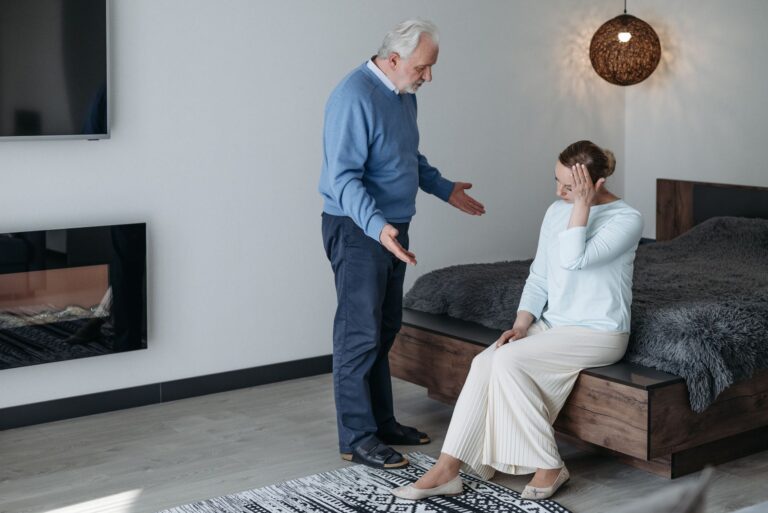
Depression after visiting a spouse with dementia is a documented, common reaction, not a sign that you are handling things poorly. Nearly one in four dementia caregivers report current depression, a rate more than 55% higher than people who are not caregiving, according to an Alzheimer's Association fact sheet drawn from national health survey data. The sadness that follows a visit has a specific shape: you see someone you love who may not fully recognize you, respond to you, or remember the visit happened. Researchers have a name for that particular grief, and there are known patterns in who it hits hardest and what actually helps.
Medical information disclaimer: This article is for general educational purposes only and does not provide medical advice, diagnosis, or treatment. Always consult a physician or other qualified health professional about symptoms, medications, tests, or treatment decisions.
Table of Contents
- Why Visits Trigger Depression Even When the Care Is Good
- How Common Is This, and Who Is Most at Risk?
- The Guilt That Often Comes With the Sadness
- What the Research Says Actually Helps
- When to Treat This as More Than Sadness
Why Visits Trigger Depression Even When the Care Is Good
The distress does not come from poor care or a bad facility. It comes from what therapist Pauline Boss termed ambiguous loss: grieving someone who is physically present but psychologically changed or absent, a state her research links directly to depressive symptoms in caregivers, as described in a 2021 Frontiers in Psychology review. Every other kind of loss has a clear boundary.
A visit with a spouse who has dementia resets that boundary each time: the person you married is there, but the relationship you had may not be. That repetition is the mechanism, not a character flaw in how you are coping. This also explains why the sadness often peaks before any final loss occurs. The same review reports that caregiver distress frequently reaches its highest point while the person with dementia is still alive, matching or exceeding the grief measured after death itself.
How Common Is This, and Who Is Most at Risk?
The elevated depression rate among dementia caregivers is not evenly distributed. A long-running study of 1,610 caregivers through the Medicare Alzheimer's Disease Demonstration, covering eight U.S. sites, found that depression and caregiving burden generally eased in the months after a spouse moved into a nursing home.
Husbands were the exception: they were the subgroup most likely to stay significantly depressed after placement, while wives and daughters were more likely to remain highly burdened rather than depressed, according to the study by Gaugler and colleagues. Depression also tends to show up earlier than many spouses expect. A five-year follow-up of 226 Alzheimer's family caregivers found that about 61.5% already had depressive symptoms at the time of diagnosis, and roughly one-third saw those symptoms worsen over the following years, per research from the University of Eastern Finland.
- You are statistically more at risk if you are a husband whose wife has moved into long-term care.
- You are at risk from the point of diagnosis onward, not just after a major transition like placement.
- A third of caregivers see symptoms deepen over years, so stability now is not a guarantee of stability later.
The Guilt That Often Comes With the Sadness
Depression after a visit is frequently tangled up with guilt, and the two feed each other. A mixed-methods study of 83 spouse and adult-child caregivers of people with dementia in long-term care found that nearly half reported guilt stemming from the person with dementia, from other relatives, or from facility staff, according to research published via NIH. The same study found that how often you visit, how those visits go, and how you view the facility all shape how much guilt you carry. That means guilt is not fixed.
A visit that goes badly, or a facility interaction that feels judgmental, can spike guilt independent of how much care you are actually providing. Recognizing which lever moved, the visit itself or an unrelated comment from staff, can keep one bad afternoon from reading as proof you are failing. Clinicians have built interventions specifically for this combination of guilt and prolonged grief after a spouse enters care. The Family Intervention: Telephone Tracking-Nursing Home program and the Chronic Grief Management Intervention were both designed to treat it directly, per the same research.
What the Research Says Actually Helps
Archived guidance from the National Institute on Aging identifies the specific risk factor that makes caregiver depression worse: isolation, caregiving without support from family, friends, or the wider community. The same guidance recommends concrete countermeasures rather than general reassurance, from an NIA caregiver guide.
A systematic review of eight studies on spouses after a partner's admission to care identified visiting the partner as one of three recurring themes that define this period, alongside loss of a shared life and grief or depression, and concluded that spouses' emotional needs after placement are still under-researched, according to a review from Bournemouth University. That gap means a spouse struggling with visits is dealing with a widely reported but still poorly served problem, which is a reason to seek out a support group or clinician experienced with dementia caregiving specifically, rather than general bereavement support that assumes the loss has already happened.
- Build scheduled breaks into your routine, not just breaks you take when you happen to feel depleted.
- Use respite care or adult day programs so the break is real rather than filled with other obligations.
- Join a caregiver support group, since isolation specifically (not caregiving itself) is the named risk factor.
When to Treat This as More Than Sadness
A hard afternoon after a visit is different from depression that persists across weeks. The interventions described above, phone-based tracking support and chronic grief management, exist because clinicians treat post-placement depression and guilt as conditions that respond to structured treatment, not just time. If sadness after visits is showing up most days, interfering with sleep or appetite, or making you dread visits you still want to make, that pattern is the signal to bring to a doctor or therapist rather than something to wait out on your own.