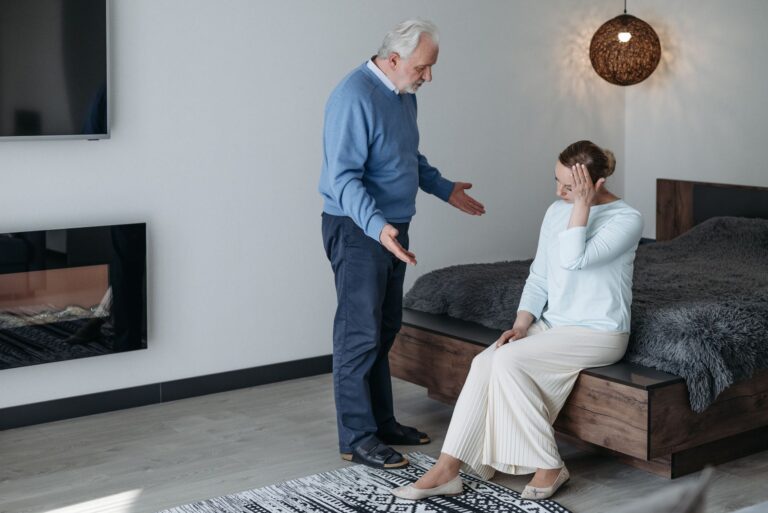
Feeling low after a visit with a parent who has dementia ends is a normal, well-documented reaction, not a sign that something is wrong with you. The Alzheimer's Association describes this as grieving a loved one's decline while they are still alive, and the sadness, guilt, or anger that follows a visit is a recognized part of caring for someone with the disease. That low feeling often has a name and a pattern behind it. Understanding why it recurs with every visit, and what it means for your own health, can help you respond to it instead of just enduring it.
Medical information disclaimer: This article is for general educational purposes only and does not provide medical advice, diagnosis, or treatment. Always consult a physician or other qualified health professional about symptoms, medications, tests, or treatment decisions.
Table of Contents
- Why Visits Leave You Feeling Worse, Not Better
- Why Guilt Shows Up So Often
- When Low Mood Signals Something More Serious
- Why Your Own Well-Being Affects Your Parent's Care
- What to Do When the Feeling Follows You Home
- Frequently Asked Questions
Why Visits Leave You Feeling Worse, Not Better
Psychologist Pauline Boss calls this experience "ambiguous loss" — grief for someone who is physically present but cognitively changed. The American Psychological Association's Monitor on Psychology explains that this grief keeps recurring because the loss has no clear endpoint. Unlike a death, there is no funeral, no finished mourning period, and no moment when the sadness is expected to lift.
Each visit can reopen that loss in a fresh way. You see your parent, and you're reminded of who they were and how much has changed, so the grief resets rather than fades over time. The same Monitor on Psychology article notes that adult children commonly describe a mix of ambivalence, guilt, and anger after visits, and that these feelings often intensify when a parent no longer recognizes them. Not being recognized by your own parent is one of the sharpest versions of this loss, and it's a common trigger for the low mood that follows a visit.
Why Guilt Shows Up So Often
Guilt is one of the most frequent emotions caregivers report after a visit ends. A study of 83 spouse and adult-child caregivers whose relative had moved into long-term care, published on NCBI/PMC, found that guilt was tied to how often and how well people visited, how involved they were in day-to-day care, and how they viewed the facility. This means guilt tends to attach to specific, nameable worries — not enough visits, a visit cut short, a facility that doesn't feel right — rather than one vague feeling.
Naming the specific worry behind the guilt can make it easier to address. The same study's authors recommend counseling strategies that include self-forgiveness exercises, built around the idea that guilt here is rarely proportional to any real failure. AARP's caregiving guidance addresses this directly, describing lingering sadness and guilt after visits as a recognized, common reaction rather than evidence that you're doing something wrong.
When Low Mood Signals Something More Serious
Occasional sadness after a visit is different from ongoing depression, and the distinction matters for your health. A cross-sectional study of 5,627 Medicare patients with moderate-to-advanced dementia and their caregivers, reported in the Journal of General Internal Medicine, found that about one-third of caregivers screened positive for depression, with risk rising among those providing more than 40 hours of care a week.
A larger meta-analysis pooling 43 studies and nearly 17,000 dementia caregivers, published on PMC, calculated an adjusted depression prevalence of about 31% among caregivers, with women showing roughly 1.5 times the odds of depression compared with men. These numbers suggest that if the low feeling after visits is persistent, daily, or accompanied by changes in sleep, appetite, or interest in other parts of your life, it may have crossed from situational sadness into clinical depression. That distinction is worth raising with a doctor rather than assuming it will pass on its own.
Why Your Own Well-Being Affects Your Parent's Care
Your emotional state after visits isn't only a personal matter — it can ripple into the care your parent receives. A six-month study of 663 dementia patients, reported through UNMC's newsroom, found that caregiver depression, present in about 13% of caregivers at baseline, was associated with a 73% increase in the patient's emergency-room visits.
This connection gives caregivers a practical reason, beyond their own comfort, to take low mood seriously. A caregiver who is depressed may be less able to spot early warning signs, coordinate care, or respond quickly to a change in their parent's condition. Treating your own emotional response as part of the care plan, not separate from it, reflects what the research shows: your health and your parent's outcomes are linked.
What to Do When the Feeling Follows You Home
A few concrete steps can help you respond to this feeling rather than just sit with it: These steps don't remove the grief, since the loss itself is ongoing, but they can keep the feeling from compounding unchecked after every visit.
- Name the emotion specifically — guilt about visit frequency, sadness at not being recognized, or anger at the situation itself — rather than labeling it all as "feeling bad."
- Track whether the low mood passes within a day or two, or whether it's becoming a daily baseline; the second pattern warrants a conversation with a doctor.
- Reach out to the Alzheimer's Association's free 24/7 Helpline at 800.272.3900, where care consultants are specifically trained to help process grief and guilt tied to dementia caregiving.
- Ask about caregiver support groups, which both the Alzheimer's Association and AARP point to as a resource for people navigating the same recurring grief.
- If you're providing more than 40 hours of care a week, treat that workload itself as a risk factor and look for ways to share or offset it, given the documented link to higher depression rates.
Frequently Asked Questions
Is it normal to feel worse after visiting a parent with dementia than before I arrived?
Yes. The Alzheimer's Association and the American Psychological Association both describe this as a common pattern tied to ongoing grief, not a sign of a problem with you.
How do I know if my low mood after visits has become depression?
Research from the Journal of General Internal Medicine found about one-third of dementia caregivers screen positive for depression; persistent low mood, sleep or appetite changes, or loss of interest in daily life beyond visit days are reasons to talk with a doctor.
Does caring more than 40 hours a week change my risk?
Yes. Studies cited by the Journal of General Internal Medicine link caregiving over 40 hours a week to higher rates of depression, making workload itself a factor worth addressing.
Where can I get immediate support for these feelings?
The Alzheimer's Association operates a free 24/7 Helpline (800.272.3900) staffed by care consultants trained to help with grief, guilt, and related emotions.