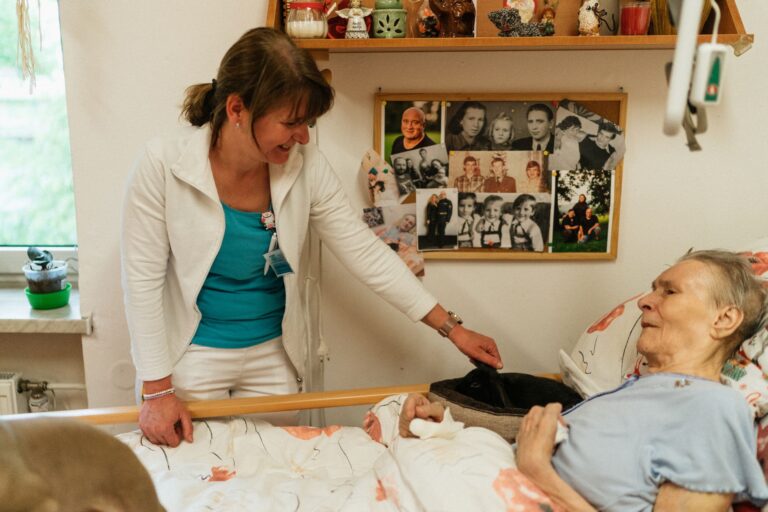
Tell friends by choosing who to tell first, deciding how much detail to share, and accepting that reactions will vary. The Alzheimer's Association says sharing a diagnosis is an important step toward integrating the disease into daily life, while concealing it limits a person's ability to cope with what comes next. There is no required script for this conversation. The National Institute on Aging advises being honest when the time feels right rather than following one fixed approach, because every friendship and every diagnosis looks different.
Medical information disclaimer: This article is for general educational purposes only and does not provide medical advice, diagnosis, or treatment. Always consult a physician or other qualified health professional about symptoms, medications, tests, or treatment decisions.
Table of Contents
- Who to tell first, and how to decide
- What to actually say
- How friends are likely to react
- Helping friends understand and offer the right support
- Spreading the news out over time
- Frequently Asked Questions
Who to tell first, and how to decide
Start with the people you trust most. The Alzheimer's Association recommends asking yourself who you feel closest to, who is likely to keep supporting you, and who you feel a personal responsibility to tell directly rather than letting them hear secondhand. A University of Arizona care-partner guide makes the same point from a different angle: the decision belongs to you.
It states that the choice of who to tell, and when, rests with the person living with dementia, and the conversation does not need to happen in one sitting. You can tell a close friend this week and wait months before telling a wider circle. One practical shortcut is to lean on a single trusted person early. Healthline reports that telling one trusted person first, ideally someone able to help pass the news to other friends and family, is a workable way to avoid repeating the hardest version of the conversation over and over.
What to actually say
You do not need medical language or a prepared speech. The National Institute on Aging's guidance to be honest when the moment feels right applies here too: a plain statement of the diagnosis, in your own words, is enough to open the conversation. Many friends already sense something is different before you say anything.
The National Institute on Aging notes that friends and family often notice something is wrong before being told, because memory and behavior changes connected to Alzheimer's are hard to hide. Naming the diagnosis directly can come as relief rather than shock, since it explains changes they had already picked up on. Once the diagnosis is out in the open, you can decide how much to explain about the disease itself. Some friends will want more information right away; others will need time before they ask questions.
How friends are likely to react
Expect a mix of responses, not a single reaction. Monica Moreno, the Alzheimer's Association's senior director of care and support, says friends and family react unevenly after hearing the diagnosis: some relationships are tested, while others grow stronger. A cool or hesitant first reaction is not necessarily rejection.
Moreno says an unsupportive early response often reflects a friend's need for more time or more education about the disease, and that giving them that time can lead to a more supportive response later. Some friends also pull back at first because the diagnosis raises fear about their own future, not because they have stopped caring. Moreno notes that some friends who step back right after hearing the news do reconnect over time, so a difficult first conversation is not necessarily the final word on that friendship.
- A friend who goes quiet may be processing, not withdrawing for good.
- A friend who asks a lot of questions is often trying to understand, not prying.
- A friend who distances themselves early may reconnect later, once the initial fear settles.
Helping friends understand and offer the right support
Telling a friend is also a chance to show them how to help. The National Institute on Aging suggests sharing articles or websites about the disease's effects, and naming specific, concrete ways a friend can help, including giving a caregiver an occasional break.
Specific requests work better than general ones. Instead of saying a friend can "help out," ask for something concrete: a weekly phone call, a ride to an appointment, or a few hours so a caregiving spouse or adult child can run errands. Pointing friends toward a short explainer on the disease also saves you from repeating the same background information to every person you tell.
Spreading the news out over time
There is no deadline for telling everyone in your life. The University of Arizona guide's point that the conversation does not have to happen in one sitting applies across your whole circle of friends, not just one talk with one person.
Telling a few close friends first, then widening the circle as you are ready, matches the Alzheimer's Association's broader guidance: sharing the diagnosis helps you cope with what is ahead, but it does not have to happen all at once to count. Some friends may hear the news from the trusted person you told first, consistent with the Healthline approach of letting one early confidant help carry the news further.
Frequently Asked Questions
Should I tell every friend the same amount of detail?
No. The University of Arizona guide notes the decision of who to tell, and when, belongs to you, and the conversation can happen in pieces rather than all at once.
What if a friend reacts badly at first?
Monica Moreno of the Alzheimer's Association says an unsupportive early reaction often reflects a need for more time or education, and that reaction can improve once a friend has had time to process the news.
Is it better to tell one person or several people at once?
Healthline describes telling one trusted person first as a practical approach, since that person can then help share the news with others.