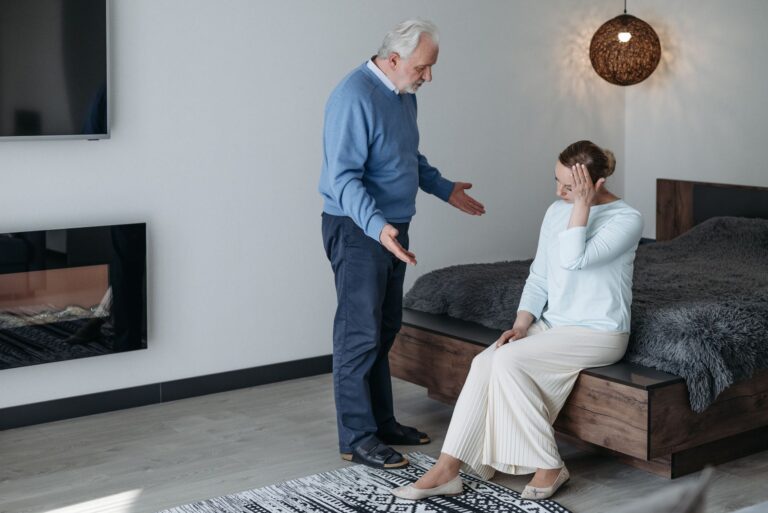
A family caregiver's emotional burden is measured with a structured questionnaire that asks the caregiver — not the patient — how caregiving has affected their health, mood, social life and finances. The standard instrument is the Zarit Burden Interview (ZBI), a 22-item scale that originated in a 1980 study of relatives caring for impaired older adults, published in The Gerontologist by Zarit, Reever and Bach-Peterson. Burden scoring turns a feeling into a number a clinician can track over time, compare against a previous visit, and use to justify respite, counselling or a change in the care plan. It is a screening and monitoring tool, not a diagnosis, and the people who built it say so plainly.
Medical information disclaimer: This article is for general educational purposes only and does not provide medical advice, diagnosis, or treatment. Always consult a physician or other qualified health professional about symptoms, medications, tests, or treatment decisions.
Table of Contents
- What the Zarit Burden Interview actually asks
- Short forms, and which ones hold up
- The other scale you may be given
- Where burden scores stop being reliable
- How the burden is measured across a whole population
- Using a burden score to get something changed
- Frequently Asked Questions
What the Zarit Burden Interview actually asks
The full ZBI has 22 statements, each rated from 0 ("never") to 4 ("nearly always"), producing a total between 0 and 88. According to an NIH-hosted review of the instrument, the items cover four areas of the caregiver's life: physical health, emotional health, social activities and finances. A higher total means greater burden. The questions are deliberately personal.
They ask whether you feel you have lost control of your life, whether you are afraid of what the future holds for your relative, whether you feel you should be doing more. A caregiver answering honestly is reporting their own strain, not grading the person with dementia. That framing matters in dementia care specifically. A spouse can describe a relative's memory loss calmly and still score high, because burden tracks the caregiver's reserves rather than the severity of the disease.
Short forms, and which ones hold up
Twenty-two items is too long for a crowded clinic visit, so shorter versions exist. Bédard and colleagues derived a 12-item short form and a 4-item screening form from the full scale in The Gerontologist in 2001, using 413 caregivers of cognitively impaired older adults at a memory clinic — the record of that study is held by McMaster Experts. Not all short forms are equal.
Zarit's own later review advises against the 4-item version and recommends using 12 items or more when a short form is needed. A Spanish item-response-theory study presented at the ISPOR 13th Annual European Congress found that a 12-item ZBI retained about 87% of the full instrument's information with a Cronbach's alpha of 0.89 — strong internal consistency, which is why 12 items are treated as an acceptable substitute. If a clinician hands you a four-question version, it is reasonable to ask whether a longer form is available. A screening score that is too crude to act on costs the caregiver a second visit.
The other scale you may be given
The Modified Caregiver Strain Index (MCSI) is the other instrument in common use. Published by Thornton and Travis in 2003 and distributed by the Hartford Institute for Geriatric Nursing, it uses 13 items scored 2 for "yes, on a regular basis," 1 for "yes, sometimes" and 0 for "no," giving a range of 0 to 26. It was developed on 158 family caregivers of older adults living in the community and reports internal reliability of about .90.
The practical difference is length and phrasing. The MCSI is quicker and its items read as concrete disruptions — sleep is disturbed, caregiving is inconvenient, there have been work adjustments — where the ZBI probes emotional state more directly. Because the scales differ in range and content, a score on one cannot be converted to the other. Keep using whichever instrument you started with so the comparison over months is meaningful.
Where burden scores stop being reliable
The ZBI's own clinical handout, published by the UK brain injury charity Headway, states that norms have not been computed for the instrument and that it "should not be taken as the only indicator of the caregiver's emotional state." It advises clinicians to add clinical observation and a separate depression measure. There is a second structural problem. The ZBI was designed as a single overall measure, but published factor analyses report anywhere from two to four dimensions, as summarised in an NIH-hosted analysis of the instrument's structure.
The consequence for a reader is narrow but real: subscale scores — "role strain," "personal strain" — are not comparable between studies or between clinics. So treat the total as a signal, not a verdict. A cut-off crossed is a prompt for a conversation about depression, sleep and respite, and the total alone says nothing about which of those is driving it.
How the burden is measured across a whole population
At population scale the method changes entirely: it is survey work, not clinical scoring. The CDC's optional BRFSS Caregiver Module screens every respondent for caregiving status, asks identified caregivers seven further questions about their caregiving experience, and asks non-caregivers whether they expect to provide care in the next two years. Those surveys are what quantify the trend.
Using the module across 35 states and Puerto Rico, the CDC's MMWR report of 29 August 2024 found that frequent mental distress and depression were among six of 19 health indicators that worsened for caregivers between 2015–2016 and 2021–2022, and that caregivers fared worse than non-caregivers on 13 of the 19 indicators in 2021–2022. Independent survey work points the same way. AARP and the National Alliance for Caregiving's Caregiving in the U.S. 2025 report, based on 6,858 caregivers recruited through a probability-based IPSOS panel, found that 64% of caregivers of adults aged 50 and older reported emotional stress and nearly one in four reported social isolation, with emotional stress up since 2020.
Using a burden score to get something changed
A score is only useful if it leads somewhere. What to do with one: If a clinician declines to score you, the CDC and AARP findings above are the argument for it: caregivers in these surveys were measurably worse off than non-caregivers on most health indicators tracked, which is why screening the caregiver and not only the patient has become standard advice.
- Ask to complete a ZBI or MCSI at the person with dementia's next appointment, in your own voice, without the patient answering for you.
- Keep your completed forms and the dates. A rising total across three visits is harder to dismiss than a single bad day.
- Bring a separate depression screen into the conversation, as the ZBI handout itself recommends, rather than letting the burden total stand in for your mental health.
- Name the specific item that scores highest — sleep, finances, loss of social contact — because that is what a respite or counselling referral has to target.
- Repeat the same instrument each time. Switching from a 22-item ZBI to a 4-item version breaks the comparison.
Frequently Asked Questions
Is there a Zarit score that counts as "high burden"?
The instrument's own handout states that norms have not been computed for it, so there is no authoritative cut-off to quote. Higher totals on the 0–88 range mean greater burden, and change in your own score over time is the more usable signal.
Can I fill in a caregiver burden scale myself at home?
You can complete one and bring it to an appointment, which is how most caregivers get the conversation started. The ZBI's guidance is explicit that a score should be paired with clinical observation and a separate depression measure rather than interpreted alone.
Does the scale measure how advanced the dementia is?
No. Every item asks about the caregiver's health, mood, social life or finances, so two caregivers looking after people at the same stage of illness can score very differently.
You Might Also Like
- Traumatic Brain Injury and Dementia Risk With a Family History of Alzheimer’s: Claims vs Evidence
- The 2026 NIA Workshop on Comprehensive Dementia Care Models: What Family Caregivers Can Check in Their Community
- Repeated Sports Concussions and Dementia Risk With a Family History of Alzheimer’s: What Evidence Supports