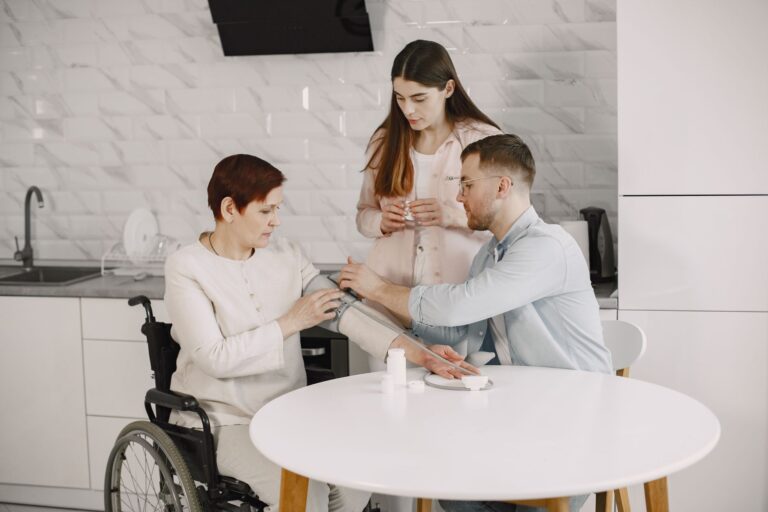
Tell the clinician how many hours you slept last night and ask whether poor sleep could affect your memory-test score. Mild cognitive impairment is a test-based label for early thinking change, and a short night can make it less stable.
An Alzheimer's & Dementia study found shorter sleep the night before testing raised the odds that label would revert one year later. Average sleep over 14 days did not show that pattern. Report the bad night before scores are filed.
Medical information disclaimer: This article is for general educational purposes only and does not provide medical advice, diagnosis, or treatment. Always consult a physician or other qualified health professional about symptoms, medications, tests, or treatment decisions.
Table of Contents
- Why a short night can skew scores
- What to tell the clinic
- How much sleep supports testing
- When one bad night may matter less
Why a short night can skew scores
Sleep helps the brain store what it learns. Harvard Gazette described young adults kept awake 35 hours who remembered images 19% worse two days later, with less hippocampus activity during learning. UC Berkeley researchers reported older adults had 75% less deep sleep and 55% worse word-pair recall, linked to transfer from hippocampus to prefrontal cortex. Fragmented sleep in midlife also predicted later scores. An Alzheimer's Research UK summary described a Neurology study of adults in their 30s and 40s.
Those with the most disrupted sleep had more than twice the odds of poor scores about 10 years later. The link held after adjusting for age, sex, race and education. The same concern appears in concussion care. Athletes with short sleep before baseline testing reported more symptoms and scored differently. Their clinicians were advised to ask about sleep and consider delaying or retesting after rest.
What to tell the clinic
Bring a clear sleep report to the visit. Keep it brief and factual so the clinician can judge the score.
Ask whether to proceed, reschedule, or repeat the test after better sleep. Ask the clinic to note your sleep hours with the score.
- how many hours you slept last night and when you woke
- how that night compares with your usual week
- frequent waking, snoring, pain, worry, late caffeine or alcohol, or a new schedule
- any drowsiness, headache, or trouble focusing at the test
How much sleep supports testing
The U.S. Centers for Disease Control and Prevention advises adults 18 to 60 to get at least 7 hours nightly, per CDC sleep guidance. The agency ties enough sleep to better attention and memory for daily tasks.
It ties short sleep to worse concentration and recall. For sleep-sensitive testing, the American Academy of Sleep Medicine recommends 2 weeks of sleep diaries, with or without actigraphy. It advises ideally 7 or more hours nightly, and at least 6 hours, per American Academy of Sleep Medicine protocol guidance.
When one bad night may matter less
Poor sleep does not lower every score. A 2012 insomnia study found older adults with insomnia showed no working-memory loss versus good sleepers on short demanding tasks.
A short, effortful task may hide a sleep effect that longer learning tests reveal. Observational links also do not prove that broken sleep caused the later scores. Still bring the fact to the visit and ask whether to note, delay, or repeat the test.