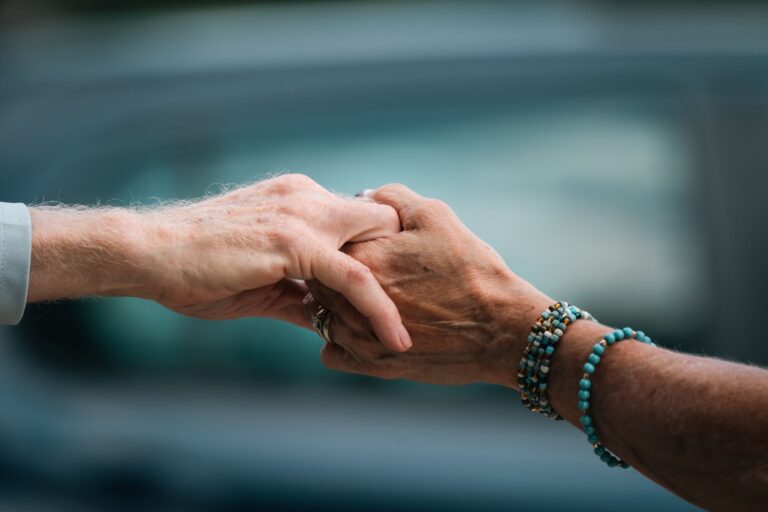
Resenting the "strong one" label while caring for someone with dementia is common, and it does not mean you love the person less or are failing at the job. Researchers have a name for the love-and-rage mix underneath it — caregiving ambivalence — and they treat it as a measurable, treatable state rather than a character flaw.
What the evidence does not yet show is that the label itself causes harm. No study isolates being *called* the strong one from simply carrying the largest share of the work. The related findings below are strong enough to act on anyway, because both the workload and the pressure to perform strength have documented costs.
Medical information disclaimer: This article is for general educational purposes only and does not provide medical advice, diagnosis, or treatment. Always consult a physician or other qualified health professional about symptoms, medications, tests, or treatment decisions.
Table of Contents
- What "ambivalence" means here, and why it is not guilt about being a bad person
- The sequence: ambivalence, then guilt, then depression
- How the "strong one" label does its damage
- Who is carrying this, and how the numbers have moved
- What actually reduces the burden
- The limits of this evidence
- Frequently Asked Questions
What "ambivalence" means here, and why it is not guilt about being a bad person
Caregiving ambivalence is the simultaneous presence of warm feelings and hostile ones toward the same person — tenderness at breakfast, fury by mid-afternoon, both real. Losada and colleagues built and validated the Caregiving Ambivalence Scale in 212 dementia family caregivers and reported it in *The Gerontologist* in 2017, which established the feeling as a construct psychologists can score, not a private moral failing. That distinction matters practically.
A caregiver who believes the rage is evidence of a bad character hides it. A caregiver who knows it is a documented, near-universal feature of the role can describe it to a clinician, a sibling, or a support group, which is the first step toward doing anything about it. Dementia caregiving is also, measurably, the harder version of the job. The Alzheimer's Association's *2025 Facts and Figures* reports that 59% of dementia caregivers rate their emotional stress as high or very high and 38% say the same of physical stress — heavier than for caregivers of people without dementia.
The sequence: ambivalence, then guilt, then depression
The order of events is now reasonably well documented, and it is not a vague spiral. A longitudinal follow-up published in the *Journal of the American Geriatrics Society* in 2024 found that increases in ambivalent feelings predicted increases in guilt, and the guilt in turn predicted increases in depressive symptoms over time. Earlier work in the same research line found ambivalence and guilt together explained 35% of the variance in caregivers' depressive symptoms. That number is why researchers argue resentment deserves direct clinical attention rather than being waved off as an incidental mood.
There is a physical signature too. In 96 dementia caregivers tracked over time and reported through the NIH's PubMed Central, a greater rise in ambivalence contributed significantly to rising C-reactive protein, a marker tied to cardiovascular risk. The practical reading: guilt is the hinge. The feeling itself does less damage than the punishment you apply for having it.
How the "strong one" label does its damage
The closest direct evidence comes from research on the Strong Black Woman schema — a cultural expectation of unbreakable self-sufficiency. A 2025 study indexed in PubMed Central found that higher scores on its Mask of Strength and Caregiving subscales predicted lower personal mastery and more depressive symptoms, and that the expectation to display strength correlated *negatively* with seeking social support. That last correlation is the mechanism.
Being cast as the strong one does not add hours to the week; it removes the option of asking for help without feeling like a fraud. The role becomes self-sealing: you are trusted because you never complain, so complaining would cost the trust. Watch for the specific signs that the label is operating rather than the workload:.
- You downplay how bad a week was when a relative asks, then feel angry that nobody offered.
- You turn down concrete offers of help because explaining the routine feels harder than doing it.
- You are the only one who gets called during a crisis, and you have stopped noticing that is unusual.
- Resentment spikes after praise ("I don't know how you do it") rather than after a hard care task.
Who is carrying this, and how the numbers have moved
The scale is large and growing. AARP and the National Alliance for Caregiving's *Caregiving in the US 2025*, released July 24, 2025, counted 63 million U.S. adults — one in four — providing care, a 45% rise in a decade, with 39% reporting high emotional stress and nearly one in four feeling socially isolated.
Dementia is a distinct slice of that. The Alzheimer's Association counts about 12 million Americans who provided unpaid dementia care in 2024, delivering more than 19 billion hours valued above $446 billion — roughly 31 hours a week, or 1,612 hours a year, per caregiver. Thirty-one hours a week is close to a second job, and it is an average that hides the people at 60 or 80. If one person in a family is at the average and the others are near zero, "strong" is a description of the schedule, not the personality.
What actually reduces the burden
The strongest evidence for a specific intervention is REACH II, funded by the National Institute on Aging and the National Institute of Nursing Research. It randomized 642 African American, Hispanic and white caregiving dyads to nine home visits plus three telephone sessions over six months. As the published analysis reports, it reduced caregiver burden, and the effect was mediated through decreases in caregiver depression.
The mediation finding is the useful part. Burden fell because mood improved — which supports treating the resentment and guilt directly rather than waiting for the care tasks to get lighter, because they will not. Things you can do without a trial to enroll in:.
- Name the feeling accurately to one person. "I love her and I am furious" is a sentence a clinician recognizes.
- Ask for one specific, bounded task rather than general help — a named Tuesday, a named errand.
- Treat depressive symptoms as the target. If low mood has lasted more than two weeks, that is a clinical conversation, not a willpower problem.
- Ask your local Area Agency on Aging or the Alzheimer's Association about structured caregiver support programs; the multi-session, in-home model is the one with trial evidence behind it.
- Say out loud, once, that you are not the only capable person in the family. The label survives on nobody contradicting it.
The limits of this evidence
Be honest with yourself about what is proven. The ambivalence research rests on modest samples — 212 and 96 participants — drawn largely from Spanish caregivers and relying on self-report, so the effect sizes may not transfer cleanly to U.S. caregivers.
The Strong Black Woman research describes a specific cultural schema. Its mechanism — displayed strength suppressing help-seeking — is plausibly broader, but the study does not establish that, and stretching it to every caregiver is an inference, not a finding. And the central question of this article is genuinely unanswered: no cited study separates being named the strong one from carrying the heaviest load. The two arrive together, and the research has not pulled them apart.
Frequently Asked Questions
Does resenting the role mean I should stop caregiving?
No. The research treats resentment as a signal to address depression and guilt, not as evidence that the arrangement must end. REACH II reduced burden while caregivers kept caring.
Should I tell my family I resent being the designated strong one?
There is no trial answer. But the Strong Black Woman findings show displayed strength correlates with *less* help-seeking, so the label persists mainly while unchallenged.
Is the guilt worse than the anger?
The 2024 longitudinal study found guilt sits between ambivalence and depressive symptoms in the causal chain, which makes it the more useful thing to target.