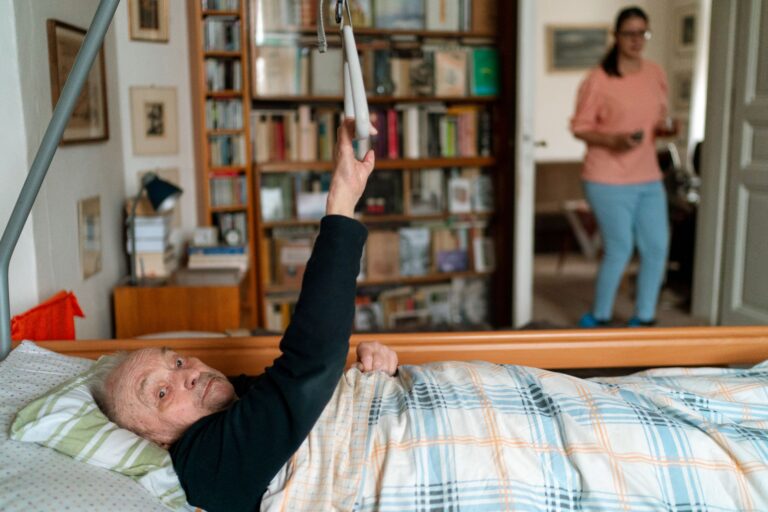
If your mom cannot identify which control turns off the stove, she should not use it without direct supervision. Disable the stove when no one can watch her and provide a safer way to prepare food. Her specific difficulty cannot be independently verified here, but it matches a documented dementia risk. The National Institute on Aging says people with Alzheimer's may forget to turn off an oven and lose the ability to manage household tasks over time.
Medical information disclaimer: This article is for general educational purposes only and does not provide medical advice, diagnosis, or treatment. Always consult a physician or other qualified health professional about symptoms, medications, tests, or treatment decisions.
Table of Contents
- Treat this as a safety warning
- Secure the stove now
- How much independence is still safe?
- Replace the task, not just the control
Treat this as a safety warning
Dementia is a decline in abilities such as memory, attention, judgment, and spatial awareness. changes in these abilities can unintentionally increase fire risk, according to Fire and Rescue NSW's dementia safety guidance. Confusing the stove controls is more serious than occasionally forgetting where an item belongs.
Your mom may be unable to stop the heat promptly, especially if she becomes distracted or panicked. Do not rely on a handwritten "OFF" label as the only safeguard. A label may help with orientation, but it does not prevent her from selecting the wrong control.
Secure the stove now
Choose a safeguard that physically prevents unsupervised use. The Alzheimer's Association home-safety guidance recommends knob covers, removing knobs, or turning off the gas when the stove is not in use.
Practical options include: For a gas stove, disabling access deserves particular attention. A person with Alzheimer's may not detect smoke or an unlit gas burner, so the National Institute on Aging advises checking smoke and natural-gas detectors regularly.
- Remove accessible knobs after cooking.
- Install safety covers over the controls.
- Add an automatic shut-off control.
- Keep the stove disabled unless a capable person is present.
- Supervise cooking from beginning to end.
How much independence is still safe?
A dementia diagnosis does not automatically mean every person must stop cooking. Restrictions should reflect the person's current abilities because experienced cooks may retain safe skills longer than others. Watch the whole cooking process, not just whether your mom recognizes the off button.
Consider whether she can consistently select the correct burner, monitor food, respond to smoke, and finish by turning everything off. If she cannot complete those steps reliably, supervision is no longer enough when nobody is available. The stove should remain inaccessible during those periods.
Replace the task, not just the control
Preserving independence can mean changing the appliance or the meal rather than accepting the fire risk. Offer foods that do not require heating, prepare meals in advance, or help her cook while you control the stove. If cooking remains important to her, give her safe parts of the task.
She might wash ingredients, mix food, set the table, or follow a familiar recipe while another person operates the heat. When someone can no longer use a conventional stove safely, Alzheimer's Association practice recommendations identify induction cooktops as a safer replacement because they reduce fire and burn hazards. Until a safer arrangement is installed, keep the existing stove disabled whenever direct supervision is unavailable.