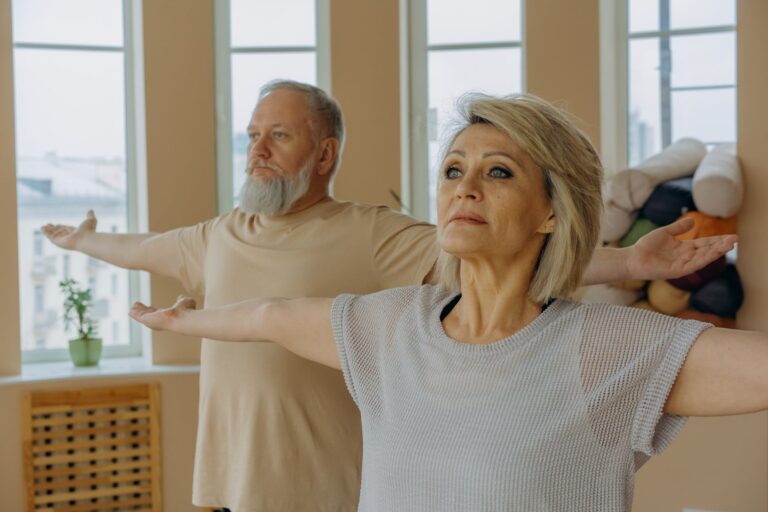
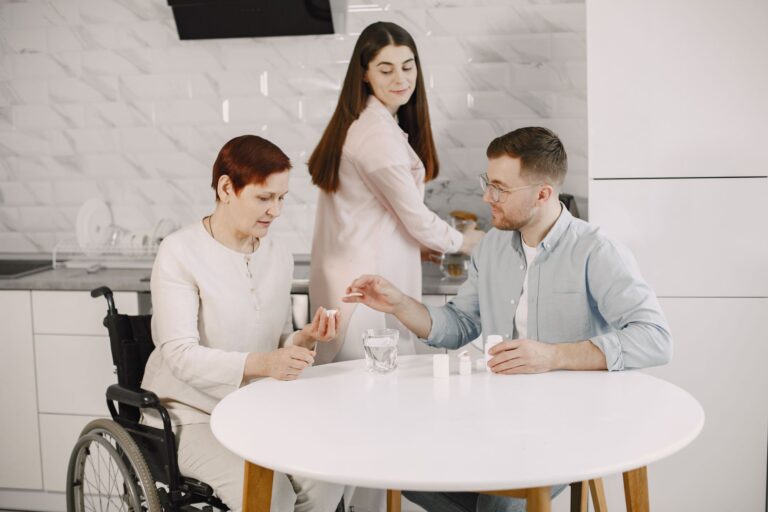
Guided walking in memory care can take place one-on-one or in a small group, but evidence does not show that either format is best for everyone. Guided walking means a planned, supervised walk adapted to a person's mobility, cognition, safety needs, and preferences. One-on-one walking has the clearest evidence for improving selected mobility measures. Group walking may suit some residents, but conversation, navigation, and movement together can overwhelm others.
Medical information disclaimer: This article is for general educational purposes only and does not provide medical advice, diagnosis, or treatment. Always consult a physician or other qualified health professional about symptoms, medications, tests, or treatment decisions.
Table of Contents
- Choose the format around the resident
- What one-on-one walking can accomplish
- What the group evidence does—and does not—show
- Build safety into every variation
- Set goals without overselling exercise
Choose the format around the resident
Start with the person, not the activity calendar. The Alzheimer's Association recommends assessing mobility, gait, falls, cognition, medical contributors, wandering patterns, and personal preferences before developing a movement plan (dementia care practice recommendations). One-on-one walking may be a better fit when a resident needs close physical support, individualized pacing, repeated directions, or a low-stimulation setting.
It also allows the guide to change the route or end the walk promptly. A group may be reasonable when participants can walk at compatible speeds and tolerate other people, conversation, and shared directions. Staff should still adapt the activity to each participant rather than expecting everyone to cover the same distance.
What one-on-one walking can accomplish
The strongest format-specific trial involved individualized, supervised walking for 30 minutes, five days a week, over 16 weeks. Across 12 long-term-care homes, participants in the walking program achieved higher gait velocity than residents receiving equal one-on-one conversation or usual care (Journal of Nutrition, Health & Aging trial). The result was narrow but useful.
Walking improved gait speed, not stride length, cadence, or base of support. Gait information was available for only 91 of the 168 randomized residents, so the study does not establish that the program prevents falls or improves cognition. A separate trial involving 21 people with later-stage Alzheimer's used 30-minute caregiver-led walks four times weekly for 24 weeks. Participants improved their six-minute walking distance by 20% and activities-of-daily-living scores by 23%, but the small sample makes those findings preliminary.
What the group evidence does—and does not—show
Research has not established that group guided walking is superior to one-on-one walking. In an earlier long-term-care study, paired walking and talking produced no significant functional or communication advantage. Researchers noted that combining conversation with walking might overstimulate people with moderate-to-severe dementia (BMC Geriatrics study). Another dementia-rehabilitation study found cognitive improvement in sessions with groups of three to five people, but not in personal sessions.
However, both formats combined physical exercise with reminiscence and orientation activities. The study therefore cannot show that group walking caused the difference. Group programs should not depend on constant conversation. A resident who walks comfortably may still struggle when asked to follow a route, answer questions, and match another person's pace simultaneously.
Build safety into every variation
Supervision matters because disorientation can arise even in residents who walk steadily. The Alzheimer's Association reports that six in 10 people with dementia wander at least once, making unfamiliar or confusing routes particularly unsuitable for unsupervised walking (wandering safety guidance).
Before a walk, the care team can make a brief, person-specific check: During a group walk, staff should watch each participant rather than treating the group as one unit. If one resident slows, becomes disoriented, or appears overwhelmed, that person may need a quieter route or individual support.
- Confirm the planned route, supervision, and expected duration.
- Account for the resident's usual gait, medical contributors, and prescribed mobility support.
- Note current distress, exit-seeking, or difficulty following simple guidance.
- Choose one-on-one support if the group's pace or stimulation would be hard to manage.
- Keep the person supervised in new or confusing surroundings.
Set goals without overselling exercise
Walking goals should be observable and personally relevant. Examples include maintaining a comfortable route, preserving participation in daily activities, or improving walking speed under supervision. Compare the resident with their own starting point, not with faster members of a group. Do not treat a research schedule as a universal prescription.
A Cochrane review of 17 dementia-exercise trials involving 1,067 participants found possible improvement in daily activities, but no clear benefit for cognition, psychological symptoms, agitation, or depression. Variation among studies and very low-certainty evidence support individualizing both format and dosage. Document what happens before, during, and after each walk, including distance or time, assistance required, disorientation, and tolerance of the setting. Use those observations to retain, shorten, simplify, or change the next session.