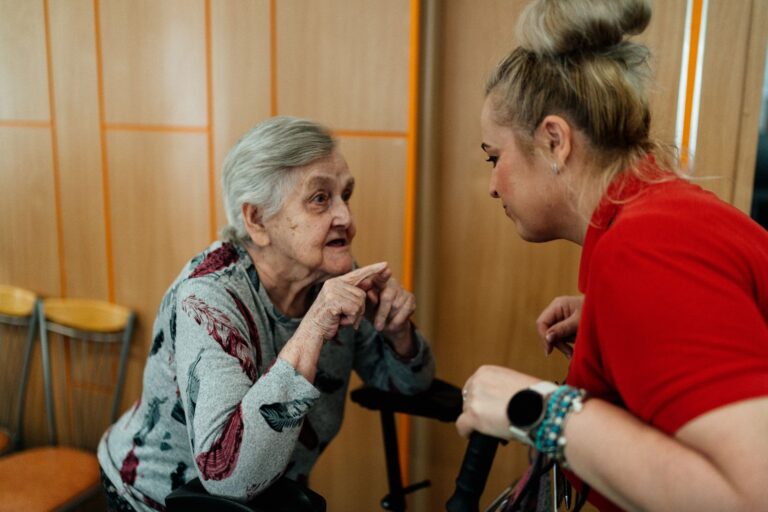
Handle nighttime wandering—getting up and moving around or trying to leave during the night—with calm supervision. Check for an unmet need, offer reassurance instead of arguing, allow supervised pacing, and never use physical restraint. Then reduce future episodes with predictable routines, safer pathways, exit alerts, and a recovery plan. The Alzheimer's Association estimates that 6 in 10 people with dementia will wander at least once, often repeatedly.
Medical information disclaimer: This article is for general educational purposes only and does not provide medical advice, diagnosis, or treatment. Always consult a physician or other qualified health professional about symptoms, medications, tests, or treatment decisions.
Table of Contents
- Is It Wandering or Sundowning?
- What to Do During an Episode
- Reduce Evening Triggers
- Make Nighttime Movement Safer
- Ask a Clinician About Medical Causes
- Prepare for an Unnoticed Exit
Is It Wandering or Sundowning?
"Sundowning" describes increased confusion from dusk through the night. It is not a separate disease. It can involve pacing, anxiety, disorientation, hallucinations, and trouble sleeping, and its exact cause remains unknown.
The term describes when symptoms appear; it does not explain why a particular episode happened. Record the time, surrounding activity, lighting, and what happened immediately beforehand. Patterns may reveal triggers that caregivers can change.
What to Do During an Episode
Focus first on reducing distress and preventing injury. Trying to prove that it is nighttime or insisting that the person return to bed may turn the encounter into an argument.
Use a simple response sequence: If the person remains awake and upset, continue calm supervision rather than forcing the issue. Physical restraint should not be used in this situation.
- Approach calmly and check whether the person has an unmet need.
- Reassure them without challenging their beliefs or confusion.
- Stay nearby and allow pacing under supervision.
- Keep them away from hazards without physically restraining them.
Reduce Evening Triggers
Keep wake times, meals, and bedtime as regular as possible. Provide daytime sunlight, then reduce evening noise, activity, and other stimulation.
Keep occupied rooms well lit as daylight fades. Change one or two conditions at a time and continue noting what happens before each episode. A simple written log can show whether wandering follows an irregular meal, a noisy evening, poor lighting, or another repeated circumstance.
Make Nighttime Movement Safer
The National Institute on Aging recommends reachable lighting or nightlights and floors cleared of rugs and cords. Secure other household hazards so an unexpected walk is less likely to cause injury.
Door and window alarms can alert a caregiver when someone with advanced dementia tries to leave. Other safeguards include an out-of-sight high or low exterior-door lock and removing keys or departure cues. However, never lock a person with dementia inside the home.
Ask a Clinician About Medical Causes
Discuss nighttime wandering or disrupted sleep with the person's clinician. The Alzheimer's Association identifies urinary infections, incontinence, restless legs, sleep apnea, and medication timing as possible causes or aggravating factors.
Bring the pattern log and a current medication list to the discussion. Non-drug measures are generally encouraged before medication, but a clinician can determine whether an underlying condition or medication schedule needs attention.
Prepare for an Unnoticed Exit
Keep identification information and a recent photo accessible, tell nearby neighbors about the risk, and consider location technology. If the person disappears, immediately search the surrounding area; the National Institute on Aging notes that many missing wanderers are found within 1.5 miles. Treat alarms, locks, and tracking devices as layers of risk reduction, not guarantees.
A NIHR Health Technology Assessment systematic review found no robust evidence for any single non-drug wandering intervention and raised ethical concerns about tracking devices and physical barriers. Decide who receives alarms, who starts searching, and where essential information is stored. Tonight, place the current photo and identification details where every caregiver can reach them quickly.