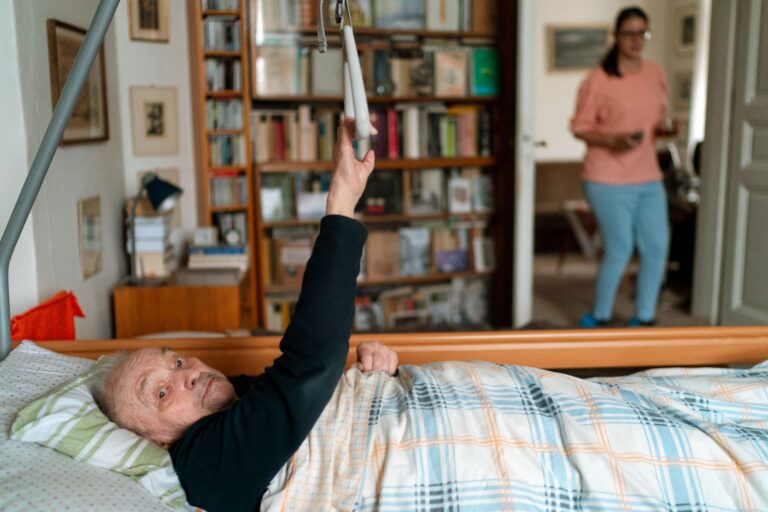
Common caregiver mistakes around sundowning include dismissing every evening change as dementia, overloading the day, arguing, and overlooking medical or safety concerns. Sundowning is a pattern of increased confusion, anxiety, agitation, hallucinations, pacing, disorientation, or sleep difficulty from dusk through night—not a separate disease. The label describes when symptoms occur, not why they occur. Effective care begins with looking for triggers, reducing strain, responding calmly, and seeking medical help when changes persist.
Medical information disclaimer: This article is for general educational purposes only and does not provide medical advice, diagnosis, or treatment. Always consult a physician or other qualified health professional about symptoms, medications, tests, or treatment decisions.
Table of Contents
- Do not assume dementia explains everything
- Avoid exhaustion and disrupted sleep
- Adjust light, noise, and stimulation
- Respond to distress without confrontation
- Know when medical assessment matters
- Prepare for evening wandering
Do not assume dementia explains everything
Late-day distress is not always inevitable dementia progression. Pain, constipation, poor sleep, medication effects, excess noise, or a sudden change in routine or surroundings may contribute.
The National Institute on Aging advises caregivers to identify possible causes and discuss them with a clinician. A new behavior after a medication change, for example, deserves investigation rather than automatic acceptance as sundowning. The NIA's guidance on agitation and sundowning also emphasizes checking what may be upsetting the person.
Avoid exhaustion and disrupted sleep
A packed schedule can leave a person exhausted by evening. Bathing, appointments, shopping, and trips may be easier in the morning or early afternoon, before late-day symptoms usually appear.
Keep the daily routine predictable and limit avoidable demands near dusk. Also protect nighttime sleep: These changes do not guarantee that symptoms will stop. They reduce several contributors that caregivers can reasonably control.
- Discourage long naps and late-day dozing.
- Avoid caffeine and alcohol late in the day.
- Move demanding activities to earlier hours.
- Keep meals and routine activities on a consistent schedule.
Adjust light, noise, and stimulation
A dark room is not necessarily calming. Low light can produce shadows that increase confusion, while television, chores, loud music, and several simultaneous activities can add stimulation. Use adequate lighting before dusk and choose quiet, familiar activities.
The Alzheimer's Association recommends reducing evening stimulation while maintaining enough light to limit troubling shadows. Its sundowning and sleep guidance also recommends a predictable routine and earlier scheduling for demanding activities. The goal is not complete silence or harsh brightness. It is a familiar setting without confusing shadows, abrupt changes, or competing noise.
Respond to distress without confrontation
Arguing about what is real rarely addresses the person's immediate distress. Showing frustration or physically restraining someone can escalate the situation and create safety risks. Approach slowly and calmly.
Check whether the person is in pain, needs the toilet, or has another unmet need. Offer reassurance without insisting that the person accept your explanation. If pacing is not immediately dangerous, allow it under supervision rather than using restraint. Calm support and attention to unmet needs are safer responses than trying to win an argument.
Know when medical assessment matters
Persistent changes in sleep or evening behavior warrant clinical assessment. Urinary infections, incontinence, restless-leg syndrome, and sleep apnea can cause or worsen these problems. Tell the clinician what changed and ask whether health conditions or medication effects could be contributing.
Non-drug measures are generally favored first; any medication decision should follow a discussion of its risks and benefits with the clinician. A sudden or continuing change should not be managed solely by adjusting the household routine. Environmental changes cannot treat an infection, sleep disorder, or medication problem.
Prepare for evening wandering
Pacing and restlessness can become wandering, so supervision and advance planning matter. The Alzheimer's Association reports that six in 10 people with dementia wander at least once and recommends planning supervised activities during each person's high-risk period.
Its wandering safety guidance treats the risk as an urgent safety issue. If the person goes missing, begin searching immediately. If they are not found within 15 minutes, call 911.