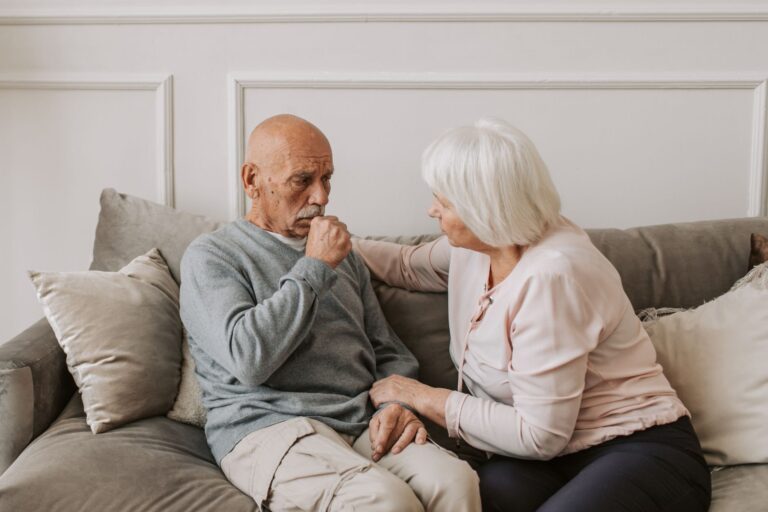
A person with dementia may keep asking to “go home” because home represents safety, familiarity, comfort, belonging, or an earlier period of life—not necessarily a specific address. The request can also express fear, pain, fatigue, loneliness, boredom, hunger, or confusion. For example, a woman living in the house she has occupied for 30 years may begin asking to go home every evening because she is searching for the security she remembers from her childhood home. Dementia can make it difficult to recognize current surroundings, place events in the correct time, or retain a recent explanation.
Someone may sincerely believe that a parent, spouse, or child is waiting at an earlier home. Even when the person recognizes the room, it may no longer feel emotionally familiar, especially after a move, a change in caregivers, or the onset of evening confusion. The request should not automatically be dismissed as meaningless repetition. A sudden or unusually intense desire to leave can signal an unmet physical or emotional need. If it appears alongside abrupt confusion, fever, weakness, a fall, urinary symptoms, breathing difficulty, or a major change in behavior, prompt medical assessment is important because illness, medication effects, pain, or delirium may be contributing.
Medical information disclaimer: This article is for general educational purposes only and does not provide medical advice, diagnosis, or treatment. Always consult a physician or other qualified health professional about symptoms, medications, tests, or treatment decisions.
Table of Contents
- Why Does Someone With Dementia Keep Asking to Go Home?
- What “Home” May Really Mean in Dementia
- Common Triggers Behind Requests to Go Home
- How to Respond When a Person With Dementia Wants to Go Home
- Repetition, Exit-Seeking, and Safety Concerns
- Supporting the Caregiver During Repeated Requests
- Tracking Patterns and Knowing When to Contact a Clinician
Why Does Someone With Dementia Keep Asking to Go Home?
Dementia affects more than the ability to remember names and recent events. It can disrupt orientation, recognition, judgment, language, and the brain’s ability to connect present surroundings with a feeling of familiarity. A person may see a bed, kitchen, and family photographs yet fail to experience the setting as home. Correcting the address does not repair that missing emotional connection. Older memories may remain accessible after newer memories have become difficult to retrieve.
As a result, “home” may refer to the place associated with the period the person currently believes they are living in. A retired teacher might insist that she needs to go home to prepare dinner for her young children, even though those children are now adults. Her request makes sense within her perceived time and responsibilities. The repeated wording can also reflect reduced language capacity. “I want to go home” may be one of the few available phrases for communicating “I do not understand what is happening,” “I need the toilet,” or “I want this activity to stop.” It is comparable to someone using the word “help” for several different problems because more precise language is temporarily out of reach.
What “Home” May Really Mean in Dementia
Home often functions as an emotional idea rather than a geographic destination. It may mean a place where the person had a role, knew what was expected, and could move through the day without assistance. A former homemaker may be seeking the kitchen where she felt capable, while a former farmer may be expressing a need to check animals or finish work. The request may also be an attempt to regain control. Dementia care often involves other people deciding when someone eats, bathes, takes medication, or goes to bed.
Saying “I’m going home” can be a way of rejecting an unwanted task or unfamiliar social situation. If the phrase appears whenever bathing begins, for example, the immediate issue may be embarrassment, cold air, fear of falling, or discomfort with the caregiver rather than the location. No single interpretation fits every person or every episode. Treating all requests as anxiety can cause caregivers to overlook constipation, dental pain, medication side effects, poor vision, or an overstimulating environment. It is particularly risky to assume that every behavioral change is simply part of dementia when it developed suddenly or is dramatically different from the person’s usual pattern.
Common Triggers Behind Requests to Go Home
Time of day is a frequent clue. some people become more restless or disoriented in the late afternoon or evening, when fatigue increases and daylight fades. Shadows, reflections, television noise, or staff changes can make the surroundings harder to interpret. A resident who is comfortable after breakfast may begin waiting beside the exit at 5 p.m., the time when she once left work or expected family members to return. Environmental cues can trigger the request as well.
Coats near a door, people discussing transportation, a caregiver picking up keys, or another resident leaving may signal that it is time to depart. In a busy care setting, alarms, carts, and unfamiliar voices can reinforce the feeling of being in a public place rather than at home. Personal routines matter. A man who spent decades collecting his children from school might become restless at the same hour each weekday. Offering a purposeful alternative—such as walking to the mailbox, folding towels, checking a calendar, or having a snack—may work better than explaining that his children are now middle-aged. The activity addresses the remembered responsibility without forcing him to confront a distressing contradiction.
How to Respond When a Person With Dementia Wants to Go Home
Begin by responding to the emotion rather than debating the facts. A calm statement such as “You want to be somewhere that feels familiar” or “It sounds as though you’re worried about getting back” acknowledges the experience without confirming an inaccurate belief. Then ask one simple question: “What do you miss most about home?” or “Is there someone you’re worried about?” Validation is usually less distressing than repeated correction. Saying “This is your home, and I’ve already told you that” may create an argument the person cannot resolve or remember.
At the same time, elaborate invented stories can create new worries and may undermine trust. A limited, reassuring response—”You’re safe here, and I’ll stay with you”—often offers a better balance than either blunt confrontation or a complicated deception. After acknowledging the feeling, look for a practical need. Offer the toilet, water, food, pain relief that has already been prescribed, a quieter room, warmer clothing, or a short supervised walk. Redirection is more effective when it connects with the person’s interests: a former gardener may settle while watering plants, whereas an invitation to watch an unfamiliar television program may feel like another demand.
Repetition, Exit-Seeking, and Safety Concerns
The question may return minutes later because the person cannot retain the answer. Repeating a long explanation can exhaust both people without preventing the next request. A brief, consistent response is easier to process: “You’re safe. We’re staying here tonight. Let’s have some tea.” Visual cues such as a familiar blanket, labeled bedroom door, family photographs, or a written note may help some people, although written reminders become less useful when reading comprehension declines.
Asking to go home is not always the same as attempting to leave, but repeated door-checking, packing belongings, pacing near exits, or trying handles requires a safety plan. Helpful measures may include supervised walks, door alerts, identification information, adequate lighting, and notifying trusted neighbors. Locks and disguised exits involve a tradeoff: they may reduce wandering risk, but they can also increase agitation and must not create a fire or emergency-escape hazard. Sedating medication should not be treated as the automatic answer to repeated requests or exit-seeking. Such medication can have serious adverse effects, including greater sleepiness, falls, and reduced function, and some drugs carry additional risks for older adults with dementia. A clinician should first consider pain, infection, sleep disruption, medication interactions, anxiety, depression, and environmental triggers, particularly when the behavior has changed quickly.
Supporting the Caregiver During Repeated Requests
The request can be painful for relatives, especially when “home” is the house where the person is already living. A spouse may hear it as rejection, while an adult child may feel erased when the person asks to return to long-deceased parents. The statement is more often evidence of altered memory and a search for security than a considered judgment about the caregiver or the quality of care.
Caregivers may need to step away briefly when repetition raises frustration, provided the person remains safe. For example, one family member can answer calmly and offer a snack while another takes ten minutes in a separate room. Respite care, caregiver groups, and guidance from dementia professionals can provide language and routines tailored to recurring situations.
Tracking Patterns and Knowing When to Contact a Clinician
A short behavior log can reveal patterns that are difficult to notice during a stressful day. Record the time, location, activity, people present, exact words used, possible physical needs, and what happened afterward. A family might discover that requests begin at 4:30 p.m.
on days when lunch was small, then test an earlier snack and a familiar activity rather than treating the episodes as random. Contact a clinician when the behavior is new, rapidly worsening, associated with hallucinations or severe distress, or creating a risk of injury or getting lost. Bring the medication list and behavior log to the appointment. A concrete entry such as “Tuesday, 7 p.m.: paced for 40 minutes after a new evening medicine and repeatedly tried the front door” gives the clinician more useful information than a general report that the person has been difficult lately.