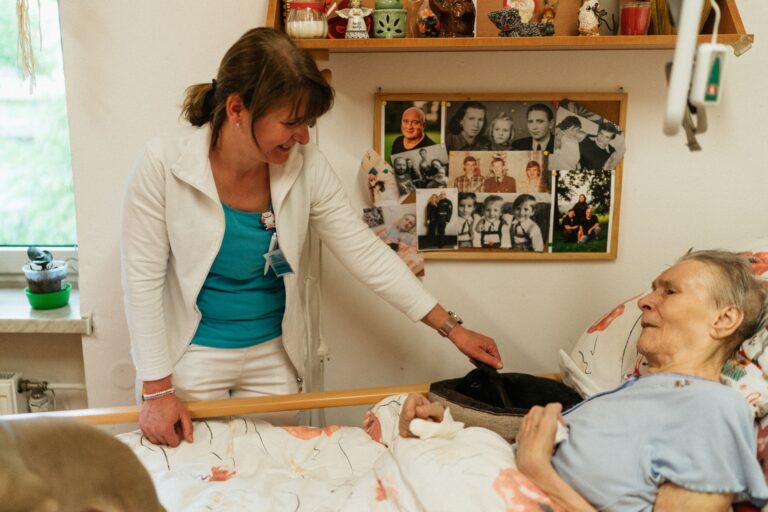
Medicare covers some home health services for dementia patients, but the coverage is limited and comes with specific conditions that don’t apply to private duty care. Home health is covered when ordered by a doctor for a homebound patient with a skilled medical need, while private duty care—personal assistance with bathing, dressing, and daily living—is typically not covered by Medicare at all. Understanding this distinction is critical because many families assume Medicare will cover the day-to-day help their loved one needs, only to face unexpected out-of-pocket costs.
Consider Margaret, whose mother was diagnosed with moderate dementia. Her daughter thought Medicare would cover a caregiver to help with bathing and meal preparation since her mother couldn’t be left alone. When the home health agency explained that Medicare only covers skilled nursing or therapy visits, not custodial personal care, the family had to scramble to find private pay options—a shock that could have been prevented with clear information about what each type of service covers.
Medical information disclaimer: This article is for general educational purposes only and does not provide medical advice, diagnosis, or treatment. Always consult a physician or other qualified health professional about symptoms, medications, tests, or treatment decisions.
Official resources:
- Medicare home health services coverage details — Verify what Medicare covers for home health care, eligibility requirements, and what services are included for dementia patients.
- Find and compare Medicare-certified home health agencies — Search for home health providers in your area, compare quality ratings, and verify which agencies accept Medicare in your region.
Table of Contents
- What Exactly Is the Difference Between Private Duty Care and Home Health?
- What Does Medicare Cover in Home Health Services?
- Medicare Coverage Limits and When Services Stop
- Choosing Between Home Health and Private Duty Care
- The Coverage Gaps You Must Know About
- Supplemental Coverage and Out-of-Pocket Planning
- How to Navigate Medicare’s Approval and Discharge Process
- Frequently Asked Questions
What Exactly Is the Difference Between Private Duty Care and Home Health?
Private duty care and home health are fundamentally different services, though the terms are often used interchangeably by families. Home health is a medical service: a nurse, physical therapist, or other licensed professional visits to assess, treat, or manage a health condition. A nurse might change a wound dressing, monitor blood pressure for someone on new medications, or administer injectable drugs. Occupational therapy might address safety modifications in the home for someone recovering from a fall. These are skilled interventions.
Private duty care, by contrast, is personal assistance with non-medical needs. It’s help getting out of bed, bathing, dressing, preparing meals, taking medications (though not administering injections), and staying engaged. A private duty caregiver might spend eight hours a day with a dementia patient, providing supervision, encouragement, and hands-on help with activities of daily living. This work doesn’t require a nursing license, though it demands patience, training, and accountability. The difference isn’t about quality or importance—private duty care is essential for many dementia patients—but about what the service is medically designed to do.
What Does Medicare Cover in Home Health Services?
Medicare Part A covers home health services when a patient meets specific criteria: they must be homebound or have difficulty leaving home, a physician must order the care, and there must be a skilled medical need. For a dementia patient, this might mean a nurse making periodic visits to monitor medication side effects, assess swallowing ability, or manage behavioral symptoms with medical oversight. If physical therapy is needed because of a recent fall or stroke alongside the dementia, Medicare may cover those visits. However, Medicare does not cover private duty personal care, even when ordered by a doctor.
This is the critical gap. If your parent needs eight hours of supervision daily and hands-on help with toileting and bathing but no active medical treatment, Medicare pays nothing. The agency might bill Medicare for a nurse to visit and assess the patient’s overall status, but Medicare won’t cover the cost of that caregiver sitting with your parent during the day. Some families hire private caregivers between home health visits—Medicare pays for the nurse, the family pays thousands monthly for the aide.
Medicare Coverage Limits and When Services Stop
Medicare home health coverage isn’t unlimited. If a patient is making progress in therapy or improving with nursing oversight, coverage continues. But when progress plateaus or the doctor determines that the condition is stable and the patient is managing safely, Medicare discontinues services. For advanced dementia, this plateau often comes quickly—the patient may need one or two nursing assessments, then the condition is deemed stable and non-skilled, and Medicare stops paying.
This is where many families encounter a harsh surprise. An 80-year-old with moderate dementia may receive home health nursing for two weeks after hospitalization, then face months or years with no Medicare coverage for care, while still needing round-the-clock supervision. Private duty care fills this gap, but at private pay rates. Some facilities or programs offer subsidized care through Medicaid (which has different rules than Medicare), but Medicaid covers private duty personal care only in certain states and under specific circumstances, typically when the person qualifies by income and has exhausted Medicare benefits.
Choosing Between Home Health and Private Duty Care
The choice often isn’t either/or but rather sequential. A dementia patient might receive home health nursing for a defined period—often a few weeks to a couple of months—after a hospitalization or acute illness, while simultaneously hiring a private duty caregiver for ongoing daily support. The home health nurse focuses on medical assessment and safety, while the private caregiver handles the bulk of personal care. Once home health ends, the private duty caregiver remains.
Cost is the primary decision driver. Home health is covered by Medicare for eligible patients, so the cost is minimal out-of-pocket (usually just a copayment if required). Private duty care, depending on geography and experience level, can range from affordable to prohibitive. In metropolitan areas, an experienced caregiver might cost thirty to forty dollars per hour or more for full-time care. A family seeking ten hours a day of coverage might spend two to three thousand dollars monthly out-of-pocket, and that’s before addressing overnight care.
The Coverage Gaps You Must Know About
Medicare will not pay for private duty personal care under any circumstance, even if a physician believes it’s medically necessary. This is the hardest reality to grasp for families who’ve paid Medicare taxes for decades. A dementia patient living alone or with a frail spouse who cannot safely bathe or toileted without help, and who may wander or forget medications, is not eligible for Medicare-covered personal care. The bureaucratic reason is that bathing and dressing are “activities of daily living,” not skilled medical services.
The practical reason many families find this distinction meaningless. There’s also a gap between what home health covers and how long it lasts. A patient discharged from the hospital with a medical order for skilled nursing care receives it, but for how long? Days, not weeks or months in many cases. Once the acute issue (e.g., managing confusion after an infection, adjusting a new medication) is resolved, the home health agency discharges the patient. If the dementia itself was the primary reason for hospitalization, home health coverage may be even briefer because dementia alone—without an acute medical event causing the hospitalization—doesn’t trigger a typical home health episode.
Supplemental Coverage and Out-of-Pocket Planning
Some families purchase long-term care insurance before a diagnosis, which covers private duty care. Others qualify for Medicaid in states that cover personal care services, though this requires spending down assets first and having income below state limits. For middle-class families without insurance or Medicaid eligibility, private duty care is an out-of-pocket expense with no federal subsidy.
This is why understanding Medicare’s limitations early allows families to plan or adjust expectations. An important caveat: even if a state’s Medicaid program covers personal care, there are typically waiting lists, eligibility restrictions, and limits on hours per week or the type of care covered. A family cannot simply transition from Medicare to Medicaid assuming coverage will continue seamlessly. Each program has its own rules, and navigating between them requires accurate information and often professional guidance.
How to Navigate Medicare’s Approval and Discharge Process
When a home health referral is made, verify with the agency and physician exactly what Medicare will cover and for how long. Ask the specific question: “Will Medicare pay for personal care help with bathing and dressing?” The answer will be no. If the patient needs that help—which most dementia patients do—plan to hire private caregivers and budget accordingly. Some families arrange trial coverage from home health while simultaneously interviewing private duty agencies, so the transition is smooth when Medicare coverage ends.
Understanding that Medicare distinguishes between skilled and non-skilled care is the foundation of realistic planning. A dementia patient may need both: medical oversight from home health and daily personal care from private sources. Families who grasp this early and begin investigating private pay options, state Medicaid programs, or support from adult children or other family members avoid the crisis decision-making that happens when Medicare coverage unexpectedly stops. The care doesn’t stop—the Medicare payment does—and someone has to pay for the care to continue.
Frequently Asked Questions
Will Medicare pay for someone to help my parent bathe and get dressed?
No. Medicare only covers skilled medical services like nursing, therapy, or medical equipment. Personal care assistance is not covered, even if medically necessary.
How long does Medicare home health last for a dementia patient?
Coverage varies, typically a few weeks to a couple of months after hospitalization or an acute illness. Once the patient is medically stable, Medicare may discontinue services even if dementia care needs remain.
Can I use Medicaid instead of Medicare for personal care?
Medicaid does cover personal care in some states, but eligibility depends on income and asset limits, and you may need to spend down savings first. Policies vary significantly by state.
What should I budget for private duty personal care?
Costs vary widely by location, but private duty caregivers typically charge hourly rates. Full-time care can range from several hundred to several thousand dollars monthly, entirely out-of-pocket.
What’s the difference between a home health aide and a private duty caregiver?
A home health aide works as part of a Medicare-ordered care plan under nursing supervision, delivering care to eligible patients. A private duty caregiver is hired privately and provides personal care without Medicare involvement or medical oversight.