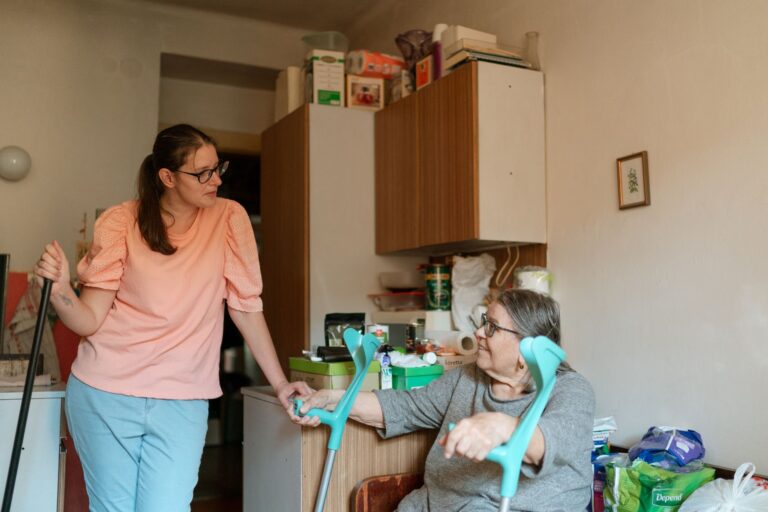
Yes, physical therapy can significantly help improve walking problems associated with dementia, though the extent of improvement varies based on the disease stage, individual health, and consistency of practice. Dementia affects not just memory and cognition but also the brain regions that control movement, balance, and coordination. A person with Alzheimer’s disease or vascular dementia may develop a shuffling gait, fear of falling, stiffness, or loss of confidence walking.
Physical therapists use targeted exercises and movement strategies to maintain muscle strength, improve balance, and reduce fall risk—often allowing someone to remain mobile and more independent longer than they otherwise would. Physical therapy does not reverse dementia or restore lost brain function, but it preserves what remains. An 72-year-old with moderate dementia who works with a physical therapist twice weekly may regain enough stability to walk from the bedroom to the kitchen without assistance, whereas without intervention he might have lost that capability within months. The key is starting early and being realistic about what therapy can achieve: improved quality of life and slowed decline, not a cure.
Table of Contents
- How Does Physical Therapy Address Gait and Balance Issues in Dementia?
- Types of Physical Therapy Interventions for Dementia Mobility
- Preventing Falls and Improving Stability
- Implementing a Physical Therapy Program at Home and in Facilities
- Limitations and Challenges in Physical Therapy for Dementia Patients
- Combining Physical Therapy with Other Treatments
- Measuring Progress and Adjusting Treatment Plans
How Does Physical Therapy Address Gait and Balance Issues in Dementia?
dementia disrupts the neural pathways that govern automatic movement. Most of us walk without thinking about it—a brainstem and cerebellum function. In dementia, these circuits degrade. The result is often a slow, unsteady gait with a shortened stride, increased body sway, or asymmetrical weight-bearing.
Physical therapists assess the specific gait pattern and underlying causes—weakness, stiffness, pain, fear, or neurological decline—then design interventions to target those deficits. A common gait problem in advanced dementia is “marching in place,” where the person lifts their feet but barely moves forward, or a “freezing” sensation where the legs simply stop despite the person’s intention to continue. Physical therapy uses repetitive movement patterns, often cued by external stimuli like music or a visual line on the floor, to help the brain reestablish the motor sequence. Rhythmic auditory cueing—walking to a metronome or song with a strong beat—has shown measurable benefit in some dementia populations because it bypasses the damaged volitional circuits and engages the motor cortex directly.
Types of Physical Therapy Interventions for Dementia Mobility
Physical therapists employ several evidence-based techniques tailored to dementia. Resistance training—light weights or resistance bands—maintains muscle mass and bone density, which naturally decline with age and inactivity. Balance training using standing exercises, weight shifts, and perturbation (gentle nudges or uneven surfaces) teaches the body to catch itself before a fall. Functional task training focuses on real-world activities like sit-to-stand transfers, turning, and walking over obstacles, which are often harder for people with dementia than isolated exercises.
One important limitation is that cognitive impairment can interfere with the person’s ability to learn and retain new movement patterns. A person with moderate to advanced dementia may not remember that they did balance exercises yesterday, so they cannot build on that learning as readily as someone without cognitive decline. This means PT sessions need to focus on restoring automatic patterns rather than teaching new techniques, or they must rely heavily on environmental modifications and caregiver support to make the exercises habitual. A person might benefit more from a consistent 10-minute daily walk with a caregiver than from complex, varied exercises that require conscious effort or recall.
Preventing Falls and Improving Stability
Falls are a leading cause of injury and hospitalization in older adults with dementia. Physical therapy directly reduces fall risk by building lower-body strength, improving proprioception (sense of body position), and teaching people safe strategies for getting up if they do fall. Tai chi, a slow, controlled movement practice, has been shown to reduce falls in some older dementia cohorts; the flowing movements improve balance and coordination while the meditative aspect may reduce anxiety-driven instability. A concrete example: a 68-year-old woman with mild cognitive impairment began falling twice a month in her home, often while reaching for objects or turning corners.
After six weeks of twice-weekly PT focusing on stepping over low obstacles, tandem stance (standing with feet in line), and hip-strengthening exercises, her falls dropped to once every two months. Her physical therapist also recommended handrails in her bathroom and a cleared walkway in her bedroom. Neither the exercises nor the environmental changes alone had fully solved the problem, but together they reduced her injury risk significantly. Importantly, she was still cognitively intact enough to remember her exercises and self-correct her posture, which would not be guaranteed in late-stage dementia.
Implementing a Physical Therapy Program at Home and in Facilities
Physical therapy for dementia can happen in an outpatient clinic, in a person’s home, or in a residential care facility. Each setting has tradeoffs. Clinic-based therapy offers professional equipment, variety, and social engagement but requires reliable transportation, which can be hard for someone with dementia and their caregiver. Home-based therapy is more convenient and allows the therapist to address actual environmental hazards, but equipment is limited and the person may be less motivated without the structured clinic setting.
Facility-based therapy is readily available in assisted living or nursing homes, but staff turnover and competing priorities can mean exercises become inconsistent. A 74-year-old man in early-stage dementia who lives independently chose clinic-based PT twice weekly because his wife could drive him, the therapist used a treadmill and balance equipment he did not have at home, and he responded well to the social environment. By contrast, his neighbor with the same diagnosis could not tolerate leaving the house (a common dementia behavior) and received home-based PT once weekly, which was more modest but better than nothing. The neighbor’s therapist worked around clutter and furniture the family would not move, focusing on walking the hallway and stairs—the functional movements that mattered most in that home.
Limitations and Challenges in Physical Therapy for Dementia Patients
Physical therapy for dementia is not equally effective for all people or all stages of disease. Someone in early-stage dementia with intact cognition and motivation can engage actively and often shows measurable gains in strength, balance, and confidence. Someone in late-stage dementia may have severe rigidity, contractures (permanent muscle shortening), or comorbidities like advanced Parkinson’s disease layered on top of dementia, making meaningful mobility gains unrealistic. For that person, PT shifts toward maintaining range of motion, preventing skin breakdown from immobility, and keeping the person comfortable. Another challenge is behavioral resistance.
A person with dementia may not understand or accept the therapist’s instructions, may become agitated or combative during exercise, or may have sundowning episodes that make afternoon or evening sessions ineffective. Some facilities find success with very early morning sessions before confusion peaks, but this is not universal. A woman with advanced Alzheimer’s actively resisted her PT sessions to the point of kicking and yelling; her family had to stop after two weeks. She was not a failure case—her disease stage and temperament simply did not align with structured therapy. She benefited more from gentle daily walks with her daughter, which required no professional intervention.
Combining Physical Therapy with Other Treatments
Physical therapy works better when paired with medical management of pain, muscle tone, and other factors that impair mobility. A person with dementia who also has knee osteoarthritis may not engage in leg-strengthening exercises if their knee is inflamed. If pain is managed with appropriate medications (not necessarily opioids—NSAIDs, topical treatments, or intra-articular injections may work), the PT becomes more effective. Similarly, someone with depression or apathy—common in dementia—may be less motivated to move, making antidepressant medication or behavioral activation a useful complement to therapy.
Occupational therapy often works alongside physical therapy, focusing on fine motor tasks, activities of daily living (like dressing or eating), and cognitive strategies. Together, PT and OT can create a comprehensive mobility and function program. A 70-year-old man with frontotemporal dementia benefited from PT three times weekly for balance and walking, combined with OT twice weekly for dressing and grooming tasks. The combined approach meant he could walk to the bathroom with less assistance and partially dress himself, substantially reducing caregiver burden.
Measuring Progress and Adjusting Treatment Plans
Physical therapists use standardized assessments to track progress and justify continued treatment. The Timed Up and Go test—how long it takes to stand from a chair, walk 10 feet, and sit back down—is a quick way to measure functional mobility and fall risk. The Berg Balance Scale assesses balance across 14 different movements and postures. Gait speed (measured in meters per second) and stride length are objective markers of improvement or decline. Frequency of falls is a concrete outcome that matters to patients and families.
Progress in dementia PT is often slow and measured in small increments. A person might maintain their current walking speed instead of declining, or regain the ability to walk stairs without a handrail, or reduce falls from twice a month to once a month. These are real gains in quality of life and safety, even if they would not meet the dramatic improvement standards of non-dementia populations. If reassessment after 4 to 6 weeks shows no change and the person is compliant, the therapist may adjust the program—increasing intensity, changing exercise type, or widening the frequency. If the person is declining rapidly despite consistent therapy, goals may shift toward comfort and function preservation rather than improvement.
- —