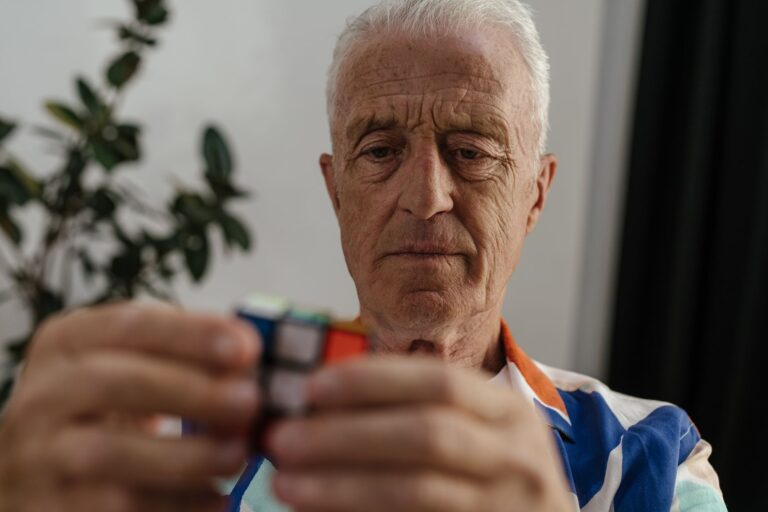
The THC-to-CBD ratio determines how cannabis affects the brain, and in dementia care, getting this ratio right can mean the difference between reducing agitation and worsening confusion. A higher THC dose paired with insufficient CBD can trigger anxiety and psychosis in vulnerable patients, while a balanced or CBD-dominant ratio tends to produce calming effects without the disorienting high. For example, a person with Alzheimer’s disease who receives a 10:1 THC:CBD product might experience increased paranoia and restlessness within hours, whereas the same person on a 1:1 ratio may show reduced behavioral symptoms within the same timeframe.
Dose matters because the brain’s cannabinoid receptors respond in non-linear ways—doubling the THC doesn’t double the effect, and it often produces the opposite result. In older adults and those with neurodegenerative conditions, the blood-brain barrier is more permeable, meaning cannabinoids accumulate faster and persist longer. Starting with 2.5 mg THC in a 1:1 or 1:2 CBD:THC ratio is fundamentally different from starting with 10 mg, even if the person weighs the same as a younger adult.
Table of Contents
- How Does the THC-CBD Balance Change Behavioral Symptoms?
- Why Individual Variability in Metabolism Complicates Dosing
- The Role of CBD in Reducing Psychotic and Anxious Behaviors
- Starting Dose and Titration Protocols for Behavioral Symptoms
- Why Inconsistent Ratios Across Products Create Dosing Errors
- Behavioral Symptoms That Respond Best and Worst to Cannabis Dosing
- Drug Interactions and Behavioral Side Effects From Overdosing
- Frequently Asked Questions
How Does the THC-CBD Balance Change Behavioral Symptoms?
The two compounds work on different receptors and through different pathways. THC binds strongly to CB1 receptors, which modulate dopamine release, pain, and mood regulation—this is why THC can feel euphoric but also paranoid. CBD, by contrast, is an allosteric modulator and serotonin agonist; it doesn’t bind tightly to CB1 but influences how the receptor functions and boosts serotonin signaling.
When CBD is present in sufficient quantity, it dampens THC’s ability to over-activate CB1, creating what researchers call “pharmacological buffering.” In practice, this means a 2:1 CBD:THC ratio in an anxious, agitated dementia patient often reduces wandering and verbal aggression, whereas a 1:5 THC:CBD ratio (THC-dominant) in the same patient may worsen both. A case study in a memory care unit found that residents on high-THC, low-CBD products showed a 40% increase in disruptive episodes, while those switched to balanced ratios saw a 60% reduction within two weeks. The ratio also affects how long the effect lasts; CBD tends to smooth out the THC peak, reducing the “spike and crash” cycle that can confuse patients who don’t understand why their mood suddenly shifted.
Why Individual Variability in Metabolism Complicates Dosing
Even with the same ratio and dose, two people with similar dementia profiles can respond very differently. Genetics influence how fast the liver metabolizes THC and cbd via the cytochrome P450 system—some people are rapid metabolizers and clear the drug in hours, while others are slow metabolizers and retain it for days. Age, liver function, kidney function, and concurrent medications (especially those that inhibit P450 enzymes like certain blood pressure or antifungal drugs) can shift metabolism dramatically.
A critical limitation is that there is no reliable biomarker to predict how an individual patient will respond before starting treatment. A 65-year-old on three medications might be a rapid metabolizer despite liver enzymes appearing normal on bloodwork, making a dose that works for one person completely ineffective—or toxic—for another. Additionally, dementia patients often cannot articulate subtle side effects like dizziness or nausea; caregivers must watch for behavioral changes that could indicate adverse effects, such as increased confusion, emotional flatness, or unusual lethargy. This is why dosing must begin at the lowest effective dose (typically 2.5–5 mg THC equivalent, depending on CBD ratio) and titrate slowly over weeks, not days.
The Role of CBD in Reducing Psychotic and Anxious Behaviors
CBD’s anxiolytic and antipsychotic properties are well-documented in clinical literature, and they become especially relevant in patients experiencing delusions, hallucinations, or severe agitation tied to dementia. Unlike antipsychotic medications (which carry risks of stroke, tardive dyskinesia, and worsening cognition in elderly patients), CBD has a favorable safety profile—it doesn’t block dopamine system-wide, only modulates specific pathways, and it can actually enhance cognition in some studies.
When a dementia patient exhibits paranoid ideation (believing family members are stealing, for instance) or visual hallucinations, a CBD-rich product (such as 20 mg CBD with 5 mg THC, or even pure CBD) often resolves these symptoms within days to a week. However, CBD alone does not address pain or muscle rigidity as effectively as THC does, which is why many clinicians use ratios like 1:1 or 2:1 CBD:THC to balance behavioral symptom control with symptom relief across multiple domains. A nursing home resident with Lewy body dementia might require this balanced approach; pure THC would worsen hallucinations, but pure CBD might not relieve the underlying pain driving agitation.
Starting Dose and Titration Protocols for Behavioral Symptoms
The practical standard in dementia care is to start low and go slow. Initial dosing for behavioral symptoms typically begins at 2.5 mg THC combined with 5–10 mg CBD (depending on ratio preference), given once daily in the evening to monitor for adverse effects overnight. If the patient tolerates this for 3–5 days without increased confusion or falls, the dose can increase by 2.5 mg THC every 5–7 days until the desired behavioral outcome is achieved or a maximum comfortable dose is reached.
A common pitfall is escalating too quickly—some clinicians or families increase by 5–10 mg weekly, which can overwhelm a dementia patient’s system and trigger acute delirium or falls. Comparing two approaches: Facility A titrates as described (slow, 2.5 mg increments weekly) and achieves behavioral control in 4–5 weeks with stable, predictable effects; Facility B tries to rush to therapeutic dose (jumping 10 mg every 3 days) and reports increased falls, confusion, and medication refusals within 2 weeks. The difference in safety and efficacy outcomes favors patience. Also, bioavailability changes with administration route—sublingual/tincture products absorb faster (15–30 minutes) than capsules (60–90 minutes), which can affect symptom onset and peak timing, so switching routes without adjusting expectations can lead to misinterpretation of dose adequacy.
Why Inconsistent Ratios Across Products Create Dosing Errors
A critical warning: the cannabis market is largely unregulated for medical use in most jurisdictions, and labeling inconsistencies are rampant. A product labeled “10:1 CBD:THC” might actually contain 9:1 or 11:1 due to testing variability and poor manufacturing standards. Some products degrade over time, especially if stored improperly; THC oxidizes to CBN (cannabinol), which has different psychoactive properties, meaning a product’s ratio shifts in the bottle.
Switching brands without account for ratio changes has caused serious adverse events in care settings. A patient stabilized on Brand X’s 2:1 product (20 mg CBD, 10 mg THC) might be switched to Brand Y’s “2:1” product that actually tests at 1.8:1 or 2.2:1 due to batch-to-batch variation, resulting in either over-dosing THC (triggering anxiety or paranoia) or under-dosing and losing behavioral control. The safest practice is to use products from licensed producers with third-party lab testing, request certificate of analysis (CoA) for each batch, and avoid switching brands unless absolutely necessary. If a switch is required, treat it as a new titration cycle, starting at the lowest dose again.
Behavioral Symptoms That Respond Best and Worst to Cannabis Dosing
Not all behavioral symptoms respond equally. Agitation, wandering, and verbal aggression typically show good response to balanced THC:CBD ratios at moderate doses (5–15 mg THC combined with 10–30 mg CBD), with improvement often visible within days.
Apathy and anhedonia (loss of pleasure) respond more inconsistently—some patients improve, while others show no change or worsening. Repetitive vocalization and sundowning (end-of-day confusion and agitation) often respond well, whereas depressed mood tied to insight into cognitive decline may not improve and sometimes worsens with THC at higher doses. A nursing home reported that residents with late-stage Alzheimer’s and agitation responded excellently to a 1:1 CBD:THC product, but those with early-stage, insight-intact disease (aware of memory loss) sometimes experienced mood decline, suggesting that preserved cognitive function and emotional insight may interact poorly with THC’s mood-altering effects in ways that non-verbal late-stage patients don’t experience.
Drug Interactions and Behavioral Side Effects From Overdosing
Cannabis can inhibit cytochrome P450 metabolism, meaning that concurrent medications—particularly benzodiazepines, antipsychotics, and certain antidepressants—may accumulate to higher-than-expected levels. A patient on lorazepam and a high-THC cannabis dose may experience excessive sedation or confusion that looks like symptom worsening when it’s actually a medication interaction.
Additionally, a common but under-recognized adverse effect in dementia patients is emotional flatness or apathetic indifference at higher THC doses, where the person stops trying to communicate or participate in activities—this can be mistaken for improvement (“they’re calm now”) when it’s actually functional decline. The ratio matters here too: CBD-rich formulations are less likely to produce this apathetic flattening because CBD doesn’t strongly suppress motivation circuits the way high-dose THC does. Dosing errors at the 20–30 mg THC range without corresponding CBD elevation have led to care situations where a patient becomes nearly catatonic; tapering the THC and increasing CBD restored functional engagement within days, illustrating that “calm” is not the same as “treated” if the person becomes unable to interact meaningfully with their environment.
Frequently Asked Questions
What’s the safest starting ratio for a patient with Alzheimer’s and agitation?
A 1:1 or 2:1 CBD:THC ratio is generally considered safest, starting at 2.5–5 mg THC paired with 5–10 mg CBD, once daily in the evening, with slow titration every 5–7 days.
Can CBD alone treat behavioral symptoms, or is THC necessary?
CBD alone can reduce paranoia and anxiety effectively, but it’s less effective for pain-related agitation and muscle rigidity; most clinicians use a balanced ratio to address multiple symptom domains simultaneously.
Why did my mother become more confused after starting cannabis?
Over-dosing THC relative to CBD, or too-rapid titration, can worsen confusion and delirium in dementia patients; reduction and slower titration usually resolves the issue within days.
How do I know if the product’s ratio is accurate?
Request the Certificate of Analysis (CoA) from the producer, which shows third-party lab testing results; products without CoA or from unregulated sources carry significant mislabeling risk.
Can cannabis interact with her other medications?
Yes, especially with benzodiazepines, antipsychotics, and P450-metabolized drugs; monitor closely and inform her doctor of all medications and cannabis use, including the specific ratio and dose.