A person diagnosed with dementia at age 85 typically has a life expectancy of 5 to 10 years, though this varies significantly depending on the type of dementia, overall health, and how quickly the disease progresses. Some individuals live only 2 to 3 years after diagnosis, while others survive 15 years or longer. For example, a relatively healthy 85-year-old with mild cognitive impairment who develops Alzheimer’s disease might live 8 to 10 years after diagnosis, whereas someone with advanced vascular dementia and existing heart disease could have a much shorter survival period.
Life expectancy calculations for people over 85 with dementia differ from younger populations because age itself is already a major factor. At 85, the average person (without dementia) has roughly 6 to 8 years remaining. A dementia diagnosis doesn’t necessarily cut this dramatically shorter—it changes the trajectory and nature of decline, but doesn’t automatically halve a lifespan. The key is understanding that individual outcomes depend on many interconnected factors beyond just the dementia itself.
Table of Contents
- How Type of Dementia Affects Survival at Age 85
- The Role of Comorbidities and Overall Health Status
- Gender, Genetics, and Individual Variation
- Complications That Shorten Life After Dementia Diagnosis
- Impact of Care Setting and Care Quality
- Stages of Dementia and Mortality Risk
- Medical Decision-Making and Monitoring in Advanced Age
- Frequently Asked Questions
How Type of Dementia Affects Survival at Age 85
Alzheimer’s disease, which accounts for 60 to 80 percent of dementia cases, typically follows a slower progression than other forms. An 85-year-old with Alzheimer’s often lives 8 to 10 years after diagnosis, sometimes longer if cognitive decline started years before formal diagnosis. However, vascular dementia, caused by reduced blood flow to the brain, can progress more unpredictably and sometimes more rapidly, especially if the person has a history of stroke or heart disease. Frontotemporal dementia, Lewy body dementia, and mixed dementia (a combination of Alzheimer’s and vascular dementia) often progress faster.
Lewy body dementia, in particular, tends to have a shorter survival time—averaging 5 to 8 years from diagnosis. Frontotemporal dementia can be especially aggressive, with some people declining significantly within 3 to 5 years, though this is relatively rare in an 85-year-old population because this type typically strikes younger individuals. The distinction matters because treatment approaches and care planning differ by type. Someone with suspected Alzheimer’s might be offered different medications than someone showing signs of vascular dementia, and those medications can affect not just cognition but also overall health and survival.
The Role of Comorbidities and Overall Health Status
An 85-year-old with dementia who also has heart disease, diabetes, chronic kidney disease, or COPD will likely have a shorter survival time than someone with dementia alone. Medical research consistently shows that dementia doesn’t exist in isolation—it occurs alongside other age-related conditions that independently shorten life. For instance, an 85-year-old with Alzheimer’s and advanced heart failure might expect 3 to 5 years of life, whereas an 85-year-old with Alzheimer’s whose heart, lungs, and kidneys are relatively healthy might expect 10 years or more. Nutritional status and the ability to swallow also matter. As dementia progresses, people often lose interest in eating, forget to eat, or develop swallowing difficulties (dysphagia).
This can lead to aspiration, malnutrition, and decline. Someone who maintains good nutrition longer typically survives longer. However, forced feeding or aggressive nutritional interventions in late-stage dementia don’t consistently extend meaningful life and raise ethical questions about quality of life. Blood pressure control, medication adherence, and the presence of other neurological conditions like Parkinson’s disease or epilepsy also affect survival. An 85-year-old with poorly controlled high blood pressure and dementia faces higher risk of stroke or heart attack, which could end life suddenly or create a new medical crisis that further accelerates decline.
Gender, Genetics, and Individual Variation
Women with dementia tend to live longer than men with dementia, even when diagnosed at the same age and with the same type. This gender gap exists partly because women generally live longer and partly because men are more likely to have comorbid cardiovascular disease. A typical 85-year-old woman with Alzheimer’s might expect 9 to 11 years post-diagnosis, whereas an 85-year-old man with the same diagnosis might expect 7 to 9 years. Family history and genetic factors play a role too. Someone with a strong family history of longevity, or who carries certain genetic markers related to slower cognitive decline, may progress more slowly.
Conversely, the APOE4 gene, linked to increased Alzheimer’s risk, is also associated with somewhat faster progression in some cases. However, genetics are not destiny—environmental factors, medical care, mental stimulation, and social engagement often matter as much or more. Age at diagnosis within the “85 and older” group also matters. An 85-year-old is fundamentally different from a 95-year-old. Someone diagnosed at 85 has longer life expectancy ahead (even with dementia) than someone diagnosed at 95. This is why survival estimates after dementia diagnosis sometimes span 5 to 10 years for someone at 85, but might compress to 2 to 4 years for someone at 95.
Complications That Shorten Life After Dementia Diagnosis
Infections, particularly pneumonia and urinary tract infections, are common killers in dementia populations. As cognitive function declines, an 85-year-old may forget to report symptoms, difficulty swallowing increases aspiration risk, and immune function naturally weakens with age. Aspiration pneumonia (lung infection from inhaling food or liquid) is one of the leading causes of death in moderate to advanced dementia. Someone who has already survived years with dementia but then develops aspiration pneumonia might decline rapidly from that point. Falls become increasingly dangerous.
An 85-year-old with dementia who falls and fractures a hip faces not just orthopedic injury but also loss of mobility, increased infection risk, and often a cascade of medical complications. Hip fracture in late-life dementia patients is associated with significant mortality in the year following the fracture. Delirium—acute confusion layered on top of chronic dementia—often signals a medical crisis like infection, medication toxicity, or metabolic derangement. When delirium develops in an 85-year-old with established dementia, it can be difficult to identify and treat, and may accelerate cognitive decline even if the acute cause is reversed. Warning signs include sudden changes in behavior, increased agitation, or apparent worsening beyond the baseline decline rate.
Impact of Care Setting and Care Quality
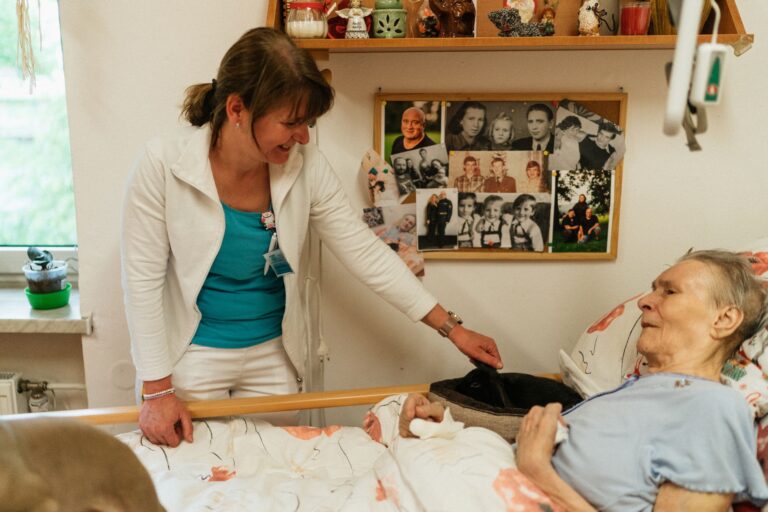
An 85-year-old with dementia who remains at home with consistent family or professional caregiving often has better quality of life and may live slightly longer than someone in institutional care, though this varies widely. Home-based care allows for continuity of relationships, familiar environments, and often better nutrition and preventive care. However, home care also requires resources that not all families have. Conversely, institutional settings (nursing homes, assisted living facilities) offer 24-hour medical monitoring, which can catch infections and complications earlier.
In theory, this should improve survival, but research shows mixed results—institutional residents sometimes develop complications like resistant infections, medication errors, or social isolation that offset the benefits of constant supervision. The quality of dementia-specific care makes a measurable difference. Facilities or home care services trained in behavioral management, proper nutrition support, fall prevention, and infection control see better outcomes. An 85-year-old receiving skilled, person-centered dementia care may have better quality of life in their remaining years and potentially a more gradual decline than someone in a minimally resourced setting.
Stages of Dementia and Mortality Risk
Early-stage dementia (the first 2 to 4 years) typically does not directly threaten life. An 85-year-old in early dementia might forget names, repeat questions, or get lost, but mortality risk is not dramatically elevated. Middle-stage dementia (usually 2 to 10 years) is when life expectancy becomes more constrained. Behavioral changes emerge, physical decline accelerates, and complications like falls, infections, and swallowing problems begin to emerge.
Late-stage dementia (final months to 2 years) is when death becomes imminent—the person may be unable to communicate, cannot feed themselves, and may lose bowel/bladder control. The transition between stages is not sharp. Some 85-year-olds move through stages quickly (aggressive dementia), while others linger in middle-stage for many years. An 85-year-old who entered middle-stage dementia at age 87 could realistically remain in that stage until age 95 or beyond, though they would experience increasing physical and cognitive decline throughout.
Medical Decision-Making and Monitoring in Advanced Age
At 85 with dementia, decisions about life-sustaining treatments—such as feeding tubes, ventilators, CPR, and hospitalization—become critically important. Inserting a feeding tube does not extend life meaningfully in advanced dementia and can cause discomfort and behavioral disturbance. However, supporting nutrition and hydration through other means (careful hand-feeding, palliative mouth care) often does improve comfort. An 85-year-old’s medical team and family should ideally discuss these decisions while the person still has decision-making capacity, or through advance directives if capacity is already lost. Regular monitoring for signs of decline—such as increased tremor, changes in gait, new behavioral problems, or loss of appetite—helps caregivers anticipate needs and sometimes catch preventable complications.
An 85-year-old with dementia benefits from coordinated medical care with clear communication between the primary care doctor, any neurologist, the care facility or home care team, and family. Medication reviews are especially important, as older adults are often taking multiple drugs that can interact or worsen dementia symptoms. Healthcare providers should document realistic prognosis with families. An 85-year-old diagnosed with advanced dementia might be told “we expect a life expectancy of 3 to 5 years, with increasing care needs,” which is more useful than vague optimism. This opens space for advance care planning, discussion of goals (comfort vs. aggressive treatment), and realistic resource allocation.
Frequently Asked Questions
Can someone with dementia at age 85 live 20 years?
It’s possible but uncommon. Some people progress extremely slowly, especially if dementia develops late and other health conditions are minimal. Most 85-year-olds with dementia don’t reach 20 additional years because age itself limits survival, but slow-progressing mild cognitive impairment diagnosed as dementia at 85 could theoretically result in 15+ years. However, this would be an outlier.
Does advanced dementia diagnosis at 85 mean death within one year?
No. Advanced dementia diagnosed at 85 typically means 1 to 3 years of remaining life, not imminent death. Advanced dementia is serious and requires significant care, but survival is still measurable in years for most people, not months.
Is Alzheimer’s at 85 slower or faster than Alzheimer’s at 65?
Alzheimer’s diagnosed at 85 often progresses slightly faster than Alzheimer’s diagnosed at 65, partly because the person is older and partly because age-related health issues complicate the picture. However, survival can still be 7 to 10 years after diagnosis, depending on other factors.
What’s the difference between life expectancy with dementia and without?
An 85-year-old without dementia has roughly 6 to 8 years remaining. An 85-year-old with dementia has roughly 5 to 10 years remaining. The dementia diagnosis reduces life expectancy somewhat, but not as drastically as people often assume, especially in the early years. The difference becomes more pronounced in later stages.
Can good care extend someone’s life with dementia?
Quality care can improve quality of life and may preserve function longer, but it doesn’t fundamentally change the disease trajectory. Good nutrition, infection prevention, and fall prevention can help someone live through their expected years without preventable complications, but they don’t “cure” dementia or add years beyond what the disease naturally allows.