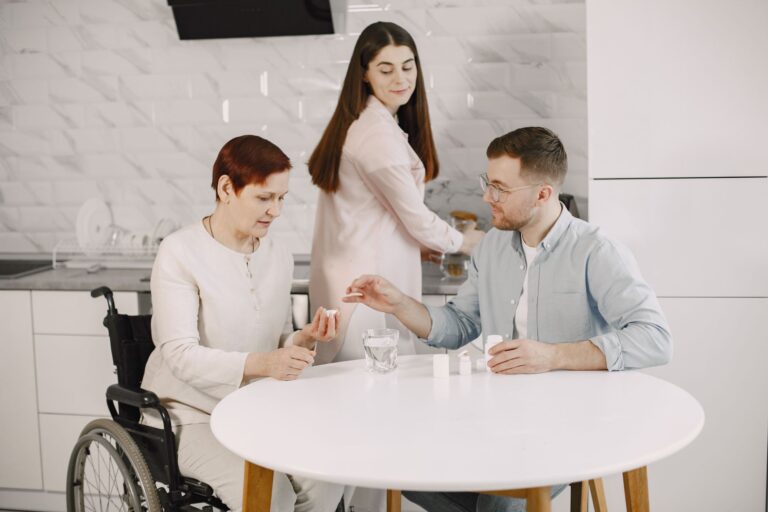
Yes, keeping someone with dementia at home can absolutely become unsafe—particularly as cognitive decline progresses and the gap widens between their abilities and the demands of their environment. A person who once navigated stairs confidently might forget the third step and fall; someone who used the kitchen daily might leave a stove on unattended, or wander outside at midnight without awareness of traffic or weather. The safety risks are not hypothetical. They emerge gradually, then suddenly present as a fall that breaks a hip, a kitchen fire, or a missing person alert. Home is emotionally powerful.
Most people, given the choice, would rather age and decline in familiar surroundings than in an institution. For caregivers, keeping a loved one home feels like a moral obligation—evidence of devotion. But safety is not a value that yields to loyalty. As dementia progresses, the home environment itself must adapt, and sometimes it simply cannot adapt quickly or completely enough to meet a person’s changing needs. The question is not whether home is theoretically safer than a facility; it is whether your specific home, with your specific resources and support, can remain safe for your specific person at their specific stage of illness.
Table of Contents
- When Does Home Care Become a Safety Risk?
- Environmental Hazards and Cognitive Decline
- Medication Management and Supervision Challenges
- Assessing Your Home’s Safety Readiness
- Wandering, Falls, and Mobility Changes
- The Role of Caregiver Burnout in Safety
- When Professional Care Becomes Necessary
When Does Home Care Become a Safety Risk?
The transition to unsafe depends less on dementia stage than on the mismatch between a person’s abilities and their environment. Someone in early-stage dementia might wander into traffic because they forgot they moved to a busier neighborhood. Someone in mid-stage might start fires while trying to cook, or fall repeatedly because they no longer recognize that the hall is dark. Someone in late-stage might aspirate during feeding, choke on medications, or suffer pressure sores if turning schedules slip.
The risk is not simply “when dementia gets bad”—it is “when what the person can do no longer matches what their home demands.” Research shows that fall risk, medication errors, and wandering account for the majority of preventable harms in home settings. An older person with moderate dementia is about 10 times more likely to fall at home than a cognitively intact peer. Most falls occur in bathrooms, bedrooms, and hallways—the familiar places where family members feel least vigilant. A 78-year-old woman with Alzheimer’s who fell in her own shower and lay there for six hours before her daughter’s scheduled visit illustrates the gap: the shower was unchanged, but the person had become unsafe within it.
Environmental Hazards and Cognitive Decline
A safe home for a cognitively intact older adult is not automatically safe for someone with dementia. Grab bars and nightlights help with balance and orientation, but they do not prevent someone from forgetting they’ve just eaten and becoming anxious or aggressive around food. They do not prevent someone from attempting to drive a car in the middle of the night. They do not prevent the accumulated risk of a stove left on, a gas leak undetected, a window left open in winter because the person no longer understands temperature.
The progression of dementia systematically erodes the cognitive skills that make homes safe: memory (did I turn off the stove?), judgment (should I be using this tool?), and situational awareness (is that a safe place to walk?). A home modified for physical safety—with ramps and accessible showers—still contains dozens of chemical hazards (cleaning supplies under the sink), electrical hazards (loose cords), and behavioral traps (a backyard gate the person can open and wander through). The limitation here is that environmental modifications are finite. You can pad sharp corners, but you cannot fully eliminate the risk of a fall from altered balance and spatial disorientation. You can lock the stove, but a person with dementia might become distressed or aggressive when they cannot access familiar appliances.
Medication Management and Supervision Challenges
Medication safety is one of the starkest contrasts between home and institutional care. At a facility, a nurse administers each dose and documents it. At home, responsibility often falls to a family caregiver who may have other jobs, other family members to care for, or their own health challenges. A person with dementia cannot self-manage medications. They will forget whether they took their pill, take it twice, or refuse it entirely. A single missed dose of a cardiac medication or blood pressure drug might not cause immediate harm—but over weeks, the cumulative effect can trigger a stroke or hospitalization.
A 72-year-old man with early-stage Alzheimer’s was discharged home on seven medications. His wife worked part-time and was in charge of pill administration. One morning she forgot his doses while handling a crisis with their grandchild. He became confused and fell, fracturing his wrist. This was not a failure of the home environment, but a failure of a system that depended on one exhausted person to flawlessly execute the same task every single day. Medication errors, missed doses, and drug interactions are among the most common triggers for emergency room visits and hospitalizations in older adults with dementia living at home. A pill organizer helps, but it does not solve the deeper problem: a person who cannot remember or understand why they need medication has no internal safeguard against error.
Assessing Your Home’s Safety Readiness
Deciding whether home remains safe requires honest assessment against several criteria. First, supervision: Can one caregiver realistically provide 24-hour or near-24-hour supervision? If the answer is no, can you afford paid in-home care to fill the gaps? Most family caregivers cannot afford full-time paid care, and many cannot access it even with money. Second, medical complexity: Does the person require tube feeding, catheter care, wound management, or frequent medication administration? These are skill-intensive tasks that demand consistent execution by trained hands. Third, behavioral symptoms: Is the person experiencing severe wandering, aggression, or sexual acting-out that creates safety and dignity risks for both them and their caregiver? The tradeoff between home and facility care is not one-dimensional.
Keeping someone home preserves autonomy and dignity and avoids the depression and decline that sometimes accompanies institutional placement. But it may require radical life changes for the primary caregiver: quitting work, sacrificing sleep, postponing other family obligations, and living under constant physical and emotional strain. A facility removes the 24-hour responsibility but introduces the risk of neglect, the loss of personalized care, and the documented associations between facility placement and accelerated cognitive and physical decline. Neither option is fully safe; the question is which risks you can manage and which you cannot.
Wandering, Falls, and Mobility Changes
Wandering is one of the clearest red lines for home safety. A person who wanders—who leaves the house at odd hours, forgets where they are, or cannot retrace their steps—requires either locked doors (which creates fire hazard and raises ethical concerns about false imprisonment) or constant outdoor supervision. In many jurisdictions, a caregiver can be held liable if a wandering person injures someone else or enters someone’s home. A man with moderate dementia walked out of his house at 2 a.m. in winter, was found three hours later in a neighbor’s garage, and would not have survived a longer period outdoors. His family installed door alarms, but they were activated only after he had already left. True prevention required one caregiver to stay awake all night or move him to a locked facility.
Falls are a close second. Dementia increases fall risk through multiple mechanisms: balance changes, spatial disorientation, slow reaction time, and medication side effects. Most falls at home are not dramatic; they are quiet events—a slip in a hallway, a misstep off a curb during a walk. Many go unwitnessed. A person might lie on the floor for hours, or might strike their head and deteriorate neurologically before anyone realizes what happened. An 81-year-old woman with Lewy body dementia fell in her home and suffered a subdural hematoma. She appeared to be fine immediately after, but declined rapidly over the next 48 hours and required emergency surgery. The fall was unwitnessed, and the delay in seeking care—because no one realized the severity—nearly cost her life.
The Role of Caregiver Burnout in Safety
The most overlooked variable in home safety is caregiver capacity. A well-rested, supported caregiver makes fewer errors. A burned-out, isolated, sleep-deprived caregiver makes many. Caregiver burnout contributes directly to medication errors, missed monitoring, falls (because a fatigued caregiver may not keep as close an eye), and sometimes to neglect or abuse. Studies show that family caregivers of people with dementia have rates of depression, anxiety, and stress-related illness that far exceed the general population.
When a caregiver is in crisis, the person with dementia is in danger—not because the home is structurally unsafe, but because the human system supporting safety has collapsed. Respite care—regular breaks where another person or facility takes over—is critical but underutilized. Many families cannot afford it, and many people with dementia refuse care from strangers. A daughter who has not slept more than four hours a night for six months is not in a position to make sound judgments about risk. Her fatigue is itself a safety hazard.
When Professional Care Becomes Necessary
There is no universal threshold at which home care becomes unsafe. The answer depends on your person, your home, your resources, and your other obligations. However, certain signs suggest that professional or institutional care may be necessary: the person requires assistance with multiple activities of daily living and one caregiver cannot safely provide that assistance alone; the person wanders or has severe behavioral changes that cannot be contained at home; medications or medical care require skills or consistency that a family caregiver cannot reliably provide; or the primary caregiver is showing signs of severe burnout—depression, isolation, health decline, or emotional withdrawal. A geriatric assessment or consultation with a social worker specializing in dementia can help clarify options and resources.
Some communities offer adult day programs, which provide daytime supervision and activities while keeping a person at home at night. Some families use a combination: home care for several days a week, supplemented by facility placement for intensive supervision during high-risk periods. Others transition gradually, moving to assisted living or memory care as home management becomes impossible. The goal is not to keep someone at home at any cost. The goal is to find the safest, most dignified environment given real constraints.