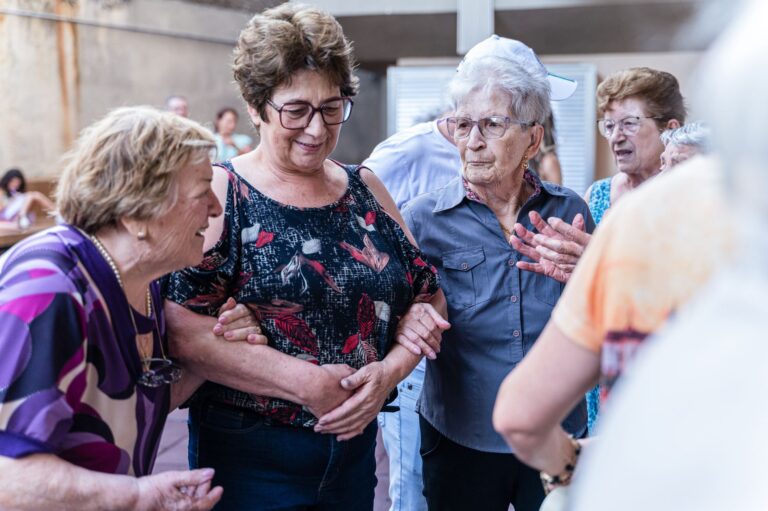
Adult children caring for a parent with dementia often face unique emotional, physical, and logistical challenges that friends and family without similar experiences struggle to understand. Support groups designed specifically for adult children of people with dementia offer a direct answer to this isolation: a community of peers who are living through the same situations, managed by trained facilitators who understand dementia’s progression and its impact on family relationships. These groups provide a structured space where adult children can share experiences without judgment, learn practical caregiving strategies from others further along the caregiving journey, and receive validation that their struggles—whether managing behavioral changes, making care decisions, or grieving a parent who is still alive—are normal responses to an abnormal situation. For example, an adult daughter struggling with the guilt of placing her mother in a memory care facility might attend a support group and meet four other adult children who made the same decision, some with vastly better outcomes than they feared. That single shared experience often dissolves weeks of shame and anxiety in a single evening.
Support groups exist in various formats—in-person gatherings at hospitals and senior centers, Zoom-based meetings for those with scheduling constraints, and phone-based options for rural areas where local groups don’t exist. The consistent thread across all formats is that they connect adult children to people who have faced or are currently facing the cognitive and behavioral changes that characterize dementia, rather than forcing them to explain everything from scratch to well-meaning but uninformed relatives. What makes these groups distinct from general dementia education is that they center adult children’s perspective and emotional experience, not just disease information or caregiver logistics. While a support group might touch on how to handle wandering or resistance to bathing, it does so in the context of how those behaviors affect the adult child’s relationship with their parent and their own mental health, not as a clinical problem to be solved. Many adult children report that attending support groups is the first time they’ve heard another person articulate a feeling they thought only they experienced—guilt about feeling angry at their parent’s illness, resentment at lost inheritance due to long-term care costs, or the strange grief of losing a parent while they’re still physically present.
Table of Contents
- Why Adult Children Need Support Groups for Dementia Care
- Types of Dementia Support Groups for Adult Children
- How Support Groups Help Adult Children Navigate Caregiving
- Finding and Joining Dementia Support Groups
- What to Expect When Attending Your First Support Group
- Online vs. In-Person Dementia Support Groups
- Building Connections That Last Beyond the Group
- Frequently Asked Questions
Why Adult Children Need Support Groups for Dementia Care
The position of adult children in dementia care is structurally different from that of a spouse caring for a partner or adult children caring for a parent without cognitive decline. Adult children with a parent in cognitive decline often occupy an emotionally ambiguous role: they are no longer children, but their parent can no longer function as a fully capable parent, leaving both generations uncertain about their relationship. A 55-year-old man might find himself making financial decisions for his 80-year-old mother while she still insists she can manage her own bills, creating daily friction and second-guessing. He is also likely to be sandwiched between caring for his aging parent, supporting his own teenage or adult children, and maintaining his job, with minimal social permission to reduce any of those demands. Without a space designed for his specific situation, he is likely to compartmentalize his parent-care stress from his work and family, never fully processing the weight he’s carrying. Support groups address this isolation directly by naming what adult children experience as caregivers.
Unlike caregiver support in general, which may include people caring for aging parents without cognitive decline, spouses caring for partners with dementia, or adult children caring for parents with other serious illnesses, dementia-specific groups for adult children focus on the cognitive and behavioral changes that define the disease and how those changes specifically affect the adult child’s identity, autonomy, and emotional relationship with their parent. The difference is significant: an adult child caring for a parent with late-stage Alzheimer’s disease faces different challenges than an adult child caring for a parent with cancer, even though both are watching their parent’s health decline. Dementia rewrites the adult child’s expectations about their parent’s role in their own life—advice-giving, emotional support, and presence at life events all shift or disappear. Research on caregiver outcomes consistently shows that social support is one of the strongest predictors of lower depression and anxiety in people managing chronic illness care. For adult children caring for parents with dementia, support groups serve this function in at least two ways: they reduce the shame and isolation of the experience by creating peer relationships with people who understand without explanation, and they provide access to practical information and strategies that might take years to learn through trial and error alone. An adult daughter who learns in a support group that her mother’s sundowning—increased confusion and agitation in late afternoon—is a predictable dementia symptom rather than a sign of Alzheimer’s progression can stop blaming herself for not scheduling activities at better times and can instead focus on managing her own expectations during those hours.
Types of Dementia Support Groups for Adult Children
Dementia support groups vary significantly in structure, focus, and format, and finding the right match often requires trying more than one. Some groups are open to anyone affected by dementia, meaning they include spouses, adult children, grandchildren, and friends of people with the disease all in one room. While these groups offer broad perspective, they can be less useful for adult children specifically, since conversations about caring for a spouse or managing a parent‘s behavior as a sibling with different parents can feel tangential. Other groups are explicitly designed for adult children and may even segment further—some for adult children caring for parents with early-stage dementia, others for those managing mid-stage or advanced disease. The challenge is that early-stage, mid-stage, and advanced dementia present radically different caregiving tasks: early-stage families often struggle with disclosing the diagnosis and managing a parent who actively resists accepting cognitive decline, while advanced-stage families focus on managing pain, maintaining dignity, and preparing for end-of-life decisions. Professionally-led groups, typically run by social workers or counselors with dementia experience, tend to follow a structured agenda with some time for open sharing. These groups are often offered through hospitals, memory care facilities, aging services organizations, or national organizations like the Alzheimer’s Association, which means they are usually free or low-cost and may be ongoing (same group meets weekly or monthly) or time-limited (6 to 8 sessions on a specific topic).
Peer-led groups, run by adult children who have experience with dementia in their own family, offer less structure and more flexibility but may have gaps in information or coping strategies, depending on the leaders’ experience. The tradeoff is significant: a peer-led group might feel more intimate and less clinical, but a member asking how to manage a parent’s aggression in advanced dementia might get advice from a peer whose parent passed away 10 years ago, which is compassionate but not necessarily current. Some groups combine both models, with a professional facilitator and peer co-leaders, which tends to balance emotional connection with informed guidance. Format has expanded in the past five years to include options beyond in-person weekly meetings. Zoom-based groups allow adult children in rural areas or with transportation constraints to participate, but they come with a loss of informal connection—there’s no coffee before the meeting or conversation while people gather. Phone-based conference groups are available for people uncomfortable with video or with very limited internet access. Some national organizations like the Alzheimer’s Association offer both synchronous (live, real-time) groups and asynchronous support (online forums or message boards where people post and respond on their own schedule). Each format attracts a different population: in-person groups tend to have more older adult children or those in early-stage dementia care, while online groups often include younger adult children (40s–50s) and those in more advanced caregiving stages where leaving home is difficult.
How Support Groups Help Adult Children Navigate Caregiving
The practical benefit of support groups is that they compress years of trial-and-error learning into a few months of attendance. An adult child facing a parent’s refusal to bathe can hear directly from someone who has managed that exact behavior: what worked, what made it worse, how long it lasted, and how the adult child’s own guilt or frustration played into the dynamic. This peer-sourced knowledge is often more useful than clinical advice because it comes with emotional texture and real-world constraints. A geriatrician might recommend “engaging the parent in activities they enjoyed before dementia,” but a peer can explain that when you actually try that with your mother, who insists she has no hobbies and never went anywhere, you realize the advice assumes a level of engagement that many people with dementia lose early in the disease. Support groups expose these gaps quickly. Beyond logistics, support groups are one of the few places where adult children can grieve their parent while their parent is still living, without social pressure to “stay positive” or “focus on the time you have left.” The experience of watching a parent lose their personality, memory, and interests is a form of anticipatory grief, and it exists alongside the practical work of caregiving in a way that exhausts both the emotional and logistical reserves of adult children. A support group member might say, “I miss my dad.
He’s here, but he’s not my dad anymore,” and receive validation rather than platitudes. This is not something most adult children can express to their siblings (who have different perspectives on the parent’s memory loss), their spouse (who might worry they’re not coping), or their own children (who need to believe their grandparent is still capable). The group creates permission for ambivalent emotions. Many groups also help adult children prepare for specific transitions: the decision to move a parent from independent living to assisted living or memory care, conversations about advance directives and end-of-life wishes, managing the parent’s financial and legal affairs, or navigating the death itself. Groups designed for people approaching these decisions often invite guest speakers or dedicate sessions to specific topics, so an adult child can hear from people who have already navigated a move to memory care or managed a parent’s final months. This reduces the sense of making these decisions alone in the dark. However, a real limitation of groups is that they cannot replace individual counseling or professional advice on legal or financial matters. A support group member’s experience placing their parent in a specific facility is valuable information, but it does not substitute for consulting an elder law attorney about guardianship or a financial advisor about managing a parent’s assets.
Finding and Joining Dementia Support Groups
The Alzheimer’s Association maintains the most comprehensive directory of dementia support groups in the United States, available through their 24/7 helpline (800-272-3900) and website. Local chapters often host both in-person and online groups, making them a logical starting point. Other sources include the parent’s care facility if they are in assisted living or memory care (many facilities sponsor support groups for family members), local hospitals (often through neurology, geriatrics, or psychiatry departments), area agencies on aging, senior centers, and mental health organizations. Some groups are listed on community calendar websites, but these listings are not always current, so calling ahead or checking the organization’s website is essential. Finding the right group often requires attending more than one to assess fit. An adult child might visit an in-person group at a hospital on a Tuesday evening and find it dominated by people caring for spouses in early-stage dementia, which feels misaligned from their experience caring for a parent in advanced-stage disease. They might try a Zoom group the following week and find the content and pacing more relevant, or they might attend both and supplement with a phone-based support option on weeks when stress is highest.
The time commitment is manageable—most groups meet weekly for 1.5 to 2 hours, though some offer drop-in options where attendance is flexible. A realistic constraint is that in-person groups require travel time and happen at fixed times, so an adult child with erratic work hours or significant caregiving responsibilities (e.g., adult children who are primary daytime caregivers) might find online groups more accessible. However, in-person groups often build stronger personal relationships and are more likely to foster connections that extend beyond the formal group meeting. Cost is rarely a barrier to entry. Most groups sponsored by established organizations (Alzheimer’s Association, hospitals, nonprofits) are free. Some for-profit counseling or coaching programs offer dementia support for adult children for a fee, ranging from $15–100 per session, but these are optional and not necessary for most people to access community-based free groups. The question to ask when contacting a group is whether new members can visit without committing to ongoing attendance, so you can experience the format and content before deciding to return. Most groups welcome visitors, and many have a process for new members to briefly introduce themselves (or not, if they prefer to observe the first session), which helps establish why you’re there without forcing a full life story.
What to Expect When Attending Your First Support Group
The structure of a dementia support group typically begins with a brief introduction from the facilitator, who may go over group confidentiality (what is said in the group stays in the group, a critical agreement for people discussing sensitive family dynamics and financial or legal matters), set a few ground rules (no unsolicited advice, avoid minimizing others’ experiences, stay on topic), and possibly introduce a guest speaker or topic for the session. Some groups start with a round of introductions where each person briefly shares who they’re caring for and what brought them to the group; others skip this and launch directly into open sharing. The most useful groups tend to balance structured content (a speaker on a specific topic, a guided discussion on a set of caregiving challenges, a review of resources) with open time for people to raise their own concerns. An important limitation of groups is that they cannot force deep conversation if participation is unevenly distributed. A group where one person dominates the conversation while others stay silent can be frustrating and feel less valuable. Good facilitators manage this by gently redirecting talkative members and inviting quiet ones to share if they want to, but facilitator skill varies widely. A related reality is that the quality and usefulness of a group depends heavily on the composition of its members. A group that includes people in very different stages of dementia care or with very different family situations might feel scattered, where everyone is dealing with different problems and few pieces of advice feel relevant to your situation.
By contrast, a group where most members are adult children in similar circumstances (e.g., all managing parents in memory care) tends to feel more cohesive and practically useful. This is not always predictable from the group description, which is why trying a group is the only way to know if it’s a good fit. Emotions in support groups can be intense. Adult children who have been holding their stress and grief alone may cry when they speak or hear someone else’s story. This is normal and expected, and group facilitators are prepared for it. However, if you are someone who becomes very distressed in group settings or who has a history of trauma that is triggered by hearing others’ stories, you might benefit more from individual counseling alongside or instead of group participation. Additionally, support groups are not therapy, so if you are experiencing significant depression, anxiety, or suicidal thoughts, a support group is a supplement to, not a replacement for, mental health treatment. Some groups explicitly recommend that members see a therapist individually, recognizing that group support alone may not address deeper mental health needs.
Online vs. In-Person Dementia Support Groups
The choice between online and in-person groups often comes down to logistics and personal preference. In-person groups require travel, which means they are most feasible for adult children who have transportation, live near a group location, and can find a meeting time that works with their schedule. The advantage is that in-person meetings foster informal connection—arriving early for coffee, staying after to exchange contact information, noticing over weeks which people understand your situation most deeply. These informal relationships often sustain people between meetings and sometimes extend beyond the group if members exchange phone numbers or meet outside the group. An adult child in crisis—managing a parent’s hospital admission or placement in memory care—can call someone from their in-person group and receive immediate emotional support from someone who truly understands. Online groups (Zoom, phone, or asynchronous forums) expand access dramatically. An adult child in a rural area without local groups, or one who works irregular hours, or one who does not drive or have reliable transportation, can participate from home at their own pace. Video-based Zoom groups approximate the in-person experience to some degree, though the absence of physical presence and informal time does flatten the connection.
Phone-based conference groups serve people without video access or computer comfort, though the experience is more anonymous and less personal than video or in-person. Asynchronous online forums or message boards allow people to post questions or reflections on their own schedule and read others’ responses when they have time, which is valuable for people with very unpredictable caregiving demands (e.g., adult children who are primary nighttime caregivers and sleep unpredictably). The tradeoff is that asynchronous groups lack real-time emotional support and may move slowly, with responses delayed by hours or days. A practical consideration is that video-based groups require a device and internet access, which not all adult children have during work hours (if they attend from work, privacy is an issue) or at home (if internet is unreliable or if sharing a home). Some organizations offer hybrid groups where the same meeting happens both in-person and on Zoom, allowing people to choose format week by week based on their circumstances. This flexibility appeals to adult children whose caregiving demands or work schedules fluctuate. However, hybrid groups sometimes compromise on connection quality for both formats: the in-person group might feel secondary to the Zoom portion, or the Zoom portion might be technically challenging (poor audio, people unable to see presentation slides clearly), leading to a mediocre experience for both groups. When evaluating a hybrid group, it’s worth asking how intentionally the group manages both formats.
Building Connections That Last Beyond the Group
Many adult children find that their most meaningful support comes not from the group itself but from the individual relationships formed within the group. Two people who attended the same group for six months might exchange phone numbers and continue meeting for coffee monthly long after one of them stops attending the formal group, because they developed real friendship and mutual understanding. These dyadic relationships often feel more intimate than the group as a whole, since conversation can be more specific and personal without the need to include everyone. Some groups explicitly facilitate this by reserving time for social connection or by suggesting that members exchange contact information, while others leave it organic. The advantage of an intentional approach is that shy people or those new to the group feel permission to reach out; the disadvantage is that it can feel forced.
A reality worth acknowledging is that not every adult child needs or benefits from an ongoing group relationship. Some people attend several meetings, get what they need (practical information about care options, validation that their experience is common, or reassurance that they’re not alone in their feelings), and then step back. Others discover that group attendance resurfaces painful feelings without providing relief, and individual counseling would be more helpful. Still others find that the group works until their parent dies, and then attending feels pointless or even painful because the group is focused on managing dementia care when they are focused on grief. The group’s role in an adult child’s care journey is variable and doesn’t have to be permanent to be valuable. What matters is finding the format and people that support you in the specific stage you’re navigating, whether that’s a group for a month or a relationship with one person from the group that sustains you for years.
- —
Frequently Asked Questions
Is there a difference between support groups for adult children and general dementia support groups?
Yes. General dementia groups include spouses, grandchildren, and other family members, while groups designed for adult children focus on their unique position—managing a parent’s decline while potentially caring for their own family and working. Adult children face distinct challenges like making decisions for a parent who resists help and grieving a parent who is still living, which benefit from peer understanding.
How often should I attend support group meetings to get the most benefit?
Most people find that attending weekly or bi-weekly for at least two to three months allows them to build relationships and apply strategies. However, there is no fixed requirement—some people benefit from attending a few times, while others attend consistently for years. Consistency matters more than frequency, but groups remain useful even with irregular attendance.
What if I attend a support group and it doesn’t feel like a good fit?
Try another group. Groups vary widely in format, focus, member composition, and facilitator style. An in-person hospital group might not work for you, but a Zoom group or a peer-led group might. You are not obligated to keep attending a group that doesn’t feel helpful, and it’s common to attend several before finding a good match.
Can support groups replace therapy or counseling?
Support groups are a valuable complement to individual therapy, but they are not a substitute. If you are experiencing depression, anxiety, grief that is interfering with daily functioning, or any mental health concern, speak with a therapist or counselor in addition to attending a group. Some facilitators will recommend therapy if they notice a member is in crisis.
How do I know if a support group is trustworthy and well-run?
Look for groups affiliated with established organizations (Alzheimer’s Association, hospitals, mental health nonprofits), confirm that they follow a confidentiality agreement (what is said stays in the group), and ask if the facilitator has training in dementia or grief counseling. If a group feels chaotic, unsafe, or led by someone who doesn’t have relevant expertise, it’s okay to leave and try another option.
Are online support groups as effective as in-person groups?
Online and in-person groups are effective in different ways. In-person groups foster deeper personal connections and informal support, while online groups offer accessibility and flexibility. Effectiveness depends on your personal needs and preferences. Some people benefit most from a mix of both. —