Social isolation significantly increases the risk of developing Alzheimer’s disease and accelerates cognitive decline in people already diagnosed. Research from the Harvard Study of Adult Development and numerous epidemiological studies shows that older adults who report feeling lonely or maintain minimal social contact have substantially higher rates of cognitive impairment and dementia diagnosis compared to those with regular social engagement. A person living alone without regular social contact faces roughly 26% higher risk of developing dementia, regardless of other health factors—a risk comparable to smoking or high blood pressure.
The mechanism behind this connection involves multiple pathways. Isolation reduces cognitive stimulation, which weakens the brain’s reserve of neural connections that normally buffer against age-related decline. Social withdrawal also triggers chronic stress responses that promote inflammation throughout the brain, directly damaging neurons and accelerating amyloid-beta accumulation, the hallmark pathology of Alzheimer’s. For someone experiencing early memory loss, isolation can create a vicious cycle: cognitive concerns lead to social withdrawal, which then speeds further decline.
Table of Contents
- Why Does Social Isolation Increase Alzheimer’s Risk?
- How Isolated Are Older Adults at Risk?
- What Role Does Caregiving Isolation Play?
- How Can Social Engagement Reduce Alzheimer’s Risk?
- What Are the Early Signs of Dangerous Isolation?
- How Do Technology and Remote Connection Compare to In-Person Engagement?
- What Specific Assessment Tools Identify Isolation Risk?
Why Does Social Isolation Increase Alzheimer’s Risk?
The brain requires constant mental challenge to maintain its architecture. When people isolate, they lose conversation partners, shared decision-making, and exposure to new information—all of which exercise memory, attention, and executive function. Studies using positron emission tomography (PET) scans show that isolated older adults have reduced glucose metabolism in the hippocampus and prefrontal cortex, the exact regions most vulnerable to Alzheimer’s pathology. Someone who spent decades in intellectually engaging social roles, then retires and withdraws from friendships, can show measurable cognitive changes within months.
Loneliness also drives a sustained inflammatory state. Isolation triggers elevated levels of IL-6, TNF-alpha, and other pro-inflammatory cytokines that cross the blood-brain barrier and activate microglia—the brain’s immune cells. Once activated, microglia over-prune synapses and amplify damage to neurons already struggling with amyloid and tau accumulation. This inflammatory pathway operates independently of any lack of cognitive stimulation, meaning even socially isolated people who stay mentally active through solitary reading or hobbies still experience this biological harm.
How Isolated Are Older Adults at Risk?
Isolation exists on a spectrum, and clinical definitions matter. Someone who lives alone but speaks regularly with family and friends is not isolated by research standards, even if they live separately. True isolation means minimal meaningful contact—fewer than weekly conversations with friends or family, or feeling alone even when surrounded by others. The National Institute on Aging estimates that roughly 25% of community-dwelling older adults over 60 experience isolation or loneliness at clinically significant levels.
A critical limitation to recognize: not all loneliness manifests the same way across cultures or personalities. An introvert who sees one close friend monthly and feels satisfied is not at elevated risk, while an extrovert with the same contact schedule may experience damaging loneliness. This heterogeneity means screening tools must assess perceived isolation, not just contact frequency. Healthcare providers sometimes miss this, assuming all elderly people living alone are at risk without asking whether they feel lonely or satisfied with their social connections. Additionally, chronic isolation can be harder to reverse than acute isolation; someone who has been isolated for years may find re-engagement more psychologically daunting than someone recently withdrawn due to mobility loss or relocation.
What Role Does Caregiving Isolation Play?
Family caregivers—usually adult children or spouses—often experience social isolation that mirrors the patient’s risk. A spouse providing 24/7 care for an Alzheimer’s partner typically abandons friendships, community involvement, and professional roles, creating the same cognitive and inflammatory stressors that threaten the person being cared for. Caregiver burnout research shows these individuals have elevated depression, higher inflammation markers, and worse cognitive outcomes than age-matched controls, sometimes leading to eventual diagnosis of mild cognitive impairment themselves.
This creates a secondary epidemiological problem: when one member of a couple develops Alzheimer’s, both are at higher dementia risk—the patient from the disease itself, and the caregiver from the isolation and stress of care. A 70-year-old providing full-time care for a spouse with advanced Alzheimer’s faces greater cognitive decline risk than a 75-year-old in an active social network with few family responsibilities. The caregiver’s isolation is not incidental; it is a direct route to neurodegeneration that can mirror the patient’s trajectory within years.
How Can Social Engagement Reduce Alzheimer’s Risk?
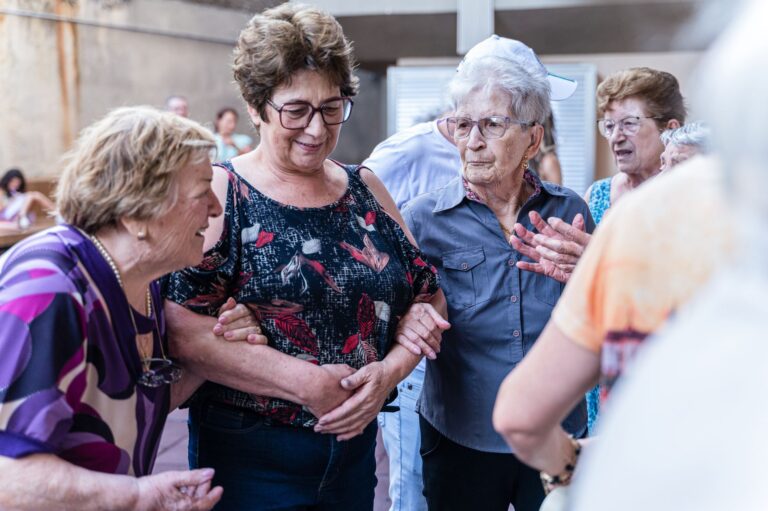
Regular social engagement activates the default mode network and salience network—brain regions that support memory, emotional processing, and self-referential thinking. These networks are often the first to show metabolic decline in preclinical Alzheimer’s, making their continued activation through social interaction a form of targeted cognitive training. Someone who joins a book club, participates in group exercise, or takes on a volunteer role recruits these networks every week, building neural redundancy that delays or prevents cognitive symptoms. Interventions targeting isolation show measurable benefits.
A meta-analysis of randomized trials found that structured social programs—senior centers, group fitness classes, volunteer work, or facilitated phone contact—reduced cognitive decline over 1-2 years by approximately 30-40% compared to controls. However, a critical tradeoff exists: sustainable engagement requires either internal motivation or consistent external support. A person who begrudgingly attends a senior center because family insists will likely disengage within weeks, while someone who chooses a hobby-based group is more likely to sustain participation. For caregivers, respite care that allows them to maintain even modest social and leisure time has been shown to reduce their own dementia risk, justifying investment in care support services as both a quality-of-life and neuroprotective measure.
What Are the Early Signs of Dangerous Isolation?
Behavioral shifts often precede full social withdrawal. A person beginning to develop cognitive concerns may notice memory lapses in group settings, feel embarrassed, and gradually reduce attendance at social events—a self-protective response that ironically accelerates decline. Family members often report that an aging relative began declining social invitations months before any memory complaints surfaced, suggesting that subjective cognitive awareness or anxiety about mental function can trigger isolation before diagnosis.
A warning sign clinicians and families should recognize: sudden isolation following a single adverse event (a fall, hospitalization, or death of a close friend) in someone over 70 can rapidly shift from acute to chronic if not actively addressed. Someone who isolates for six months after losing a spouse has a window of high vulnerability; if they remain isolated for two years, neurobiological changes may have already begun. Additionally, cognitive impairment itself reduces the initiative to seek social contact—a person with emerging Alzheimer’s may have reduced motivation to initiate conversations or attend events, requiring others to maintain the connection. Without family or professional intervention, this reduced agency can quickly become profound isolation, closing off what may be one of the most modifiable risk factors available.
How Do Technology and Remote Connection Compare to In-Person Engagement?
During the COVID-19 pandemic, many older adults shifted to virtual social contact through video calls, online groups, and social media. Emerging evidence suggests that video communication provides some cognitive benefit compared to phone calls, likely because facial recognition and nonverbal communication require more neural processing. However, video contact does not fully replicate in-person interaction; physical presence, shared meal experiences, and tactile contact (hugging, hand-holding) appear to provide additional neuroprotective signals that video alone cannot convey.
A person who maintains close relationships primarily through occasional video calls with distant family members is at higher risk than someone with weekly in-person senior center participation, even if the video contacts are frequent and emotionally warm. For homebound individuals or those in remote areas, video connection is far superior to complete isolation and should be encouraged. For those with mobility to participate in physical gatherings, however, prioritizing in-person engagement offers measurable advantages for cognitive protection.
What Specific Assessment Tools Identify Isolation Risk?
Healthcare providers can use structured screening tools like the UCLA Loneliness Scale, the Lubben Social Network Scale, or simpler questions asking about contact frequency and subjective satisfaction with social connections. The Lubben scale, for instance, asks about family contact, friendship contact, and participation in organized activities; a score below 12 indicates significant isolation risk. Brief assessment takes fewer than five minutes and can be integrated into standard cognitive screening that already occurs during wellness visits.
Recognition of isolation risk should trigger structured intervention planning. Primary care physicians can refer isolated patients to community senior centers, volunteer programs, or exercise groups; they can discuss with family members the importance of maintaining regular contact; and they can screen for depression or anxiety that may be driving withdrawal. For caregivers, asking directly—”Who do you spend time with weekly outside of caregiving?”—often reveals isolation that even the caregiver had not consciously acknowledged as a risk factor.
- —