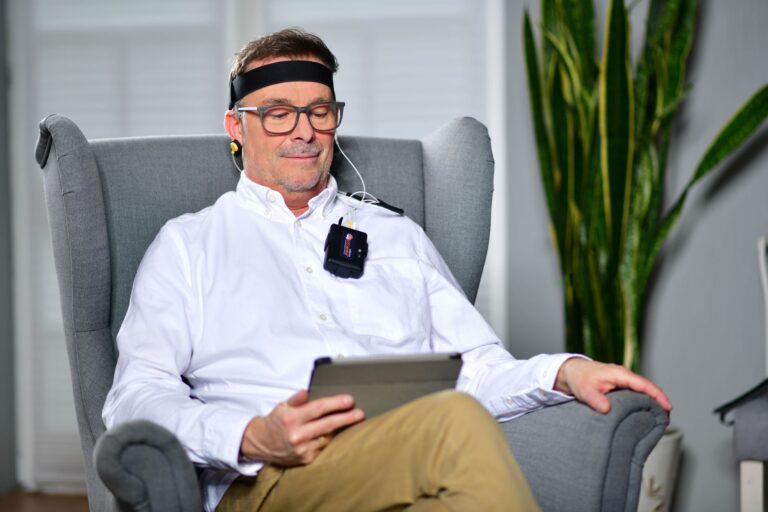
At-home dementia tests can detect early signs of cognitive decline and help you identify whether a medical evaluation is needed, but they cannot diagnose dementia or replace a neurologist’s assessment. These screening tools—typically digital tests, phone-based questionnaires, or paper forms—measure memory, attention, language, and other cognitive skills by comparing your performance to age-matched norms. For example, an online test might ask you to remember a list of words or complete a timed pattern-recognition task, then score you against a baseline. What matters most is understanding that a positive result means you should see a doctor, not that you have dementia.
The real utility of at-home tests lies in their ability to detect *signals* early, before symptoms become obvious to family members or affect your daily life. Many people dismiss occasional forgetfulness as normal aging, even when it’s becoming a pattern. An at-home screening can provide objective evidence that something has changed, which often motivates people to schedule the neurological evaluation they’ve been putting off. However, these tests have significant blind spots: they cannot account for depression, medication side effects, vitamin deficiencies, or sleep disorders—all of which can mimic dementia symptoms.
Table of Contents
- What Types of Cognitive Tasks Do At-Home Screenings Actually Measure?
- How Accurate Are These Screenings at Detecting Early Cognitive Decline?
- Which Tests Are Actually Backed by Research, and Which Are Just Marketing?
- What’s the Practical Workflow If You Get a Concerning At-Home Result?
- Why Might an At-Home Test Miss Real Cognitive Decline?
- What Role Should Family Members Play in At-Home Screening?
- When Should You Skip an At-Home Test and Go Straight to a Doctor?
- Frequently Asked Questions
What Types of Cognitive Tasks Do At-Home Screenings Actually Measure?
At-home dementia tests typically focus on five core cognitive domains: memory (both short-term recall and delayed recall), attention and processing speed, language and naming ability, visual-spatial skills, and executive function (planning and problem-solving). A commonly used at-home version is based on the Montreal Cognitive Assessment (MoCA), a validated clinical tool compressed into a 5–10 minute online format. The standard MoCA, for instance, requires you to draw a clock showing a specific time, copy a cube, perform serial subtractions, and recall a list of five words after a distraction task. An at-home version might simplify the clock test to multiple-choice or remove the drawing component entirely, since it’s harder to score through a screen.
The limitation here is that no at-home test can replicate the full diagnostic workup a neurologist performs. In a clinic, a doctor observes you during conversation—noting hesitation in word retrieval, difficulty following complex instructions, changes in mood or personality—and integrates these observations with your history and physical exam. An at-home test is essentially a single snapshot of your performance on predetermined tasks, often without context about whether you slept poorly last night, took a cold medication, or are simply having an off day. A person with mild cognitive impairment might score normally on a memory task if they use external aids (lists, reminders, calendar apps), but a neurologist would ask directly about that compensation strategy.
How Accurate Are These Screenings at Detecting Early Cognitive Decline?
Sensitivity and specificity are the key metrics. Sensitivity tells you what fraction of people with true cognitive decline the test correctly identifies (how few false negatives). Specificity tells you what fraction of cognitively normal people the test correctly clears (how few false positives). Most commercial at-home tests report sensitivities in the 70–85% range and specificities of 75–90%, depending on the cutoff score and the population tested. That means a positive test catches about 3 out of 4 people who actually have cognitive decline, but it also misses 1 out of 4—and might flag 1 in 10 cognitively normal people as having problems they don’t actually have.
This statistical reality has a practical consequence: a positive at-home test should never be treated as a diagnosis, only as a signal to get professional assessment. Consider someone who scores in the “impaired” range on an at-home memory test. They might be experiencing genuine mild cognitive impairment, but they might also be depressed (depression can severely impair memory), taking a medication that clouds thinking, suffering from vitamin B12 deficiency, or simply having a bad-test day. Only a neurologist or geriatrician—equipped with blood work, imaging, a detailed history, and in-person cognitive testing—can sort these out. A person who takes three at-home tests and gets different results each time should definitely seek professional evaluation, since inconsistent results suggest either poor test reliability or external factors (fatigue, distraction) affecting performance.
Which Tests Are Actually Backed by Research, and Which Are Just Marketing?
The most research-backed at-home screening tools are digital versions of established clinical tests: the Montreal Cognitive Assessment (MoCA), the Mini-Cog, and variants of the Alzheimer’s Disease Cognitive Screen (ADCS). The MoCA, for example, has been validated in tens of thousands of people across multiple countries and languages, and research consistently shows that older adults with mild cognitive impairment or Alzheimer’s disease score lower than cognitively normal peers. Several peer-reviewed studies have tested web and app-based versions of these tools and found they perform similarly to paper versions when administered with adequate instructions. Many other at-home tests, however, come from companies with minimal published validation.
A game-based “brain training” app that claims to detect dementia risk may have only internal company data supporting that claim, not peer-reviewed research in a clinical population. The federal Trade Commission has cracked down on several companies for making unsubstantiated claims about dementia detection. One red flag is a test that promises results like “your brain age is 5 years younger than your chronological age”—this metric has no clinical meaning and is often just a marketing gimmick. Another warning sign is a company that doesn’t clearly state the test’s sensitivity and specificity, or that doesn’t disclose the population on which those numbers were based (a test validated on 30-year-olds, for instance, may perform very differently in 75-year-olds).
What’s the Practical Workflow If You Get a Concerning At-Home Result?
A positive at-home screening should trigger a three-step process: first, schedule an appointment with your primary care doctor or a neurologist; second, prepare a detailed history of your cognitive concerns and any changes family members have noticed; third, bring the at-home test result as supporting evidence, not as a diagnosis. Your doctor will likely order blood work to rule out vitamin deficiencies, thyroid dysfunction, infection, or medication side effects—all common culprits that mimic dementia. If the blood work is normal and your doctor suspects genuine cognitive decline, they’ll either conduct a formal cognitive battery in the office (usually 30–60 minutes of pencil-and-paper or computerized tests) or refer you to a neuropsychologist, who administers much more comprehensive testing over several hours. The trade-off is time and cost.
An at-home test is free or inexpensive (often $10–100) and takes 10–20 minutes, making it accessible to people who might otherwise never screen. A formal neuropsychological evaluation can cost $3,000–$10,000 and requires multiple appointments, though insurance often covers it if your doctor documents cognitive concerns. Some people use at-home tests as a gate: if they score normal, they feel reassured and don’t burden their doctor; if they score poorly, they’ve built a case for why an evaluation is worth the effort and expense. This can be a sensible approach, provided you understand the test’s limitations and don’t panic if the result is equivocal or contradicts how you feel.
Why Might an At-Home Test Miss Real Cognitive Decline?
At-home tests cannot capture decline in subtle domains that matter clinically. For example, a person with early frontotemporal dementia (which affects personality, judgment, and behavior before memory) might score normally on a memory-focused at-home test but be making dangerous financial decisions or losing the ability to empathize with family. Similarly, someone with vascular cognitive impairment—cognitive decline caused by small strokes—might pass a standard memory test but fail a timed processing-speed task, and an at-home tool that doesn’t include speed components would miss this. Another crucial gap is that at-home tests cannot assess decline from a person’s own baseline. If you were always a brilliant chess player with a sharp mind, a score in the “average” range might actually represent significant decline for you, yet the at-home test would rate you as normal.
Depression and anxiety are particularly insidious mimics. An older adult with major depression often scores in the “impaired” range on cognitive tests because depression slows processing, impairs concentration, and makes memory feel unreliable. Yet the underlying problem is not dementia but a treatable mood disorder. An at-home test cannot distinguish these because it has no way to assess mood or context. Similarly, sleep apnea causes cognitive fog, slowed thinking, and memory problems that might trigger a positive at-home result, but the real culprit is nocturnal oxygen deprivation. A neurologist would ask about daytime sleepiness and might refer for a sleep study; an at-home test would just flag you as impaired.
What Role Should Family Members Play in At-Home Screening?
Family observations are often more reliable than a single at-home test. If a spouse, adult child, or close friend has noticed concrete changes—forgotten appointments, repeated stories, difficulty managing finances, getting lost in familiar places, or changes in personality—these real-world observations carry weight that a lab task cannot replace. Some at-home screening platforms include a short questionnaire for a family informant, asking them to rate whether they’ve observed specific memory or thinking problems over the past few months.
Research shows that a concerned family member’s report, combined with a positive at-home cognitive test, is a stronger signal of true decline than either one alone. The key is that family members should be honest and specific. A daughter who says “Mom seems a bit forgetful” is offering less-actionable information than one who says “Mom forgot our lunch date three times last month, and yesterday she called me asking if she’d already asked me the same question she asked me an hour earlier.” If an aging parent takes an at-home test and scores poorly, but family members have noticed no real-world changes, that mismatch is worth discussing with a doctor—it might suggest a one-time test artifact, anxiety during the online assessment, or a technical glitch rather than genuine decline.
When Should You Skip an At-Home Test and Go Straight to a Doctor?
Certain red flags warrant immediate professional evaluation without waiting for an at-home test result. If you or someone you know has experienced a sudden change in cognitive ability—confusion or memory loss appearing over days or weeks rather than months or years—seek emergency evaluation; this can indicate stroke, infection, medication toxicity, or other acute medical problems that at-home screening cannot address. Similarly, if someone has been diagnosed with a condition known to affect cognition (Parkinson’s disease, heart failure, sleep apnea, diabetes), or is taking medications known to impair thinking (certain anticholinergics, benzodiazepines, opioids), cognitive decline should be assessed by their specialist or primary care doctor, not self-screened at home.
For people with strong family risk factors—a parent or sibling diagnosed with Alzheimer’s disease before age 65—screening should be done under professional guidance, possibly including genetic counseling. At-home tests can be a reasonable first step for someone with gradual, subtle cognitive changes who has no medical red flags, but they should not delay evaluation in anyone with concerning symptoms, acute changes, or significant medical complexity. The at-home test is a tool to initiate conversation with a doctor, not a substitute for one.
Frequently Asked Questions
How much do at-home dementia tests cost?
Most at-home tests range from free to $100. Some are free apps funded by research institutions; others are $20–50 through consumer health platforms. Comprehensive neuropsychological evaluations through a hospital or clinic typically cost $3,000–$10,000. Some insurance plans cover formal testing if your doctor documents cognitive concerns.
Can an at-home test tell me if I have Alzheimer’s disease specifically?
No. At-home tests can only measure general cognitive function and suggest whether decline may be present. Alzheimer’s disease requires a neurologist’s evaluation, often including imaging (MRI or PET scan) and sometimes cerebrospinal fluid or blood biomarker testing. A positive at-home test means you should see a doctor for proper diagnosis.
What if I take two different at-home tests and get different results?
Inconsistent results are a sign that you should seek professional evaluation. Different tests may emphasize different cognitive domains, but large discrepancies between tests often indicate that at-home testing alone is insufficient—you need a comprehensive assessment by a neuropsychologist or neurologist.
Are at-home tests good for monitoring cognitive changes over time?
They can be useful for detecting an initial problem, but they’re not ideal for tracking change. Clinical neuropsychological testing is more standardized and better suited to detecting subtle year-to-year changes. If you’ve had one concerning at-home result, your doctor will likely recommend formal testing rather than repeat at-home screening.
Can an at-home test tell me about my dementia risk if I’m currently healthy?
Not reliably. At-home tests measure current cognitive function, not future risk. Family history, cardiovascular health, lifestyle factors (exercise, cognitive engagement, sleep), and genetic testing (if appropriate) provide better information about risk. A normal at-home test does not mean you won’t develop cognitive decline in the future.
What should I bring to my doctor’s appointment if I took an at-home test?
Bring the actual test result or a screenshot, the date you took it, and detailed notes about any cognitive changes you or family members have noticed in the past 6–12 months. Write down specific examples—forgotten appointments, repeated questions, difficulty managing bills—rather than vague complaints, so your doctor has concrete information to work with.