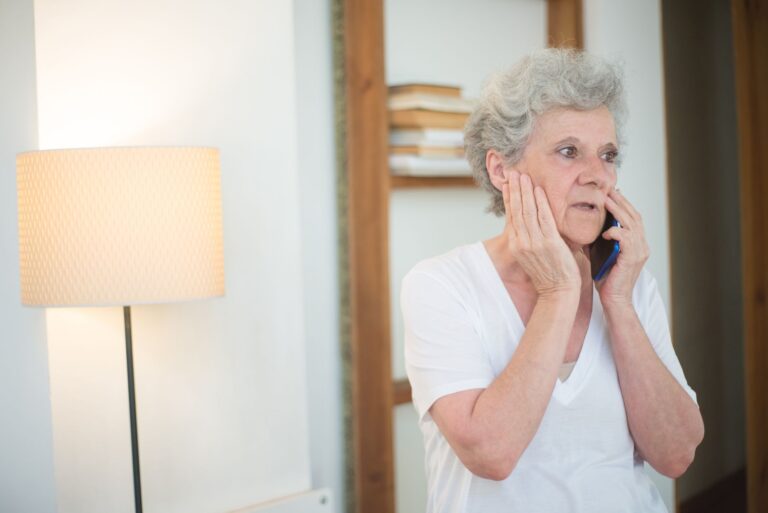
Background noise has a profound and often underestimated impact on dementia patients, making it one of the most significant environmental factors affecting their daily functioning and quality of life. People with dementia struggle to filter out irrelevant sounds, process multiple conversations at once, and maintain focus when there is acoustic clutter—abilities that most people take for granted. When a person with dementia is in a noisy environment like a crowded restaurant or a busy family gathering, they may experience increased confusion, anxiety, agitation, and memory disruption that can last for hours afterward. A common scenario illustrates this challenge: A 72-year-old man with early-stage Alzheimer’s disease attends his grandson’s birthday party. While he was fine at home that morning, the noise from 20 people talking, children playing, background music, and a loud television becomes overwhelming.
Within 30 minutes, he becomes visibly frustrated and withdrawn, struggling to recognize family members he knows well and repeatedly asking the same questions. The noise hasn’t changed his disease progression—it has simply temporarily amplified his cognitive impairment and made normal social interaction impossible. This heightened sensitivity to sound is rooted in how dementia affects the brain’s auditory processing centers. The disease damages the neural pathways responsible for filtering background noise and isolating meaningful sound—the same mechanisms that allow you to hear your friend’s voice at a noisy party. Without this filtering ability, dementia patients receive all sound equally, creating a chaotic acoustic environment that exhausts their cognitive reserves.
Table of Contents
- Why Do Dementia Patients Struggle With Noisy Environments?
- How Background Noise Increases Confusion and Behavioral Changes
- Speech and Language Processing in Noisy Settings
- Strategies for Reducing Harmful Background Noise
- Hearing Loss and Dementia Make Noise Problems Worse
- The Cumulative Effect of Chronic Noise Exposure
- Creating Individualized Quiet Spaces
- Frequently Asked Questions
Why Do Dementia Patients Struggle With Noisy Environments?
The brain’s ability to isolate important sounds from background noise depends on intact connections between the auditory cortex, the prefrontal cortex, and other regions involved in attention. Dementia diseases like Alzheimer’s, vascular dementia, and Lewy body dementia damage these neural circuits, particularly in the frontal and temporal lobes. When these connections degrade, the person loses the ability to selectively attend to one sound source—a cognitive function called auditory selective attention. In addition to neural damage, dementia patients often have slower processing speed, meaning their brain needs more time to interpret any incoming information. When multiple sound sources compete for attention, the person cannot process them quickly enough, leading to cognitive overload.
A person without dementia might effortlessly tune out background chatter and focus on a conversation across the table. A person with dementia hears all sounds at equal volume and importance, requiring significant mental effort to pick out anything specific—and often failing to do so. This problem becomes more pronounced in advanced dementia stages. A resident in late-stage dementia may no longer respond to voices or music but will still show physical signs of distress when exposed to sudden loud noises—increased heart rate, agitation, or attempts to escape. The neurological damage has progressed so far that processing sound requires more energy than the person’s brain can reliably allocate.
How Background Noise Increases Confusion and Behavioral Changes
Exposure to excessive noise consistently triggers or worsens behavioral symptoms in dementia patients—including agitation, aggression, anxiety, and emotional withdrawal. This is not a personality flaw or intentional misbehavior; it is a direct neurological response to sensory overload. When the brain’s auditory processing is already compromised, adding background noise exhausts the limited cognitive resources the person has left, leaving almost nothing available for executive function, emotional regulation, or memory retrieval. One important limitation to understand: background noise does not cause dementia, but it can accelerate the appearance of symptoms and make them seem worse than they actually are in a quieter setting. Family members sometimes misinterpret this as a sudden worsening of the disease itself.
A person who is calm and relatively oriented at home may appear significantly more confused and agitated during a loud hospital stay, leading doctors and family to believe the disease has progressed rapidly. In reality, the patient is simply unable to function cognitively in that environment. When they return to a quieter setting, many of their apparent symptoms improve. Research has also documented that chronic exposure to noise increases stress hormones like cortisol in dementia patients, contributing to sleep disruption, weakened immune function, and increased risk of falls. This cascade of effects means that a noisy living environment is not just uncomfortable—it actively harms the person’s health over time.
Speech and Language Processing in Noisy Settings
Background noise particularly impairs a dementia patient’s ability to understand speech. Even a person with mild cognitive impairment who understands one-on-one conversation well may fail to comprehend speech in a noisy room because they lack the cognitive bandwidth to separate the speaker’s voice from competing sounds. This creates a cruel paradox: the patient may withdraw socially to avoid the frustration of not understanding, leading to increased isolation and depression. A practical example: A woman with mid-stage dementia is sitting with her adult daughter during lunch at a busy café.
The daughter speaks clearly and directly, but the woman struggles to follow the conversation because of noise from other tables, the coffee machine, and the door chime. By the end of lunch, the woman is frustrated and exhausted, and her daughter feels rejected, not realizing that the acoustic environment—not her mother’s affection—is the real barrier to connection. In a quiet home setting an hour later, the same mother and daughter have a warm, coherent conversation over tea. This speech comprehension problem also affects how dementia patients respond to care instructions. A nurse trying to give an orientation or safety reminder in a noisy healthcare setting may find the patient unresponsive or resistant, when in fact the patient simply cannot process what is being said.
Strategies for Reducing Harmful Background Noise
Creating a quieter environment is one of the most effective, low-cost interventions available to families and caregivers. Simple changes—lowering television volume, turning off multiple electronic devices simultaneously, using white noise machines to mask unpredictable sounds, and choosing quiet times for social visits—can dramatically improve a dementia patient’s mood, cooperation, and cognitive function. The tradeoff between maintaining a normal household and creating silence is real. A family with young children, pets, or multiple residents cannot eliminate noise entirely, and attempting to do so may create an isolating or depressing atmosphere. The goal is not absolute quiet but manageable, predictable sound.
A television on mute with closed captions is much less cognitively demanding than a television with dialogue and background music. A softly playing radio station is less jarring than unpredictable household noises. Anticipating and warning the person before unavoidable noise (like a doorbell or vacuum) allows them to prepare mentally. A comparison worth noting: dementia patients in facilities with consistent noise-reduction protocols (quiet common areas, sound-dampening materials, restricted use of overhead announcements) show fewer behavioral incidents, better sleep quality, and more social engagement than those in standard institutional environments. The investment in acoustics pays measurable dividends.
Hearing Loss and Dementia Make Noise Problems Worse
Many dementia patients also have age-related hearing loss, a combination that creates unique challenges. A person who cannot hear well may rely on hearing aids, but hearing aids amplify ALL sound—the background noise as well as speech. In a noisy environment, even a well-fitted hearing aid cannot separate signal from noise, and the amplified cacophony can actually drive the person away from wearing the device. A critical warning: some caregivers assume that turning up the volume or providing hearing assistance will automatically improve communication in noisy settings.
This frequently backfires. The person hears more noise, not clearer speech, and the excess sound increases agitation and withdrawal. Hearing aids work best in quiet or moderately quiet environments where there is less competing sound for the device to amplify. Additionally, some medications used to treat dementia-related symptoms (certain antipsychotics or anti-anxiety drugs) can impair the brain’s remaining auditory processing ability, making the patient even more sensitive to noise. This creates a medical complexity that requires careful coordination between the patient’s neurologist, primary care physician, and audiologist.
The Cumulative Effect of Chronic Noise Exposure
Dementia patients who live in persistently noisy environments—whether a chaotic household, a busy nursing home, or near a major roadway—accumulate stress that manifests in accelerated cognitive decline, more frequent behavioral crises, and poorer overall health outcomes. Noise is a chronic stressor, and chronic stress in dementia accelerates neurodegeneration.
A practical example from long-term care settings: facilities located near airports or highways report higher rates of resident agitation and medication use compared to similarly staffed facilities in quieter locations. The constant background noise creates a state of low-grade hypervigilance in dementia patients, preventing restful sleep and constant regeneration of cognitive resources.
Creating Individualized Quiet Spaces
Not every dementia patient reacts to noise identically. Some individuals are hypersensitive and become distressed with minimal sound; others may seek out some environmental stimulation to combat apathy or depression. The key is understanding the specific person’s sensory threshold and creating adaptable spaces where they can retreat when overwhelmed.
A bedroom with a door that closes, a quiet corner with comfortable seating, or even noise-canceling headphones playing soothing music can provide a necessary refuge. In clinical settings and home care, the most effective approach is to assess the individual patient’s noise sensitivity through observation and conversation with family members, then modify the environment accordingly. One person might benefit from a white noise machine that masks unpredictable household sounds; another might need complete silence. A dementia patient who becomes agitated after loud family gatherings needs a clear exit route to a quiet room, not judgment for being “unfriendly” or “withdrawn.”.
Frequently Asked Questions
Can hearing aids help dementia patients in noisy environments?
Hearing aids amplify all sound, including background noise, which can actually increase agitation rather than improve communication. Hearing aids work best in quiet settings. In noisy environments, the amplified cacophony may drive the person away from wearing the device. Always test hearing aids in realistic environments before relying on them.
Is my loved one’s increased confusion in noisy settings a sign their dementia is getting worse?
Not necessarily. Many dementia patients appear significantly more confused and agitated in noisy environments than in quiet settings, but this reflects their inability to process competing sounds—not a sudden disease progression. When they return to a quieter space, their apparent symptom severity often improves markedly. This is an important distinction for families to understand when evaluating care facility quality.
What specific decibel level is safe for dementia patients?
There is no universal threshold, as individual sensitivity varies. However, prolonged exposure to sound above 70 decibels (roughly the noise level of a busy restaurant or vacuum cleaner) consistently triggers stress responses in dementia patients. Quieter environments (below 60 decibels) support better cognitive function and emotional regulation.
Should I keep dementia patients completely isolated from all sound?
No. Complete silence can increase depression and apathy, especially in earlier dementia stages. The goal is to reduce unpredictable, uncontrollable noise while allowing for meaningful human interaction, music, or nature sounds that the person finds pleasant. Predictable, soft background sound is different from chaotic noise.
Why do sudden loud noises (like a doorbell or alarm) upset dementia patients more than expected?
Dementia damages the brain’s ability to orient to sudden sounds and determine whether they pose a threat. What a younger person quickly recognizes as a doorbell triggers a prolonged startle response and stress in a dementia patient because their brain cannot quickly contextualize the sound. Warning the person before unavoidable noises helps their brain prepare and reduces the stress response.
Can noise-reduction interventions delay dementia progression?
Noise reduction alone does not slow the underlying disease, but chronic noise exposure accelerates the appearance of behavioral symptoms and cognitive decline. Living in a quieter, less stressful environment supports better overall health outcomes and allows the person’s remaining cognitive function to be used more effectively for social engagement and daily living activities.