Reviewed by the Help Dementia Editorial Team — our editors review every article for accuracy against guidance from the National Institute on Aging, the Alzheimer’s Association, and peer-reviewed sources.
The Global Deterioration Scale (GDS), also known as the Reisberg Scale, is a seven-stage rating system that measures the progression of cognitive decline from normal aging through severe dementia. When a person reaches severe dementia—stages 6 and 7 on the GDS—they experience profound loss of cognitive function, physical abilities, and often the ability to communicate or recognize loved ones.
Understanding where someone falls on the GDS scale at the severe end is critical for families and caregivers because it directly shapes what medical interventions make sense, what kind of care environment is needed, and what realistic expectations should guide daily life. The GDS is particularly valuable in severe dementia because it provides objective language to describe what’s actually happening, beyond general terms like “very bad” or “end-stage.” A person at GDS stage 6 might still recognize their spouse some days but need help with all daily activities; someone at GDS stage 7 has lost nearly all verbal ability, cannot recognize anyone, and requires 24-hour hands-on care. Knowing this distinction helps caregivers understand whether the agitation, changes in sleep, or new behaviors they’re witnessing are typical for this stage of disease, and what interventions are likely to help versus cause more distress.
Table of Contents
- What Are the GDS Stages That Define Severe Dementia?
- How Is Severe Dementia Assessed Using the GDS?
- Why Does GDS Staging Matter in Severe Dementia Care?
- How Should Caregivers Assess and Document GDS Stage?
- What Are the Common Misconceptions About GDS Staging in Severe Dementia?
- Physical Changes and Complications in Severe GDS Stages
- Long-Term Care Settings and GDS Staging
- Conclusion
- Frequently Asked Questions
What Are the GDS Stages That Define Severe Dementia?
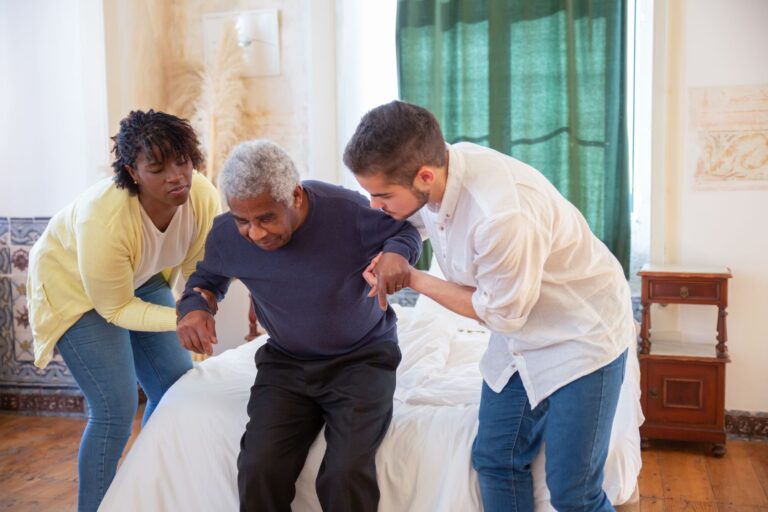
The gds has seven stages total, but severe dementia is generally considered to be stages 6 and 7. Stage 6, called “severe cognitive decline,” involves significant behavioral changes, loss of awareness of recent events and surroundings, incontinence (sometimes), and greatly altered personality. A person at this stage may know their name but forget their spouse’s name, may sleep most of the day, and often becomes suspicious, anxious, or withdrawn. They typically cannot bathe, dress, or use the toilet safely without direct physical assistance.
Stage 7, called “very severe cognitive decline” or end-stage dementia, is the final stage. Speech becomes minimal or incomprehensible; the person loses awareness of most surroundings; physical abilities decline sharply including the ability to walk, sit upright, or control bowels and bladder; and they become entirely dependent on others for all care. This stage can last months to years, and the person may eventually lose the ability to swallow safely. The difference between stage 6 and stage 7 is not merely a matter of degree—stage 7 represents a qualitative shift toward end-of-life care.

How Is Severe Dementia Assessed Using the GDS?
Assessing someone on the GDS at the severe end relies less on cognitive testing (which becomes meaningless when verbal communication is nearly absent) and more on careful observation of functional abilities and behavioral patterns. A clinician or trained evaluator asks the family or primary caregiver detailed questions about what the person can and cannot do: Can they initiate conversation? Can they follow simple commands? Can they eat or drink without supervision? Do they recognize family members? Are they continent? A person who cannot answer questions, cannot initiate conversation, and requires total assistance with self-care is clearly stage 7, while someone who still attempts conversation (even if incoherent) and retains some awareness may be stage 6. The limitation of GDS assessment in severe dementia is that the scale was originally designed by looking backward at a small number of Alzheimer’s disease patients, and it doesn’t always perfectly fit other types of dementia or individual variations.
Some people with frontotemporal dementia or Lewy body dementia may show different patterns—for example, preserved physical ability but profound behavioral changes, which doesn’t fit neatly into a single GDS stage. Family members sometimes find that their relative seems to fluctuate between stages, especially over weeks or months, which is normal and reflects the uneven progression of neurodegeneration. The GDS is best used as a general compass, not a rigid box.
Why Does GDS Staging Matter in Severe Dementia Care?
GDS staging directly informs care planning decisions that can improve quality of life. Someone at stage 6 might still benefit from structured activities, attempts at conversation, and engagement with the world, even if those interactions don’t “work” the way they used to. The goal is meaningful connection and comfort. By contrast, someone at stage 7 is less likely to engage with activities and more likely to benefit from focused comfort care: pain management, gentle touch, presence, familiar music, and the removal of stressful stimuli.
Misunderstanding the stage can lead to over-medicating, over-testing, or pursuing aggressive treatments that cause more distress than benefit. Another critical application: GDS staging helps families and care teams align on whether hospital transfers, feeding tubes, and resuscitation attempts are consistent with the person’s values and the reality of their condition. A person at stage 7 who develops pneumonia may die from it despite antibiotics; a feeding tube cannot restore meaningful function when swallowing is lost; CPR in the context of advanced dementia rarely leads to good outcomes. When families understand through the concrete language of GDS where their loved one truly stands, difficult conversations about goals of care become clearer and more humane. It’s not just an assessment tool—it’s a way of seeing the person’s actual situation plainly.

How Should Caregivers Assess and Document GDS Stage?
The best approach is a combination of clinical observation and caregiver input. A physician or geriatric nurse who spends even 10 minutes with someone at stage 6 or 7 can typically place them correctly by observing speech, awareness, and functional abilities. At the same time, family members or direct care staff who spend hours daily with the person have crucial information: they know whether the person had a moment of recognition yesterday, whether bathroom accidents are total or partial, whether the person initiates any sounds or gestures. A good assessment brings both perspectives together.
Documentation matters because it creates a baseline. If a caregiver notes that someone is at stage 6 in January and stage 7 in April, that documents the expected progression and helps everyone understand that declining further is not a failure of care—it’s the nature of the disease. Many care facilities and hospice programs use GDS staging specifically because it provides shared language and measurable markers. The practical tradeoff is that GDS assessment takes time and training; a busy primary care doctor in a 15-minute appointment cannot assess reliably, which is why geriatric specialists or dementia care coordinators often perform the formal evaluation.
What Are the Common Misconceptions About GDS Staging in Severe Dementia?
One frequent misconception is that someone at a given GDS stage will stay there for a predictable amount of time. In reality, the speed of progression varies enormously. Some people progress from stage 6 to stage 7 in weeks; others remain at stage 6 for years. Health complications (urinary tract infections, aspiration, falls), comorbid conditions (diabetes, heart disease), and quality of nutrition all influence the timeline. A person with advanced dementia who develops a life-threatening infection may decline suddenly, while another may have a long, slow fade. Expecting a specific timeline can set families up for surprise and grief.
Another misconception: that reaching stage 6 or 7 means the person no longer experiences comfort, pain, emotions, or preference. This is false and dangerous. A person at stage 7 cannot tell you they’re in pain, but they may grimace, become restless, or withdraw when hurt. They may not remember their daughter’s name but may quiet when they hear her voice. They may not understand words but may respond to a gentle touch or a familiar song. Assuming the person is “gone” can lead to neglect of pain management and the loss of moments of connection that still matter.
Physical Changes and Complications in Severe GDS Stages
As people progress through stages 6 and 7, specific physical changes become common and important to manage. Contractures—permanent tightening of muscles and joints—can develop if the person is immobile; regular gentle stretching and positioning can help. Pressure sores are a major risk when someone is bedbound; frequent turning, cushioning, and skin care are essential. Swallowing difficulties (dysphagia) often develop, increasing the risk of food or liquid entering the lungs instead of the stomach, which can cause aspiration pneumonia—a frequent cause of death in advanced dementia.
Appetite typically decreases significantly at stage 7. Some families and doctors interpret this as suffering and push feeding; others understand it as the body’s natural signal that it’s nearing the end. This is one of the most ethically fraught topics in advanced dementia care. The honest assessment from research and palliative care specialists is that artificial feeding (tube feeding) does not extend survival meaningfully in advanced dementia and can cause discomfort. Allowing someone to eat or drink only what they want, with assistance to avoid choking, is often the more compassionate path.
Long-Term Care Settings and GDS Staging
Many people in stage 6 and 7 dementia live in specialized dementia care units, skilled nursing facilities, or at home with significant support. The choice depends on family resources, caregiver burnout, safety needs, and the person’s preferences (if they can still express them). A facility with staff trained in dementia care and available hospice services can provide appropriate support for someone at stage 7, while some families choose to keep their loved one at home with home health aides and visiting nurses.
There is no single right setting; the right one is the one that delivers the care that matches the person’s needs and values. As dementia care advances, more facilities are adopting person-centered approaches even for stage 6 and 7 residents—focusing on comfort, dignity, and meaningful activity rather than trying to “manage” behavior with medication or restraint. Research on music therapy, touch, and environmental design shows that people at even the most severe stages can still respond to these forms of connection. Understanding GDS staging helps staff and families recognize that stage 6 and 7 care is not about cure or rehabilitation; it’s about honoring the person’s remaining capacity for comfort and connection.
Conclusion
The GDS Scale provides families and care teams with a concrete, measurable way to understand where someone with severe dementia truly stands and what that means for care planning. Stages 6 and 7 represent profound cognitive and physical decline, but the distinction between them—and the detailed observation required to place someone accurately—makes a significant difference in how care is approached. Rather than guessing or using vague language, GDS staging allows for honest conversations about what is and isn’t realistic, what interventions make sense, and what goals should guide the remaining time.
If you’re caring for someone in advanced dementia, work with a physician or geriatric specialist to establish their GDS stage, document it, and revisit it periodically as they change. Use that staging as a foundation for talking with family, setting care goals, and making medical decisions that align with the person’s reality and values. Severe dementia is one of the most challenging stages of life, but understanding its actual contours—through a tool like the GDS—can help you navigate it with greater clarity and compassion.
Frequently Asked Questions
Can someone move backward on the GDS scale, or is it always progressive?
Dementia is progressive, not reversible. However, someone might appear to fluctuate slightly due to temporary factors like delirium from infection, medication effects, or day-to-day variation in awareness. Once a person has declined to stage 6 or 7, they will not recover function, though the rate of further decline varies.
Is there a cure or treatment that can reverse severe dementia (stage 6 or 7)?
Currently, no. Medications like donepezil may slow cognitive decline in earlier stages for some people, but they don’t work once someone reaches stage 6. At stage 6 and 7, care focuses on comfort, dignity, and managing symptoms rather than reversing the disease.
How long does someone typically live at stage 6 or 7?
This varies greatly. Some people progress from stage 6 to death in 1–2 years; others remain at stage 6 for many years. Overall life expectancy after dementia diagnosis averages 8–10 years, but individual cases range widely based on the type of dementia, age, general health, and other medical conditions.
Can a primary care doctor assess GDS stage, or do I need a specialist?
A primary care doctor can make a reasonable assessment, especially if they know the patient well. However, geriatric specialists, neurologists, and dementia care coordinators often provide more detailed and reliable staging because they are trained to recognize subtle differences and have time for thorough assessment.
Is it okay to put someone at stage 6 or 7 in a nursing home, or is that giving up?
This is a personal, ethical decision that depends on your resources, caregiver capacity, and the person’s needs. Some families can provide excellent care at home with help; others find that a facility with 24-hour staff and specialized dementia care is the most compassionate choice. Neither choice is “giving up”—both can be acts of love.