
Reviewed by the Help Dementia Editorial Team — our editors review every article for accuracy against guidance from the National Institute on Aging, the Alzheimer’s Association, and peer-reviewed sources.
Dementia care teaches us that memory and selfhood are not the same thing. A person with advanced dementia may not remember their children or their own name, yet they remain themselves—capable of emotion, preference, and connection. What we learn from these patients is that our sense of self is built on far more than memory alone. It rests on our body’s responses, our relational patterns, the ways we’ve learned to move through the world, and the essence of who we are that persists beneath the fog of forgetting.
When Margaret, an 82-year-old woman with Alzheimer’s, no longer recognized her husband of 58 years, she still smiled at him—every time he entered the room. She couldn’t tell you his name, but her body remembered safety in his presence. This distinction matters profoundly. It tells us that identity is woven into more layers of our being than our conscious memory system can hold. The person with dementia is still there, even when the biography is gone.
Table of Contents
- How Does Dementia Reveal the Limits of Memory as Identity?
- What Does the Persistence of Emotional Self Tell Us?
- How Do Routines and Embodied Knowledge Preserve Self?
- What Do Caregivers Learn About Presence Over Facts?
- Why Does Identity Shift, and What Are Its Limits?
- What Do People with Dementia Teach Us About What We Really Value?
- What Hope Does This Offer for How We Think About Aging?
- Conclusion
How Does Dementia Reveal the Limits of Memory as Identity?
We often confuse memory with identity. Our culture builds stories around what we remember—our achievements, relationships, histories. We assume that without memories, there is no self. Dementia shatters this assumption. A person with severe memory loss still has personality, preferences, and ways of being that feel distinctly theirs. They may not remember learning to play piano, but their fingers still know the music. They may not recall their favorite meal, but they light up when they taste it. This is because memory itself is not a single system. There’s declarative memory—the facts we can consciously recall—and there’s procedural memory, the knowledge stored in our muscles and nervous system.
There’s semantic memory (facts) and episodic memory (experiences). Dementia often erases episodic memory first, leaving procedural memory intact much longer. A former dancer with advanced dementia may not remember dancing, but when music plays, their body moves with grace. The self that learns and creates exists at multiple depths, not just at the surface of conscious recall. The limitation here is important: not all aspects of self persist equally. As dementia progresses, profound changes do occur. Personality can shift. Emotional regulation can fail. The person we knew does change, and caregivers must grieve this reality alongside their love for the person who remains.

What Does the Persistence of Emotional Self Tell Us?
One of the most striking discoveries in dementia care is how emotions persist when facts dissolve. A person who cannot remember their own address will cry genuine tears at a sad scene on television. Someone who doesn’t know their spouse’s name will feel comfort and security in their presence. Emotional memory—the feelings associated with people, places, and experiences—operates through different neural pathways than fact-based memory. This suggests that our emotional self, our capacity to feel, to prefer, to respond, is more fundamental to who we are than the biographical details we assume make us “us.” The emotional tone of a relationship can matter more than the memory of it. A woman with dementia doesn’t remember her son, but she has internalized, over decades, that he is safe, that he cares for her.
That lived experience is encoded not in her hippocampus but in her limbic system, in the patterns of her nervous system. When he visits, her body knows him before her mind catches up—if her mind ever does. This has profound implications for caregiving. It means that even advanced dementia is not the erasure caregivers sometimes fear. The relational warmth, the quality of presence, the tone of care—these register. A person with dementia may not remember yesterday’s visit, but the comfort received during it shapes their emotional baseline, their sense of safety, their capacity to rest.
How Do Routines and Embodied Knowledge Preserve Self?
The body holds memory in ways the brain cannot. A lifetime of habits—the way someone brushes their teeth, the rhythm of their morning, the particular sequence of folding a blanket—these become part of the self. In dementia care, we see repeatedly that people rely on these embodied routines to stay anchored to themselves. Consider a man with advanced dementia who is disoriented in time and place, who doesn’t recognize family members. Put him in a familiar kitchen, and something shifts. His hands know where things belong.
He might reach for a coffee cup before anyone has offered him coffee. He might begin to fold laundry with no prompting, his hands moving through a sequence learned over 60 years. These aren’t conscious memories—he cannot tell you why his hands move this way. But his hands remember, and in that remembering, he experiences himself as competent, as oriented, as the person he has always been. This is why environmental design and routine structure matter so much in dementia care. They’re not just helpful—they’re identity-supporting. They allow the person to remain themselves through muscle memory and sensory recognition when cognitive memory has failed.

What Do Caregivers Learn About Presence Over Facts?
Caregivers of people with dementia quickly discover a crucial truth: presence matters more than accuracy. If a person with dementia asks you five times in an hour if you’ve had lunch, the answer is not to correct them or to remind them you already answered. The caregiving move is to answer again, warmly, as if for the first time. If someone insists it’s Thursday when it’s Saturday, you have a choice: to reality-test them, or to meet them where they are. The tradeoff is real and worth understanding.
Reality orientation—correcting false beliefs, insisting on accurate facts—can frustrate, distress, and shame people with dementia. They cannot retain the correction anyway. But entering their experience, validating their feelings, and meeting them in their current reality allows for genuine connection and peace. A woman who is disoriented and believes her mother is still alive might be comforted by stories about her mother instead of told that her mother died 20 years ago. This teaches a broader lesson about selfhood: we maintain dignity and connection not through facts, but through being recognized, understood, and valued. The person with dementia needs to be seen and accepted as they are now, not corrected into alignment with a reality they cannot access.
Why Does Identity Shift, and What Are Its Limits?
Not everything persists. As dementia progresses, some people become more irritable, more withdrawn, more suspicious. The prevailing interpretation is that dementia “changes personality,” and this is sometimes true. But neurobiology offers another frame: as the brain’s language centers and executive functions deteriorate, the person loses the ability to moderate or contextualize their responses. An underlying anxiety, a lifelong tendency toward caution, might emerge more prominently because there’s no executive function available to keep it in check. The limitation caregivers face is this: not all behavioral changes are recoverable with compassion, routine, or better caregiving. Some reflect genuine neurological loss.
A person may become aggressive in ways that were never part of their baseline self. They may lose the capacity for certain kinds of reasoning or emotional connection. The self does change, sometimes profoundly. To understand what dementia teaches about self, we must hold both truths: identity persists in surprising ways, and it also can be lost in ways that are irreversible and devastating. Caregivers are sometimes blamed for “bad behavior” from the person they’re caring for, as if patience and understanding alone could restore lost function. The warning here is necessary: dementia is a disease with biological limits. The presence of love cannot stop the progression of neurological damage.
What Do People with Dementia Teach Us About What We Really Value?
When memory is no longer available, preferences become louder. A person with dementia might not remember their career, but they still prefer quiet to noise, detail to chaos. They might not recall their children’s names, but they distinctly prefer one visitor to another.
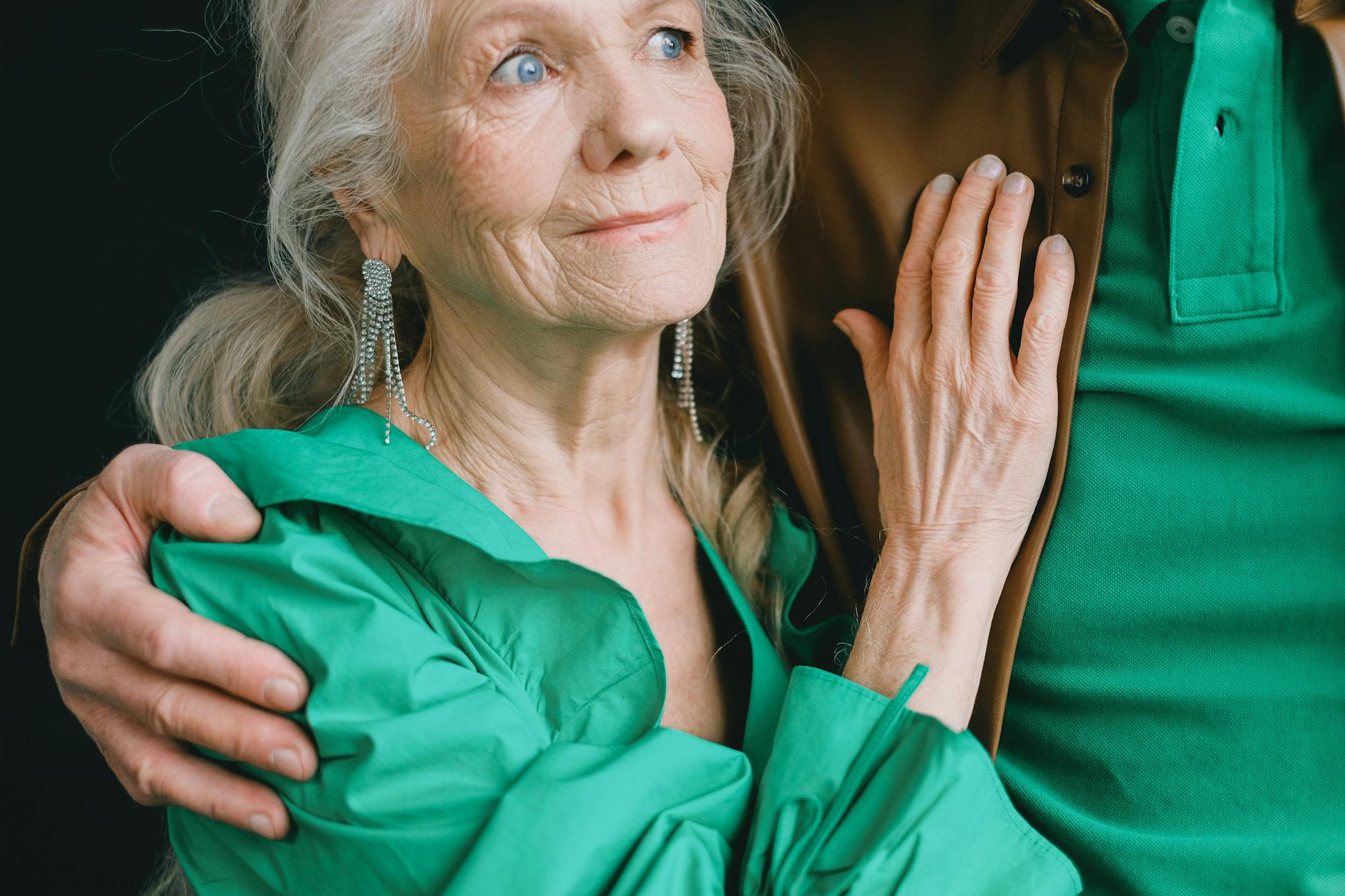
These preferences—aesthetic, sensory, social—seem to comprise a kind of self that is more durable than biography. This is a humbling mirror. It suggests that the personality traits, quirks, and preferences we think of as our “true selves” are more fundamental than the resume, the achievements, the experiences we usually use to define ourselves. A person stripped of memory, intelligence, and capacity reveals what they are beneath all these layers: a being with sensory preferences, with comfort zones, with ways they like to be touched and talked to.
What Hope Does This Offer for How We Think About Aging?
The lessons of dementia care reshape how we might think about aging more broadly. If selfhood persists through memory loss, through cognitive decline, then we might release some of our terror around aging. The fear is often “I’ll lose myself.” Dementia care shows that the self is more resilient, more distributed across the body and relationships, than we feared. Some aspects of self persist even in severe dementia.
This doesn’t erase the pain of dementia—for the person who develops it or the family members who witness it. But it offers a reframing: the person you love does not cease to exist when their memory fades. They change, yes. The relationship transforms. But the fundamental capacity for presence, for feeling, for connection—these often remain.
Conclusion
Dementia care teaches that memory and self are distinct. We are more than our ability to recall facts, more than our autobiographical timeline. We are embodied, relational beings whose identity lives in muscle memory, in emotional connection, in sensory preference, in the patterns learned over a lifetime. A person with severe dementia has lost access to their biography, but they have not lost themselves entirely.
For those caring for someone with dementia, this insight shifts the work from trying to restore memory to honoring the person as they are now. For all of us, it offers a quiet reassurance: the self is resilient, multifaceted, and persists in ways we don’t fully understand. We are not just our memories. We are the people we’ve become, in our bodies, in our relationships, in the irreplaceable ways we move through the world.





