Reviewed by the Help Dementia Editorial Team — our editors review every article for accuracy against guidance from the National Institute on Aging, the Alzheimer’s Association, and peer-reviewed sources.
Volunteering matters sits at the center of this dementia and brain health question.
Volunteering matters more than medication for brain health because it addresses the root mechanisms of cognitive aging in ways that pills alone cannot: it stimulates memory centers, activates multiple cognitive domains simultaneously, and rebuilds the neural networks that decline naturally with age. A landmark 20-year study of over 30,000 Americans found that volunteering just 2 to 4 hours per week reduced age-related cognitive decline by 15 to 20%, a benefit comparable to years of medication while also improving mood, purpose, and social connection. Consider the case of Margaret, a 72-year-old former teacher who joined her local literacy program as a volunteer tutor.
Within two years, her memory improved noticeably, her attention span lengthened, and her doctor noted improved markers of cognitive function—changes that began almost immediately after she started the work, suggesting something fundamental was shifting in her brain. The critical distinction is not that medication has no value, but that medication typically maintains the status quo while volunteering actively rebuilds cognitive reserve. This matters because the brain is malleable at any age, and volunteer work activates multiple neural pathways simultaneously—planning lessons, remembering student names, solving problems on the fly, managing social interactions. These compound cognitive challenges force the brain to adapt and strengthen in ways that even the most effective medications cannot replicate.
Table of Contents
- Can Volunteering Slow Cognitive Decline Better Than Medication?
- Who Showed the Greatest Brain Health Benefits From Volunteering?
- How Does Volunteering Improve Mental Health When Medication Alone Falls Short?
- What Types of Volunteering Offer the Most Brain Protection?
- When Is Volunteering Not Enough?
- Building Brain Health Through Community Contribution
- The Future of Brain Health Is Social, Not Pharmaceutical
- Conclusion
Can Volunteering Slow Cognitive Decline Better Than Medication?
The evidence strongly suggests yes. The Baltimore Experience Corps trial followed volunteers aged 60 and older who served as classroom tutors in public schools. After two years, volunteers showed measurable increases in brain volume in critical memory regions and showed no decline in memory and executive function, while the control group—who were not volunteering—experienced the expected age-related cognitive decline. This is remarkable because brain volume loss is one of the most concrete markers of neurodegeneration, and it was reversed by meaningful work, not pharmaceutical intervention. A 14-year longitudinal study tracking nationally representative samples of older adults found that simply initiating volunteering in late life decreased the risk of cognitive impairment significantly.
What made this particularly striking was that the protective effect wasn’t just about people who were already healthy choosing to volunteer; the initiation of new volunteering activity itself was the protective factor. This suggests that the cognitive benefits aren’t merely correlation—that people with better brains volunteer—but rather causation: that volunteering changes the brain. The limitation here is timing. Medication can begin working within days or weeks, while volunteering requires sustained engagement, usually over months, to show measurable effects. For someone with rapid cognitive decline or early dementia diagnosis, medication offers immediate symptom management. But for prevention and long-term cognitive health, the research increasingly shows volunteering provides deeper, longer-lasting benefits because it addresses the fundamental plasticity of aging brains rather than just managing symptoms.
Who Showed the Greatest Brain Health Benefits From Volunteering?
A UC Davis study of 2,476 older adults with an average age of 74 examined whether volunteering’s cognitive benefits held across diverse populations. The sample included 48% Black participants, 20% white, 17% Asian, and 14% Latino adults—a demographic makeup rare in brain health research. The findings were consistent: volunteering in late life was associated with better executive function and stronger episodic memory (the ability to remember specific events and details) across all groups. This matters because much of the early neuroscience research on aging was conducted on predominantly white, educated populations, and the generalizability of findings was always uncertain. The research also shows that the type of volunteering affects which brain systems benefit most. Tutoring and teaching work activates memory centers intensely because you must recall information and adapt it for others.
Mentoring work engages social cognition and planning regions. Community service or caregiving activates emotional regulation and empathy circuits. This suggests that the most effective volunteering for brain health isn’t just any service, but service work that challenges you cognitively—work that requires learning, problem-solving, and social engagement simultaneously. One important caveat: the UC Davis study and others like it are observational, not experimental. We cannot entirely rule out that people with better baseline cognitive health chose to volunteer more often. However, the 14-year longitudinal studies that followed people from baseline and observed what happened after they initiated volunteering help address this concern, because those studies show that the initiation of volunteering itself—regardless of starting cognitive status—was protective. The strongest evidence comes from the Experience Corps trial, which randomly assigned people to volunteer or control conditions, eliminating selection bias.
How Does Volunteering Improve Mental Health When Medication Alone Falls Short?
Medication for depression or anxiety typically targets neurotransmitters—increasing serotonin, for example—but volunteering addresses the deeper psychological roots: it restores sense of purpose, rebuilds social connection, and creates evidence of competence and value. Research from the National Alliance on Mental Illness (NAMI) shows that volunteering correlates with improved life satisfaction, happiness, self-esteem, and perceived mental health, with the benefits increasing with more frequent volunteering. Importantly, these improvements are reported by the volunteers themselves and validated in clinical assessments; they are not merely subjective feelings but measurable shifts in mood and outlook. However, research also suggests an important limitation: volunteering excels at enhancing positive emotions and building meaning, but may be less effective at reducing acute negative emotions stemming from specific life traumas or severe mental health crises.
A recent study in Frontiers in Psychology found that while volunteering could boost overall life satisfaction and happiness, it was not particularly effective at resolving the kind of intense, trauma-based negative affect that often requires medication or therapy. This means volunteering works best as a complementary approach, not a replacement for treatment in serious mental health conditions. The distinction is practical: someone experiencing clinical depression benefits from medication to restore baseline neurochemical balance, then volunteering to rebuild meaning and connection. But trying volunteering alone while untreated depression makes engagement impossible would be setting someone up for failure. The research is clear that volunteering and evidence-based treatments work best together.
What Types of Volunteering Offer the Most Brain Protection?
The most effective volunteering for brain health combines cognitive challenge, social engagement, and a sense of meaningful contribution. Tutoring, as shown in the Experience Corps research, activates multiple brain systems: you must remember information, tailor explanations to individual learners, manage classroom dynamics, and solve problems in real-time. Teaching a literacy class or mathematics tutoring requires this constant cognitive flexibility, which is exactly what declining brains need to stay sharp. Mentoring or coaching work shows similar benefits because you’re guiding someone else’s growth, which requires empathy, long-term thinking, and problem-solving. In contrast, volunteering that is purely repetitive—sorting donations, filing, or simple assembly work—shows less cognitive benefit. This doesn’t mean it’s worthless; the social connection and sense of contribution still matter.
But for brain health specifically, the research suggests seeking volunteer roles that stretch your capabilities and require ongoing learning. A retired accountant might serve as a financial literacy mentor. A former nurse might help coordinate health education programs. The best volunteer work is often one step beyond your comfort zone. The practical comparison: one hour per week of challenging volunteer work appears to provide greater cognitive protection than three hours of routine work. The 2-4 hour per week recommendation from the major studies likely assumes moderate cognitive demand. This is encouraging news for people with limited mobility or energy—you don’t need massive time commitments, but the time you do give should be cognitively engaging.
When Is Volunteering Not Enough?
This is the essential caveat that the title itself can obscure: volunteering matters more than medication for certain aspects of brain health—particularly prevention and long-term cognitive reserve—but this does not mean volunteering can replace medication for diagnosed cognitive decline or neurological disease. Someone with Alzheimer’s disease diagnosis needs medication (cholinesterase inhibitors, memantine) to slow symptom progression. Volunteering might enhance quality of life and provide psychological benefits, but it cannot reverse the neuropathological changes of Alzheimer’s the way medication can modulate. The research establishing volunteering’s superiority is strongest in healthy aging and mild cognitive impairment prevention, not in treating established dementia. Similarly, for depression or anxiety with biological components, medication provides faster symptom relief than volunteering alone.
Someone in acute crisis—suicidal ideation, severe anxiety attacks, or rapid functional decline—needs medical intervention, not volunteering. The evidence suggests volunteering works best as a prevention strategy and as a complement to treatment, not as a replacement for it. There’s also a practical limitation: volunteering requires sufficient cognitive and physical function to engage meaningfully. Someone in advanced dementia or with severe psychiatric symptoms may not be able to access volunteering without significant support. The protective effects of volunteering are most accessible to people who still have the capacity to engage, which is precisely the population that benefits most from prevention strategies.
Building Brain Health Through Community Contribution
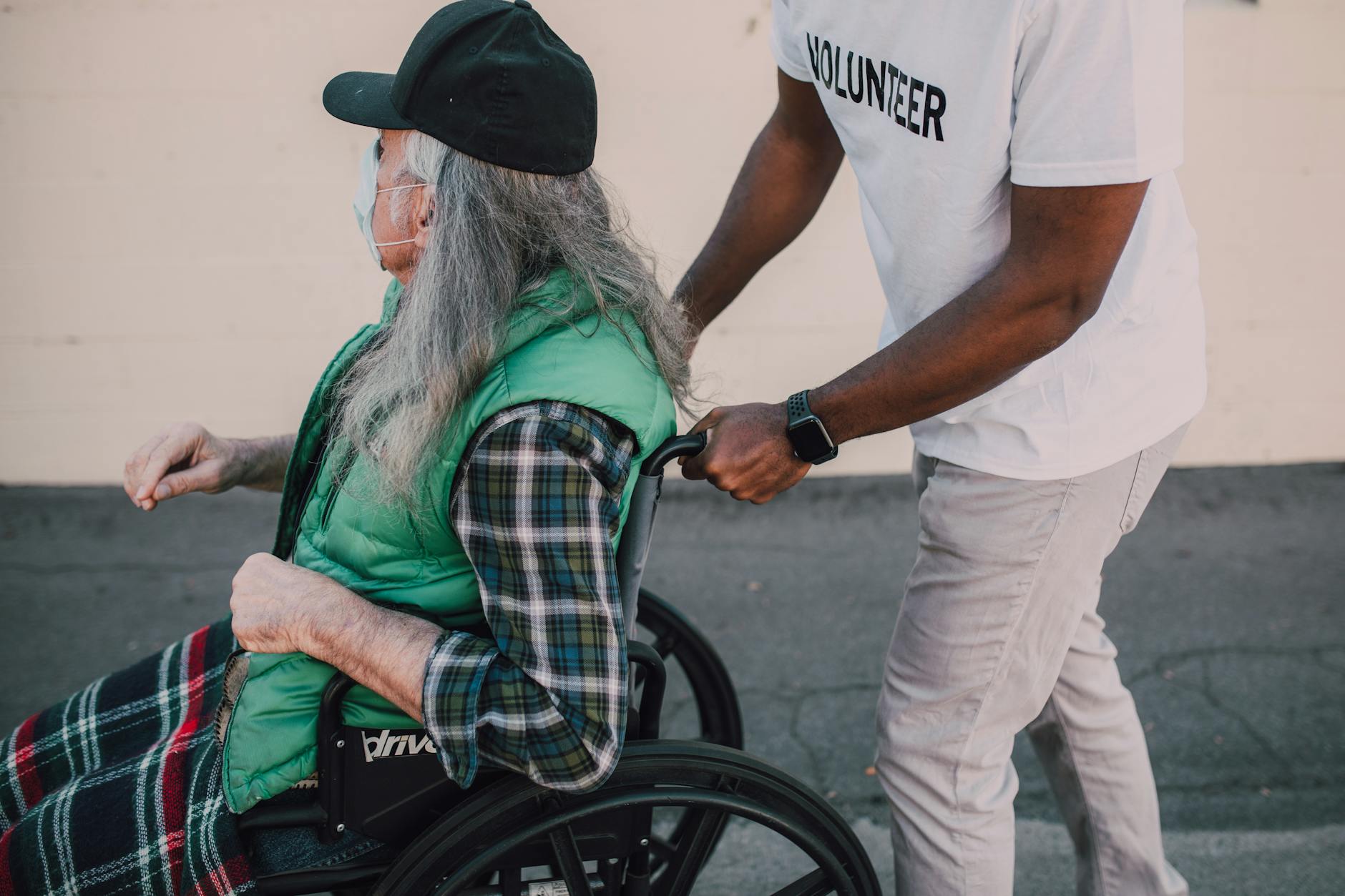
The power of volunteering extends beyond the individual volunteer to reshape how communities approach brain health itself. When communities organize volunteer programs specifically designed for older adults—like Experience Corps—the benefits accumulate: volunteers get cognitive protection, students get tutoring, schools get resources, and the entire community gains a model that works. Cities like Baltimore and Philadelphia have expanded Experience Corps programs because the results were so clear: better cognitive outcomes for volunteers, improved reading achievement for students, and measurable strengthening of community bonds.
The infrastructure matters. Effective volunteer programs provide transportation, training, social support, and meaningful recognition. A volunteer who shows up to tutor and is welcomed into the school community, trained in reading instruction, and celebrated for her contribution experiences very different brain benefits than someone who feels marginalized or uncertain. The best volunteer experiences combine purpose with belonging, which activates both the cognitive and emotional systems that decline with age.
The Future of Brain Health Is Social, Not Pharmaceutical
The research trajectory is clear: neuroscience is increasingly recognizing that brain health is not solvable through medication alone. The most significant cognitive declines come from loss of purpose, social isolation, and absence of meaningful challenge. Volunteering addresses all three simultaneously. As pharmaceutical options for dementia plateau—despite decades of research, disease-modifying drugs for Alzheimer’s remain limited and modest in effect—the focus is shifting to what actually works: building cognitive reserve, maintaining social engagement, and sustaining purposeful activity throughout life.
This doesn’t diminish the role of medication, which will remain essential for symptom management and for people with serious psychiatric or neurological conditions. But it fundamentally reframes what medicine can and cannot do. Medicine is one tool; volunteering is another. The evidence suggests that for long-term brain health, the second tool may ultimately be more powerful.
Conclusion
Volunteering matters more than medication for brain health because it activates the brain’s capacity for change and growth in ways that medications—designed to manage symptoms—cannot replicate. The research is consistent across diverse populations and study designs: regular volunteer work reduces cognitive decline, protects memory function, improves executive capacity, and strengthens emotional wellbeing. For someone concerned about brain health, starting a volunteer commitment may protect cognitive function more effectively than hoping future medications will save you from decline.
The path forward is clear: if you are healthy, volunteer now as the most powerful investment in future brain health. If you have been diagnosed with cognitive impairment or mental health conditions, use medication as needed while also building volunteer engagement as a complementary tool. Talk with your healthcare provider about how to combine these approaches. The brain remains plastic throughout life, capable of adaptation and growth—but only if we give it meaningful work to do.
You Might Also Like
- Why taking 8,000 steps a day Matters More Than Medication for Brain Health
- Why taking 8,000 steps a day Matters More Than Medication for Brain Health
- Why socializing weekly Matters More Than Medication for Brain Health
For more, see NIH MedlinePlus — dementia.