Reviewed by the Help Dementia Editorial Team — our editors review every article for accuracy against guidance from the National Institute on Aging, the Alzheimer’s Association, and peer-reviewed sources.
Treatment response sits at the center of this dementia and brain health question.
Treatment response monitoring is fundamentally changing how doctors approach Alzheimer’s care by allowing them to track how individual patients respond to medications and interventions over time, then adjust treatment plans based on actual results rather than assumptions. Rather than following a one-size-fits-all protocol, clinicians can now observe specific cognitive changes, functional abilities, and biomarker improvements in each patient, then make informed decisions about whether to continue, modify, or change their treatment strategy. For example, a 72-year-old patient starting a new cholinesterase inhibitor can be monitored through regular cognitive assessments, functional tests, and blood biomarkers every few months—if the monitoring shows stabilization or slowing of decline, the treatment continues; if it shows continued rapid decline, the doctor might try a different medication or dosage, or add a complementary therapy.
This shift toward monitoring-driven care represents a significant departure from traditional Alzheimer’s management. Previously, many patients received medications and other interventions with limited objective feedback about whether the treatment was actually working for them. Memory care providers had to rely on general guidelines and family observations, which often meant valuable time was lost on ineffective treatments. With systematic treatment response monitoring, care becomes genuinely personalized—tailored not to a statistical average Alzheimer’s patient, but to the actual biological and cognitive trajectory of the specific person sitting in the clinic.
Table of Contents
- What Exactly Is Treatment Response Monitoring in Alzheimer’s Disease?
- Measuring Cognitive and Functional Changes with Accuracy and Limitation
- Biomarker Tracking and Early Intervention Decisions
- Adapting Treatment Plans Based on Individual Response
- Challenges in Monitoring and Data Interpretation
- Technology and Tools in Response Monitoring
- The Future of Personalized Alzheimer’s Management
- Conclusion
- Frequently Asked Questions
What Exactly Is Treatment Response Monitoring in Alzheimer’s Disease?
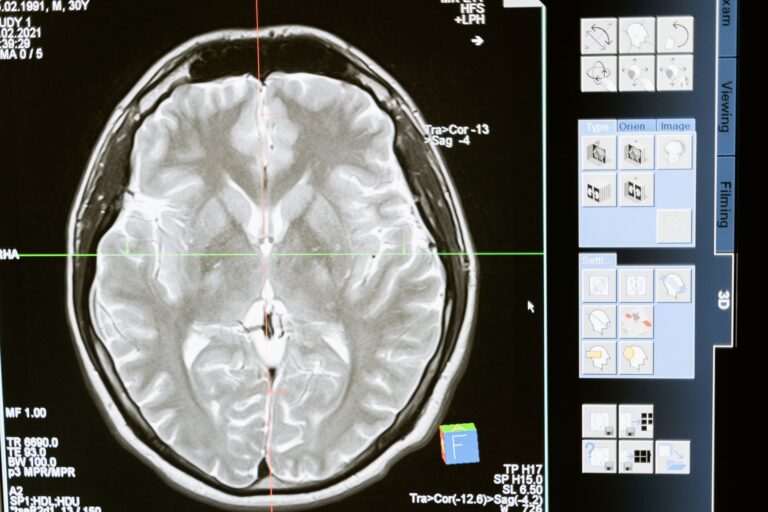
Treatment response monitoring in Alzheimer’s care involves regularly measuring objective markers of disease progression and treatment effects. This includes cognitive testing (such as the Montreal Cognitive Assessment or ADAS-Cog), functional assessments (evaluating ability to perform daily activities), imaging results (PET or MRI scans), blood-based biomarkers (like phosphorylated tau or amyloid-beta levels), and caregiver observations of behavioral and functional changes. The data from these measurements is then used to determine whether the current treatment is slowing decline, stabilizing function, or producing no benefit—informing decisions about whether to continue, adjust, or change the treatment approach.
The key distinction is that monitoring is continuous and systematic, not episodic or casual. Rather than seeing a patient annually and making broad judgments, care teams establish baseline measurements at the start of treatment, then assess at regular intervals—typically every 2-4 months for certain measures, quarterly for comprehensive evaluations, and annually for imaging. This creates an objective record of how a specific person is progressing, which is crucial because Alzheimer’s progression varies enormously between individuals. One patient on the same medication might show meaningful slowing of decline, while another continues declining at the original rate; treatment response monitoring reveals this difference and enables the care team to respond appropriately to each patient’s individual trajectory.

Measuring Cognitive and Functional Changes with Accuracy and Limitation
Cognitive assessments form the backbone of treatment response monitoring, with tests like the Montreal Cognitive Assessment, Mini-Cog, or Alzheimer’s Disease Assessment Scale-Cognition designed to measure memory, language, attention, and problem-solving. functional assessments measure the patient’s ability to perform activities of daily living—cooking, managing medications, dressing, bathing—which often decline faster than cognitive performance and are equally or more important to quality of life. Together, these assessments provide measurable data: a patient’s score at baseline, at 3 months, at 6 months, and so on, allowing the care team to see whether decline is slowing, stabilizing, or accelerating. However, these measurements have important limitations that clinicians must understand.
Cognitive test scores can be influenced by factors unrelated to Alzheimer’s disease progression—depression, anxiety, sleep deprivation, medication side effects, or even the patient’s stress about taking the test itself can affect performance on any given day. Additionally, early Alzheimer’s disease often shows regional or domain-specific cognitive changes; one patient might primarily lose memory while another loses language skills or visual-spatial abilities first, making it difficult to choose a single test that captures the clinically relevant change in every patient. Functional decline is similarly complex—an elderly patient might lose the ability to balance a checkbook due to progressive cognitive impairment, or due to arthritis making fine motor tasks difficult, or due to vision loss, each of which requires a different intervention. These nuances mean that monitoring must be interpreted thoughtfully, with awareness of what is actually being measured and what could confound the results.
Biomarker Tracking and Early Intervention Decisions
Modern Alzheimer’s care increasingly relies on blood-based biomarkers—phosphorylated tau (p-tau), amyloid-beta, neurofilament light chain, and others—that can be measured regularly without invasive procedures. These biomarkers correlate with pathological changes in the brain and can reveal disease progression even when cognitive symptoms are minimal. Tracking these biomarkers allows treatment response monitoring to begin earlier than traditional cognitive testing alone would allow, potentially enabling intervention during the preclinical or mild cognitive impairment stages when treatments may have greater impact. For instance, a patient with normal cognition but biomarker evidence of brain amyloid pathology could be started on an amyloid-targeting monoclonal antibody like aducanumab or lecanemab, with blood biomarkers tracked every few months to see if the therapy is reducing brain pathology before cognitive decline becomes apparent.
The practical value is substantial but still evolving. A 65-year-old with no cognitive symptoms whose blood biomarkers show elevated phosphorylated tau and amyloid might now be considered for preventive therapy, with biomarker monitoring guiding the intensity and approach of treatment. If biomarkers stabilize or improve with treatment, there is objective evidence that the therapy is working. If biomarkers continue worsening despite the medication at standard doses, the care team might increase the dose, switch medications, or add a complementary therapy. This represents a fundamental change from managing patients based on their cognitive and functional symptoms alone, allowing intervention before significant impairment has developed.

Adapting Treatment Plans Based on Individual Response
One of the most significant practical applications of treatment response monitoring is the ability to adapt treatment plans in real time rather than committing to a fixed protocol. When a patient starts a disease-modifying therapy like lecanemab, a monoclonal antibody targeting amyloid, cognitive and functional monitoring begins immediately. If at 6 months the patient’s cognitive score has remained stable while an untreated control patient has declined 3 points, and biomarkers show reduction in brain amyloid, the evidence suggests the treatment is working and continuation is justified. Conversely, if the patient continues declining at the same rate as before treatment, and biomarkers remain unchanged, the medication is unlikely to provide benefit, and the clinician might discontinue it to avoid ongoing infusions or other burdens and costs while exploring alternative approaches.
This approach differs markedly from older neurology practice where medications were often continued indefinitely regardless of apparent benefit. With systematic monitoring, treatment duration and intensity can be personalized. Some patients might benefit from a lower dose of medication paired with more frequent cognitive monitoring to detect any worsening. Others might require maximum-dose therapy plus combination treatments targeting different pathological mechanisms. A 78-year-old patient with moderate cognitive impairment, multiple comorbidities, and shorter life expectancy might reasonably choose a less aggressive monitoring and treatment approach than a 65-year-old with mild impairment and good overall health, and response monitoring data allows clinicians to counsel families transparently about what the actual evidence shows in their specific situation rather than applying a generic treatment protocol.
Challenges in Monitoring and Data Interpretation
Despite its promise, treatment response monitoring in Alzheimer’s care faces substantial practical and analytical challenges. Cognitive test performance varies due to practice effects (patients improve simply by taking the same test repeatedly), fluctuations in mood or fatigue, and the inherent variability of human cognition day-to-day. Determining whether a patient’s score declined due to disease progression versus normal test variability requires statistical sophistication and careful baseline establishment. Additionally, not all patients have access to the same monitoring capabilities—advanced biomarker testing, specialized cognitive testing, and MRI or PET imaging may be available in academic medical centers but unavailable in community clinics, creating disparities in who can access truly personalized, monitoring-driven care.
A critical limitation is that cognitive decline in early Alzheimer’s disease is often slow and variable, making it difficult to distinguish real treatment effects from normal variability over short timeframes. A patient might show a 2-point decline in cognitive score between 3-month assessments, but the measurement error might be ±3 points, making it unclear whether actual progression has occurred. This ambiguity can lead to prolonged uncertainty about whether a treatment is working, during which time medication burdens and costs accumulate. Furthermore, the interpretation of monitoring data requires expertise—a clinician must understand not just the absolute numbers but the clinical significance of changes, whether observed changes are consistent with the specific pathology likely present in that patient, and how to weight objective monitoring data against the patient’s and family’s subjective observations and preferences. Misinterpretation can lead to inappropriate treatment discontinuation or unnecessarily aggressive escalation.

Technology and Tools in Response Monitoring
Digital and automated tools are increasingly being incorporated into Alzheimer’s treatment response monitoring, reducing the burden of in-office testing and enabling more frequent assessment. Computerized cognitive testing platforms allow patients to complete assessments remotely and generate automated reports of their cognitive trajectory. Wearable devices track sleep, activity, and gait patterns—all of which are sensitive to cognitive decline in Alzheimer’s disease. Telehealth visits allow specialists to conduct cognitive assessments and review monitoring data with patients and families without requiring frequent travel to a medical center.
For example, a memory clinic might have a patient complete a computerized cognitive test battery at home monthly, with results automatically uploaded and reviewed by the neuropsychologist, who alerts the physician to any significant changes and recommendations for monitoring adjustments or treatment modifications. These technologies extend the reach of personalized monitoring to patients in rural areas or those with mobility limitations, but they also introduce new complexities. Automated cognitive testing may miss subtle changes that an experienced clinician would catch, or conversely, might over-interpret noise as signal. Wearable data about activity and sleep is interesting but requires interpretation—does a decline in activity represent Alzheimer’s-related functional decline or depression or medical illness? The patient and family must also be engaged and compliant with monitoring; a patient who skips remote testing or reports inaccurate information about their own function undermines the entire system. The promise of frequent, objective monitoring data must be balanced against the realistic burden placed on patients and families managing a progressive, demanding illness.
The Future of Personalized Alzheimer’s Management
As disease-modifying treatments for Alzheimer’s disease continue to improve, treatment response monitoring will become increasingly central to care decisions. Combination therapies targeting multiple pathological mechanisms—amyloid, tau, neuroinflammation—will require sophisticated monitoring to determine which combinations work best in which patients and when to escalate or de-escalate intensity. Artificial intelligence and machine learning approaches may help interpret complex monitoring datasets, identifying patterns that distinguish true treatment response from noise and predicting which patients are most likely to benefit from specific interventions.
Genetic and biomarker-based subtyping may eventually allow clinicians to predict in advance which patients are most likely to respond to a given therapy, directing monitoring efforts more efficiently. The vision of truly personalized Alzheimer’s care rests on the foundation of treatment response monitoring—the ability to measure, in each individual patient, what is actually happening with their disease and how they are responding to interventions. This requires continued investment in accessible biomarker testing, cognitive assessment tools that work across diverse populations, and training for clinicians to interpret complex monitoring data thoughtfully. As the field advances, treatment response monitoring will likely shift earlier in the disease course, toward preventing symptom onset in people with biomarker evidence of pathology but no cognitive symptoms, and will become more granular, measuring specific domains of cognition and function most likely to show change with particular treatments.
Conclusion
Treatment response monitoring transforms Alzheimer’s care from a protocol-driven, population-based approach to a truly personalized, evidence-based practice. By systematically measuring how individual patients respond to medications and interventions—through cognitive assessments, functional evaluations, biomarkers, and imaging—clinicians can make informed decisions about whether treatments are working and adjust plans accordingly. This approach honors the reality that Alzheimer’s disease manifests differently in each person and that the same treatment produces vastly different results depending on individual biology and disease pathology.
For patients and families facing an Alzheimer’s diagnosis, insisting on systematic treatment response monitoring can meaningfully improve outcomes. This means working with clinicians who establish baseline cognitive and functional measures, regularly reassess using the same objective tools, track relevant biomarkers, and use the data to guide treatment decisions rather than continuing ineffective therapies indefinitely. While monitoring-driven care requires more active engagement and frequent visits than traditional approaches, the payoff is significant: care tailored to what is actually happening in that person’s brain and body, not assumptions about what should happen. As treatments improve and monitoring tools advance, personalized Alzheimer’s care anchored in objective measurement of treatment response will become the standard of practice.
Frequently Asked Questions
How often should treatment response monitoring occur in Alzheimer’s care?
Monitoring schedules vary depending on the stage of disease, specific treatments, and which measures are being tracked. Cognitive and functional assessments are typically done every 3-6 months during active treatment. Blood biomarkers can be tracked quarterly or biannually. Brain imaging (MRI or PET) is usually done annually. More frequent monitoring may occur if treatments are being adjusted or if there are concerns about accelerated decline.
Can treatment response monitoring predict which Alzheimer’s medications will work for my parent?
Not in advance. However, baseline biomarkers and cognitive assessment can provide some clues about whether specific disease-modifying treatments are appropriate. For example, amyloid-targeting monoclonal antibodies require evidence of brain amyloid pathology. Once treatment begins, systematic monitoring over 3-6 months provides evidence of whether that specific medication is slowing decline in that specific person.
What if monitoring shows my relative’s treatment isn’t working? Does this mean Alzheimer’s is untreatable?
No. If one medication shows no benefit, alternatives exist—different classes of disease-modifying drugs, combination therapies, or therapies targeting different pathological mechanisms like tau or neuroinflammation. Monitoring that identifies a treatment as ineffective actually opens the door to trying something more likely to help, rather than wasting months or years on a medication providing no benefit.
Are blood biomarkers for Alzheimer’s available through my regular doctor?
Availability varies by location. Specialty clinics, memory centers, and academic medical centers commonly offer blood biomarker testing. Many primary care offices do not yet have access, though this is changing as tests become more standardized and commercialized. You may need a referral to a neurologist or gerontologist to access comprehensive biomarker monitoring.
How much does Alzheimer’s treatment response monitoring cost?
Costs vary widely depending on which tests are included. Cognitive assessment through a neuropsychologist might be $500-$1,500. Blood biomarker panels range from $200-$800 depending on which markers are tested. Brain imaging (MRI or PET) can cost $1,000-$3,000. Insurance coverage varies; some plans cover these tests when medically necessary, others do not. Discuss costs and coverage with your care team and insurance company in advance.
Can treatment response monitoring help with Alzheimer’s prevention if I have no symptoms?
Possibly. If you have risk factors, a family history, or biomarker evidence of Alzheimer’s pathology but no cognitive symptoms, some clinicians now recommend preventive therapy with regular biomarker and cognitive monitoring to assess whether treatment is slowing or preventing symptom onset. This is a newer approach still being studied, so discuss the evidence and your individual situation carefully with your doctor.
You Might Also Like
- Comprehensive Alzheimer’s Care Plans Integrate Multiple Treatment Approaches
- Hybrid Care Delivery Models Support Rural Alzheimer’s Patient Access
- Care Coordination Technology Improves Alzheimer’s Healthcare Delivery
For more, see NIH MedlinePlus — cognitive testing.