Reviewed by the Help Dementia Editorial Team — our editors review every article for accuracy against guidance from the National Institute on Aging, the Alzheimer’s Association, and peer-reviewed sources.
Minute cognitive sits at the center of this dementia and brain health question.
Your doctor can administer a five-minute cognitive test right now—likely during your next annual checkup—that screens for early dementia signs with 80.6% sensitivity and 84.11% specificity for detecting cognitive impairment. The most established option is the Five-Minute Cognitive Test (FCT), which focuses on episodic memory and has proven particularly effective at catching early Alzheimer’s disease. If your primary care doctor uses the newer 5-Cog assessment, you may complete picture-based memory screening and symbol matching tasks; a 2024 study from Montefiore Einstein found that this brief assessment, when combined with electronic medical record recommendations, led to a 3-fold improvement in diagnosis and treatment outcomes in primary care settings.
These quick assessments are designed to fit seamlessly into routine office visits. They’re not diagnostic tools—no single test can diagnose dementia—but rather screening instruments meant to flag whether further evaluation is warranted. This article covers how these tests work, what early dementia signs they detect, the specific tests your doctor might use, important limitations you should understand, and what happens after screening suggests cognitive concerns.
Table of Contents
- What Is the Five-Minute Cognitive Test Your Doctor Can Administer During an Office Visit?
- How the Five-Minute Cognitive Test Detects Early Dementia Signs
- The Mini-Cog as Your Doctor’s Fastest Screening Option
- The 5-Cog Assessment and How New Research Is Changing Early Dementia Detection
- What These Five-Minute Tests Cannot Do and Why Additional Testing Matters
- Other Cognitive Screening Tools Your Doctor Might Use
- Why Early Detection Matters and What Comes Next
- Conclusion
What Is the Five-Minute Cognitive Test Your Doctor Can Administer During an Office Visit?
The Five-Minute Cognitive test (FCT) is a structured assessment validated through National Center for Biotechnology Information research showing 80.6% sensitivity and 84.11% specificity for detecting cognitive impairment. It emphasizes episodic memory testing—specifically, your ability to remember recent events and new information—which gives it an advantage for early Alzheimer’s disease detection. The test is straightforward enough that your primary care doctor, neurologist, or nurse practitioner can administer it with minimal specialized training, making it practical for routine office visits rather than requiring a referral to a specialist.
An alternative that’s even faster is the Mini-Cog, which takes just three minutes to complete and one minute to score. It combines a word-recall test with a scored clock-drawing test, where you’re asked to draw a clock showing a specific time. The clock-drawing component captures executive function and visuospatial reasoning, not just memory. For comparison, while the Mini-Cog is quicker and simpler, the Five-Minute Cognitive Test provides more comprehensive episodic memory assessment, which is why some offices use both depending on the clinical situation.

How the Five-Minute Cognitive Test Detects Early Dementia Signs
The test specifically targets the cognitive domains that change earliest in dementia: memory of recent events, concentration, and the ability to follow instructions or organize information. When you struggle to remember something you just heard or read, or when your attention wavers during the test, those are signals that warrant further investigation. The test may also reveal changes in processing speed or difficulty with verbal fluency—signs that something in your cognitive baseline has shifted.
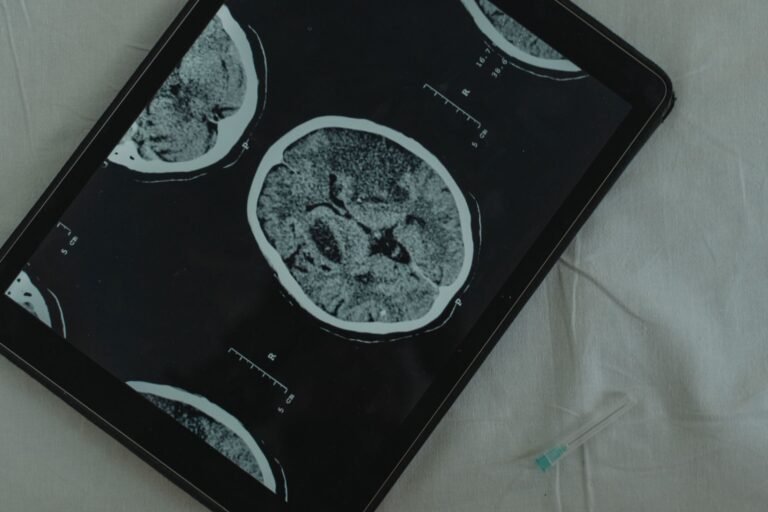
However, a critical limitation: no single cognitive test can diagnose dementia. Your doctor combines these screening results with your medical history, symptoms you report, a neurological examination, brain imaging (like MRI), blood work that can now detect biomarkers associated with Alzheimer’s disease, and observation of how you function in daily life. If the FCT suggests impairment, your doctor will typically order more comprehensive neuropsychological testing, imaging, or bloodwork before discussing any diagnosis. A positive screening is a starting point for further investigation, not a final answer.
The Mini-Cog as Your Doctor’s Fastest Screening Option
The Mini-Cog has become increasingly popular in primary care because it takes so little time and requires minimal equipment—just a piece of paper and a pen. The recall component asks you to remember three words, and the clock-drawing test asks you to draw a clock face and set it to a specific time. The test is scored quickly by your doctor right there in the office: if you recall two or three of the words and draw the clock correctly, the results suggest normal cognition. If you struggle with either component, it raises the possibility of impairment.
The Mini-Cog’s simplicity is both a strength and a limitation. It’s quick enough that it can be incorporated into every primary care visit, and the clock-drawing component captures things that pure memory tests miss. But if you have visual-spatial difficulties, tremors that affect handwriting, or language barriers that make instruction-following harder, the test may not accurately reflect your actual cognitive status. This is why your doctor should interpret results in context with your overall presentation and history.

The 5-Cog Assessment and How New Research Is Changing Early Dementia Detection
A 2024 study published in Nature Medicine described the 5-Cog assessment, a brief tool that takes roughly five minutes and includes picture-based memory screening, symbol-matching tasks, and documentation of whether you’ve reported cognitive complaints to your doctor. The research from Montefiore Einstein found something remarkable: when primary care doctors used the 5-Cog assessment paired with electronic medical record alerts and treatment recommendations, patients received three times better diagnostic and treatment outcomes compared to standard care. This suggests that the test’s value isn’t just in the screening itself, but in how it prompts doctors to act on the results systematically.
The 5-Cog is notable because it bridges screening and clinical decision-making. Rather than simply flagging impairment and leaving the next steps unclear, the assessment generates recommendations for further workup or specialist referral directly in the medical record. For patients, this means that a positive screen is more likely to lead to concrete next steps rather than ambiguous results. The tradeoff is that not all practices have yet adopted this newer tool; you may encounter the more established Mini-Cog or FCT during your visit, both of which are well-validated and perfectly appropriate for initial screening.
What These Five-Minute Tests Cannot Do and Why Additional Testing Matters
These brief cognitive screens serve one purpose: to identify whether your performance suggests possible cognitive impairment. They cannot determine the cause of impairment, cannot measure how much impairment is present, and cannot predict whether you will develop dementia. A person can score abnormally on the Five-Minute Cognitive Test for reasons that include depression, sleep deprivation, delirium from a urinary tract infection, medication side effects, vitamin B12 deficiency, or normal aging. This is precisely why physicians insist on combining cognitive testing with a full evaluation.
If your screening test suggests possible impairment, your doctor will want to review your medications, run blood tests to rule out reversible causes, and likely order brain imaging. You might see a neurologist or neuropsychologist for more detailed testing. The Montreal Cognitive Assessment (MoCA), which takes about ten minutes, may be administered to provide a more comprehensive picture; it detects mild cognitive impairment with 90% sensitivity and mild Alzheimer’s disease with 100% sensitivity, compared to much lower sensitivity with older screening tools. The point is: a five-minute screen is a trigger for evaluation, not a conclusion.

Other Cognitive Screening Tools Your Doctor Might Use
Beyond the Five-Minute Cognitive Test and Mini-Cog, your doctor has other established options. The Montreal Cognitive Assessment (MoCA) is a 10-minute test with 30 questions that screens for mild cognitive impairment; a score of 26 or higher is considered normal, while scores below 26 suggest possible impairment. It’s more comprehensive than the FCT, evaluating memory, attention, language, abstraction, and executive function.
The SAGE (Self-Administered Gerontological Evaluation) test is unique because you complete it on your own with just pen and paper, taking 10 to 15 minutes; it covers orientation, language, calculations, memory, abstraction, and executive function and is designed specifically to detect early Alzheimer’s disease. The choice of which test your doctor uses often depends on available time, the patient’s capabilities (for example, the SAGE and MoCA require intact vision and fine motor control), and whether there are specific concerns about certain cognitive domains. Someone with suspected memory impairment might benefit from the episodic memory emphasis of the Five-Minute Cognitive Test, while someone with possible language or attention difficulties might be better served by the broader MoCA. Your doctor selects the tool based on your presentation and the clinical question being asked.
Why Early Detection Matters and What Comes Next
Early dementia screening has shifted from being a specialized neurological concern to a routine part of primary care. The reason is straightforward: if cognitive impairment is detected early, there are interventions—medications, cognitive training, lifestyle changes, management of vascular risk factors—that may slow decline or improve quality of life. Missing the opportunity to identify impairment early means missing the window when some of these interventions are most effective.
If you’re concerned about cognitive changes you’ve noticed in yourself or a loved one, bring these observations to your next doctor’s appointment. You don’t need to wait for your doctor to suggest screening; asking directly—”I’d like a cognitive screening test because I’ve noticed some memory changes”—often prompts assessment. The tests described in this article are quick, non-invasive, and designed to be administered in a regular office visit, making them accessible to anyone concerned about their cognitive health.
Conclusion
Your doctor can screen for early dementia signs during a routine visit using one of several validated five-minute (or near five-minute) cognitive tests, most commonly the Five-Minute Cognitive Test with its 80.6% sensitivity for detecting impairment, the faster Mini-Cog, or the newer 5-Cog assessment. These tools are designed to be simple, practical, and sensitive enough to catch real cognitive changes while being fast enough to fit into standard office hours.
Remember that a positive screening is not a diagnosis; it’s an indication that further evaluation is needed, which may include specialist consultation, brain imaging, bloodwork, and more comprehensive neuropsychological testing. If you’re experiencing memory problems, increased confusion, difficulty concentrating, or if others have noticed personality or behavioral changes, discuss screening with your doctor at your next visit. Early detection of cognitive impairment, when reversible causes can be ruled out and when interventions are most likely to help, is one of the most valuable preventive health steps you can take.
You Might Also Like
- Why Dementia Patients Respond to Music From Their Youth Even When They Cannot Recognize Family
- The Dementia Friendly Church Program That Is Helping Congregations Support Affected Families
- Why 4 Out of 5 Doctors Do Not Mention the New Dementia Blood Test During Annual Physicals
For more, see Alzheimer’s Association.