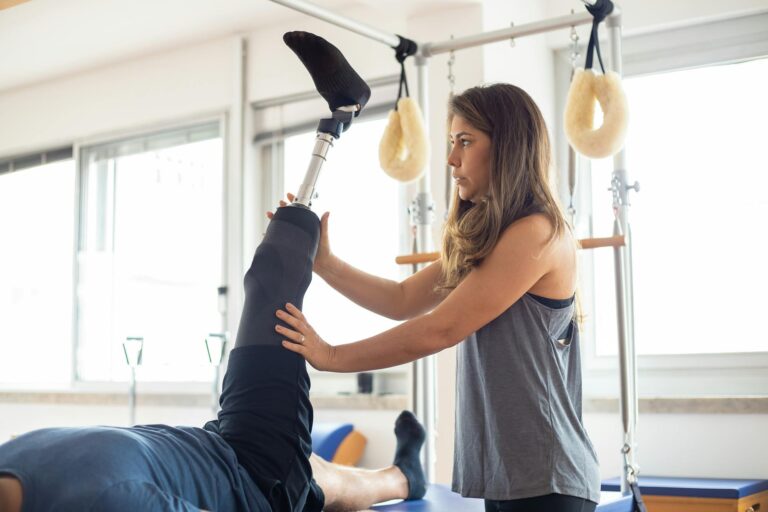
Physical therapy for lumbar spine recovery typically incorporates a structured program of nine key exercises and movement patterns designed to rebuild strength, improve flexibility, and restore function to the lower back. These exercises target the core stabilizer muscles, address stiffness in the spine and hips, and strengthen the gluteal muscles that support the lumbar region—working together to reduce pain and prevent future injury. A patient recovering from a disc herniation, for instance, would start with gentle stabilization work like bird dog exercises and progress toward more demanding movements over the course of four to six weeks, under guidance from a physical therapist who tailors each exercise to the individual’s specific condition and pain tolerance. This article explores nine essential exercises and techniques used in lumbar spine recovery, explains how they work, discusses optimal program duration and frequency, and covers what research tells us about their effectiveness.
Table of Contents
- Why Core Stabilization Forms the Foundation of Lumbar Recovery
- Mobility Exercises That Address Spinal Stiffness and Hip Tightness
- Gluteal and Hip Strengthening for Lumbar Support
- Progressive Exercise Prescription and Duration Guidelines
- Exercise Frequency, Intensity, and the Risk of Overdoing Recovery
- Exercise Selection Based on Diagnosis and Movement Patterns
- Bridging Recovery to Lifelong Spinal Health
- Conclusion
Why Core Stabilization Forms the Foundation of Lumbar Recovery
Core stabilization is the cornerstone of lumbar spine rehabilitation because the deep abdominal and spinal muscles act as a biological corset, protecting the lumbar discs and joints from harmful movement. Physical therapists often begin recovery programs with exercises like pelvic tilts, where a patient lies on their back and gently tightens the belly muscles while controlling small hip lifts—this teaches the nervous system to engage the deep core without unnecessary tension. Bird dog exercises, rated as particularly effective by Cleveland Clinic for both preventing and recovering from back pain, involve alternating arm and leg extensions while on hands and knees, forcing the core to stabilize against rotational forces.
These foundational exercises may seem simple, but research shows that combined lumbar stabilization and gluteal strengthening protocols achieved large effect sizes with complete functional recovery in nearly 50% of participants with chronic low back pain. The critical difference between effective core work and ineffective exercise is specificity: many people perform crunches or sit-ups thinking they’re building core strength, but these movements actually increase compressive load on the lumbar spine and miss the deep stabilizer muscles entirely. A physical therapist will correct form and progression, ensuring the patient feels the core engage rather than strain the hip flexors or neck. The initial program typically spans 4-6 weeks, with patients performing these foundational exercises more frequently than other movement types before progressing to weight-bearing or dynamic variations.

Mobility Exercises That Address Spinal Stiffness and Hip Tightness
Once foundational stability improves, mobility work becomes essential because stiffness in the spine and hips directly contributes to abnormal movement patterns that perpetuate pain. Cat-cow stretches, performed on hands and knees while alternating between spinal flexion and extension, address spinal stiffness by gently mobilizing each vertebral segment and are recommended across clinical practice for this specific purpose. Lumbar rotations, which involve opening up both the back and hip structures through controlled twisting movements, improve rotational freedom that many people lose after back injury or surgery.
These exercises differ fundamentally from static stretching: they use movement and breathing to gradually restore range of motion rather than forcing the spine into end-range positions where it becomes vulnerable. However, timing matters significantly—mobility work is introduced after initial pain settles and core stability is established, not as a first step. A patient who performs aggressive lumbar rotations during the acute phase risks re-injury, whereas the same exercise in week three of recovery becomes therapeutic. Additionally, some patients with disc herniations or stenosis may find certain rotational movements uncomfortable even weeks into recovery; a good physical therapist adapts the exercises to the patient’s tolerance and underlying diagnosis rather than applying the same progression to everyone.
Gluteal and Hip Strengthening for Lumbar Support
The gluteal muscles—particularly the gluteus maximus and medius—act as powerful stabilizers of the lumbar spine during standing, walking, and bending. Weakness in these muscles forces the spine to compensate, increasing injury risk and perpetuating pain cycles. Physical therapy programs incorporate hip extension and abduction exercises that directly target gluteal strength, often progressing from lying positions to standing positions and eventually to resisted movements.
Research from a Cureus study specifically noted that combined lumbar stabilization and gluteal strengthening exercises achieved significantly better outcomes than education alone, with participants experiencing both pain reduction and restored function. The gluteal muscles are often “underactive” or inhibited in people with chronic back pain, meaning they’ve essentially forgotten how to engage properly even though they’re not structurally damaged. This creates a particular challenge in recovery: simply performing glute exercises is not enough—patients must relearn how to activate these muscles during daily movements like walking, climbing stairs, and bending. A physical therapist typically teaches this activation through cues, positioning, and feedback, making gluteal strengthening far more effective than self-directed exercise performed in the wrong muscle groups.

Progressive Exercise Prescription and Duration Guidelines
Research indicates that the most effective physical therapy programs follow a specific framework: sessions should not exceed 30 minutes in duration, performed more than 4 times per week, with a complete program cycle lasting no longer than 4 weeks before reassessment and progression. An initial 4-6 week program is standard unless a healthcare provider specifies otherwise—typically because imaging reveals severe pathology or post-surgical complications. For chronic lumbar pain, extended interventions lasting 8-12 weeks yield the largest improvements in pain relief and disability reduction according to recent research published in Frontiers in Physiology, suggesting that longer recovery timelines produce more durable results than shorter “quick fix” programs.
The distinction between initial recovery and maintenance is crucial: after completing intensive rehabilitation, patients transition to a maintenance phase of 2-3 days per week of spinal conditioning to maintain strength and prevent recurrence. Many people mistakenly believe that once pain resolves, they can abandon exercise entirely—but research shows this leads to deconditioning and eventual reinjury. Instead, lifetime spinal health requires ongoing but less frequent movement, similar to how regular cardiovascular activity maintains heart health. Patients who adopt this maintenance mindset experience dramatically lower recurrence rates than those who stop exercising as soon as pain improves.
Exercise Frequency, Intensity, and the Risk of Overdoing Recovery
The intensity and frequency of exercise follows a precise progression designed to avoid re-injury while building sufficient strength for durable recovery. Research on optimal exercise protocols suggests that more frequent sessions—more than four times weekly—combined with controlled duration produce better outcomes than longer, less frequent sessions. However, patients often make the opposite mistake: they perform too few sessions per week (perhaps once or twice) and assume that doing the exercises more intensely will compensate. This approach typically backfires, causing setbacks and prolonged pain.
A specific caution applies to post-surgical patients: while exercise training interventions are recommended to reduce pain and disability following lumbar spine surgery, the timing and intensity must respect healing timelines. A patient who underwent lumbar fusion surgery cannot begin the same progressive program as someone recovering from a disc herniation; the surgeon provides specific restrictions that must be honored for the first 6-12 weeks. Ignoring these restrictions, even with good intentions, risks hardware complications or fusion failure. Conversely, some post-surgical patients become overly cautious and avoid beneficial movement, leading to stiffness and deconditioning that complicates later recovery.

Exercise Selection Based on Diagnosis and Movement Patterns
Different lumbar pathologies respond best to different exercise approaches. Research from a Frontiers in Medicine meta-analysis found that Pilates, McKenzie therapy, and functional restoration protocols outperformed other exercise types for reducing pain and functional limitations in lumbar conditions. This means that while bird dog and pelvic tilts work well for general core weakness, a patient with lumbar disc herniation might benefit more from McKenzie-based directional preference exercises, while another patient with facet syndrome might respond better to Pilates-based core engagement.
A physical therapist determines which approach to emphasize based on movement testing, symptom behavior, and diagnostic imaging. The McKenzie approach, for example, uses repeated movements in specific directions to centralize pain—meaning pain that radiates into the leg gradually retreats back toward the spine, signaling healing progress. Functional restoration programs, by contrast, emphasize task-specific training that mimics activities of daily living, helping patients rebuild confidence in movements they fear. Understanding which exercise strategy aligns with the patient’s diagnosis prevents wasted time on ineffective protocols and accelerates recovery.
Bridging Recovery to Lifelong Spinal Health
Physical therapy for lumbar spine recovery represents not an isolated intervention but the beginning of a lifelong approach to spinal health. Once the acute recovery phase ends and pain resolves, the mindset must shift from “return to baseline” to “optimize spinal function for aging.” The maintenance phase of 2-3 sessions weekly can be performed at home or in a gym without ongoing professional supervision, but the exercises remain fundamentally the same—core stabilization, mobility work, and gluteal strengthening never stop providing benefit. As people age, maintaining spinal strength becomes increasingly important for preventing falls, maintaining independence, and avoiding the cumulative effects of deconditioning.
Future research continues to refine understanding of optimal exercise protocols, and emerging evidence suggests that combining exercise with other interventions—such as education about movement patterns and activity modification—produces superior long-term outcomes compared to exercise alone. Additionally, innovations in telehealth have made it easier for patients to maintain accountability in their maintenance programs by checking in periodically with their physical therapist, preventing the slow erosion of discipline that often occurs when people exercise entirely independently. The nine exercises outlined in this article represent not nine isolated movements but the core of a comprehensive system for building and maintaining a resilient lumbar spine.
Conclusion
Physical therapy for lumbar spine recovery relies on nine key exercises and movement patterns that target core stability, spinal mobility, and hip strengthening. These exercises follow a structured progression: initial stabilization work (4-6 weeks minimum), mobility development, progressive strengthening, and transition to a maintenance program of 2-3 sessions weekly. Research demonstrates that programs lasting 8-12 weeks with sessions exceeding 4 times per week, each lasting 30 minutes or less, produce the largest reductions in pain and disability.
Success in lumbar spine recovery requires understanding that rehabilitation is not a short-term project but the foundation for lifelong spinal health. Working with a physical therapist to ensure proper exercise form, appropriate progression, and diagnosis-specific modifications dramatically improves outcomes and reduces the risk of recurrent pain. By committing to these evidence-based exercises during recovery and maintaining them indefinitely, patients can rebuild strength, regain function, and prevent future injury.