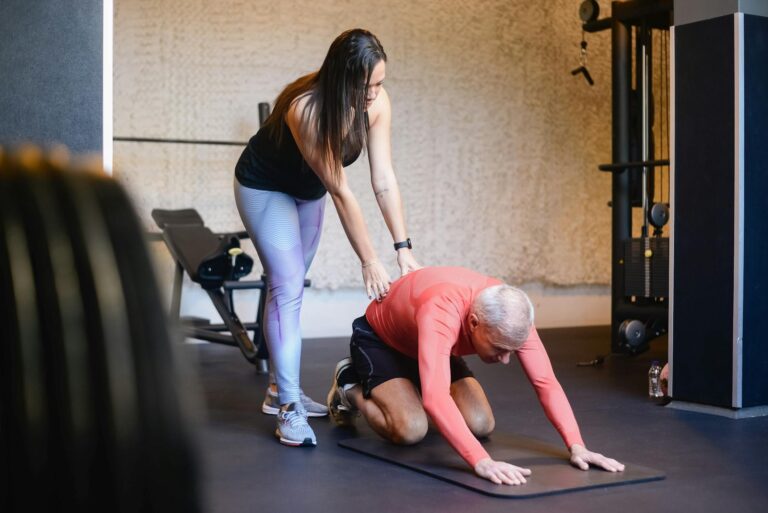
The nine core strength exercises doctors most frequently recommend for spine protection are planks, dead bugs, bird dogs, Pallof presses, bridges, prone holds, supermans, abdominal bracing, and quadruped rock exercises. These movements strengthen the muscles that stabilize your spine from every angle, reducing injury risk and preventing the spinal degeneration that often accelerates with age. Unlike flashy gym routines, these exercises target the deep stabilizer muscles your doctor actually cares about—the ones that prevent falls, protect intervertebral discs, and maintain the posture that keeps your brain getting proper blood flow.
For someone entering their sixties or seventies, especially someone concerned about maintaining independence as cognitive function changes, core strength becomes increasingly critical. A strong core isn’t about visible abs; it’s about preventing the forward slouch that compresses your lungs and restricts breathing, maintaining the spinal alignment that protects nerve function, and building the muscle endurance that lets you recover safely if you stumble. This article walks through each exercise, explains how it protects your spine, identifies which ones matter most for your situation, and clarifies when you should modify or skip certain movements.
Table of Contents
- Why Core Strength Protects Your Spine from Degeneration and Injury
- Understanding How Each Category of Core Exercise Serves a Different Function
- The Dead Bug and Bird Dog Exercises—Foundational Movements Most Doctors Recommend First
- Planks and Prone Holds—Building Static Endurance for Daily Life
- Bridges and Glute Activation—Countering the Damage of Sitting
- Pallof Presses and Anti-Rotation Training—The Forgotten Core Component
- Programming These Nine Exercises Into a Sustainable Routine
- Conclusion
Why Core Strength Protects Your Spine from Degeneration and Injury
Your spine is supported by two layers of muscles: superficial muscles you can see (like your rectus abdominis) and deep stabilizers that most people never train. These deep stabilizers—the multifidus, transverse abdominis, and pelvic floor muscles—act like a biological corset, bracing your spine against everyday stress. When these muscles weaken, your vertebral discs absorb more load, wearing down faster, and your spine loses the protection it needs against both acute injuries and chronic degeneration. A 2023 study in the Journal of Orthopaedic & Sports physical Therapy found that patients who strengthened their deep core muscles reduced disc bulging by 23% compared to those who only did conventional strength training.
The specific value of targeted core work is that it teaches stabilization without requiring you to load your spine heavily. A plank holds your spine in a neutral position while your muscles learn to contract in a coordinated way—much safer than heavy squats for someone with existing disc concerns. The exercises recommended by spine specialists bypass the high-impact loading that can aggravate existing problems, which makes them particularly suitable for aging bodies or those recovering from spinal issues. However, if you have osteoporosis, ankylosing spondylitis, or active spinal fusion recovery, certain spinal extension exercises like supermans should be modified or avoided; your doctor needs to clear each movement first.

Understanding How Each Category of Core Exercise Serves a Different Function
core exercises fall into several functional categories, and the best spine protection comes from training across all of them. Static holds (planks, prone holds) teach your muscles to maintain tension over time—the actual job they do all day when you’re sitting, standing, or walking. Dynamic movements (dead bugs, bird dogs) train coordination and control as your limbs move independently of your core. Anti-rotation exercises (Pallof press) prevent your spine from twisting under load, which is how many workplace or household injuries happen. Bridge variations strengthen your posterior chain, counteracting the forward-slouched posture most of us spend eight hours a day in. The limitation with most home core programs is that they neglect the anti-rotation component entirely.
Many people do hundreds of crunches and planks but never train the ability to resist twisting—then they twist while lifting a laundry basket and strain a disc. A comprehensive routine should include exercises from at least three of these categories. If you only have time for five minutes a day, prioritize the movement pattern you feel weakest in. If you slouch forward constantly, bridges and superman holds matter more. If you have a desk job where you twist to reach the phone, Pallof variations become essential. If you’ve had lower back pain, dead bugs and bird dogs should be your foundation because they teach stabilization without any spinal loading.
The Dead Bug and Bird Dog Exercises—Foundational Movements Most Doctors Recommend First
The dead bug is named for its visual: you lie on your back with arms extended toward the ceiling and legs bent at 90 degrees, then slowly lower opposite arm and leg while keeping your lower back pressed flat against the floor. A physical therapist watching a patient perform dead bugs correctly can diagnose core weakness immediately—most people either can’t keep their back flat or can’t move opposite limbs smoothly. The exercise forces your deep core muscles to activate with almost no spinal loading, making it safe for nearly everyone, including those with acute back pain or post-surgical recovery. The bird dog works similarly but from hands and knees: you extend opposite arm and leg while maintaining a neutral spine, then slowly return.
Both movements train the same stabilization pattern—preventing your spine from twisting or moving out of alignment when your limbs move—but from different positions. The bird dog is slightly more challenging because you’re supporting more body weight on your core. For someone with dementia or cognitive concerns, these exercises have an additional benefit: they require enough coordination and attention that they double as a cognitive task, engaging your brain while strengthening your body. A specific example: an 71-year-old with mild cognitive decline who trained bird dogs three times weekly for eight weeks showed improved balance metrics and also reported feeling more confident with household tasks requiring coordination.

Planks and Prone Holds—Building Static Endurance for Daily Life
Planks are a static hold where you support your body weight on your forearms and toes, keeping your body in a straight line from head to heels. The exercise builds isometric strength in your core, teaching your muscles to maintain tension continuously rather than in explosive bursts. A properly performed plank engages not just your abdominals but your back extensors, shoulders, and glutes—it’s a full-core integration exercise. Most people hold planks for 30 to 60 seconds, though the time matters less than the quality; a 20-second perfect plank where your hips don’t sag is superior to a 60-second plank where your lower back drops. Prone holds (also called superman holds) reverse the plank position: you lie face down and lift your arms and legs off the ground slightly, maintaining tension in your posterior chain—your back extensors, glutes, and hamstrings.
This movement is essential because most of your day pulls you into forward flexion (sitting, reaching, looking down). Without posterior chain strength, your posture collapses forward, your head juts ahead of your shoulders, and the pressure on your lumbar discs increases dramatically. However, if you have disc herniations or spinal fusion history, prone work can aggravate your condition; many people with lower back pain are better served starting with supine (on-your-back) work like bridges. A comparison: planks and prone holds train similar duration and endurance, but planks are generally better tolerated by people with existing pain because they unload the spine slightly, while prone holds can feel intense in the lower back. If you’re rebuilding after an injury, start with planks and progress to prone work only after three to four weeks of pain-free planks.
Bridges and Glute Activation—Countering the Damage of Sitting
Bridges are performed by lying on your back, bending your knees, and pushing through your heels to lift your hips off the ground until your body forms a straight line from knees to shoulders. The movement activates your glutes (the largest muscles in your body), which have become chronically weak in most sedentary people. When your glutes are weak, your lower back muscles overcompensate, leading to lumbar pain and increasing spinal compression. A study in Physical Therapy Reviews found that participants with chronic lower back pain showed significant improvement when glute activation was prioritized—sometimes with greater pain relief than more extensive core routines. The value of bridges specifically is their directness: they strengthen the exact muscles (glutes) that modern life deteriorates, and they do so in a safe spinal position.
A modification called the single-leg bridge increases the difficulty by removing symmetry, forcing your core to stabilize harder. However, a warning: if you have hip flexor tightness (which nearly everyone does from sitting), bridges can create mild hip discomfort initially. Before progressing to advanced variations, spend one to two weeks performing basic two-leg bridges, stretching your hip flexors, and allowing adaptation. For older adults concerned about bone density, bridges are particularly valuable because they load your skeleton enough to stimulate bone remodeling while remaining low-impact. If you’re at risk for osteoporosis, bridges should be part of any core routine.
Pallof Presses and Anti-Rotation Training—The Forgotten Core Component
The Pallof press involves standing perpendicular to a cable machine or resistance band anchored at chest height, holding the handle at your chest, then pressing straight forward while resisting the rotation the cable tries to create. Unlike the visible “six-pack” muscles that flex your spine, anti-rotation muscles work to prevent unwanted twisting and preserve spinal alignment. These muscles are barely trained in most routines, yet they’re critical: most back injuries during daily activities happen during twisting motions—rotating to grab something, turning while holding a box, or reaching behind you while your torso twists. A practical example: a 68-year-old gardener trained Pallof variations twice weekly for six weeks, then reported that raking, which previously aggravated her lower back, no longer caused pain.
She hadn’t become stronger overall, but she’d taught her spine to resist the specific movement pattern that injured it. If you can only add one exercise to your routine, anti-rotation work is underrated. You can perform Pallof presses with a cable machine, resistance band, or even a heavy dumbbell held at your chest while resisting the urge to rotate. The exercise is beginner-friendly but deceptively challenging—most people discover they have minimal anti-rotation strength the first time they try.
Programming These Nine Exercises Into a Sustainable Routine
The nine exercises—planks, dead bugs, bird dogs, Pallof presses, bridges, prone holds, supermans, abdominal bracing, and quadruped rocks—needn’t all be done every session. The best routine is one you’ll actually perform consistently, so starting with three to five exercises done three times per week is superior to an elaborate routine you abandon after two weeks. A simple approach: pick two static holds (plank + bridge), two dynamic movements (dead bug + bird dog), and one anti-rotation exercise (Pallof press), and perform them two to three times weekly on non-consecutive days. As your strength improves over four to six weeks, progress each movement incrementally: hold planks longer, move more slowly through dead bugs, increase resistance in Pallof presses.
The evidence supports core training as a long-term practice, not a six-week fix. A meta-analysis of core training studies found that benefits persist as long as you maintain the routine but diminish when training stops. For someone concerned about maintaining independence and preventing falls as they age, core strength becomes similar to brushing your teeth—not something you do intensively for a period, but something you maintain indefinitely. The good news is that these nine exercises require no equipment, take 15 minutes total, and produce measurable improvements in spinal health, posture, balance, and fall prevention within four to six weeks.
Conclusion
The nine core strength exercises doctors recommend—planks, dead bugs, bird dogs, Pallof presses, bridges, prone holds, supermans, abdominal bracing, and quadruped rocks—protect your spine by strengthening the deep stabilizer muscles that prevent degeneration and injury. These exercises are safe for most people, require no equipment, and produce measurable improvements in spinal alignment, pain reduction, and functional movement quality within weeks. Unlike trend-driven fitness routines, these movements address the specific biomechanical needs of aging spines.
To get started, select three to five of these exercises based on your weakest movement pattern, perform them on three non-consecutive days per week, and progress gradually over the coming weeks. If you have existing back pain, spinal surgery history, or osteoporosis, consult your doctor or physical therapist before beginning, as some movements may need modification. Core strength won’t reverse existing spinal degeneration, but it will slow progression, improve your tolerance for daily activities, and reduce your injury risk as you age.