Physical therapy exercises remain one of the most effective conservative treatments for lumbar disc herniation, with research consistently showing that about 90 percent of patients improve within six to twelve weeks without surgery. The eight exercises most commonly prescribed in recovery programs — prone press-ups, bird-dogs, glute bridges, cat-cow stretches, single knee-to-chest stretches, abdominal drawing-in maneuvers, planks, and standing back extensions — each target a specific aspect of spinal recovery, from reducing nerve compression to rebuilding the core stability that protects the disc from further damage. A 2025 meta-analysis published in Frontiers in Medicine confirmed that exercise therapy is effective for both pain reduction and functional improvement in lumbar disc herniation, with core stabilization exercises showing particular benefit.
Lumbar disc herniation affects approximately one to three percent of the global population, concentrated mainly in adults aged 30 to 50, though the incidence among younger adults aged 18 to 35 is rising significantly due to prolonged sitting and reduced physical activity. For readers on this site who are navigating cognitive health challenges alongside physical ones, understanding these exercises matters doubly — chronic pain from an untreated disc herniation can worsen sleep quality, increase stress hormones, and accelerate cognitive decline. This article walks through each of the eight exercises in detail, explains the research behind phased rehabilitation, highlights recent 2025 findings on newer approaches like Dynamic Neuromuscular Stabilization, and offers practical guidance on when each exercise is appropriate and when it is not. Beyond the exercises themselves, this guide addresses how to progress safely through rehabilitation phases, what the latest clinical trials reveal about combining techniques, and why a supervised program typically outperforms a home-only approach — particularly for older adults or those managing multiple health conditions.
Table of Contents
- What Are the Eight Physical Therapy Exercises Most Prescribed for Lumbar Disc Herniation Recovery?
- How Extension-Based Exercises Like Prone Press-Ups and Standing Back Extensions Reduce Disc Pain
- Why Core Stabilization Exercises Are Central to Preventing Recurrence
- Comparing Flexibility Exercises — When to Use Cat-Cow Stretches Versus Knee-to-Chest Stretches
- Recent Research Challenges and Limitations in Exercise-Based Recovery
- How Glute Bridges Support Lumbar Disc Recovery by Reducing Spinal Load
- The Future of Physical Therapy for Lumbar Disc Herniation — Where Evidence Is Heading
- Conclusion
- Frequently Asked Questions
What Are the Eight Physical Therapy Exercises Most Prescribed for Lumbar Disc Herniation Recovery?
The eight exercises fall into three functional categories: extension-based movements that reduce disc pressure on nerves, core stabilization exercises that protect the spine during daily activity, and flexibility movements that restore range of motion. Prone press-ups and standing back extensions belong to the first group, drawing directly from the McKenzie Method — an approach where up to 80 percent of patients experience significant improvement or complete resolution of symptoms. Bird-dogs, glute bridges, the abdominal drawing-in maneuver, and planks make up the core stabilization group. Cat-cow stretches and single knee-to-chest stretches round out the flexibility category. What makes this particular set of eight exercises standard across most rehabilitation protocols is that they can be scaled in difficulty and introduced at different phases of recovery.
A person in the acute phase, for example, might begin with only prone press-ups and the abdominal drawing-in maneuver during the first two weeks, while planks and bird-dogs are typically reserved for Phase II or Phase III once tissue healing has progressed. Massachusetts General Hospital’s rehabilitation guidelines emphasize that protocols should be both time-based, following tissue healing timelines, and criterion-based, adapting to individual exam findings rather than following a rigid calendar. Consider a 42-year-old office worker diagnosed with an L4-L5 disc herniation causing sciatica down the left leg. In a typical recovery program, the physical therapist would likely begin with prone press-ups and gentle knee-to-chest stretches during weeks one through three, introduce cat-cow stretches and glute bridges around week four, add bird-dogs and the drawing-in maneuver by week six, and progress to planks and standing back extensions as symptoms allow. This graduated approach is not arbitrary — it reflects how disc tissue heals and how the neuromuscular system regains control over spinal segments.

How Extension-Based Exercises Like Prone Press-Ups and Standing Back Extensions Reduce Disc Pain
Prone press-ups, sometimes called McKenzie extensions, are often the first exercise prescribed after a lumbar disc herniation diagnosis. The patient lies face down and presses the upper body upward using the arms while keeping the hips on the ground. This movement creates a mechanical effect that can shift disc material away from the compressed nerve root — a concept called centralization, where pain migrates from the leg back toward the center of the spine. Pain relief typically occurs within one to three weeks, with many patients noticing improvement during their very first session. Standing back extensions work on the same principle but in a functional position: the patient places hands on the lower back and gently leans backward, making it an exercise that can be repeated throughout the day to counteract the flexion postures that aggravate most herniations. However, extension exercises are not universally appropriate. Patients with spinal stenosis — a narrowing of the spinal canal that is more common in adults over 60 — often experience worsening symptoms with extension movements.
In these cases, flexion-based exercises may be preferred. This is why the McKenzie assessment specifically tests for “directional preference,” meaning the direction of movement that reduces or centralizes the patient’s pain. Roughly 80 percent of disc herniation patients have an extension preference, but the remaining 20 percent may need a different approach entirely. Anyone beginning these exercises without a professional assessment risks worsening their condition, particularly if the herniation is lateral rather than posterior or if there is significant stenosis present. Combined approaches show additional promise. Research documented in PMC and NCBI found that pairing the McKenzie method with Muscle Energy Technique was associated with documented resolution of disc herniation on MRI, along with improved spinal mobility and reduced pain levels. This suggests that extension exercises work best not in isolation but as part of a broader treatment strategy.
Why Core Stabilization Exercises Are Central to Preventing Recurrence
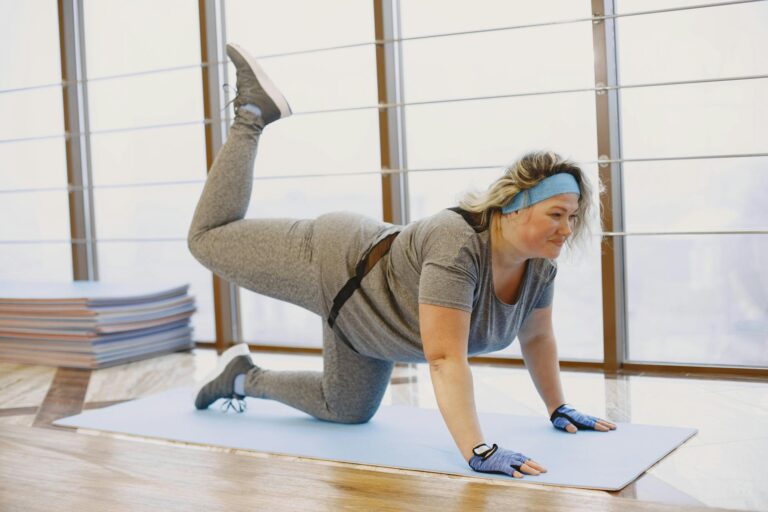
The bird-dog, abdominal drawing-in maneuver, and plank exercises share a common goal: rebuilding the deep muscular corset that stabilizes the lumbar spine. The bird-dog targets the multifidus and erector spinae muscles from a hands-and-knees position, where the patient extends one arm forward and the opposite leg backward while maintaining a neutral spine. The abdominal drawing-in maneuver focuses specifically on the transversus abdominis, the deepest abdominal muscle, by having the patient pull the navel toward the spine without moving the pelvis. Planks — both front and side variations — challenge the entire core musculature isometrically, targeting the transversus abdominis, obliques, and erector spinae simultaneously. A 2025 meta-analysis in Frontiers in Medicine confirmed that core stabilization exercises strengthen the paraspinal and abdominal musculature, enhance spinal stability, and effectively relieve pain in disc herniation patients.
The reason these muscles matter so much is straightforward: the lumbar spine relies on muscular support for roughly 80 percent of its stability during movement. After a herniation, the body’s natural response is to guard the area through muscle spasm, but this guarding weakens the deep stabilizers over time, creating a vulnerability to re-injury. Consider a specific example from phased rehabilitation protocols documented in PMC: during Phase I, patients perform only the abdominal drawing-in maneuver in a supine position for sets of ten-second holds. In Phase II, they progress to bird-dogs and modified planks held for 15 to 30 seconds. By Phase III, full planks and side planks are introduced with longer hold times and added movement challenges. Attempting to jump to Phase III exercises during the first few weeks — which many motivated patients try — can re-irritate the disc and set recovery back significantly.

Comparing Flexibility Exercises — When to Use Cat-Cow Stretches Versus Knee-to-Chest Stretches
Cat-cow stretches and single knee-to-chest stretches serve different purposes in a disc herniation recovery program, and understanding the distinction helps patients and caregivers make better decisions about daily exercise selection. The cat-cow stretch, performed on hands and knees by alternating between spinal flexion and extension, primarily improves segmental mobility — the ability of individual vertebrae to move relative to one another. This is particularly valuable in the subacute phase when stiffness has set in after the initial acute inflammation subsides. The single knee-to-chest stretch, performed lying on the back by pulling one knee toward the chest while keeping the other leg flat, gently stretches the lumbar paraspinal muscles and can reduce nerve compression through a mild traction effect. The tradeoff between these exercises relates to timing and symptom response. Knee-to-chest stretches involve lumbar flexion, which can increase disc pressure in some patients, particularly those with large posterior herniations.
Massachusetts General Hospital’s conservative management guidelines recommend this stretch but with the important caveat that the opposite leg should remain flat on the surface to minimize pelvic rotation. Cat-cow stretches, by contrast, move through both flexion and extension in a controlled range, making them generally safer during early recovery but potentially less effective at targeting specific nerve compression. For patients who find that bending forward worsens their leg symptoms, the cat-cow may need to be modified to emphasize only the extension phase — essentially becoming a gentle prone press-up variation on hands and knees. Neither stretch replaces the other. The cat-cow addresses overall spinal mobility and is well-suited for morning routines when the spine is stiffest. The knee-to-chest stretch provides targeted relief when paraspinal muscle tightness is contributing to nerve irritation. Most rehabilitation protocols include both, but their sequencing depends on the patient’s specific presentation and phase of recovery.
Recent Research Challenges and Limitations in Exercise-Based Recovery
Despite the strong evidence supporting exercise therapy for lumbar disc herniation, recent research reveals important nuances that patients and clinicians should consider. A 2025 systematic review published in ScienceDirect comparing exercise, manipulation, and traction therapy found that traction therapy actually had the highest effect size for pain reduction, followed by exercise therapy and then manipulation therapy. Within exercise approaches, suspension exercises achieved superior outcomes compared to core stability exercises alone. This does not mean core stability exercises are ineffective — rather, it suggests that the field may be converging on more dynamic, multimodal approaches. A 2025 randomized controlled trial published in PMC found that an eight-week Dynamic Neuromuscular Stabilization program significantly reduced pain, improved lumbar mobility, decreased functional disability, and enhanced trunk muscle endurance in women with chronic lumbar disc herniation. DNS exercises differ from traditional core stabilization by emphasizing developmental movement patterns — the same stabilization strategies that infants use before they can walk.
This approach may activate deeper stabilization reflexes that conventional exercises miss. However, DNS requires specialized training to teach correctly, and access to practitioners trained in this method remains limited outside major metropolitan areas. One significant limitation of all exercise-based research in this area is the difficulty of blinding participants. Patients know whether they are exercising or not, which introduces potential placebo and expectation effects. Additionally, most studies measure outcomes at 8 to 12 weeks, but lumbar disc herniation has a natural history of improvement — about 90 percent of patients get better within that timeframe regardless of intervention. The question is not whether exercise helps compared to doing nothing, but whether specific exercise protocols accelerate recovery or reduce recurrence rates beyond what would happen naturally. Current evidence supports supervised therapeutic exercise over unsupervised home programs, but the optimal exercise combination remains an active area of investigation.

How Glute Bridges Support Lumbar Disc Recovery by Reducing Spinal Load
Glute bridges deserve particular attention because they address a biomechanical problem that many patients and even some clinicians overlook: weak gluteal muscles force the lumbar spine to absorb forces that the hips should handle. When a patient lies on their back with knees bent and lifts the hips off the floor, the gluteus maximus and hamstrings engage to create hip extension without requiring any lumbar movement. This strengthens the posterior chain — the muscles running from the mid-back through the glutes and down the backs of the legs — which collectively reduces the mechanical load on the herniated disc during standing, walking, and lifting. In early-phase lumbar disc herniation rehabilitation, glute bridges are often one of the first strengthening exercises introduced because the supine position minimizes spinal compression.
A practical example: a patient who has been limited to prone press-ups and gentle stretching for two weeks might add glute bridges at week three, performing two sets of ten repetitions with a five-second hold at the top. As strength improves, single-leg variations progressively challenge the stabilization demand. The warning here is that patients who perform glute bridges with excessive lumbar extension — arching the low back rather than driving through the hips — can actually increase disc pressure and irritate the herniation. The cue to “squeeze the glutes and keep the ribs down” prevents this compensation pattern.
The Future of Physical Therapy for Lumbar Disc Herniation — Where Evidence Is Heading
Clinical practice guidelines from 2025, including those published in Neurospine, increasingly emphasize that rehabilitation protocols should be criterion-based rather than purely time-based. This means progression through exercises is determined by individual exam findings — pain response, range of motion, muscle activation patterns — rather than simply following a predetermined weekly schedule. For older adults, including those managing cognitive decline, this individualized approach is especially important because tissue healing rates slow with age and comorbidities like osteoporosis or diabetes can alter the risk profile of certain exercises.
The combination of traditional exercise therapy with newer approaches like Dynamic Neuromuscular Stabilization, suspension training, and Muscle Energy Technique points toward a future where disc herniation rehabilitation is less about prescribing a fixed set of exercises and more about matching interventions to the patient’s specific movement dysfunction. For readers on this site who are supporting a family member through both cognitive and physical health challenges, the practical takeaway is this: a supervised physical therapy program that adapts over time will nearly always outperform a static exercise sheet printed from the internet. The exercises described in this article are well-supported by evidence, but their effectiveness depends heavily on proper execution, appropriate timing, and professional guidance — particularly for patients with complex medical histories.
Conclusion
The eight physical therapy exercises commonly used in lumbar disc herniation recovery — prone press-ups, bird-dogs, glute bridges, cat-cow stretches, single knee-to-chest stretches, abdominal drawing-in maneuvers, planks, and standing back extensions — represent a well-researched, graduated approach to restoring function and reducing pain. A 2025 meta-analysis confirmed the effectiveness of exercise therapy for this condition, and with approximately 90 percent of patients improving within six to twelve weeks of conservative treatment, these exercises offer a realistic path to recovery without surgical intervention for the majority of people.
What matters most is not simply knowing the exercises but understanding how to sequence them, when to progress, and when to seek professional reassessment. Rehabilitation guidelines from major institutions emphasize both time-based and criterion-based progression, and recent research into approaches like Dynamic Neuromuscular Stabilization and suspension exercise suggests that the field continues to refine its understanding of what works best. For anyone managing a disc herniation — or supporting a loved one through recovery — starting with a qualified physical therapist who can tailor these exercises to the individual’s specific presentation remains the single most important step.
Frequently Asked Questions
How long does it typically take for physical therapy exercises to relieve lumbar disc herniation symptoms?
About 90 percent of patients with acute lumbar disc herniation improve within 6 to 12 weeks with conservative treatment including physical therapy. With the McKenzie Method specifically, many patients notice some improvement during their first session, though meaningful pain relief typically occurs within one to three weeks of consistent practice.
Can I do these exercises at home without seeing a physical therapist first?
While the exercises described here are generally safe, a professional assessment is strongly recommended before beginning any program. Extension exercises like prone press-ups, for example, can worsen symptoms in patients who have spinal stenosis rather than a straightforward disc herniation. A physical therapist can determine your directional preference and ensure you are performing each exercise correctly.
Are some of these exercises better than others for disc herniation recovery?
A 2025 systematic review found that suspension exercises achieved superior pain reduction outcomes compared to core stability exercises alone, and that traction therapy had the highest overall effect size. However, the best exercise for any individual depends on their specific herniation location, symptom pattern, and phase of recovery. Core stabilization exercises show strong evidence for preventing recurrence.
Is it normal for some of these exercises to cause temporary discomfort?
Mild discomfort in the lower back during exercise can be normal, but increasing leg pain, numbness, or tingling is a warning sign that the exercise may be aggravating the nerve compression. The general clinical guideline is that an exercise is appropriate if it centralizes pain — meaning symptoms move from the leg toward the center of the back — even if back discomfort temporarily increases.
How do these exercises fit into recovery for older adults who also have cognitive health concerns?
The same exercises apply, but progression may need to be slower due to age-related changes in tissue healing, and supervision becomes more important for patients with memory or attention difficulties. Chronic pain from untreated disc herniation can worsen sleep quality and increase stress hormones, both of which negatively affect cognitive health, making effective physical rehabilitation doubly important.
When should someone consider surgery instead of continuing with physical therapy?
Surgery is typically recommended when conservative treatment including physical therapy fails to improve symptoms after six to twelve weeks, when there is progressive neurological deficit such as worsening weakness or loss of bladder or bowel control, or when pain is so severe that it prevents participation in rehabilitation. The vast majority of patients improve without surgery.