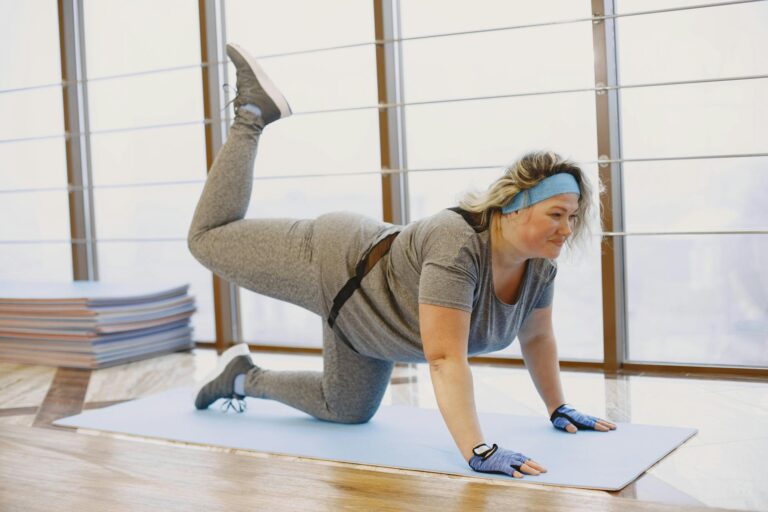
Physical therapy exercises remain one of the most effective conservative treatments for lumbar disc herniation, with a 2025 meta-analysis of randomized controlled trials confirming that structured exercise programs significantly reduce both pain and disability compared to controls. The eight exercises most commonly prescribed in recovery programs include McKenzie extension exercises, core stabilization work, pelvic tilts, bird-dog exercises, nerve gliding techniques, walking programs, aquatic therapy, and prone lying progressions. Most symptomatic lumbar disc herniations resolve within six to eight weeks using these conservative approaches, which means surgery is often avoidable when patients commit to a well-designed rehabilitation protocol. For readers of a brain health and dementia care site, this topic carries particular relevance. Chronic pain from conditions like disc herniation is associated with reduced physical activity, disrupted sleep, and increased stress, all of which are recognized risk factors for cognitive decline.
An older adult managing both spinal issues and concerns about brain health needs safe, evidence-backed movement options. This article walks through each of the eight exercises, the research behind them, when they work best, and the situations where caution is warranted. What follows is not a generic list of stretches. Each exercise has a specific mechanical rationale, a body of clinical evidence, and real limitations that determine whether it belongs in a given patient’s program. Understanding these distinctions matters, especially for older adults who may be balancing disc herniation recovery with other health priorities.
Table of Contents
- What Are the Most Effective Physical Therapy Exercises for Lumbar Disc Herniation Recovery?
- How Core Stabilization and Foundational Exercises Build Long-Term Spinal Protection
- How Nerve Gliding Techniques Address Sciatic Pain From Disc Herniation
- Walking Programs Versus Aquatic Therapy — Comparing Two Accessible Recovery Options
- The Prone Lying Progression and Why Rushing Through Phases Backfires
- Why Dementia Caregivers Should Pay Attention to Spinal Health
- What the Latest Research Suggests About Exercise Therapy for Disc Herniation
- Conclusion
- Frequently Asked Questions
What Are the Most Effective Physical Therapy Exercises for Lumbar Disc Herniation Recovery?
The exercises used in disc herniation recovery fall broadly into three categories: extension-based movements that address disc mechanics directly, stabilization exercises that protect the spine during daily activity, and neural mobilization techniques that reduce sciatic nerve irritation. McKenzie extension exercises and prone lying progressions belong to the first group. Core stabilization, pelvic tilts, and bird-dog exercises belong to the second. Nerve gliding fits the third category. Walking programs and aquatic therapy serve as broader conditioning tools that support all three goals simultaneously. Among these, McKenzie extension exercises have the longest track record. Developed by physiotherapist Robin McKenzie in the 1950s and formally systematized around 1985 as Mechanical Diagnosis and Therapy, the approach is built on a straightforward biomechanical principle: lumbar extension pushes disc pressure anteriorly, creating a suction effect that can help retract herniated disc material away from the nerve root.
A two-month McKenzie program performed five days per week reduced disability index scores from 44 percent to 22 percent and pain visual analog scale scores from 8 to 4 in clinical studies. A systematic review found that MDT is superior to spinal manipulation during the earlier phases of disc herniation recovery, making it a strong first-line intervention. However, not every patient responds to extension. A subset of disc herniations, particularly large central herniations or those accompanied by spinal stenosis, may worsen with repeated extension. This is precisely why the McKenzie method begins with a detailed mechanical assessment rather than jumping straight to press-ups. The directional preference must be established first. If extension increases radiating leg pain or causes neurological symptoms to spread further down the limb, the approach needs to be modified or abandoned in favor of other strategies.

How Core Stabilization and Foundational Exercises Build Long-Term Spinal Protection
Core stabilization exercises target the transversus abdominis and multifidus muscles, the deep spinal stabilizers that most people cannot consciously activate without training. These muscles regulate intra-abdominal pressure during spinal motion, essentially creating a natural brace that reduces the load on damaged disc structures. A 2025 systematic review and meta-analysis published in Frontiers in Medicine confirmed core strengthening as particularly effective for long-term recovery and stability in lumbar disc herniation patients, distinguishing it from exercises that only address short-term pain relief. Pelvic tilts serve as the entry point for core stabilization training. The patient lies supine and gently flattens the lower back against the floor by contracting the abdominal muscles, a motion that activates deep core musculature while maintaining a neutral spine position. Massachusetts General Brigham rehabilitation guidelines recommend pelvic tilts as part of Phase 1 conservative management for lumbar disc displacement. The exercise is deliberately simple because patients in the acute phase often cannot tolerate more demanding positions.
The limitation here is equally important to understand: pelvic tilts alone do not build enough strength or endurance to protect the spine during real-world activities. They are a starting point, not a destination. The bird-dog exercise represents the next progression. Performed on hands and knees, the patient extends the opposite arm and leg simultaneously while maintaining a neutral spine, training coordination and endurance of the back extensors alongside the core stabilizers. Rehabilitation protocols for disc herniation design bird-dog progressions with varying surfaces, speeds, and loads, adding weights and resistance bands as the patient advances. For older adults concerned about balance, the hands-and-knees position offers inherent stability, but those with significant wrist arthritis or knee pain may need padding or modified hand positions. The exercise is only effective when performed with strict form; a sagging lower back during the movement actually increases disc pressure rather than relieving it.
How Nerve Gliding Techniques Address Sciatic Pain From Disc Herniation
Sciatic nerve flossing, also called neural mobilization, addresses a problem that persists even after the disc itself begins healing. When a herniated disc compresses or irritates the sciatic nerve, the surrounding tissues can develop adhesions or restrictions that limit nerve movement through its tract. Even as inflammation subsides, these mechanical restrictions continue to produce pain and stiffness. Nerve gliding exercises involve moving multiple joints to alternate tension and slack on opposing ends of the sciatic nerve, creating a flossing effect that gradually restores normal nerve mobility. The evidence for this approach is substantial. Six of eight studies in a systematic review found that neural mobilization added to conservative treatment improved all measured outcomes.
Across 40 studies of chronic low back pain patients, average improvements included an Oswestry disability score improvement of 9.3 points and a visual analog scale pain improvement of 1.8 points. These are clinically meaningful changes, though they are moderate rather than dramatic, which reflects the reality that nerve gliding works best as one component of a broader program rather than a standalone treatment. A practical example illustrates the technique: a patient sits on a chair, slumps the trunk forward while extending one knee and dorsiflexing the ankle, then reverses by sitting upright while flexing the knee and pointing the toes. The alternating movements slide the nerve through the tissues without placing sustained tension on it. The critical warning here is that nerve flossing should not reproduce or intensify radiating leg pain. Mild tension is expected, but sharp or shooting pain signals that the technique is being performed too aggressively or that the herniation is too acute for this intervention. Patients with progressive neurological deficits, such as foot drop or loss of bladder control, need medical evaluation rather than self-directed nerve exercises.

Walking Programs Versus Aquatic Therapy — Comparing Two Accessible Recovery Options
Walking and aquatic therapy represent the two most accessible conditioning exercises in disc herniation recovery, but they serve somewhat different populations and purposes. Walking showed a significant lumbar strengthening effect in systematic reviews and is recommended as a cost-effective rehabilitation intervention that reduces pain and improves physical function and quality of life. Studies show that lumbar stabilization combined with walking exercises produces measurable improvements in both pain and disability outcomes. Walking is highly recommended for L5-S1 herniations specifically, due to its accessibility and low risk of aggravation. Aquatic therapy offers an alternative for patients who find land-based exercise too painful. Buoyancy reduces spinal loading while still allowing strengthening exercises. A six-week supine water exercise program demonstrated statistically significant reductions in both pain intensity and disability in men with chronic low back pain from lumbar disc herniation.
More recently, a 2025 randomized controlled trial found that an eight-week combined aquatic and Pilates program was more effective than aquatic exercise alone for improving pain, mobility, disability, and quality of life in women with lumbar disc herniation. A 2025 systematic review of 55 randomized controlled trials with 4,311 patients confirmed physical therapies including aquatic exercise are effective after surgery for lumbar disc herniation. That same review found suspension training and aquatic therapy showed superior improvements in pain and functional outcomes compared to other modalities. The tradeoff is practical. Walking requires nothing beyond a pair of supportive shoes and a safe route. Aquatic therapy requires pool access, which may involve cost, transportation, and scheduling constraints that are especially burdensome for older adults or those in rural areas. For someone managing both disc herniation and early cognitive changes, the simplicity and routine-building potential of a daily walking program may outweigh the theoretical superiority of pool-based exercise. The best exercise program is the one the patient will actually do consistently.
The Prone Lying Progression and Why Rushing Through Phases Backfires
The prone lying progression is the most frequently overlooked component of disc herniation rehabilitation, perhaps because it looks like doing nothing. The sequence begins with flat prone lying, simply resting face down on a firm surface, then progresses to prone on elbows, and finally to a full press-up with extended arms. Initial prone lying allows gravity-assisted extension of the lumbar spine without any active muscular effort. It serves as the entry point of the McKenzie protocol and is suitable even for patients in acute pain who cannot tolerate any other exercise. The mistake that derails many recovery programs is advancing through these phases too quickly. A patient who moves from flat prone lying to full press-ups within the first week because the early positions feel “too easy” risks centralizing symptoms that have not yet stabilized.
The progression should be guided by symptom response, not by how challenging the exercise feels. If flat prone lying reduces leg pain or shifts it closer to the midline, the patient stays there until the response plateaus before adding elbow support. Each phase may take days or weeks depending on the severity of the herniation. For older adults, prone lying carries its own set of considerations. Those with osteoporosis, significant kyphosis, or breathing difficulties in the face-down position may need modifications such as a pillow under the chest or limited time in the position. Anyone with a history of retinal detachment or certain cardiac conditions should discuss prone positioning with their physician. The exercise is mechanically sound for disc herniation, but the patient’s complete medical picture must be part of the decision.

Why Dementia Caregivers Should Pay Attention to Spinal Health
Dementia caregivers face an elevated risk of lumbar disc problems due to the physical demands of caregiving, including lifting, transferring, and supporting individuals who may resist or be unable to assist with movement. A caregiver who develops disc herniation and does not address it through rehabilitation is likely to reduce their own physical activity, which in turn affects their ability to provide care and maintain their own cognitive health.
The exercises described in this article are particularly relevant for this population because they can be performed at home with minimal equipment and adapted to tight schedules. A caregiver who commits to ten minutes of pelvic tilts, bird-dogs, and a brief walking session has a realistic maintenance program that protects spinal health without requiring gym access or extended time away from caregiving responsibilities. For caregivers who are themselves at risk for cognitive decline, maintaining physical activity through safe, structured exercise is one of the more actionable protective strategies available.
What the Latest Research Suggests About Exercise Therapy for Disc Herniation
The research landscape for exercise-based disc herniation treatment has shifted meaningfully in recent years. The 2025 meta-analysis of randomized controlled trials confirmed that exercise therapy is clinically effective for lumbar disc herniation, with muscle strengthening significantly reducing symptoms compared to controls. This is a stronger statement than earlier reviews, which often hedged with language about “insufficient evidence” or “low-quality studies.” The accumulation of larger, better-designed trials is producing clearer answers.
Looking ahead, the trend is toward individualized exercise prescription rather than one-size-fits-all protocols. The McKenzie method already incorporates this principle through its directional preference assessment, and newer approaches are combining multiple modalities, as seen in the aquatic-plus-Pilates trials. For patients managing disc herniation alongside cognitive concerns, the integration of physical rehabilitation with broader brain health strategies, such as combining walking programs with social engagement or cognitive stimulation, represents a promising direction that aligns what we know about spinal health with what we know about protecting the aging brain.
Conclusion
The eight exercises outlined here, McKenzie extensions, core stabilization, pelvic tilts, bird-dogs, nerve gliding, walking, aquatic therapy, and prone lying progressions, form the backbone of conservative treatment for lumbar disc herniation. The evidence supporting them is substantial, including multiple 2025 systematic reviews and meta-analyses confirming their effectiveness for pain reduction and functional improvement. Most symptomatic herniations resolve within six to eight weeks with consistent application of these techniques, which makes a strong case for committed participation in a rehabilitation program before considering surgical options.
The practical next step for anyone dealing with disc herniation is to work with a physical therapist who can assess directional preference, determine the appropriate starting phase, and build a progression that accounts for the patient’s full medical picture. For older adults concerned about both spinal health and cognitive decline, these exercises serve a dual purpose: they address the immediate disc problem while maintaining the physical activity levels that support long-term brain health. No single exercise is a solution on its own, but a well-structured program that combines several of these approaches gives patients the best chance at meaningful recovery.
Frequently Asked Questions
How long does it typically take for a lumbar disc herniation to heal with physical therapy?
Most symptomatic lumbar disc herniations resolve within six to eight weeks with conservative care, including structured exercise programs. However, this timeline varies depending on the severity of the herniation, the patient’s age, overall health, and adherence to the rehabilitation protocol. Some patients notice significant improvement within two to three weeks, while others require several months of consistent work.
Are McKenzie exercises safe to do at home without a physical therapist?
The basic prone lying progression can generally be performed safely at home, but the full McKenzie protocol requires an initial assessment by a trained practitioner to determine your directional preference. Performing extension exercises when your herniation responds better to flexion can worsen symptoms. A qualified McKenzie-certified therapist should evaluate you before you begin a home program.
Can walking make a disc herniation worse?
For most disc herniations, particularly at the L5-S1 level, walking is both safe and beneficial. Systematic reviews confirm it reduces pain and improves function. However, walking on uneven terrain, walking long distances before the acute phase has settled, or walking with poor footwear can aggravate symptoms. Start with short, flat-surface walks and increase gradually based on symptom response.
Is aquatic therapy better than land-based exercise for disc herniation?
Research suggests aquatic therapy and suspension training show superior improvements in pain and functional outcomes compared to some other modalities, and a 2025 systematic review of 55 randomized controlled trials with 4,311 patients supports its use. However, accessibility and cost are real barriers. Land-based exercises like walking and core stabilization are effective and far more practical for most people. The best choice depends on pain severity, access to a pool, and personal preference.
When should someone with a disc herniation avoid these exercises and seek medical attention instead?
Seek immediate medical evaluation if you experience progressive weakness in the legs, loss of bladder or bowel control, numbness in the groin area, or rapidly worsening neurological symptoms. These signs may indicate cauda equina syndrome, a surgical emergency. Also consult a physician if pain does not improve after six to eight weeks of consistent physical therapy, or if symptoms worsen despite appropriate exercise.
How do these exercises relate to brain health and dementia prevention?
Chronic pain from untreated disc herniation often leads to reduced physical activity, poor sleep, and elevated stress hormones, all of which are established risk factors for cognitive decline. By resolving pain and restoring mobility, these exercises help maintain the active lifestyle that research consistently links to better brain health outcomes in aging populations.