The eight exercises physical therapists most commonly recommend for sciatica relief are the knee-to-chest stretch, piriformis stretch, sciatic nerve glides, press-up extensions (McKenzie Method), pelvic tilts, glute bridges, bird dogs, and child’s pose. These movements target the specific muscles and nerve pathways involved in sciatic pain, and most patients who perform them consistently see noticeable improvement within four to six weeks. Physical therapy is considered the first-line treatment for sciatica, and research shows that patients who begin PT within the first few days of symptom onset tend to have better outcomes than those who wait. Consider someone in their mid-forties who wakes up one morning with a sharp, burning pain running from the lower back down through the left leg.
That person is squarely within the peak incidence window for sciatica, which most commonly strikes patients in their 40s, with men aged 30 to 50 at higher risk. Up to 40 percent of Americans will experience sciatica at some point, making it one of the most common nerve pain conditions in the country. The good news is that a structured exercise program, ideally guided by a physical therapist, can address the root cause rather than just masking symptoms with medication. This article walks through each of the eight recommended exercises in detail, explains why certain stretches can actually make sciatica worse, discusses how the underlying cause of your nerve irritation should shape your exercise selection, and covers what to expect during recovery. For those caring for older adults with both sciatica and cognitive decline, we also address practical considerations for adapting these exercises safely.
Table of Contents
- Why Do Physical Therapists Recommend These Specific Exercises for Sciatica?
- Stretches That Relieve Sciatic Nerve Compression
- Nerve Glides and the McKenzie Method — Two Evidence-Based Approaches
- Building Core Strength to Prevent Sciatica From Returning
- Exercises That Can Make Sciatica Worse — And When to Stop
- Adapting Sciatica Exercises for Older Adults With Cognitive Decline
- What Recovery Looks Like and When to Seek Further Treatment
- Conclusion
- Frequently Asked Questions
Why Do Physical Therapists Recommend These Specific Exercises for Sciatica?
Physical therapists do not prescribe random stretches for sciatica. Each of these eight exercises targets a specific mechanism that contributes to sciatic nerve irritation, whether that is a tight piriformis muscle compressing the nerve, a herniated disc pressing against the nerve root, or weak core muscles failing to stabilize the spine. A combination of exercise and manual therapy has been shown to produce greater outcomes than exercise alone, which is why most PT programs pair these movements with hands-on techniques like soft tissue mobilization or joint manipulation. The exercises fall into three broad categories: stretches that relieve nerve compression (knee-to-chest, piriformis stretch, child’s pose), nerve mobilization techniques that restore healthy nerve movement (sciatic nerve glides), and strengthening exercises that address the muscular weaknesses allowing the problem to recur (pelvic tilts, glute bridges, bird dogs, press-ups).
A PT will typically evaluate which category your sciatica falls into before building your program. Someone with piriformis syndrome needs a very different emphasis than someone with a lumbar disc herniation, and performing the wrong exercises can delay recovery or worsen symptoms. As the Hospital for Special Surgery notes, “The best way to alleviate most sciatica pain is to do any stretch that can externally rotate the hip to provide some relief.” That principle underlies several of these exercises, but it is not universal. What works depends on the root cause of the nerve irritation, which is why a professional evaluation matters before you start any routine on your own.

Stretches That Relieve Sciatic Nerve Compression
The knee-to-chest stretch is often the first exercise a physical therapist will teach because it is gentle and accessible even during an acute flare-up. You lie on your back with both knees bent, pull one knee toward your chest, hold for 30 seconds, then return and repeat three times per side. This movement gently stretches the lower lumbar spine and opens space around compressed nerve roots. For older adults or anyone with limited mobility, a caregiver can assist by gently guiding the knee while the person relaxes. The piriformis stretch, sometimes called the figure-four stretch, addresses one of the most common non-disc causes of sciatica. The piriformis muscle sits directly over the sciatic nerve deep in the buttock, and when it tightens or spasms, it can compress the nerve and mimic the symptoms of a disc problem.
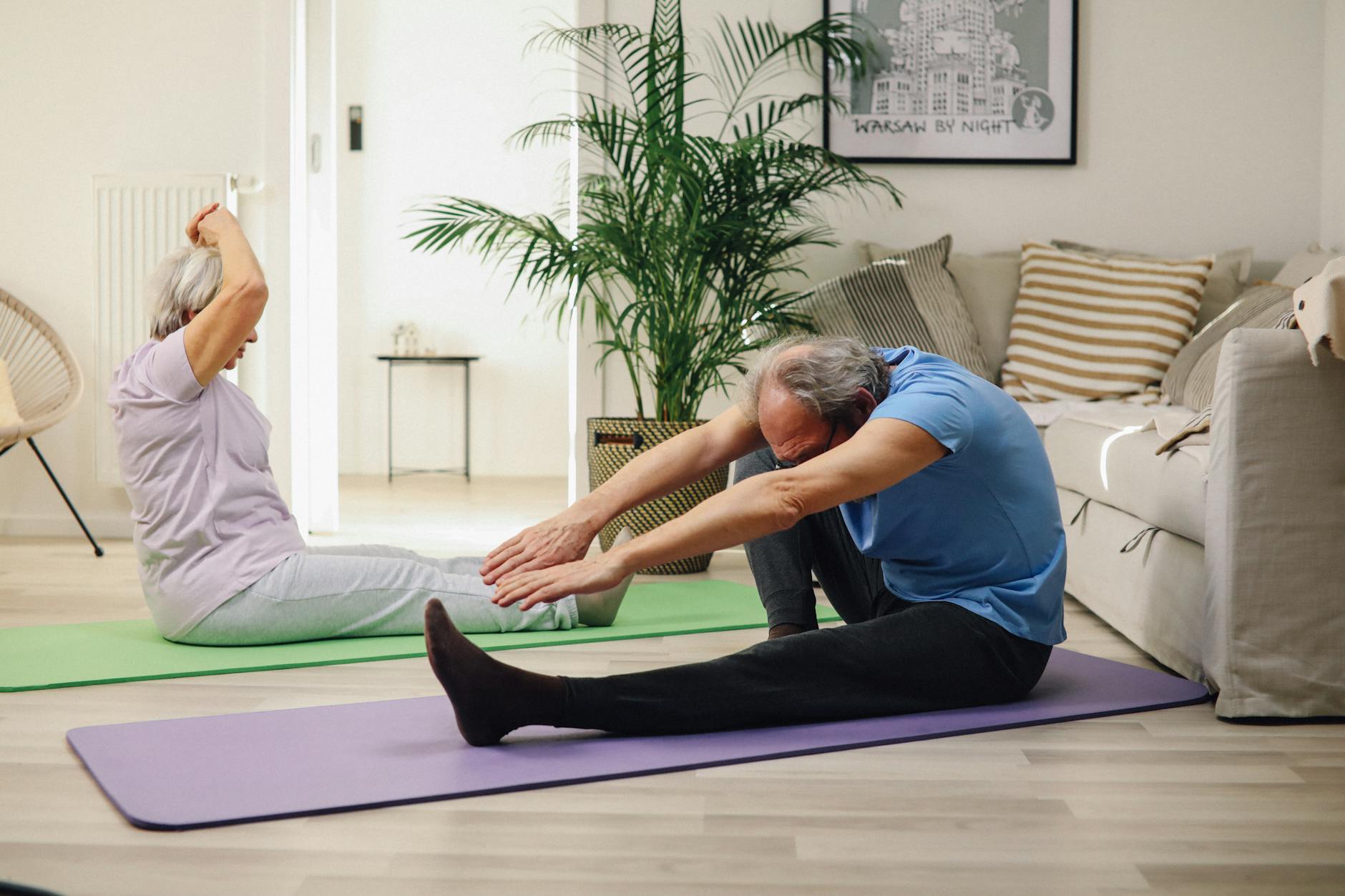
To perform it, lie on your back, cross the affected ankle over the opposite thigh to form a figure-four shape, then pull the uncrossed thigh toward your chest until you feel a deep stretch in the buttock. Hold for 30 seconds and repeat three times. However, if your sciatica is caused by a large disc herniation rather than piriformis tightness, aggressive hip stretching can sometimes aggravate the condition. This is an important distinction that only a proper evaluation can clarify. Traditional forward bending and hamstring stretches, which many people instinctively try, can actually make sciatica worse by increasing tension on an already irritated nerve. If any stretch increases your pain during or after performing it, stop immediately. Pain is not something to push through with sciatica exercises.
Nerve Glides and the McKenzie Method — Two Evidence-Based Approaches
Sciatic nerve glides, also called nerve flossing, represent a fundamentally different approach from static stretching. Instead of holding a position and placing sustained tension on the nerve, glides move the sciatic nerve gently through its pathway in a rhythmic back-and-forth motion. To perform them, sit upright or lie on your back, bring the affected knee toward your chest, then slowly straighten the knee while alternating between flexing and pointing your foot. Repeat 10 to 15 times. Research published in PMC has shown that nerve glides are generally safer than static stretches for irritated nerves because they mobilize without sustaining compression. The press-up, or prone extension, comes from the McKenzie Method, one of the most studied approaches in physical therapy for back-related leg pain.
You lie face-down, place your hands under your shoulders, and press your upper body upward while keeping your hips on the floor, similar to a yoga cobra pose. During acute flare-ups, a therapist may recommend performing up to 20 repetitions repeated every hour. The key principle behind McKenzie exercises is centralization — if the leg pain moves closer to the spine (retreats from the foot toward the buttock, for example), that is actually a positive sign indicating the disc is responding to the exercise. For someone caring for a parent with both sciatica and early-stage dementia, the McKenzie press-up can be easier to cue than more complex exercises because the movement pattern is simple and repetitive. A caregiver can demonstrate the motion and provide verbal prompts. However, this exercise is specifically evidence-based for anterior disc herniations and may not be appropriate for spinal stenosis, where extension can narrow the spinal canal further. This is yet another reason why identifying the root cause matters before committing to an exercise program.
Building Core Strength to Prevent Sciatica From Returning
Stretching and nerve mobilization address the immediate pain, but without strengthening the muscles that support the spine, sciatica tends to come back. Pelvic tilts are the entry point for core strengthening in most sciatica programs. Lying on your back with knees bent, you flatten the lower back against the floor by engaging the abdominal muscles, hold for five seconds, and release. Repeating this 10 to 15 times builds awareness of the deep core muscles that most people cannot consciously activate. The glute bridge takes this further by targeting the gluteal muscles, which are critical stabilizers of the pelvis. Weak glutes force the lower back to compensate during walking, sitting, and standing, placing chronic strain on the structures around the sciatic nerve. Lie on your back with knees bent, squeeze the glutes, lift the hips toward the ceiling, hold five seconds at the top, and lower slowly.
Repeat 10 to 15 times. The tradeoff between pelvic tilts and glute bridges is that tilts are safer during acute pain but bridges build more functional strength. Most therapists start with tilts and progress to bridges as symptoms allow. The bird dog is often the most challenging of these eight exercises but also one of the most valuable for long-term prevention. From a hands-and-knees position, you extend the right arm forward and the left leg backward simultaneously while keeping the spine completely neutral, hold for five seconds, then alternate sides. Repeat 10 times per side. This builds core stability and spinal endurance without loading the spine, which makes it particularly effective for people who need to maintain an exercise habit but cannot tolerate high-impact activities. For older adults, performing this near a wall or stable surface provides a safety net against balance loss.
Exercises That Can Make Sciatica Worse — And When to Stop
One of the most common mistakes people make with sciatica is assuming that any stretch targeting the back or legs will help. In reality, certain popular exercises can significantly worsen symptoms. Traditional hamstring stretches, especially standing toe touches, pull directly on the sciatic nerve and can inflame an already irritated nerve root. Sit-ups and crunches compress the lumbar discs and are generally contraindicated during active sciatica. Deep squats and heavy leg presses load the spine in ways that can increase disc pressure on the nerve. The overarching rule, emphasized by physical therapists at the Hospital for Special Surgery, is that pain should not increase during or after performing these exercises.
Mild discomfort or a gentle stretching sensation is acceptable, but if an exercise sends sharp or electrical pain down the leg, worsens numbness or tingling, or causes pain that lingers for hours afterward, it needs to be modified or eliminated from the program. This is especially important for older adults who may have difficulty distinguishing between productive discomfort and harmful pain, or who may have multiple sources of pain that complicate the picture. People with spinal stenosis, a narrowing of the spinal canal that is more common with aging, often find that extension-based exercises like the McKenzie press-up worsen their symptoms, while flexion-based movements like the knee-to-chest stretch provide relief. The opposite is typically true for disc herniations. This is why a blanket list of exercises, without understanding the underlying diagnosis, carries real limitations. If you or someone you care for has tried these exercises for more than six weeks without meaningful improvement, it is time to revisit the diagnosis rather than simply pushing harder.
Adapting Sciatica Exercises for Older Adults With Cognitive Decline
Child’s pose rounds out the list of eight recommended exercises and is particularly well-suited for older adults because it requires no balance, involves minimal coordination, and provides a calming, restful position. Kneeling on the floor, sitting back on the heels, and stretching the arms forward while lowering the chest toward the ground creates gentle lumbar flexion and decompression. Hold for 30 seconds to one minute. For someone with knee problems, placing a pillow between the calves and thighs can reduce joint stress.
When adapting any of these exercises for a person with dementia or cognitive impairment, simplicity and consistency matter more than variety. Choose two or three exercises that the person responds well to and repeat them at the same time each day, using the same verbal cues. A caregiver performing the exercises alongside the person provides visual modeling that can compensate for difficulty following verbal instructions. Written or picture-based exercise cards placed in a visible location can also serve as helpful reminders.
What Recovery Looks Like and When to Seek Further Treatment
Most patients who commit to a consistent physical therapy exercise program see noticeable improvement within four to six weeks, though the timeline varies depending on the cause and severity of the nerve irritation. The annual incidence of sciatica is estimated at one to five percent of the general population, and the majority of cases resolve with conservative treatment alone. Progress is not always linear — some weeks will feel better than others, and temporary setbacks during recovery are normal rather than a sign of failure.
For the subset of patients who do not respond to physical therapy, further evaluation may include imaging, injection therapy, or in rare cases surgical consultation. But for most people, these eight exercises represent the foundation of effective, evidence-based sciatica management. Starting them early, performing them consistently, and working with a physical therapist to tailor the program to the specific cause of nerve irritation gives the best chance of lasting relief.
Conclusion
Sciatica affects a substantial portion of the population, with up to 40 percent of Americans experiencing it at some point in their lives. The eight exercises outlined here — knee-to-chest stretch, piriformis stretch, sciatic nerve glides, McKenzie press-ups, pelvic tilts, glute bridges, bird dogs, and child’s pose — represent the core toolkit that physical therapists use to address the condition. They work by relieving nerve compression, restoring healthy nerve mobility, and building the muscular support system that prevents recurrence.
The most important takeaway is that not every exercise is right for every type of sciatica. A disc herniation, piriformis syndrome, and spinal stenosis each respond to different movement patterns, and performing the wrong exercises can set recovery back. If you or someone you care for is dealing with sciatica, a physical therapy evaluation is the safest starting point. From there, a consistent daily routine built around the appropriate exercises from this list offers the most reliable path to relief.
Frequently Asked Questions
How long does it take for sciatica exercises to start working?
Most patients notice meaningful improvement within four to six weeks of consistent daily exercise. Some people feel partial relief within the first week or two, but lasting change in nerve irritation typically requires sustained effort over several weeks.
Can sciatica exercises make the pain worse?
Yes. Exercises that are wrong for your specific type of sciatica can increase nerve irritation. Traditional hamstring stretches and forward bending, for example, can worsen symptoms caused by disc herniations. If any exercise increases your pain during or after performing it, stop and consult a physical therapist.
How often should I do these sciatica exercises?
Most physical therapists recommend performing stretches once or twice daily, with strengthening exercises like glute bridges and bird dogs done three to five times per week. During acute flare-ups, McKenzie press-ups may be recommended as frequently as every hour.
Is it safe for someone with dementia to do sciatica exercises?
Yes, with appropriate supervision and simplification. Choose two or three of the gentler exercises, such as the knee-to-chest stretch and child’s pose, and use consistent verbal cues and visual demonstration. A caregiver should be present to ensure safety and proper form.
Should I stretch or strengthen first for sciatica?
During an acute flare-up, gentle stretches and nerve glides typically come first because they address immediate pain. As symptoms improve, strengthening exercises like pelvic tilts, glute bridges, and bird dogs are gradually introduced to prevent recurrence. A combined approach of exercise and manual therapy produces the best outcomes.
When should I see a doctor instead of doing exercises?
Seek medical evaluation if you experience progressive leg weakness, numbness in the groin or saddle area, loss of bladder or bowel control, or pain that does not improve after six weeks of consistent physical therapy exercises. These symptoms may indicate a more serious condition requiring urgent attention.