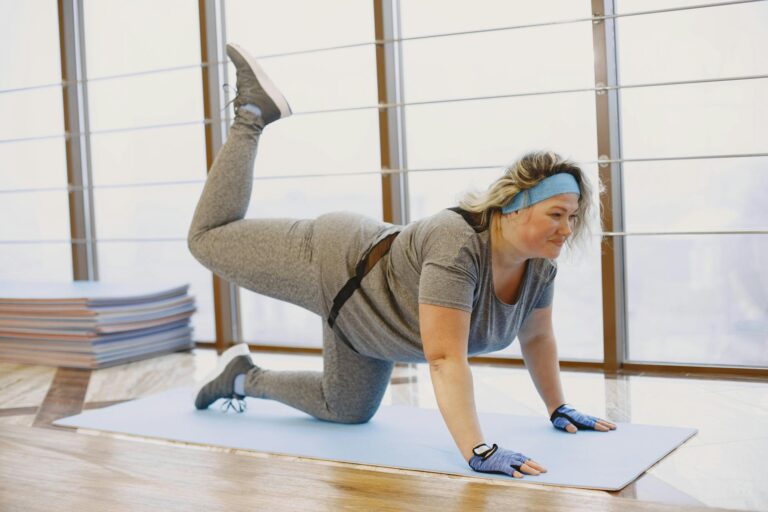
The eight exercises most frequently recommended by spine specialists to protect your spinal discs are the bird-dog, modified curl-up, side plank, glute bridge, dead bug, front plank, cat-cow, and transverse abdominal contraction. These movements target the deep stabilizing muscles that wrap around your lumbar spine like a natural brace, and research confirms they work. A 2025 systematic review and meta-analysis published in Frontiers in Medicine found that exercise therapy significantly reduces symptoms of lumbar disc herniation compared to controls, particularly when the program targets core muscle groups. For the estimated 60 to 90 percent of patients who respond to conservative, non-operative treatment, these exercises can be the difference between surgery and recovery. This matters more than most people realize.
The lifetime risk of lumbar disc herniation sits at roughly 30 percent, with the highest prevalence striking people between ages 30 and 50. Symptomatic lumbar disc herniation affects an estimated 2 to 3 percent of the population overall, with prevalence climbing to 4.8 percent in men over 35 and 2.5 percent in women over 35. Those numbers mean that a significant portion of people reading this either have disc problems now or will face them eventually. The good news is that the muscle groups surrounding and protecting your discs are trainable at nearly any age and fitness level. This article walks through each of the eight exercises in detail, explains the research behind them, identifies which movements to avoid if you already have disc issues, and offers a practical framework for building these exercises into a weekly routine. We will also look at why endurance matters more than raw strength when it comes to spinal health, and how complementary activities like swimming and walking fit into the picture.
Table of Contents
- Why Do Your Spinal Discs Need Muscle Protection, and Which Exercises Help Most?
- The McGill Big Three — What the Research Actually Shows
- Posterior Chain and Deep Core — The Exercises That Complete the Picture
- How to Build a Weekly Routine Without Overdoing It
- Exercises to Avoid and When These Movements Are Not Enough
- How Low-Impact Aerobic Activity Complements Core Stabilization
- What Ongoing Research Suggests About Spinal Disc Protection
- Conclusion
Why Do Your Spinal Discs Need Muscle Protection, and Which Exercises Help Most?
Your spinal discs are essentially shock absorbers, small pads of cartilage with a gel-like center that sit between each vertebra. They have no direct blood supply of their own, which means they rely on movement and the pressure changes created by surrounding muscles to receive nutrients and stay hydrated. When the muscles that stabilize the spine are weak or poorly coordinated, the discs absorb forces they were never designed to handle alone. Over time, this imbalance can lead to bulging, herniation, or degeneration. Think of it like a tent: the poles (your spine) need well-anchored guy wires (your muscles) pulling in every direction to stay upright and stable under load. The three exercises that form the foundation of disc-protective training come from Dr. Stuart McGill, a professor emeritus at the University of Waterloo who spent more than 30 years conducting peer-reviewed research on spine biomechanics.
His “Big Three” — the bird-dog, the modified curl-up, and the side plank — were specifically designed to increase spinal stiffness and stability without compressing the discs. Research on McGill’s stabilization exercises has shown they improve coordination between the anterior-posterior and lateral lumbar muscles, reduce pain, and improve function in patients with chronic non-specific low back pain. What sets these apart from conventional ab exercises is that they create what McGill calls a “spine-sparing” training effect: you build the muscular endurance your spine needs without repeatedly bending it under load. The remaining five exercises — glute bridge, dead bug, front plank, cat-cow, and transverse abdominal contraction — round out the program by targeting muscle groups the Big Three do not fully address. For example, the glute bridge strengthens the posterior chain, specifically the glutes and hamstrings, which helps unload stress directly from the lumbar discs. The dead bug trains the transverse abdominis, the deepest layer of abdominal muscle, which acts as a natural corset. Together, these eight movements address the spine from every angle: front, back, sides, and deep interior.

The McGill Big Three — What the Research Actually Shows
The bird-dog is performed on hands and knees by extending one arm and the opposite leg simultaneously while keeping the torso still and the core braced. It sounds simple, and it is, which is part of the point. The movement challenges your body to resist rotation and extension at the same time, training the multifidus and erector spinae muscles that run along the spine. Beginners often discover that they cannot hold a straight line from fingertips to toes without their hips shifting or their lower back sagging, which reveals exactly the instability the exercise is designed to correct. However, if you have significant pain during this movement, particularly a sharp or radiating sensation down one leg, stop and consult a physician before continuing. Pain during a stability exercise is a signal, not something to push through. The modified curl-up, sometimes called the McGill curl-up, looks deceptively like a crunch but differs in critical ways. You lie on your back with one knee bent and one leg straight, place your hands under your lower back to maintain its natural curve, and then lift only your head and shoulders a few inches off the floor.
The lumbar spine does not flex at all. This distinction matters because traditional sit-ups and crunches repeatedly load the discs in flexion, which is the exact mechanism that causes herniation over time. The McGill curl-up targets the rectus abdominis — the “six-pack” muscle — while keeping intradiscal pressure low. One limitation worth noting: this exercise primarily builds anterior strength. Without the other two movements in the Big Three, it creates an imbalance rather than stability. The side plank completes the trio by targeting the obliques and quadratus lumborum, muscles that stabilize the spine laterally. Most people underestimate how much lateral stability matters. Every time you carry a bag in one hand, reach for something on a shelf, or even walk, your spine experiences side-bending forces. Research shows that when performed together, these three exercises create a balanced pattern of spinal stiffness — essentially training the muscles to hold the spine in a safe, neutral position during the hundreds of small movements you make every day.
Posterior Chain and Deep Core — The Exercises That Complete the Picture
The glute bridge targets a muscle group that many people with desk jobs have essentially stopped using. You lie on your back with knees bent and feet flat on the floor, then drive your hips toward the ceiling by squeezing the glutes. Baylor Scott and White Health and multiple orthopedic spine specialists recommend this exercise because strong glutes directly reduce the load on your lumbar discs. When the glutes are weak or inhibited, the lower back compensates by taking on forces during walking, standing up, and bending that should be absorbed by the much larger gluteal muscles. A person who sits eight or more hours a day and then tries to lift a heavy box is asking their spinal discs to do a job their glutes should be handling. The dead bug exercise trains the transverse abdominis, arguably the most important muscle for spinal disc protection that most people have never heard of. You lie on your back with arms extended toward the ceiling and knees bent at 90 degrees, then slowly lower one arm overhead and the opposite leg toward the floor without allowing your lower back to arch away from the ground.
The challenge is entirely about control. If your back arches, you have exceeded your current stability capacity, and that is useful information. The dead bug works well as a progression from the transverse abdominal contraction exercise, which simply involves lying on your back with knees bent and pulling the belly button toward the spine, holding for 10 seconds. Mayfield Brain and Spine recommends that foundational bracing exercise as the starting point for anyone new to core stabilization work. The front plank builds endurance in both the abdominal wall and the erector spinae simultaneously, making it one of the few exercises that trains the front and back of the trunk at the same time. The recommended protocol is not to hold a plank for as long as possible — that often leads to form breakdown and compensatory stress on the spine. Instead, spine specialists recommend holding for 10 seconds and repeating five times, with brief rest between holds. This approach builds the muscular endurance pattern that actually translates to daily life, where your core needs to fire in short, repeated bursts rather than one sustained contraction.

How to Build a Weekly Routine Without Overdoing It
The recommended frequency for these exercises is two to three sessions per week, with adequate rest between sessions to allow the muscles and connective tissues to adapt. This is less than many people expect, but more is not necessarily better when it comes to spinal stabilization. Overtrained, fatigued muscles provide worse stabilization than rested ones, which means doing these exercises daily — especially in the early weeks — can actually increase your risk rather than reduce it. Start with the foundational movements: the transverse abdominal contraction, glute bridge, and cat-cow. Once you can perform those without pain or difficulty, progress to the McGill Big Three and the dead bug. There is a meaningful tradeoff between exercise complexity and effectiveness here. The simpler exercises — bracing, glute bridges, cat-cow — are less demanding but also less effective at building the multi-directional stability your spine needs under real-world loads.
The more complex movements like the bird-dog and dead bug require better coordination and body awareness, but they train the exact motor patterns that prevent disc injuries during everyday activities like bending, twisting, and lifting. Dr. McGill’s research emphasizes that endurance, not maximal strength, is the key factor in spinal health. Your core muscles need to fire appropriately thousands of times throughout the day, every day. That requires stamina, not the ability to do one heavy set. This is why the short-hold, multiple-repetition approach — 10-second holds repeated five to six times — is the standard recommendation rather than grinding through one long set. One practical comparison: a person who does three sets of 10-second planks three times per week will likely develop better functional spinal stability than someone who does a single two-minute plank every day. The former trains the endurance pattern the spine actually needs; the latter trains the ability to suffer through fatigue, which often means the last 30 to 60 seconds are performed with deteriorating form.
Exercises to Avoid and When These Movements Are Not Enough
Not all core exercises are good for your discs. Heavy flexion-based movements — full sit-ups, toe touches, and any exercise that repeatedly rounds the lower back under load — increase intradiscal pressure and can worsen existing herniations or create new ones. This is counterintuitive for many people who were taught that sit-ups are the gold standard of core fitness. They are not. The forces generated during a traditional sit-up compress the anterior portion of the disc, which is precisely the mechanism that pushes disc material toward the nerves. If you currently do sit-ups as part of your routine and have any history of lower back pain, replacing them with the McGill curl-up is one of the simplest, most evidence-supported changes you can make. There are also situations where exercise therapy alone is not sufficient.
While 60 to 90 percent of patients with disc herniation respond to conservative treatment including exercise, that means 10 to 40 percent do not. Warning signs that you need medical evaluation rather than more exercise include progressive weakness in a leg or foot, loss of bladder or bowel control, numbness in the groin area, or pain that worsens steadily despite weeks of consistent, properly performed exercise. These symptoms may indicate nerve compression that requires surgical intervention. Exercise therapy is powerful, but it has limits, and recognizing those limits is part of using it responsibly. It is also worth noting that these exercises address muscular stabilization, but disc health involves other factors as well. Hydration, sleep quality, nutrition, smoking status, and body weight all influence disc integrity. A person who performs every exercise perfectly but sits for 12 hours a day, sleeps poorly, and smokes will likely still develop disc problems. The exercises are one critical piece of a larger picture.

How Low-Impact Aerobic Activity Complements Core Stabilization
Swimming, walking, and cycling are frequently recommended alongside the eight core exercises because they provide benefits that isolated stabilization work cannot. Swimming in particular deserves attention: the buoyancy of water reduces spinal compression, allowing the discs to experience a partial unloading effect while the surrounding muscles still work to propel and stabilize the body. For someone recovering from a herniation who finds land-based exercise painful, pool-based movement can serve as a bridge back to full activity.
Walking, though it seems too simple to matter, promotes the cyclical loading and unloading of the discs that helps them absorb nutrients from surrounding tissues — the disc equivalent of a sponge being gently squeezed and released. The combination of core stabilization exercises and regular low-impact aerobic activity addresses both the local stability problem and the broader cardiovascular and tissue-health factors that influence disc resilience. Neither approach alone is as effective as both together.
What Ongoing Research Suggests About Spinal Disc Protection
The 2025 systematic review and meta-analysis in Frontiers in Medicine represents the most current synthesis of randomized controlled trials on exercise therapy for lumbar disc herniation. Its conclusion — that exercise therapy significantly reduces symptoms compared to controls — is consistent with the direction research has taken over the past decade, but the strength and specificity of the evidence continue to grow. What is particularly notable is the finding that programs targeting core muscle groups specifically outperform general exercise advice.
This reinforces the value of structured, targeted routines like the one described in this article over vague recommendations to “stay active.” Looking ahead, the trend in spine research is toward more personalized exercise prescriptions. Not everyone’s disc problems have the same cause or respond to the same movements in the same way. The eight exercises outlined here represent the current best evidence for the general population, but the future likely involves movement assessments that identify which specific stabilizers are underperforming and tailor the program accordingly. For now, these eight exercises remain the most broadly supported, accessible, and effective approach available to most people — no equipment required, no gym membership necessary, and backed by decades of research from some of the most respected names in spine biomechanics.
Conclusion
The eight exercises physicians and spine researchers recommend — bird-dog, modified curl-up, side plank, glute bridge, dead bug, front plank, cat-cow, and transverse abdominal contraction — represent the most evidence-supported approach to protecting your spinal discs through muscular stabilization. They work by training the muscles that surround the lumbar spine to hold it in a safe, neutral position during the movements of daily life. The research is clear that endurance matters more than maximal strength, that short holds with multiple repetitions outperform long, grinding sets, and that two to three sessions per week is sufficient for most people. With a lifetime herniation risk of approximately 30 percent and the highest prevalence in working-age adults, this is not a niche concern. Start with the simplest movements — abdominal bracing and glute bridges — and build toward the McGill Big Three and the dead bug as your coordination and endurance improve.
Combine these with regular walking or swimming. Avoid flexion-heavy exercises like traditional sit-ups. And pay attention to your body: if an exercise produces sharp, radiating, or worsening pain, that is a reason to consult a physician, not to push harder. For the majority of people, these exercises can meaningfully reduce the risk of disc problems and improve function if problems already exist. The evidence supports it, and the investment — roughly 15 to 20 minutes, three times per week — is modest compared to the alternative.