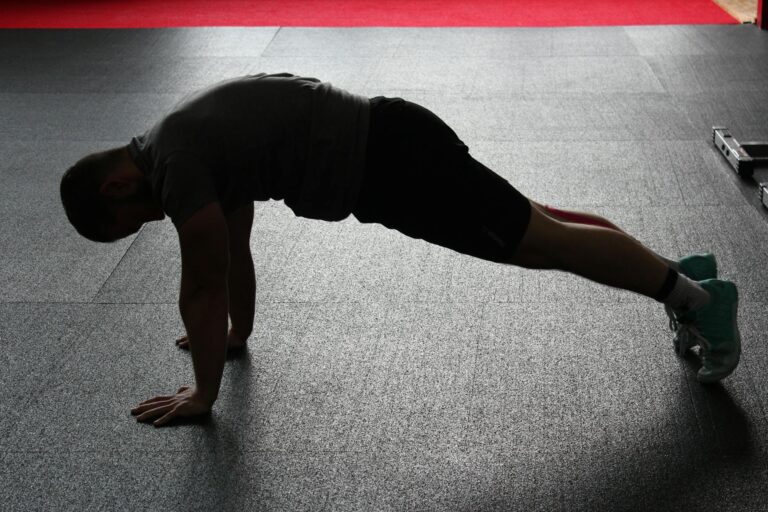
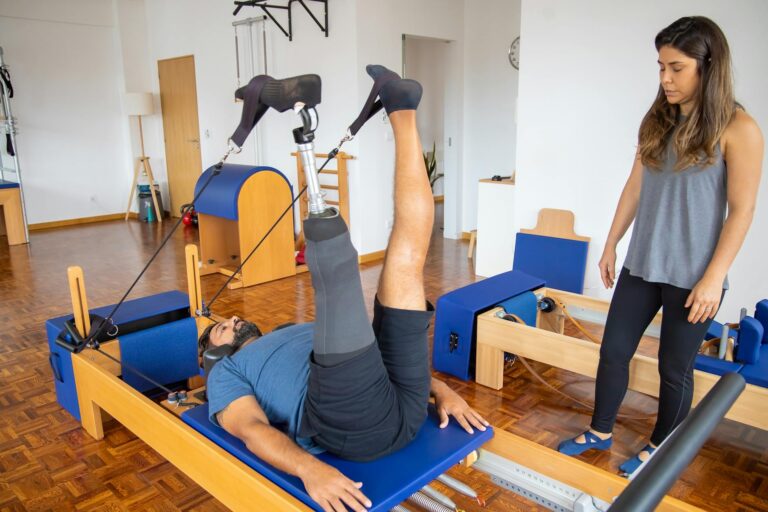
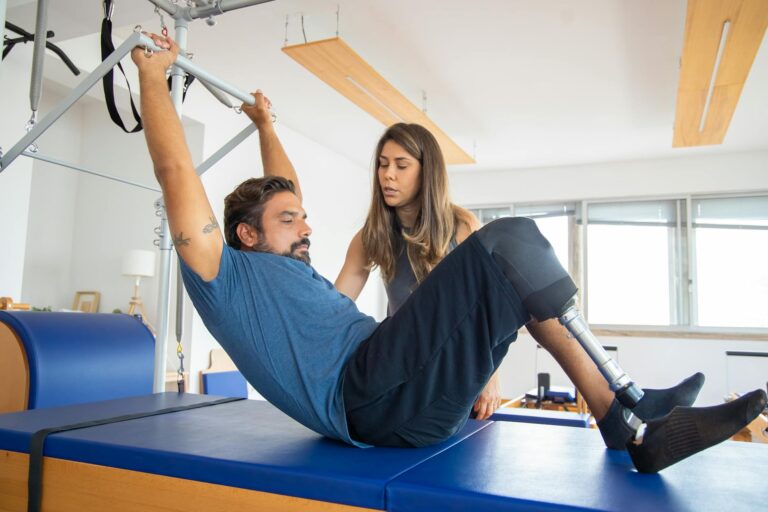
The seven exercises most commonly used in spine rehabilitation clinics are physical therapy movements specifically designed to strengthen weak muscles, improve flexibility, and reduce pain caused by spinal conditions. These include pelvic tilts, prone press-ups, bird dogs, quadruped rocks, glute bridges, the dead bug exercise, and cat-camel stretches. Spine rehabilitation professionals select these exercises because they target deep stabilizer muscles that support the vertebrae, distribute forces evenly across spinal discs, and can be progressively modified as patients improve—making them safer than sudden high-impact activities that can aggravate existing damage. For patients with dementia or cognitive decline, these exercises also provide the added benefit of maintaining core strength and balance, which directly reduces fall risk and preserves independence in daily activities.
Spinal health is inseparable from brain health and overall quality of life. Chronic pain from spine problems triggers prolonged inflammation and stress hormones that can worsen cognitive decline. Conversely, maintaining spinal strength through targeted rehabilitation can reduce pain, improve sleep quality, and support better blood flow to the brain. This article walks through each of the seven core rehabilitation exercises, explains why they work, describes how to perform them safely, and discusses how they fit into a broader recovery plan.
Table of Contents
- What Makes These Seven Exercises Different From General Fitness?
- How Movement Helps the Aging Brain During Spinal Rehabilitation
- The Pelvic Tilt and Its Role in Core Activation
- Prone Press-Ups and Quadruped Exercises for Spinal Extension
- The Bird Dog and Dead Bug for Integrated Core Control
- Glute Bridges and Cat-Camel Stretches for Posterior Chain Strength
- Progression and Long-Term Spinal Health in Aging
- Conclusion
What Makes These Seven Exercises Different From General Fitness?
Standard gym exercises like deadlifts, squats, and bench presses target large muscle groups for strength and size. Spine rehabilitation exercises take a different approach—they isolate and activate the deep stabilizing muscles surrounding the spine, particularly the transverse abdominis (the deepest abdominal layer) and multifidus muscles that run along either side of the vertebrae. This distinction matters because these deep stabilizers are chronically underactive in people with back pain, and activating them reduces abnormal spinal movement that stresses damaged discs or irritated nerves. A physical therapist will typically progress these exercises over weeks, gradually increasing repetitions or difficulty rather than immediately lifting heavy weight.
For someone with dementia or brain health concerns, this controlled progression is especially valuable. A fall or re-injury from overly aggressive rehabilitation can trigger a cascade of complications—hospitalization, deconditioning, increased confusion, and loss of independence. The seven core exercises are designed to work within each person’s capacity and can be performed in a clinic, assisted living facility, or at home with minimal equipment. They also tend to be repeatable and relatively easy to remember, which helps with compliance for older adults.
How Movement Helps the Aging Brain During Spinal Rehabilitation
Physical activity during spine rehabilitation isn’t just about healing damaged tissue—it’s also about stimulating the brain itself. Exercise increases blood flow, promotes the production of brain-derived neurotrophic factor (BDNF), and strengthens neural pathways that support cognition and memory. For older adults, this neuroprotective effect can be as important as pain relief. Studies show that people who maintain core strength and engage in regular spine rehabilitation exercises have better balance, fewer falls, and slower cognitive decline compared to sedentary peers.
However, if a spinal condition causes severe pain or neurological symptoms (numbness, tingling, weakness), jumping into rehabilitation exercises without medical clearance can worsen the condition. A physician or physiatrist must first rule out serious pathology like fractures, infections, or significant disc herniations that require different treatment. Once cleared, the progression from gentle passive stretches to active stabilization work typically takes 4 to 12 weeks. During this time, caregivers of people with dementia should monitor for signs of pain—facial expressions, guarding movements, reduced participation—since cognitive decline may limit a person’s ability to verbally report discomfort.
The Pelvic Tilt and Its Role in Core Activation
The pelvic tilt is often the first exercise introduced in spine rehabilitation because it teaches the most fundamental spinal movement pattern: flattening the low back against the floor. To perform it, a person lies on their back with knees bent and feet flat. They then gently tilt their pelvis so that the low back presses into the ground, hold for 2 to 3 seconds, then relax. This simple action activates the lower abdominal muscles and teaches the nervous system to engage these stabilizers without straining. For dementia patients, the repetitive, controlled nature of pelvic tilts provides a form of motor practice that maintains motor learning capacity even as cognitive function declines.
The pelvic tilt’s real-world benefit becomes apparent when someone gets out of a chair or walks up stairs. A stronger, more stable pelvis distributes the forces from movement more evenly, reducing abnormal stress on individual spinal segments. Many people with chronic back pain unconsciously brace other muscle groups—their shoulders, neck, and hips—to compensate for weak deep core muscles. This compensation pattern spreads pain and dysfunction throughout the body. By retraining the pelvis to initiate movement, rehabilitation helps break this cycle. A physical therapist might progress the pelvic tilt by having a person hold it longer, perform it on a therapy ball, or add arm movements while maintaining the pelvic position.

Prone Press-Ups and Quadruped Exercises for Spinal Extension
Prone press-ups involve lying face down and pushing the upper body upward using the arms, similar to an upside-down sit-up. This exercise extends the spine and is particularly helpful for people with discogenic back pain—pain caused by bulging or degenerated discs—because the extension movement can help reposition disc material and reduce nerve compression. For this reason, some patients find press-ups genuinely relieving, while others (those with spinal stenosis or facet joint pain) may feel worse. A therapist assesses each person’s response and adjusts accordingly.
Quadruped exercises, performed on hands and knees, include movements like the bird dog (opposite arm and leg extension), quadruped rocks (gently shifting weight back toward the heels), and shoulder blade squeezes. These exercises activate the glute muscles, hip stabilizers, and muscles supporting the thoracic spine—the region between the ribs and lower back. A practical comparison: prone press-ups emphasize spinal extension and are more intense, while quadruped movements are gentler and more suitable for people with cognitive impairment who need clear, slow instructions. Quadruped rocks, in particular, are nearly risk-free because the movement is small and the person is stable on the ground, making them ideal for long-term home exercise programs in dementia care settings.
The Bird Dog and Dead Bug for Integrated Core Control
The bird dog exercise involves lying face down on hands and knees, then extending one arm forward and the opposite leg backward while keeping the spine neutral—neither arching nor rounding excessively. The challenge is maintaining balance and spinal position while moving limbs, which requires precise coordination of multiple deep stabilizer muscles. This exercise is more demanding than simple pelvic tilts but still accessible to most older adults with proper coaching. The dead bug exercise is performed lying on the back, knees bent, and feet flat.
The person then lifts arms toward the ceiling and extends one leg while keeping the other leg bent, then switches. The dead bug is mechanically safer than the bird dog because the spine is supported against the ground, but it requires sufficient cognitive engagement to coordinate opposite limbs. For people with moderate dementia, the dead bug can be simplified by moving just one arm or one leg at a time rather than opposite limbs. A critical limitation of both exercises is that they demand conscious attention and concentration; if someone’s cognitive impairment prevents them from understanding instructions or correcting their form, these exercises should only be performed under direct supervision. An unsupervised person with advanced dementia doing a bird dog incorrectly could strain their neck or lower back, undoing the exercise’s benefits.

Glute Bridges and Cat-Camel Stretches for Posterior Chain Strength
The glute bridge targets the gluteus maximus—the largest muscle in the body—along with the lower back muscles and hamstrings. A person lies on their back with knees bent, feet flat and hip-width apart, then lifts the hips off the ground, creating a straight line from knees to shoulders. This exercise builds strength in the posterior chain (back side of the body), which is crucial for walking, climbing stairs, and getting out of a chair—all essential functions for independent living. As people age and sit more, the glutes weaken and other muscles compensate, often resulting in low back pain.
A glute bridge directly addresses this weakness and is one of the few exercises that also improves walking speed and gait stability, both protective against falls. Cat-camel stretches, performed on hands and knees, involve slowly arching the spine (camel) then rounding it (cat), moving back and forth through the range. These stretches restore spinal mobility without the intensity of press-ups and are particularly valuable for people with stiffness from arthritis or prolonged immobility. For a person with dementia, the cat-camel has the added advantage of being rhythmic and somewhat meditative—some individuals find the gentle back-and-forth motion calming.
Progression and Long-Term Spinal Health in Aging
A spine rehabilitation program doesn’t end once the initial exercises are mastered. Progression typically follows this sequence: pain reduction and initial stabilization (weeks 1-4), increased repetitions and duration (weeks 5-8), addition of resistance or balance challenges (weeks 9-12), and eventually return to functional activities like walking, yard work, or hobbies. For older adults, the transition phase—moving from supervised clinic exercises to independent home practice—is critical. Many people regress once they stop seeing a therapist because they revert to old movement patterns or skip exercises when pain improves.
The goal is lifelong maintenance, not cure. Long-term spinal health is an often-overlooked component of dementia care and brain health. A person with cognitive decline who maintains core strength through spine rehabilitation exercises is less likely to fall, suffer fractures, become hospitalized, or lose independence. These outcomes directly affect quality of life and caregiver burden. Establishing a sustainable, low-intensity routine—even just 10 to 15 minutes of gentle exercises three to four times per week—provides protection that extends into advanced dementia stages when more aggressive rehabilitation may no longer be feasible.
Conclusion
The seven core spine rehabilitation exercises—pelvic tilts, prone press-ups, bird dogs, quadruped rocks, glute bridges, dead bugs, and cat-camel stretches—address the fundamental problem of modern aging: weak deep stabilizer muscles combined with chronic pain and immobility. These exercises work because they target the muscles directly responsible for spinal stability without requiring heavy weight or high impact. For someone with dementia or cognitive decline, they offer the additional benefit of maintained strength, improved balance, reduced fall risk, and preservation of functional independence.
The key to success is starting with medical clearance, performing exercises under supervision until proper form is established, and then maintaining a long-term routine tailored to individual capacity. A physical therapist or rehabilitation specialist should assess each person’s specific spinal condition and cognitive status to select the right exercises and progression timeline. With consistency, these seven exercises can meaningfully improve quality of life, reduce pain, protect the brain through increased activity, and support healthy aging for many years.