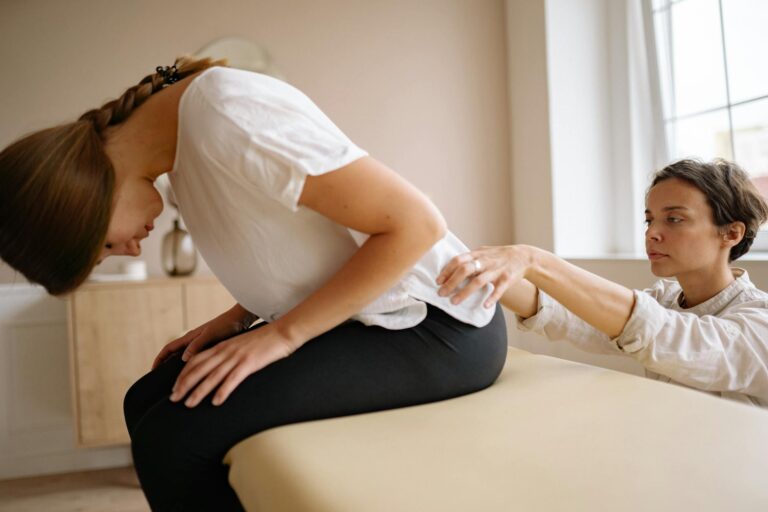
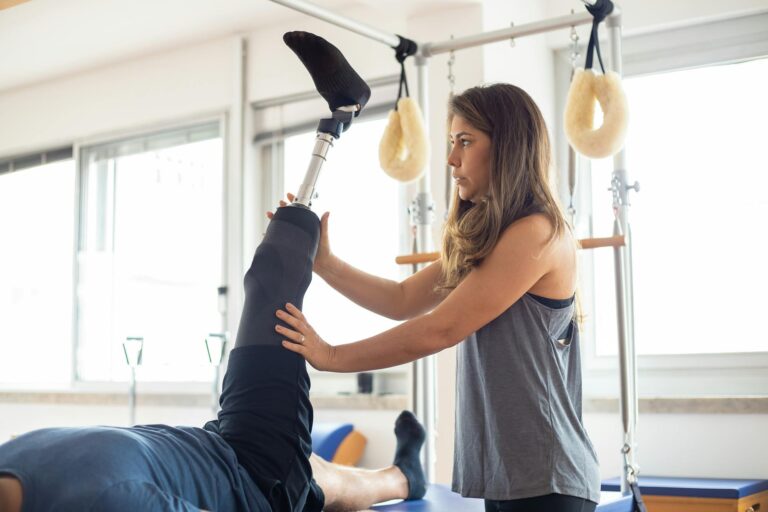
The seven exercises most commonly prescribed in spine rehabilitation clinics are the Dead Bug, Bird Dog, Bridge, Pelvic Tilt, Modified Side Plank, Modified Curl-Up, and Quadruped Arm and Leg Raise. These exercises form the backbone of modern spine rehabilitation because they emphasize motor control and deep stabilization rather than brute strength or high-impact movement. For example, a patient recovering from lower back pain might start with pelvic tilts lying on their back, progress to dead bugs to engage deeper core muscles, and eventually advance to bird dogs or bridges as their stabilizer strength improves.
This article explores each of these seven exercises, how they work, why physical therapists rely on them, and how they fit into a comprehensive spine recovery program. The shift toward these specific exercises reflects a fundamental change in how clinicians approach spine rehabilitation. Rather than prescribing rest or aggressive stretching, modern practice recognizes that controlled, early movement activates the deep muscles that prevent acute pain from becoming chronic disability. These exercises target muscles like the transversus abdominis and multifidus—stabilizers that often become inhibited after injury—without placing excessive load on injured discs or ligaments.
Table of Contents
- Why These Seven Exercises Form the Foundation of Spine Rehabilitation
- Foundation Exercises—Building the Base for Spinal Stability
- Progressive Stabilization—From Hands and Knees to Full Anti-Rotation
- Lateral and Rotational Stability—Advanced Control Patterns
- The Modified Curl-Up and Avoiding Harmful Progressions
- Individual Exercise Mechanics and Patient Tolerance
- Long-Term Spine Health and Transitioning Beyond Rehabilitation
- Conclusion
- Frequently Asked Questions
Why These Seven Exercises Form the Foundation of Spine Rehabilitation
These seven exercises became the clinical standard because they address what rehabilitation specialists call “motor control deficits”—the nervous system’s loss of coordination and fine control over spinal stabilizer muscles. Unlike exercises that build bulk or power, these movements focus on teaching the spine’s deep musculature to contract with precision and hold steady during daily movements. When a patient performs a dead bug correctly, for instance, they’re not trying to lift heavy weight; they’re learning to press their lower back firmly into the floor while moving just one arm and leg at a time, training neuromuscular patterns that transfer directly to everyday activities. The clinical preference for these specific exercises stems from research and decades of practice data showing that they work reliably across different patient populations.
A patient with a history of disc herniation, someone recovering from fusion surgery, or a person managing chronic lower back pain can typically benefit from versions of these same movements, though the specific modifications differ. This standardization also means therapists can easily regress or progress exercises based on what a patient can tolerate, rather than having to introduce completely new movement patterns. However, these exercises are not universally appropriate for every spine condition or every phase of recovery. In the acute phase immediately after a severe injury, even modified versions may be too advanced, and patients may need gentler approaches first. Conversely, once a patient regains stability, these exercises alone may not be sufficient to prevent re-injury; they must eventually be combined with functional movements, load tolerance, and real-world activity retraining.
Foundation Exercises—Building the Base for Spinal Stability
The first tier of exercises in most rehabilitation protocols includes the Pelvic Tilt and Dead Bug, which serve as gateways to deeper core activation. The pelvic tilt—lying on your back with knees bent and gently flattening your lower back by engaging your deep abdominal muscles—sounds deceptively simple but teaches the fundamental action that many people have forgotten: how to activate the transversus abdominis in isolation. Therapists use this exercise because it requires almost no spinal movement, making it safe even for patients in significant pain, yet it establishes the neural pathway needed for all the more advanced exercises that follow. The dead bug takes this foundation further by adding limb movement to the equation. While maintaining that same pressed-down lower back position, the patient extends opposite arm and leg—say, the right arm and left leg—slowly and controlled.
This exercise challenges the nervous system to maintain deep core activation while the body is moving, which is far more realistic than a static contraction. The beauty of the dead bug is that it scales easily: patients can slow down their movements, reduce range of motion, or take longer pauses between repetitions if needed. A common mistake occurs when patients rush these foundation exercises or try to add difficulty prematurely. If someone moves too quickly through dead bugs or doesn’t maintain that lower-back contact with the floor, they’re no longer activating the deep stabilizers—they’re just moving their limbs. This is why physical therapists spend time ensuring perfect form at this level before advancing. Skip this step, and patients often find they plateau quickly or experience symptom flare-ups when they reach more advanced exercises.
Progressive Stabilization—From Hands and Knees to Full Anti-Rotation
Once a patient demonstrates control with pelvic tilts and dead bugs, the Bird Dog becomes the natural next step. Starting from hands and knees, the patient extends one arm and the opposite leg while actively resisting any rotation or shifting of the trunk. What makes this exercise particularly valuable is that it engages the back extensors and erector spinae—muscles that the dead bug doesn’t target as intensely—while still demanding deep stabilization. The bird dog also forces the nervous system to work against a natural tendency toward trunk rotation, training what clinicians call “anti-rotation” stability, which is critical for real-world activities like lifting, reaching, and turning. The Bridge or Hip Bridge represents another progression pathway, but one that emphasizes hip extension and lower back extensor activation. Lying on your back with knees bent, you lift your hips while maintaining a neutral pelvis position.
This activates the glutes and the multifidus—deep back muscles essential for maintaining upright posture. Many rehabilitation specialists consider bridges the ideal exercise for people who spend long hours sitting, because sitting inhibits glute activation, and bridges restore that function. A patient might do pelvic tilts in week one, add dead bugs in week two, and introduce bridges once they can perform dead bugs with consistent form. However, bridges can aggravate symptoms if a patient’s lumbar extension tolerance is limited. Someone with central stenosis or acute facet-joint irritation might find bridges uncomfortable or painful, even when done perfectly. This is why progression isn’t linear—a therapist might have a patient skip bridges temporarily, complete more bird dogs instead, and revisit bridges once the acute phase has passed.

Lateral and Rotational Stability—Advanced Control Patterns
The Modified Side Plank targets a different plane of movement and addresses stability demands that the earlier exercises don’t fully stress: lateral stability and resistance to side-bending. The quadratus lumborum, along with the external and internal oblique rotators, work to keep the spine from collapsing sideways or rotating when challenged. Side planks teach the nervous system to resist movement in the frontal plane—the left-to-right plane—which is essential for walking, reaching across your body, and maintaining posture during asymmetrical activities. The “modified” version, typically performed on the knees rather than the feet, makes this exercise accessible to patients earlier in recovery. The Quadruped Arm and Leg Raise, sometimes called an advanced bird dog, extends the anti-rotation challenge by adding longer holds or increased range of motion.
A patient might hold the position for 5-10 seconds, performing 10-15 repetitions, then progress to slower movements or adding light resistance. This exercise serves as a bridge between isolated core exercises and functional movements, preparing the spine stabilizers for the demands of daily life. For a dementia care population specifically, these movements also provide cognitive engagement—they require attention and coordination, which can be beneficial for maintaining neural pathways. The comparison between side planks and the earlier prone exercises reveals an important principle: comprehensive spine rehabilitation addresses all three planes of movement. A patient who performs dead bugs and bird dogs but never does side planks develops excellent front-to-back stability but may remain vulnerable to lateral injuries or postural deviations. This is why clinicians include at least one lateral stability exercise in almost every rehabilitation program.
The Modified Curl-Up and Avoiding Harmful Progressions
The Modified Curl-Up differs from traditional sit-ups in that the patient lifts only the head and shoulders while hands support the lower back, and the movement stays well short of a full sit-up. This targets the rectus abdominis—the “six-pack” muscle—and upper core without the high disc loads that full sit-ups create. For patients who want to address abdominal weakness without risking re-injury, this exercise is a practical middle ground. However, the modified curl-up is notably absent from some rehabilitation programs, and therapists often recommend waiting until a patient has achieved solid stability through the previous exercises before introducing it.
The key limitation is that isolated abdominal work, even in modified form, contributes less to functional stability than exercises like dead bugs and bird dogs. A patient who relies heavily on curl-ups might develop good abdominal muscle tone without ever improving the deep core coordination that prevents injury in the first place. This is why experienced therapists typically treat curl-ups as a secondary exercise—valuable for addressing specific weak areas, but not a cornerstone of the program. Additionally, if a patient’s disc herniation is still actively irritable, even a modified curl-up might increase symptoms, and waiting another 2-4 weeks before introducing it is often the safer choice.

Individual Exercise Mechanics and Patient Tolerance
Each of the seven exercises has specific mechanical demands that can make them more or less suitable depending on the patient’s condition. A patient with facet-joint irritation may tolerate dead bugs and pelvic tilts well but experience increased pain with extensions like bird dogs. Someone with active inflammation might benefit from early gentle movement through dead bugs but need to avoid side planks until the acute phase resolves.
Therapists use detailed assessments—checking movement quality, tracking pain responses, and monitoring changes over time—to determine which exercises a specific patient should emphasize and which ones to defer. The progression timeline varies significantly. Some patients move through all seven exercises within 4-6 weeks, while others spend 2-3 months perfecting the foundation exercises before advancing. For a dementia care population, where cognitive processing speed or memory might affect learning, the gradual progression becomes even more important; simpler, more repetitive exercises allow for better retention and fewer frustrations during therapy sessions.
Long-Term Spine Health and Transitioning Beyond Rehabilitation
The ultimate goal of these seven exercises is not to perform them indefinitely but to restore motor control and stability well enough that patients can progress to functional activities and eventually maintain spinal health through regular general fitness. A patient who masters all seven exercises but never advances beyond them is missing critical next steps: loaded exercises, dynamic stabilization tasks, sport-specific movements, or age-appropriate functional activities like stair climbing, heavy lifting, or balance challenges. Think of these seven exercises as literacy—fundamental and essential—but not the entire library of reading material a person needs.
For individuals in dementia care settings or those with cognitive decline, maintaining spine stability becomes increasingly important because falls and mobility loss accelerate decline. Regular practice of these exercises, even in simplified forms, can help preserve the neuromuscular patterns that support independence. This is why spine rehabilitation’s emphasis on motor control over raw strength aligns well with older adult populations and those managing cognitive changes: the goal is sustainable, injury-resistant movement patterns that persist even as overall conditioning fluctuates.
Conclusion
The seven most common spine rehabilitation exercises—Dead Bug, Bird Dog, Bridge, Pelvic Tilt, Modified Side Plank, Modified Curl-Up, and Quadruped Arm and Leg Raise—represent a systematic approach to restoring spinal stability through motor control rather than strength alone. By progressing from simple foundation exercises like pelvic tilts through to advanced anti-rotation challenges, patients rebuild the neuromuscular coordination that prevents acute pain from becoming chronic disability. The clinical reliance on these specific exercises reflects decades of evidence showing they work reliably, scale effectively, and transfer directly to real-world movement.
If you’re considering spine rehabilitation—either for yourself or as part of a care plan for someone with dementia or cognitive decline—working with a licensed physical therapist remains essential. They can determine where you should start in the progression, identify which specific exercises best match your condition, and modify movements based on your responses. These seven exercises are tools; their effectiveness depends entirely on proper form, appropriate pacing, and timely progression toward functional independence and long-term spinal health.
Frequently Asked Questions
How often should these exercises be performed for best results?
Most rehabilitation programs recommend daily practice of foundation exercises like pelvic tilts and dead bugs during the early phase, typically 5-10 minutes. As patients progress to more challenging exercises like bird dogs and bridges, therapists often recommend 3-4 sessions per week combined with daily activities, rather than maximum-frequency exercise. Consistency matters more than intensity at this stage.
Can someone with arthritis in the spine still safely perform these exercises?
Yes, with modifications. Degenerative disc disease and arthritis don’t automatically contraindicate these exercises; in fact, controlled movement often helps maintain mobility better than rest. However, a physical therapist needs to adjust range of motion, select which exercises to prioritize, and potentially avoid extensions (like bird dogs) if they trigger pain. The modifications are exercise-specific, not condition-specific.
Why shouldn’t I just follow a video online instead of seeing a therapist?
While instructional videos can show the general movement pattern, they cannot observe whether you’re maintaining proper form—specifically, whether your deep stabilizers are actually activating or if you’re compensating with larger muscles. A therapist watches your spine alignment, monitors your breathing, catches compensatory patterns, and adjusts your program based on how your symptoms respond over 1-2 weeks of practice. This feedback loop is difficult to replicate without professional assessment.
Is it normal to feel sore after starting these exercises?
Mild muscle fatigue is normal—your stabilizer muscles may not have worked properly in weeks or months. However, sharp pain, increased symptoms at your site of injury, or pain lasting hours after exercise suggests you’ve either done too much volume or your form has broken down. A good rule: if symptoms are worse 2-4 hours after exercise, reduce volume or intensity at your next session.
How long before I can return to sports or heavy lifting?
It varies widely, but most people can’t return safely until they’ve progressed beyond these seven foundational exercises to loaded, dynamic, sport-specific movements—often 8-12 weeks into a structured program. Returning too early is one of the most common causes of re-injury. A physical therapist can test your readiness with sport-specific movements and load tolerance before clearing you for full activity.
Can these exercises help prevent future spine problems?
Yes, maintaining motor control and stabilizer strength is proven to reduce recurrence rates and the risk of chronicity after future minor injuries. However, these specific exercises are most valuable during rehabilitation; long-term prevention combines general fitness, adequate activity variation, and ergonomic awareness. Someone who’s completed spine rehabilitation and returned to full activity should maintain conditioning through broader exercise programs rather than indefinitely repeating these seven exercises.