Specialists consistently recommend seven key exercises for spine rehabilitation: bird-dog, dead bug, bridges, planks, pelvic tilts, cat-cow stretches, and lumbar rotations. These exercises work by reactivating and strengthening the deep core muscles—the transversus abdominis and multifidus—that provide essential support to your spine. Clinical research shows moderate-certainty evidence that exercise therapy is more effective than no treatment for chronic low back pain, and the American Physical Therapy Association identifies exercise as the first-line care for spine-related conditions rather than immediate surgery or prolonged immobility.
Consider the case of someone recovering from a disc herniation: these core stabilization exercises have proven highly effective at treating disc herniation and spinal stenosis without requiring invasive intervention. The exercises work progressively, starting with basic stability and advancing to dynamic movements that restore normal function. This article explores each of the seven essential exercises, explains how to structure a rehabilitation program, and covers the modern understanding of hip mobility’s role in preventing future spine problems.
Table of Contents
- How Core Stabilization Exercises Restore Spinal Support
- Foundation Movements: Bridges and Planks for Lasting Spinal Support
- Mobility Exercises: Pelvic Tilts, Cat-Cow, and Lumbar Rotations
- Hip Mobility and Flexibility: The 2026 Spine Health Trend
- Structuring Your Rehabilitation Program: Duration and Frequency
- Safety and Professional Supervision Throughout Rehabilitation
- From Rehabilitation to Lifelong Spine Maintenance
- Conclusion
How Core Stabilization Exercises Restore Spinal Support
The foundation of any spine rehabilitation program begins with reactivating the deep core muscles that many people lose strength in over months or years of pain avoidance. Bird-dog and dead bug exercises are the two most essential exercises for this purpose, as they specifically target the transversus abdominis and multifidus muscles that specialists consider critical for spinal stability. Bird-dog involves kneeling on hands and knees, then extending one arm forward and the opposite leg backward while maintaining a neutral spine—the careful coordination required forces your brain to reconnect with those stabilizing muscles. Dead bug exercises work similarly but from your back: you extend opposite arms and legs toward the ceiling while keeping your lower back pressed flat against the floor.
The key difference between these two exercises lies in the feedback they provide. Bird-dog demands balance and proprioceptive awareness as you manage your position on all fours, while dead bug gives immediate tactile feedback through your lower back staying pressed to the floor. For someone returning to activity after injury, bird-dog often feels more functional because it requires integrated stability, whereas dead bug offers a safer starting point if you experience acute pain with movement. Both exercises should be performed with controlled movements—typically 10-12 repetitions per side—rather than rushed or bouncy motions that bypass the stabilizer muscles you’re trying to activate.

Foundation Movements: Bridges and Planks for Lasting Spinal Support
Once you’ve reestablished awareness of your core stabilizers, bridges and planks build endurance in those muscles and extend support to larger muscle groups. Bridges involve lying on your back with knees bent, then pushing through your heels to lift your hips toward the ceiling, engaging your glutes and lower back extensors while maintaining core tension. Planks position you face-down on forearms and toes, creating a straight line from head to heels while your core muscles work to prevent your hips from sagging. Both movements reduce spine strain by distributing loads across multiple muscle groups rather than concentrating stress on individual vertebrae.
However, planks and bridges have a critical limitation: they’re isometric exercises, meaning you hold them in one position. This builds muscular endurance but doesn’t translate directly to dynamic, functional movements like bending, lifting, or rotating. Someone recovering from spine injury should perform planks and bridges as part of a complete program, not in isolation. Research shows these movements are effective at stabilizing the core and supporting the spine, per Mayo Clinic guidelines, but they work best when combined with the mobility exercises covered in the next section. For most people, bridges should be held for 20-30 seconds and repeated 3-4 times, while plank holds begin at 15-20 seconds and progress gradually to longer durations as strength improves.
Mobility Exercises: Pelvic Tilts, Cat-Cow, and Lumbar Rotations
While core stabilization creates a strong foundation, mobility exercises restore movement patterns and reduce pain through improved flexibility and coordination. Pelvic tilts are the gentlest of these movements: lying on your back with knees bent, you alternately tilt your pelvis to press your lower back into the floor, then lift slightly to create a natural curve—the movement is subtle but teaches you to control your lumbar spine. Cat-cow stretches, performed on hands and knees, involve arching your back (cow) and then rounding it (cat) in a flowing rhythm that mobilizes the entire spine and reduces stiffness. Lumbar rotations involve sitting or lying down and gently twisting your trunk side to side, carefully moving the lower back through its natural rotation range while your core muscles stay engaged.
These three exercises represent very different intensity levels, which makes them suitable for different recovery phases. Pelvic tilts are appropriate even for acute pain because they move within a very small range and can be done throughout the day. Cat-cow stretches are intermediate—effective for pain relief according to Commons Clinic specialists, but requiring slightly more mobility and comfort than pelvic tilts. Lumbar rotations challenge your coordination because they require stability through the core while your spine simultaneously moves, making them later-stage exercises. The progression from pelvic tilts to cat-cow to lumbar rotations mirrors a typical rehabilitation timeline, with each exercise preparing your nervous system and muscles for the next level of complexity.

Hip Mobility and Flexibility: The 2026 Spine Health Trend
Recent research has shifted specialists’ focus to hip mobility as a primary factor in spine health—tight hips force the lower back to overcompensate and cause additional strain and pain. This 2026-forward insight changes how rehabilitation programs are designed: simply doing back exercises isn’t sufficient if your hips remain tight and restricted. Tight hip flexors, hamstrings, or external rotators create muscle imbalances that alter your posture and spinal mechanics, pushing excessive load onto your lumbar spine even when your core is strong. Specialists now recommend specific hip mobility drills including hip flexor stretches, figure-four stretches for the deep glute muscles, and controlled hip rotations to restore normal movement patterns.
The practical implication is significant: someone with lower back pain may find that pain resolves faster once hip mobility improves, even if traditional back-specific exercises alone weren’t fully effective. Many people spend weeks doing planks and bridges while ignoring their chronically tight hips, then wonder why their pain hasn’t fully resolved. This represents a shift in 2025-2026 rehabilitation philosophy—viewing the spine and hips as an integrated kinetic chain rather than separate body parts. If you’ve had disc herniation or stenosis, your rehabilitation program should allocate roughly 40 percent of exercise time to hip mobility work, not just spinal stabilization.
Structuring Your Rehabilitation Program: Duration and Frequency
The intensity and duration of your spine rehabilitation program matter as much as which exercises you perform. Evidence-based guidelines recommend an initial intensive phase lasting 4 to 6 weeks, during which you perform exercises 4 to 5 days per week under the supervision of a physical therapist or doctor. This initial phase establishes muscle memory, rebuilds strength, and retrains your nervous system to stabilize and protect your spine during activity. Many people experience significant pain reduction within this window, though complete tissue healing—especially for disc herniations—may require more time.
After this initial 4 to 6 week phase, specialists recommend transitioning to a maintenance program performed 2 to 3 days per week for lifelong spine health. This isn’t the end of rehabilitation; rather, it’s acknowledging that your spine requires ongoing care similar to brushing your teeth or exercising your cardiovascular system. The maintenance phase prevents deconditioning and future injury recurrence. Someone who completes intensive rehabilitation but then abandons all exercise commonly experiences pain return within 6 to 12 months as their core muscles atrophy and protective patterns weaken. The commitment to continued, regular exercise—even at reduced frequency—determines long-term success.

Safety and Professional Supervision Throughout Rehabilitation
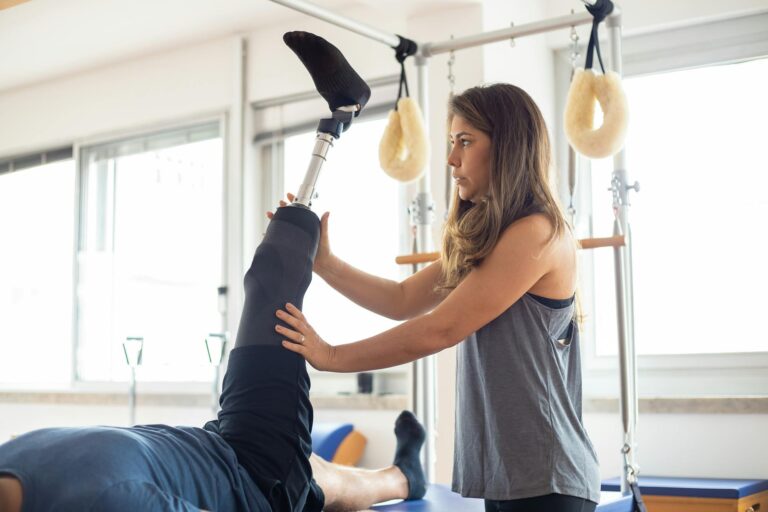
All spine rehabilitation programs should be performed under the supervision of a doctor or physical therapist to ensure safety and appropriate progression. This supervision matters because individual anatomy varies widely: the exercise intensity or range of motion appropriate for one person may exacerbate another person’s condition. Someone with significant spinal stenosis, for example, might need modified planks that reduce compression, while someone with a disc herniation might need careful limitation of forward bending. A qualified professional assesses your specific condition, teaches proper exercise form, and adjusts the program as you progress.
Red flags requiring immediate modification or program cessation include sharp pain that shoots down your leg (suggesting nerve involvement), numbness or tingling that spreads, or pain that worsens during exercises despite proper form. These warning signs indicate that the current exercise may be inappropriate for your condition and requires professional assessment. Pain that is mild to moderate during exercise and then resolves within an hour is generally tolerable, but sharp, shooting, or progressive pain demands immediate attention. The supervision framework doesn’t mean you need a therapist at every exercise session; rather, you need professional guidance when starting your program, periodic check-ins to verify proper form, and immediate access to professional assessment if unexpected symptoms develop.
From Rehabilitation to Lifelong Spine Maintenance
Successful spine rehabilitation isn’t about finishing a six-week program and moving on—it’s about establishing lifelong habits that protect your spine and prevent future injury. The transition from intensive rehabilitation to maintenance represents a shift in mindset: your spine requires ongoing care, just like your cardiovascular system, teeth, or mental health.
People who maintain their spine rehabilitation exercises at 2 to 3 times per week report significantly lower rates of pain recurrence compared to those who abandon exercise entirely. The 2026 approach to spine health emphasizes integration with daily living: the best spine exercise is the one you’ll actually do consistently, which often means incorporating mobility work and core activation into your existing routine rather than requiring a separate, dedicated workout session. Morning stretches combining hip mobility and spinal mobility, movement breaks during work, and evening strengthening exercises become sustainable when woven into your day rather than viewed as an additional obligation.
Conclusion
Spine rehabilitation is a structured, evidence-based process that relies on seven key exercises—bird-dog, dead bug, bridges, planks, pelvic tilts, cat-cow stretches, and lumbar rotations—performed progressively over a 4 to 6 week intensive phase. These exercises work by reactivating deep core stabilizers and restoring the mobility that many people lose during pain-avoidance patterns. The modern understanding of spine health also emphasizes hip mobility as essential, recognizing that tight hips force excessive compensation from the lower back.
Your next step is scheduling an assessment with a physical therapist or physician to confirm your specific spinal condition and receive personalized guidance on exercise progression. Start conservatively, prioritize professional form assessment, and commit to the maintenance phase of 2 to 3 weekly exercises for long-term spine health. The most effective spine rehabilitation program is the one you’ll actually maintain for years, not the most intense program you can tolerate for six weeks.