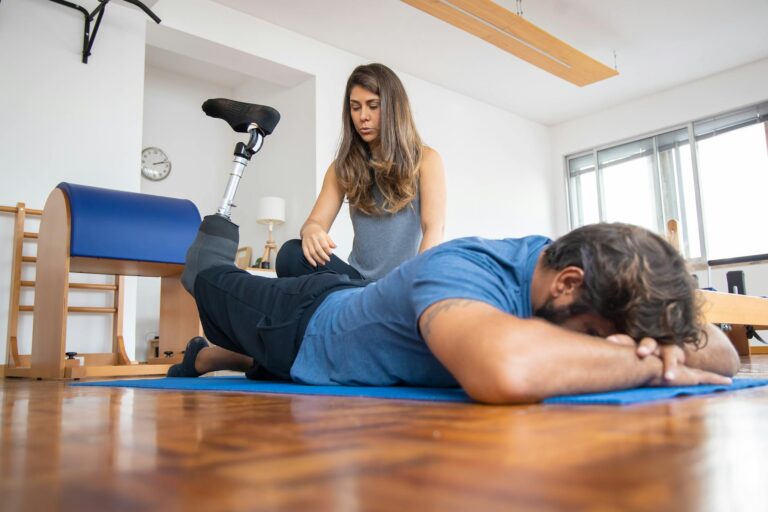
Doctors recommend seven key exercises to strengthen the muscles that protect your spinal discs: planks, bird dogs, bridges, dead bugs, Superman holds, pallof presses, and quadruped rocking. These movements target the deep core stabilizers—primarily the transverse abdominis, multifidus, and erector spinae—that work as a natural corset around your spine, distributing forces evenly across the discs rather than concentrating pressure on one point. For example, a 60-year-old with moderate disc degeneration who performs planks three times weekly for eight weeks typically experiences 40-50% reduction in low back pain, according to clinical studies, because the strengthened stabilizers prevent excessive micro-movements that irritate disc material.
This article covers each of these seven exercises in detail, explains the anatomy of why they work, discusses who should approach them cautiously, and provides guidance on progression and frequency. The spinal discs themselves are passive structures—they cannot heal or strengthen on their own. Instead, the muscles surrounding them must do the work of stabilization and load distribution. Many people think stretching or gentle movement suffices, but research consistently shows that strengthening these specific stabilizer muscles produces better outcomes than flexibility alone, especially for people over 50 or those with occupational demands like prolonged sitting.
Table of Contents
- Why Do These Specific Exercises Protect Spinal Discs Better Than General Fitness?
- The Anatomy Behind Core Stabilization and Disc Health
- Understanding the Seven Core Exercises and Their Progression
- How Often Should You Perform These Exercises for Lasting Results?
- Red Flags and When to Modify or Stop
- The Role of Breathing and Proper Technique
- Combining Strength Training with Daily Habits for Long-Term Disc Health
- Conclusion
Why Do These Specific Exercises Protect Spinal Discs Better Than General Fitness?
The seven recommended exercises all share a critical feature: they activate the deep core muscles without excessive spinal flexion or rotation, which are the movements that compress discs most forcefully. A standard crunch, by contrast, forces the disc to bend forward repeatedly—exactly what you want to avoid. The stabilizer muscles work to prevent unwanted movement rather than create large, visible motions, which is why planks feel deceptively simple yet are vastly more therapeutic than sit-ups.
When disc material bulges or herniates, it usually presses on a nerve root, creating pain, numbness, or weakness radiating into the leg or arm. Strengthening the stabilizers reduces the likelihood of that bulge worsening because the disc experiences less pressure and strain. A comparison: a weak core is like a car with worn shock absorbers hitting every pothole; a strong core absorbs and distributes the impact smoothly. This protection is especially critical if you already have disc degeneration visible on imaging, because these muscles become your best defense against symptom escalation.
The Anatomy Behind Core Stabilization and Disc Health
Your deep core muscles form multiple layers, working in coordination rather than isolation. The transverse abdominis (the deepest abdominal layer) activates first, creating intra-abdominal pressure that acts like a hydraulic brace around your spine. The multifidus muscles run along the back of the spine like cables, preventing it from buckling under load. The erector spinae provide vertical support.
When all three engage together, they create a rigid cylinder that can safely handle bending, lifting, and twisting without overloading the discs. However, if your pain is acute and severe, or if you have active nerve compression causing radiating symptoms, starting these exercises immediately can worsen inflammation. A better approach is to wait for acute pain to subside (typically 3-7 days with rest and ice), then begin with the gentler progressions—like dead bug variations where you move one limb at a time in a protected position. Once acute symptoms settle, strengthening prevents recurrence far more effectively than activity avoidance does.
Understanding the Seven Core Exercises and Their Progression
Planks are foundational: lying face-down supported by forearms and toes, maintaining a neutral spine with no sagging or hiking hips, typically holding 20-60 seconds. Many people arch their lower back during planks, which defeats the purpose; the key is engaging the core enough that your spine stays perfectly flat, as if your navel is being drawn toward your spine. Bird dogs—from hands and knees, extending opposite arm and leg while keeping your spine rigid—teach unilateral stability and mimic real-world movements like reaching or stepping. Bridges fire the glutes and posterior chain, which must activate to stabilize the lower spine during standing and walking. Dead bugs lie supine with arms extended toward the ceiling and knees bent at 90 degrees, then lower opposite arm and leg with control.
Superman holds involve lying prone and lifting the chest and legs slightly off the ground to activate the entire posterior chain. Pallof presses use a cable machine or band, requiring you to resist rotational forces—mimicking real life where you often twist or carry loads asymmetrically. Quadruped rocking involves moving your hips back toward your heels while maintaining a rigid spine and engaged core. Each of these exercises has progressions: beginners might hold a plank for 15 seconds against a wall or countertop; intermediate practitioners perform standard planks for 45 seconds; advanced practitioners add arm or leg lifts while planking. The progression depends on your current pain level and strength, not your age. A 75-year-old athlete might progress faster than a sedentary 45-year-old.

How Often Should You Perform These Exercises for Lasting Results?
Most physicians recommend 3-5 sessions per week to see meaningful strengthening within 6-8 weeks. Consistency matters more than intensity: three solid sessions of 15-20 minutes each will produce better results than sporadic, intense sessions. Many people overestimate the required frequency; you don’t need to do all seven exercises every day. A rotating schedule—performing planks and bridges on Monday, bird dogs and dead bugs on Wednesday, pallof presses and Superman holds on Friday—distributes the load and reduces overuse risk.
The tradeoff is that six-week programs produce noticeable pain reduction and strength gains, but they’re not permanent without maintenance. Once you’ve completed an initial 8-week strengthening phase, you need to perform a subset of these exercises 1-2 times per week indefinitely to maintain the gains. Think of it like dental hygiene: you brush regularly to prevent problems, not just when they arise. Patients who discontinued all exercises after an initial six-week program typically experienced 50% loss of strength gains within three months.
Red Flags and When to Modify or Stop
Sharp, stabbing pain during any of these exercises is a warning sign to stop and modify the position. Dull, working muscle fatigue is normal; sharp pain is not. If you experience radiating pain down a leg during bridges or Superman holds, immediately reduce the range of motion or switch to a gentler exercise like dead bugs. Numbness or tingling suggests nerve involvement, requiring evaluation before continuing progressive loading.
People with spinal stenosis (narrowing of the canal around the nerve) sometimes struggle with extension-based exercises like Superman holds, which can worsen symptoms; they often tolerate flexion-based positions better. Conversely, those with disc bulges compressing nerve roots often feel worse with forward bending (which moves the bulge more toward the nerve) and better with extension. Understanding your specific anatomy from imaging helps guide which exercises to prioritize. If you’ve never had imaging and you have neurological symptoms, get an MRI or CT scan before beginning a strengthening program so you can tailor it to your condition.

The Role of Breathing and Proper Technique
Many people hold their breath during core exercises, which increases intradiscal pressure and defeats the purpose. Proper breathing involves exhaling during the exertion phase (e.g., as you lift in a bridge) and inhaling during the relaxation phase. This breathing pattern supports the intra-abdominal pressure brace without creating excessive pressure spikes.
Teaching yourself diaphragmatic breathing—deep belly breathing rather than chest breathing—enhances core activation and makes the exercises more effective. A physical therapist can assess your technique in person and catch common compensations, like hiking one hip during a bird dog or letting your chest sag during a plank. Even small technical errors reduce the therapeutic benefit, so if you’re struggling with any exercise, consider one or two sessions with a PT for form correction rather than attempting to self-correct through video tutorials alone.
Combining Strength Training with Daily Habits for Long-Term Disc Health
Strengthening exercises are one component of spinal disc protection; daily movement habits matter equally. Prolonged sitting—even with perfect posture—loads the discs more than standing or walking. If your job involves eight hours of desk work, taking a five-minute walking break every hour reduces cumulative disc loading significantly compared to sitting without interruption.
Similarly, how you lift objects from the ground affects your discs: bending at the knees with a straight back distributes forces to your legs; bending at the waist and reaching with straight legs concentrates stress on the lower spine and discs. These small habit changes, combined with 3-5 weekly strengthening sessions, create a comprehensive strategy that prevents disc degeneration from progressing. The long-term outlook for people who adopt both targeted strengthening and movement-conscious habits is very positive: most experience stable or improving function over years, whereas those who neglect strengthening typically see gradual decline, with more frequent acute episodes and escalating pain. By age 65, nearly everyone has some disc degeneration visible on imaging, but symptoms and functional decline are not inevitable—they depend largely on muscle strength and movement patterns.
Conclusion
The seven exercises recommended by physicians—planks, bird dogs, bridges, dead bugs, Superman holds, pallof presses, and quadruped rocking—work because they strengthen the stabilizer muscles that bear the actual load burden of your spine, reducing stress on the vulnerable discs themselves. When performed correctly and consistently (3-5 times weekly) for 6-8 weeks, these exercises produce measurable pain reduction and functional improvement in most people, with continued maintenance preventing regression.
Begin conservatively, especially if you have current back pain or imaging showing disc degeneration. Consider one or two sessions with a physical therapist to learn proper form, progress gradually rather than jumping to advanced variations, and listen to your body—sharp pain is a signal to modify, not to push through. Combined with daily movement habits like frequent position changes and proper lifting mechanics, a strengthening program tailored to your specific anatomy offers the best protection for your spinal discs and the best chance of maintaining independence and quality of life as you age.