Doctors most commonly recommend seven core exercises for lumbar spine strength: bird dogs, dead bugs, bridges, quadruped rocks, pelvic tilts, half-kneeling rotations, and side-lying leg lifts. These exercises target the deep stabilizing muscles around your lower back—particularly the transverse abdominis and multifidus—which are far more important than surface muscles for preventing pain and maintaining a healthy spine. For example, a patient with chronic lower back pain might notice that a week of consistent bird dogs (where you extend opposite arm and leg while on all fours) reduces their pain more effectively than stretching alone, because these exercises actively rebuild the muscular corset that protects your spine.
This article covers each of these seven exercises in detail, explains why doctors prescribe them, and walks through how to perform them correctly to avoid common mistakes. You’ll also learn when these exercises might not be appropriate, how to progress them as you get stronger, and what to expect in terms of recovery timelines. Whether you’re a caregiver managing your own back health or an older adult working to maintain mobility and independence, understanding these exercises gives you concrete tools to build spine resilience without equipment or a gym membership.
Table of Contents
- Why Are These Seven Specific Exercises Better Than Other Back Workouts?
- Understanding the Progression From Beginner to Advanced Versions
- The Bird Dog Exercise and Its Role in Functional Movement
- Dead Bugs and Pelvic Tilts as Foundational Exercises
- Bridges and Half-Kneeling Rotations for Power and Rotation Control
- Side-Lying Leg Lifts and Quadruped Rocks
- Creating a Sustainable Long-Term Practice and Preventing Regression
- Conclusion
- Frequently Asked Questions
Why Are These Seven Specific Exercises Better Than Other Back Workouts?
These seven exercises were selected and refined by spine specialists because they activate the stabilizer muscles without excessive load or risk of injury. Unlike traditional sit-ups or crunches—which can actually increase pressure on a damaged disc—these exercises keep your spine in a neutral, supported position while your muscles learn to work together. A physical therapist might progress a patient through all seven over several weeks, starting with the easiest (dead bugs) and building toward more challenging variations like half-kneeling rotations, which demand better balance and coordination. The distinction between “stabilizer” and “mover” muscles matters for spine health.
Your large muscles like the rectus abdominis (the six-pack muscle) are designed to move your spine, but your smaller, deep core muscles are designed to stabilize it and protect it from injury. When your stabilizers are weak, your larger muscles overcompensate, which leads to tension and pain. These seven exercises correct that imbalance. However, if you already have severe disc herniation or nerve pain radiating down your leg, starting these exercises without first consulting a physician can make things worse—you may need a short period of rest or specific modifications before beginning.

Understanding the Progression From Beginner to Advanced Versions
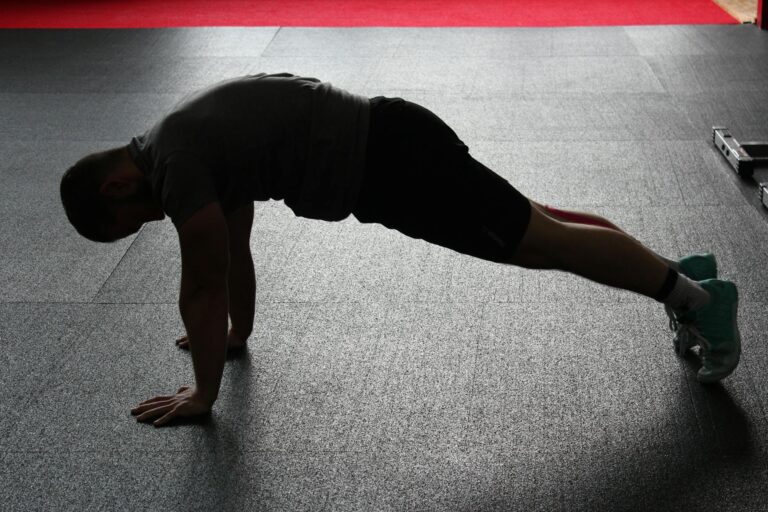
Each of these seven exercises has easier and harder versions, allowing you to match the difficulty to your current strength level. Dead bugs, for instance, can start with just one leg movement while the opposite arm stays down, and progress to full opposite-arm-and-leg extension. Bridges can progress from a basic double-leg lift to single-leg bridges, then to single-leg bridges with the top leg lifted.
This progression matters because doing the exercise correctly at an easier level is far better than struggling through an advanced version with poor form. Many people skip the beginner versions because they feel “too easy,” but this is where most back injuries actually occur—at the point where form breaks down. A therapist might spend an entire week on pelvic tilts alone with a deconditioned patient, ensuring they feel their deep core muscles activate before moving forward. The timeline for progression varies widely: some people move through all seven in different difficulty levels within four to six weeks, while others—especially those recovering from injury—might spend two to three months building up to the advanced versions.
The Bird Dog Exercise and Its Role in Functional Movement
The bird dog is often called the “gold standard” of core stability exercises because it mimics the opposite-arm-opposite-leg pattern your body uses during walking and crawling. To perform it correctly, you start on your hands and knees, engage your core by drawing your belly button toward your spine, then extend your right arm straight forward and left leg straight back simultaneously—holding for a few seconds before returning and repeating on the opposite side. The key is keeping your hips level and not letting your low back arch, which many people do naturally when they lose concentration.
A common real-world example is an older adult recovering from back surgery who starts bird dogs because the exercise rebuilds the neural connection between their brain and deep core muscles. They might do three sets of ten repetitions per side, three times a week. Within two weeks, they often report that bending down to pick something up feels more stable and requires less bracing. However, the bird dog becomes ineffective if your lower back arches excessively or if you rush through repetitions—quality and control matter much more than speed or high repetitions.

Dead Bugs and Pelvic Tilts as Foundational Exercises
Dead bugs and pelvic tilts are often where people should start because they teach core activation while lying on your back in a fully supported position. With dead bugs, you lie on your back, knees bent with feet flat, then slowly extend one leg while pressing the opposite arm overhead—moving like you’re “dying” with your limbs extended. This exercise forces you to maintain lower back contact with the floor, which ensures your deep core is working rather than your hip flexors or surface muscles taking over.
Pelvic tilts are even more foundational: lying on your back with knees bent, you gently tilt your pelvis by tightening your glutes and drawing your belly in, which flattens your lower back against the floor. Holding that position for five to ten seconds and repeating teaches you what core engagement feels like. The tradeoff is that these exercises feel deceptively simple—they don’t leave you breathless or sore—but they often produce faster pain relief than people expect, sometimes within days. A patient doing dead bugs and pelvic tilts consistently for a week might suddenly realize they stood up from a chair without their usual lower back discomfort.
Bridges and Half-Kneeling Rotations for Power and Rotation Control
Bridges strengthen the glutes and lower back simultaneously, addressing one of the most common weaknesses: underactive glutes. Many people with lower back pain actually have glutes that have “switched off” due to prolonged sitting, and their lower back muscles have compensated by working overtime. A bridge requires you to lie on your back with knees bent, feet flat, then press through your heels to lift your hips until your body forms a straight line from shoulders to knees. Squeezing your glutes at the top ensures they’re doing the work, not your lower back.
Half-kneeling rotations are more advanced and introduce the element of controlled rotation, which is critical for functional movement like reaching, turning, and picking things up. In a half-kneeling position (one knee down, one knee up at 90 degrees), you hold a light weight or medicine ball at chest height and rotate your torso side to side, keeping your hips still. This teaches your core to control rotation rather than letting your lower back twist, which is often where injuries happen in real life. However, this exercise isn’t appropriate for people with acute disc herniations or those experiencing sharp pain with rotation—it should only be introduced once basic stability is restored.

Side-Lying Leg Lifts and Quadruped Rocks
Side-lying leg lifts strengthen your hip abductors, particularly the gluteus medius, which is a key stabilizer that prevents excessive side-to-side movement of the pelvis. You lie on your side and lift the top leg straight up to hip level, controlling it on the way down. This exercise is often underestimated because it’s not demanding enough to fatigue you, but the gluteus medius is critical for walking mechanics and preventing Trendelenburg gait (where your pelvis tips to one side when standing on one leg), which itself can cause back pain. Performing side-lying leg lifts correctly requires maintaining a neutral spine and avoiding rolling backward or forward.
Quadruped rocks have you on your hands and knees, then you shift your weight backward slightly so your glutes move toward your heels, then shift forward again—gently rocking. This teaches your body to move from your hips while keeping your spine stable. It’s particularly useful for older adults because it builds the foundation for getting up from the ground safely, which is important for maintaining independence. A specific example: someone who couldn’t previously stand up from the floor without assistance often finds that after four weeks of quadruped rocks combined with bridges, they can do it independently.
Creating a Sustainable Long-Term Practice and Preventing Regression
These seven exercises only work if they become a habit rather than a one-time effort. Doctors typically recommend performing them three to four times per week indefinitely, not just for a few weeks. Many people make the mistake of stopping once their pain resolves, only to have the pain return when they become sedentary again.
A sustainable approach means finding a routine that fits your lifestyle—whether that’s doing them first thing in the morning, before bed, or during a lunch break—and sticking with it long-term. The outlook for core strength and spine health has improved significantly with this evidence-based approach. Where decades ago, doctors simply prescribed rest for lower back pain, the modern approach recognizes that strengthening the deep stabilizer muscles and maintaining spinal mobility actually prevents future problems. Whether you’re sixty or eighty, whether you’ve had back surgery or never have, these seven exercises work because they address the fundamental weakness that leads to back pain: a core that’s lost the ability to stabilize your spine.
Conclusion
The seven exercises doctors recommend—bird dogs, dead bugs, bridges, quadruped rocks, pelvic tilts, half-kneeling rotations, and side-lying leg lifts—work because they target the deep stabilizer muscles that protect your spine, rather than just the surface muscles everyone can see. Each exercise has beginner and advanced versions, allowing you to progress as you get stronger, and each serves a specific purpose in rebuilding spinal stability and function. Performed consistently three to four times per week, these exercises can reduce or eliminate chronic back pain within four to eight weeks for most people.
Your next step is to start with the easier versions—dead bugs and pelvic tilts—and spend at least one to two weeks building confidence with perfect form before progressing. If you have severe pain, numbness, or tingling in your legs, consult a physician or physical therapist before beginning. For most people, however, these exercises represent a straightforward, equipment-free path to a stronger, more resilient lower back and better quality of life.
Frequently Asked Questions
How long does it take to see results from these exercises?
Many people report reduced pain within one to two weeks of consistent practice, but building true spinal stability takes four to eight weeks. Your nervous system needs time to “learn” how to activate your deep core muscles, and this neurological adaptation happens faster than muscular strength gains.
Can I do these exercises if I have a herniated disc?
It depends on the severity and location of your herniation. Dead bugs, pelvic tilts, and gentle bridges are often safe, but half-kneeling rotations and exercises involving spinal flexion may aggravate symptoms. Always consult your physician or physical therapist before starting any exercise program after a disc injury.
Do I need to do all seven exercises every day?
No. Three to four sessions per week is sufficient, and spacing them out allows your muscles to recover. Each session might include all seven exercises or focus on three to four, rotating through different combinations across the week.
How many repetitions should I do?
Start with two to three sets of ten to fifteen repetitions per exercise, performed slowly and with control. As you progress, you can add more repetitions, increase hold times, or move to more challenging versions rather than just doing more reps of the same version.
Can older adults safely do these exercises?
Yes. These exercises are actually ideal for older adults because they build the stability needed for functional movement and help prevent falls. Start with the easiest versions and progress slowly, and your risk of injury is very low.
What if an exercise causes sharp pain rather than muscle fatigue?
Stop immediately. Sharp pain indicates your spine is being moved in a way your current strength level can’t support. Return to an easier version or skip that exercise entirely until your base strength improves.