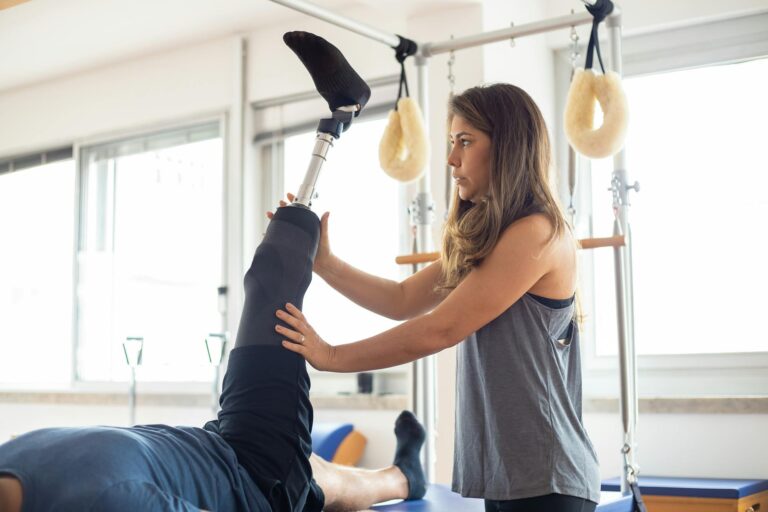
Doctors recommend seven core exercises that provide reliable benefits for spine stability and core strength: planks, bridges, dead bugs, bird dogs, side planks, glute bridges, and pelvic tilts. These exercises build the deep abdominal and back muscles that support your spine, maintain posture, and reduce your risk of falls—particularly important for aging adults and those navigating cognitive changes. For someone in their 60s or older, consistent practice of these movements can mean the difference between independence and needing assistance with daily tasks.
This article covers each exercise in detail, explains how to modify them for different ability levels, and shows you how to progress safely without injury. A strong core doesn’t just improve how you look—it’s foundational to balance, movement quality, and the stability your brain relies on when coordinating movement in three-dimensional space. Physical therapists and orthopedic doctors routinely prescribe these seven exercises because they target the exact muscles that prevent slouching, reduce lower back pain, and keep your spine properly aligned. Even people with arthritis, limited mobility, or previous injuries can perform versions of these exercises with modifications.
Table of Contents
- Why Core Strength Matters More Than Most People Realize
- The Foundation: Planks, Bridges, and Dead Bugs
- Building Control: Bird Dogs and Side Planks
- Safe Progression Without Injury
- Common Mistakes That Undermine Results
- Integrating Core Work Into Daily Life
- Long-Term Benefits and Sustainable Practice
- Conclusion
Why Core Strength Matters More Than Most People Realize
Your core is far more than your abdominal muscles. It includes your rectus abdominis (the “six-pack” muscle), transverse abdominis (the deep stabilizer underneath), obliques, and the erector spinae and multifidus muscles along your spine. Together, these muscles function as a corset that holds your spine in a neutral, protected position throughout the day. When your core is weak, your spine becomes unstable, forcing surrounding muscles to work overtime and leading to pain, postural collapse, and increased fall risk. For older adults and anyone with cognitive concerns, core strength directly impacts balance and proprioception—your body’s awareness of where it is in space.
When your core muscles are engaged and strong, your brain receives better information about your body’s position, making it easier to catch yourself if you stumble. Research consistently shows that people with strong cores have fewer falls and better recovery from stumbles. Someone with weak core muscles might fall hard; someone with strong core muscles can often prevent the fall entirely. The spine itself contains no muscles—it depends entirely on the core muscles surrounding it to stay safe during movement. Without core strength, even simple activities like reaching for a coffee cup or turning in bed can strain your spine. This is why doctors recommend core work for almost everyone, regardless of age or current fitness level.
The Foundation: Planks, Bridges, and Dead Bugs
The plank is the gold standard for core strength because it requires your entire core to work together to maintain a straight line from head to heels. In a basic plank, you hold a push-up position on your forearms, with elbows directly under your shoulders, body straight, and core engaged. A 30-second hold for a beginner is perfectly adequate; you’re not racing to 5 minutes. The plank teaches your core to stabilize your spine against gravity, and it does this while your whole body works together—your shoulders stabilize, your legs activate, and your glutes engage to keep your hips level. However, many people plank incorrectly, either by letting their hips sag (which puts stress on the lower back) or by hiking their hips too high (which reduces the core activation). If a full plank feels too difficult, modifying it by dropping to your knees preserves the exercise’s benefit while reducing demand. Even a 15-second modified plank, repeated several times with good form, strengthens your core more effectively than a 60-second plank with poor form.
Bridges are equally foundational. Lying on your back with knees bent and feet flat, you press through your heels to lift your hips until your knees, hips, and shoulders form a straight line. Bridges activate your glutes and lower back muscles while strengthening core stability. They’re especially valuable because they feel less intimidating than planks and provide immediate feedback—if you’re doing it right, you’ll feel your glutes and core muscles working, not your lower back straining. Dead bugs might sound unusual, but they’re essential. Lying on your back, arms extended toward the ceiling and knees bent at 90 degrees, you lower your opposite arm and leg slowly while maintaining a flat lower back against the floor. This exercise teaches your core to stabilize your spine while your limbs move, which is closer to real-world movement patterns than static holds. If your lower back arches away from the floor, your core isn’t controlling the movement—that’s a sign to reduce your range of motion or move more slowly.
Building Control: Bird Dogs and Side Planks
The bird dog exercise starts on your hands and knees, then you extend your opposite arm and leg out straight while maintaining a neutral spine. This movement teaches core stability while your limbs move through space—something you do constantly in daily life. Many people rush through bird dogs or allow their spine to rotate or sag. Instead, slow down and focus on keeping your body completely still except for the moving limb. Three sets of eight slow, controlled repetitions per side will challenge your core far more than quick, sloppy movement. Side planks address the often-neglected oblique muscles that run along your sides. Lying on your side with your forearm on the ground directly under your shoulder, you lift your hips until your body forms a straight line.
Side planks prevent side-to-side spinal movement and strengthen the muscles that prevent falls when you trip sideways. This is important because many falls in older adults involve lateral loss of balance. The movement feels harder than a front plank, and that’s normal—your obliques are strong muscles, but many people never train them directly. A 20-second side plank is challenging and effective; 60 seconds of poor-form plank is wasted effort. Unlike exercises done on both sides of your body, unilateral movements like single-leg bridges or single-leg dead bugs exist but are advanced. Save these for after you’ve mastered the two-limb versions. Progression should be gradual, and attempting advanced variations before you’re ready is how people get injured.

Safe Progression Without Injury
The biggest mistake people make with core training is doing too much too fast or progressing too quickly. Your spinal stabilizer muscles (especially the deep transverse abdominis) respond to consistent, modest training better than they do to heroic efforts. If you haven’t exercised in years, starting with modified planks and bridges is wise, even if the initial challenge feels minimal. Your goal in the first 2-3 weeks is to establish good form and neural adaptation—your nervous system learning how to activate these muscles properly. As you progress, increase either duration, repetitions, or difficulty—never all three at once. For example, in week 1, you might do 20-second planks. In week 2, you might extend to 25 seconds.
In week 3, you might add a second set. Only after you’ve achieved three sets of 45-60 second planks with perfect form should you consider progressions like lifting one foot slightly or adding a shoulder tap. This measured approach prevents the lower back pain or rib pain that people often experience when they progress too quickly. If you have a history of back pain, osteoporosis, or spinal surgery, modify movements further or consult your doctor. Someone with significant osteoporosis might avoid planks entirely in favor of gentler alternatives like glute bridges and dead bugs. Someone recovering from back surgery needs doctor clearance before attempting any core work. The right exercise is the one that challenges you without causing pain or excessive strain.
Common Mistakes That Undermine Results
The most common mistake is holding your breath during core exercises. When you hold your breath, pressure builds inside your abdominal cavity and actually reduces core activation. Instead, breathe steadily throughout—exhale slightly during the hardest part of the movement. For example, in a plank, maintain steady breathing. In a bridge, exhale as you lift and continue breathing as you hold. Another mistake is positioning your elbows incorrectly in a forearm plank. If your elbows are too far forward (ahead of your shoulders), you’ll feel strain in your neck and shoulders instead of core activation.
If they’re too far back, you’ll struggle to maintain the position. Elbows should be directly under your shoulders, and your forearms should be parallel. Set up in front of a mirror or ask someone to check your form until it becomes automatic. Allowing your hips to drop or pike in a plank is also very common. If this happens, reduce the duration immediately. A 15-second plank with perfect form is infinitely better than a 45-second plank where your hips sag after 10 seconds. Your core is hardwired to prevent these movements, and allowing them under load actually reinforces poor muscle activation patterns that transfer to daily life.

Integrating Core Work Into Daily Life
These exercises take 10-15 minutes total, and they’re most effective when done 3-4 times per week with at least one rest day between sessions. Your muscles need recovery time to adapt and strengthen. This isn’t a “do it every day” situation—consistency matters more than frequency, and overdoing it leads to overuse injuries rather than results. Beyond the formal exercises, find ways to activate and strengthen your core throughout the day.
Standing while holding a grocery bag, maintaining good posture while sitting, and getting up and down from chairs all demand core engagement. The more you practice good form during daily activities—shoulders back, core engaged, neutral spine—the more these patterns become automatic. Over time, strong core muscles support better posture, which improves breathing, circulation, and even mood. Physical and mental health are deeply interconnected, and the spinal stability these exercises provide reduces pain that often interferes with activity and cognitive engagement.
Long-Term Benefits and Sustainable Practice
The benefits of consistent core training accumulate slowly but compound over months and years. Someone who commits to core exercises for 12 weeks will notice improved posture, reduced back pain, better balance, and often a subtle improvement in how they move through the world. These aren’t dramatic changes, but they’re profound—the difference between being able to pick something up off the floor without pain versus needing assistance. Long-term adherence matters far more than intensity.
A person who does these seven exercises twice a week for two years will develop far superior core strength and spine stability than someone who does intense core training for two months then quits. Find a time of day that works for you, make it a habit, and treat it as seriously as brushing your teeth. Many people find that morning workouts are easiest to maintain consistently, while others prefer evening sessions. The “best” time is the one you’ll actually do. Your goal is sustainable practice, not perfection, and even 10 minutes of core work twice weekly provides meaningful long-term benefits for spine health and fall prevention.
Conclusion
Core strength is foundational to spine health, balance, and independence—especially for aging adults and anyone navigating cognitive changes. The seven exercises recommended by doctors (planks, bridges, dead bugs, bird dogs, side planks, glute bridges, and pelvic tilts) target the exact muscles your spine needs for stability. These exercises are simple, require no equipment, and can be modified for any fitness level or health condition.
Your next step is to choose two or three of these exercises to start with, perform them with careful attention to form, and practice them consistently 2-3 times weekly. If you have significant health concerns or a history of spinal problems, consult your doctor or physical therapist before beginning. For most people, starting with bridges and dead bugs—then adding planks and bird dogs after two weeks—provides a solid foundation. Strong core muscles are built through consistent, moderate effort over time, not through occasional intense effort, and the payoff in terms of better posture, reduced pain, and fall prevention is well worth the modest time investment.