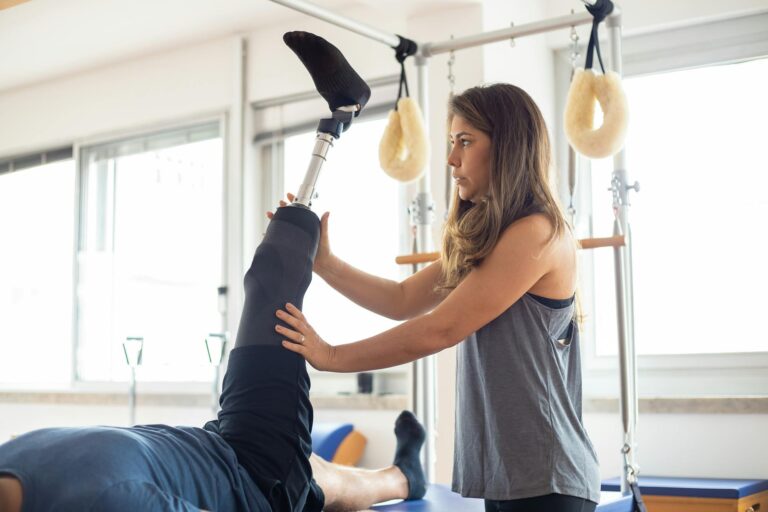
Physical therapists rely on six core exercises to strengthen the spine and restore function in patients dealing with back pain, disc herniation, postural issues, and mobility loss. These exercises—bird-dog movements, core stabilization work, dead bug exercises, bridges, cat-cow stretches, and posterior pelvic tilts—form the foundation of evidence-based spine rehabilitation.
Recent research, including a 2025 meta-analysis of over 2,000 subjects, confirms that exercise therapy is significantly superior to passive treatment alone in relieving pain, improving spinal stability, and correcting structural issues like kyphosis and scoliosis. For someone experiencing lower back pain, a physical therapist might start with a bridge exercise to activate the glute muscles and core, progressing to bird-dog work that targets the stabilizing muscles deep within the spine. This article walks through each of these six proven exercises, explains how they work, when to use them, and what to watch for as you progress.
Table of Contents
- What Makes These Six Exercises the Foundation of Spine Strengthening
- Bird-Dog Exercises—The Spinal Stabilizer
- Core Stabilization—The Deep Muscles That Support Everything
- Bridge Exercises and Posterior Pelvic Tilts—Activating the Glutes
- Cat-Cow Stretches—Mobility and Flexibility for the Spine
- Progression and Safe Performance—When to Challenge and When to Hold Back
- The Bigger Picture—Spine Health Requires More Than Exercise
- Conclusion
What Makes These Six Exercises the Foundation of Spine Strengthening
Physical therapists design these six exercises around the same principle: activating and strengthening the deep stabilizer muscles that support the spine rather than just the large, superficial muscles you can see and feel. The multifidus muscle, which runs along the spine, and the transversus abdominis, a deep core muscle, do the heavy lifting in spinal stability. A 2025 meta-analysis that reviewed 30 high-quality studies found that exercise therapy addressing these stabilizers outperformed control groups across multiple measures—pain relief, correction of cervical and lumbar dysfunction, and even structural improvements in scoliosis.
What makes these particular six exercises stand out is their specificity: they don’t just strengthen; they teach your nervous system to engage the right muscles at the right time. The research also shows that exercise therapy for lumbar disc herniation—one of the most common spine injuries—enhances core strength and lumbar stability while relieving both lower back and radiating leg pain. The results aren’t just statistical improvements on a scale; patients report a meaningful return to daily activities. However, it’s worth noting that these exercises work best when done consistently and with proper form, not sporadically or with compensatory movement patterns that shift the work to the wrong muscles.

Bird-Dog Exercises—The Spinal Stabilizer
The bird-dog exercise is a cornerstone of spine rehabilitation because it directly activates the multifidus muscle, the deep stabilizer that runs alongside your vertebrae and prevents excessive movement between segments. In this exercise, you start on hands and knees, then extend one arm forward while straightening the opposite leg behind you, creating a straight line from fingertips to toes. You hold briefly, then return and repeat on the other side. The beauty of bird-dog work is that it forces your spine to remain stable while your limbs move—a pattern you need in real life when you’re reaching for something on a shelf while standing or reaching forward while walking.
Physical therapists often use bird-dog as a progression exercise. A patient might start with just extending the leg while keeping the arm stationary, then progress to the full opposite arm-opposite leg movement. For someone recovering from a disc herniation or chronic back pain, this controlled instability is crucial—it trains the stabilizer muscles to respond automatically without you thinking about it. One limitation to be aware of: if you have significant shoulder pain or mobility restrictions, the arm extension can be uncomfortable, and a therapist might modify it to focus on the leg portion first or use a different setup, like a kneeling position against a wall.
Core Stabilization—The Deep Muscles That Support Everything
Core stabilization goes beyond the six-pack abdominal muscles and targets the transversus abdominis, the multifidus, and the pelvic floor—all the deep muscles that create an internal corset holding your spine upright. These muscles engage through specific techniques: abdominal bracing (tightening your core as if preparing for a punch), bridging (lying on your back, bending knees, lifting hips), and quadruped exercises (hands and knees, performing controlled movements). Research on adolescent posture showed that structured physical exercise addressing these stabilizers reduced thoracic and lumbar kyphosis angles, increased trunk mobility, and decreased pain—measurable changes, not just subjective improvements.
The dead bug exercise is one of the most effective for targeting core stabilizers while protecting the spine. You lie on your back, raise your arms straight up toward the ceiling, bend your knees, and then extend one leg while lowering the opposite arm overhead, always keeping your lower back pressed to the floor. This exercise teaches your core to work while your limbs move in different directions—exactly what happens when you carry groceries, bend down to pick something up, or reach across your body. However, if you have lumbar lordosis (excessive lower back curve), you may need to start with a modified version that keeps both feet on the ground initially, ensuring your lower back stays protected and engaged.

Bridge Exercises and Posterior Pelvic Tilts—Activating the Glutes
Bridge exercises target the glute muscles and the posterior chain—the muscles along the back of your body that support the lower back. Lying on your back with knees bent and feet flat, you push through your heels to lift your hips toward the ceiling, creating a straight line from knees through hips to shoulders. This exercise is particularly valuable for people with lumbar disc herniation because strong glutes reduce the load on the spine itself. Posterior pelvic tilts work alongside bridges to engage the deep core; this exercise involves tilting your pelvis so your lower back flattens slightly against the floor, engaging the lower abdominal muscles. The advantage of combining bridge and posterior pelvic tilt work is that they address the lower back from two angles: bridges activate the back and glute extensors, while pelvic tilts activate the front-side core muscles.
For someone with chronic lower back pain, this dual approach creates balanced strength. A practical comparison: imagine someone standing at a desk all day with weak glutes and tight hip flexors. Their lower back compensates by overarching, creating pain. Bridges directly address this by strengthening the glute muscles that should be stabilizing the pelvis. One caveat: if you have low blood pressure or dizziness when lying on your back, check with your therapist before holding bridge positions for extended periods.
Cat-Cow Stretches—Mobility and Flexibility for the Spine
While the previous exercises focus on strength and stability, cat-cow stretches address mobility and flexibility—the other essential component of spinal health. On hands and knees, you alternate between two positions: in “cow,” you drop your belly, lift your head and chest, creating a gentle arch in your lower back; in “cat,” you round your spine, tucking your chin and drawing your belly in. This dynamic stretch increases spine flexibility and releases tension accumulated in the back, neck, and shoulders.
For someone with postural stiffness from sitting or desk work, cat-cow often provides immediate relief and teaches the spine to move through its full range of motion. The limitation of cat-cow work is that it can be uncomfortable if you have a disc herniation or acute nerve pain—the spinal extension (the “cow” portion) might intensify symptoms in some people. In these cases, a therapist might focus on the cat (spinal flexion) portion alone or modify the movement. The real value of cat-cow is that it’s a warm-up and mobility tool that prepares the spine for the stabilization work, making it useful to perform before doing bird-dog or bridge exercises.

Progression and Safe Performance—When to Challenge and When to Hold Back
These six exercises are most effective when progressed thoughtfully. A typical progression might start with static holds—holding a bridge position for 10 seconds—and progress to dynamic movements, longer holds, and eventually adding external resistance. The 2025 meta-analysis found that exercise dose matters; the studies showing the best results typically involved structured programs lasting 4 to 12 weeks. For someone new to these exercises, starting with 2 to 3 sets of 8 to 12 repetitions, performed 3 times per week, allows the body to adapt without overloading.
One critical warning: proper form is more important than repetitions or speed. Performing a bird-dog exercise with a rounded lower back defeats the purpose because you’re not stabilizing the spine; you’re just moving your limbs. This is where working with a physical therapist initially makes a difference—they can assess your movement patterns, identify compensations, and catch issues before they become habits. If you’re working independently, film yourself performing these movements or use a mirror, and compare to instructional videos from reputable sources like Mayo Clinic or your therapist’s clinic.
The Bigger Picture—Spine Health Requires More Than Exercise
While these six exercises are the mechanical foundation of spine rehabilitation, current medical research confirms that the biopsychosocial model—addressing physical movements, stress levels, sleep quality, and nutrition—is essential for true recovery. Someone can perform perfect bird-dog exercises but still have chronic back pain if they’re chronically stressed, sleeping poorly, or dealing with poor nutritional status affecting muscle recovery. Studies on adolescent posture improvement found that combining exercise with postural education and stress management produced the best results.
This integrated approach matters especially for aging populations and those with dementia-related concerns, where spine and brain health intersect. Poor posture and spine weakness limit mobility and increase fall risk, directly affecting cognitive engagement and quality of life. Conversely, maintaining spinal strength through these exercises supports upright posture, improves breathing and circulation, and reduces pain-related stress—all of which contribute to better brain health and functional independence.
Conclusion
The six exercises used in physical therapy to strengthen the spine—bird-dog, core stabilization, dead bug, bridge, cat-cow, and posterior pelvic tilt—are evidence-based tools that address the root of most back pain: weak or ineffectively coordinated stabilizer muscles. Research confirms that these exercises outperform passive treatments alone and deliver measurable improvements in pain, mobility, and structural alignment.
The key is consistency, proper form, and progression tailored to your individual capacity and limitations. If you’re experiencing back pain or postural issues, starting with a physical therapist helps ensure you’re performing these exercises correctly and progressing appropriately. Even 10 to 15 minutes of these exercises, performed 3 times per week, can meaningfully improve your spinal health, reduce pain, and support the physical independence and upright posture that keeps both body and brain functioning optimally.