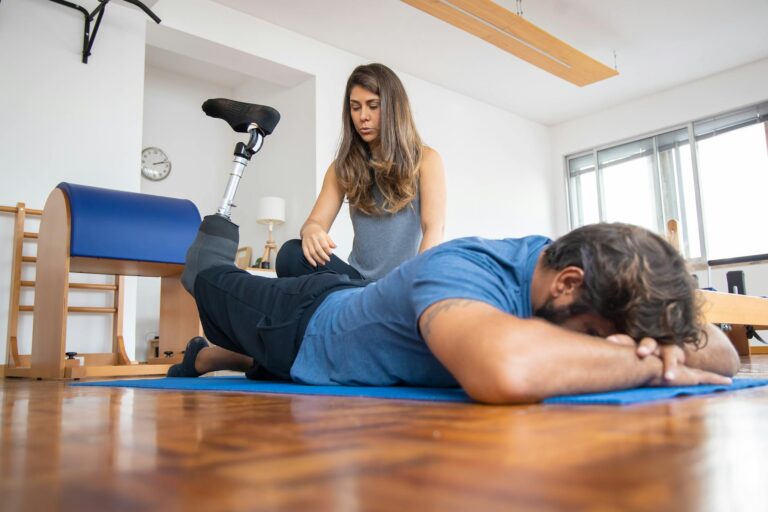
Physical therapists typically recommend six core stability exercises to help patients recover from disc injuries: prone planks, bird dogs, dead bugs, quadruped rock-backs, glute bridges, and modified cat-cow stretches. These exercises work by gradually rebuilding the deep abdominal and spinal muscles that support your vertebrae, reducing stress on damaged discs and promoting proper healing. They’re not flashy movements—in fact, they’re deliberately slow and controlled—but they address the root problem: most disc injuries happen because surrounding muscles have become weak or imbalanced, allowing the spine to move in ways it shouldn’t.
When a 58-year-old office worker develops lower back pain from a herniated disc, physical therapists don’t send them to do crunches or heavy deadlifts. Instead, they start with these six foundational exercises, progressing the difficulty only as the spine strengthens. This article covers how each of these six exercises works, why physical therapists choose them specifically, how to perform them correctly, and what mistakes most people make during recovery. We’ll also explain the timeline for seeing results and when you might need additional treatment beyond exercise alone.
Table of Contents
- What Are the Most Effective Stability Exercises Physical Therapists Prescribe?
- How Core Stability Exercises Reduce Stress on Damaged Discs
- Which Exercises Target Specific Regions of the Spine Most Effectively?
- How to Progress Stability Exercises Safely as Your Spine Heals
- What Mistakes Do Most People Make During Spine Stability Training?
- How Long Does Real Spinal Stability Take to Develop?
- When Should You Progress Beyond Basic Stability Exercises?
- Conclusion
What Are the Most Effective Stability Exercises Physical Therapists Prescribe?
The six exercises that form the backbone of disc injury recovery each target different parts of your core and lower back. Prone planks build endurance in the anterior (front) core and help stabilize your spine in a neutral position. Bird dogs improve coordination between opposite limbs while engaging deep stabilizing muscles—a 62-year-old patient recovering from a disc injury might spend two weeks only able to hold the bird dog position for 10 seconds before fatigue, but after six weeks of consistent practice, holding it for 45 seconds becomes manageable. Dead bugs (lying on your back and moving opposite arms and legs) activate your transversus abdominis, the deepest abdominal muscle that acts like a natural corset for your spine.
Quadruped rock-backs gently mobilize the lumbar spine while building stability, glute bridges activate the posterior chain that protects the lower back, and cat-cow stretches increase flexibility through the thoracic and lumbar spine. Together, these six create a balanced rehabilitation program rather than overloading any single area. The reason physical therapists choose these specific movements is that they can be scaled to any fitness level—a person three days post-injury performs a simplified version, while someone eight weeks into recovery performs a more challenging variation. Unlike exercises that require expensive equipment or a gym membership, all six can be done on a living room floor with just a yoga mat. This accessibility matters because consistency matters more than intensity during the first six to eight weeks of recovery.

How Core Stability Exercises Reduce Stress on Damaged Discs
When a disc herniation occurs, the inner gel material pushes through the outer ring and can irritate nerves or put pressure on the spinal cord. Simply resting the spine isn’t the solution—immobility actually weakens supporting muscles faster, which delays healing. By performing stability exercises, you’re essentially teaching your abdominal and spinal muscles to take on more of the load-bearing responsibility that the disc can’t handle while it’s healing. Think of it like building scaffolding around an injured structure: the muscles provide external support, allowing the disc to experience less compression and inflammation.
However, if someone jumps into stability exercises too aggressively, they can actually irritate the injury further. A physical therapist’s job includes determining which exercises are safe given the specific location and severity of the disc injury. A disc herniation at L4-L5 might respond well to glute bridges and planks, while the same exercise could be contraindicated for a more acute L5-S1 injury. This is why working with a licensed physical therapist, at least initially, produces better outcomes than trying to self-direct rehabilitation using YouTube videos. The PT assesses your movement patterns, pain response, and healing timeline to adjust the progression accordingly.
Which Exercises Target Specific Regions of the Spine Most Effectively?
The lower back (lumbar spine) is where most disc injuries occur, and this region benefits most from glute bridges, prone planks, and dead bugs. These three directly load the lower back in a way that builds stability without creating the shearing forces that running or heavy lifting would produce. The mid-back (thoracic spine) and neck often suffer secondary problems after a disc injury elsewhere, as patients unconsciously tense up and develop compensation patterns. Cat-cow stretches and bird dogs address this by restoring mobility and symmetrical activation throughout the entire spine.
A 71-year-old patient with a lower lumbar disc injury often develops tight shoulders and neck pain within weeks because she’s bracing against pain, and addressing only the lower back leaves her with a new movement dysfunction. Physical therapists catch this and incorporate movements that restore natural spinal rhythm across all regions. Understanding where your disc injury is located matters because the exercise progression differs. Someone with a thoracic disc injury might tolerate bird dogs and planks immediately, while someone with a lumbar disc injury needs to begin with gentler dead bugs and glute bridges before progressing to planks. This specificity is why cookie-cutter exercise programs often fail—they don’t account for which segment of the spine is injured.

How to Progress Stability Exercises Safely as Your Spine Heals
The first week or two after a disc injury, the goal is simply moving gently without aggravating symptoms. A physical therapist might start with 10 repetitions of each exercise, holding positions for only a few seconds. As inflammation decreases and pain diminishes—typically after two to three weeks—the next phase adds duration: holding planks for 20-30 seconds instead of 10, repeating bird dogs for 15 repetitions per side instead of 8. The third phase, usually weeks four through six, adds complexity: moving to single-leg glute bridges, adding arm movements to bird dogs, or progressing planks to include arm lifts.
A common mistake is jumping multiple progression levels too quickly, especially when someone feels better. If pain is decreasing, the temptation is to do harder exercises faster. Instead, physical therapists recommend increasing one variable at a time: increase duration first, then add repetitions, then add movement complexity. The tradeoff is that this method feels slow, especially to someone accustomed to “no pain, no gain” mentality from gym workouts. However, slow progression produces lasting stability, while aggressive progression often leads to re-injury and a longer recovery timeline.
What Mistakes Do Most People Make During Spine Stability Training?
The most common error is sacrificing form for quantity—doing 30 dead bugs with poor alignment is far less beneficial than doing 8 with perfect form. Poor form not only reduces the exercise’s effectiveness but can also irritate the healing disc. Another mistake is neglecting to activate the correct muscles. Many people attempt a plank but primarily engage their shoulders and neck rather than their core, leaving the spine vulnerable. A physical therapist teaches you what “activation” feels like: a gentle, constant tension in your abdominal muscles without holding your breath (which creates dangerous intra-abdominal pressure).
Patience is also a challenge. Most people want to return to their previous activity level within two weeks, but research shows that accelerating the timeline increases re-injury rates by 30-40%. Even after completing an eight-week physical therapy program, the spine is still building lasting stability for another two to three months, and gradual return to sport or heavy work prevents setbacks. Someone who felt great at week six and immediately returned to landscaping often ended up back in pain by week nine, undoing weeks of recovery. The limitation of stability exercises alone is that they work best when combined with activity modification—avoiding heavy lifting, excessive bending, or prolonged sitting while the disc heals.

How Long Does Real Spinal Stability Take to Develop?
Symptom improvement—less pain and better function—often happens within three to four weeks of consistent exercise, which creates an illusion of full recovery. However, true spinal stability, where the deep stabilizing muscles have adapted and strengthened sufficiently to prevent re-injury, typically requires twelve to sixteen weeks of consistent exercise.
A 45-year-old patient might have no pain by week six and feel confident returning to normal activities, but at week eight, a minor movement during yard work causes a setback because the muscles hadn’t fully adapted yet. Physical therapists often recommend continuing stability exercises even after returning to normal activities—dropping them entirely increases the risk of future disc injuries. In fact, people who maintain a weekly stability exercise routine for six months after their initial recovery experience fewer subsequent back problems compared to those who abandon the exercises once pain resolves.
When Should You Progress Beyond Basic Stability Exercises?
For most disc injuries, the six foundational exercises are sufficient for complete recovery when performed consistently over twelve to sixteen weeks. However, some people need additional treatment: those with severe disc herniations, multiple level involvement, or herniated material that’s touching a nerve may benefit from epidural steroid injections or other medical interventions to reduce inflammation faster before exercises become tolerable. Others have underlying movement dysfunctions—excessive spine curvature, leg length discrepancies, or hip mobility problems—that physical therapy alone won’t fix.
These patients often benefit from addressing those limitations alongside the stability exercises. As your spine stabilizes, the horizon shifts from injury recovery to long-term spine health. Adding dynamic movements, returning to activities you enjoy, and maintaining foundational stability exercises as part of a regular fitness routine prevents future disc injuries and ensures your spine remains resilient into your 70s and beyond.
Conclusion
Disc injuries feel serious because they are—they disrupt movement, cause pain, and create anxiety about re-injury. However, the six exercises that physical therapists universally recommend—prone planks, bird dogs, dead bugs, quadruped rock-backs, glute bridges, and cat-cow stretches—address the actual problem: insufficient spinal stability and weak supporting muscles. By understanding how these exercises work, progressing them appropriately, and committing to consistency over speed, most people recover fully within three to four months.
The key is viewing these exercises not as temporary treatment but as an investment in lasting spinal health. A person who masters these six movements and maintains them as part of a regular routine can expect decades of pain-free function, while someone who abandons the exercises after pain resolves often finds themselves back in physical therapy within a few years. Start gently, progress patiently, and trust the timeline—your spine will reward the consistency.