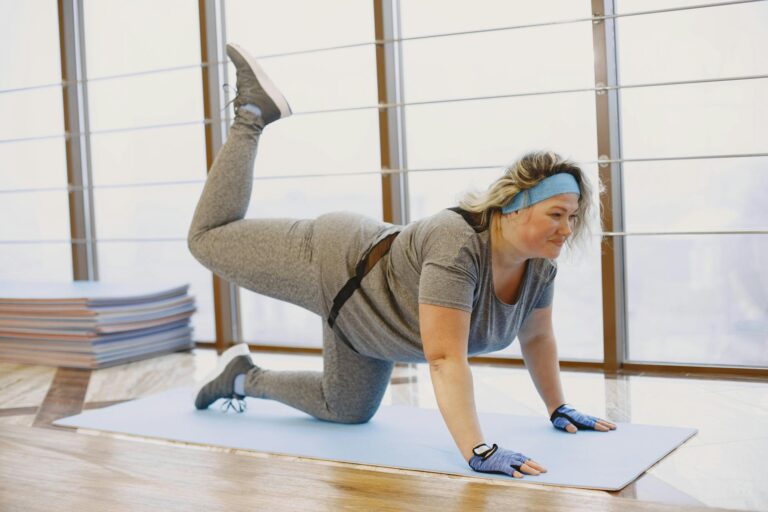
Physical therapists most commonly recommend six foundational exercises for SI joint rehabilitation: the bridge, the clamshell, bird-dog, supine piriformis stretch, transverse abdominis activation (often called the “drawing-in” maneuver), and single-leg balance work. These movements target the muscles that stabilize the sacroiliac joint — the glutes, deep core, and hip rotators — without placing excessive shear force on the pelvis. A 72-year-old woman recovering from a fall, for instance, might begin with gentle bridging on day one of therapy and progress to single-leg balance by week four, regaining enough pelvic stability to walk her neighborhood again without the lurching gait that had been worsening her lower back pain.
For older adults, and particularly those living with cognitive decline, SI joint dysfunction deserves careful attention because it directly affects mobility, balance, and fall risk — all of which accelerate the loss of independence that families dread most. Pain in the sacroiliac region often gets misdiagnosed as generic low back pain or hip arthritis, which means the right exercises never get prescribed. This article walks through each of the six recommended exercises in detail, explains how to modify them for people with limited mobility or dementia-related coordination challenges, and addresses the situations where these exercises may not be appropriate without medical clearance. Beyond the exercises themselves, we will cover how SI joint problems interact with gait changes common in dementia, what warning signs suggest you should stop an exercise immediately, and how caregivers can safely guide a loved one through a home-based rehabilitation routine when verbal instructions alone are not enough.
Table of Contents
- Why Do Physical Therapists Specifically Recommend These Six Exercises for SI Joint Rehabilitation?
- How Bridging and Clamshells Build the Foundation of Pelvic Stability
- Bird-Dog and Core Activation Exercises for Coordinated Pelvic Control
- Stretching the Piriformis and Improving Hip Mobility Without Aggravating the SI Joint
- Single-Leg Balance Work and When SI Joint Exercises Should Be Stopped
- Adapting SI Joint Exercises for People Living With Dementia
- The Role of SI Joint Rehabilitation in Preserving Long-Term Mobility and Independence
- Conclusion
- Frequently Asked Questions
Why Do Physical Therapists Specifically Recommend These Six Exercises for SI Joint Rehabilitation?
The sacroiliac joint sits where the spine meets the pelvis, and unlike the knee or shoulder, it is designed for stability rather than large-range motion. When the muscles surrounding this joint weaken — from prolonged sitting, a fall, surgery, or the general deconditioning that accompanies aging and dementia — the joint becomes hypermobile or locks into a misaligned position. Either scenario produces pain that radiates into the buttock, groin, or down the leg, mimicking sciatica. Physical therapists select exercises that restore the muscular “corset” around the pelvis without forcing the SI joint through ranges of motion that aggravate inflammation. The six exercises listed above were not chosen arbitrarily; they reflect decades of clinical evidence showing that gluteal and deep core strengthening, combined with gentle hip mobility work, produces the most reliable pain reduction and functional improvement. What separates these six movements from a generic stretching routine is their emphasis on controlled, low-load muscle activation.
A bridge, for example, fires the gluteus maximus while keeping the spine in neutral — compare that to a deep squat, which loads the SI joint under compression and shear simultaneously and can worsen symptoms. The clamshell isolates the gluteus medius, a muscle that often atrophies in older adults who spend most of the day seated. Bird-dog trains the deep stabilizers of the spine and pelvis to work in coordination, which is exactly the pattern that breaks down when someone develops a shuffling gait. Each exercise addresses a specific link in the stability chain, and skipping one can leave a gap that prolongs recovery. It is worth noting that these exercises are a starting framework, not a rigid prescription. A physical therapist will adjust sets, repetitions, holds, and progressions based on the individual’s pain level, strength, and cognitive ability to follow instructions. For someone with moderate Alzheimer’s disease, the therapist may simplify the routine to three exercises with tactile cueing rather than verbal direction.

How Bridging and Clamshells Build the Foundation of Pelvic Stability
The bridge is often the first exercise prescribed because it can be performed lying on the back, which is the least threatening position for someone in pain. The patient bends both knees, places feet flat on the floor, and lifts the hips toward the ceiling while squeezing the glutes. This fires the gluteus maximus — the largest muscle in the body and the primary stabilizer of the SI joint during walking and stair climbing. A proper bridge also engages the deep multifidus muscles along the spine, which research published in the Journal of Orthopaedic & Sports physical Therapy has linked directly to SI joint stability. For older adults with dementia, the bridge has the advantage of being a simple, symmetrical movement that a caregiver can guide by placing a hand under the hips to cue the lift. The clamshell targets the gluteus medius, the muscle on the outer hip responsible for preventing the pelvis from dropping to one side during single-leg stance — which is, functionally, what every step of walking requires.
The patient lies on their side with knees bent and feet together, then lifts the top knee while keeping the feet in contact. It looks easy, but when performed slowly and with proper form, most people feel fatigue within ten repetitions. A common mistake is rotating the trunk backward to cheat the movement, which shifts the work away from the gluteus medius and onto the hip flexors. Therapists often place a hand on the patient’s top hip to prevent this compensation. However, if the patient has significant trochanteric bursitis — inflammation of the bursa on the outside of the hip — the clamshell can aggravate symptoms rather than help. In that case, a therapist will typically substitute a standing hip abduction with support or a side-lying straight-leg raise with the bottom leg bent for comfort. This is one reason a professional assessment matters before starting any home program: what works for one person’s SI joint pain can flare a coexisting condition in another.
Bird-Dog and Core Activation Exercises for Coordinated Pelvic Control
The bird-dog exercise asks the patient to start on hands and knees, then extend one arm forward and the opposite leg backward while keeping the trunk completely still. It is deceptively difficult. The movement demands simultaneous activation of the transverse abdominis, multifidus, gluteus maximus, and scapular stabilizers, training the body to coordinate the deep stabilizers that protect the SI joint during real-world tasks like reaching into a cabinet or stepping over a threshold. For a person in their seventies recovering from SI joint dysfunction, the bird-dog bridges the gap between isolated muscle activation (like a bridge) and functional movement (like walking or turning). The transverse abdominis activation exercise — often called the “drawing-in” maneuver or abdominal bracing — is more subtle.
Lying on the back with knees bent, the patient gently draws the lower abdomen inward, as though pulling the belly button toward the spine, without holding the breath or flattening the back aggressively. This activates the deepest layer of abdominal muscle, which wraps around the trunk like a corset and attaches to the thoracolumbar fascia that directly supports the SI joint. Research from the University of Queensland’s motor control group demonstrated that in people with sacroiliac pain, this muscle fires late or not at all during limb movements, leaving the joint unprotected during daily activities. For individuals with dementia, the bird-dog presents a genuine cognitive challenge because it requires remembering which arm and leg to move simultaneously. A practical workaround that many therapists use is to start with just the leg extension, eliminating the arm component entirely, and adding it only if the patient demonstrates consistent ability to maintain balance on three points. The drawing-in maneuver can be cued tactilely by having the caregiver place fingertips just inside the hip bones and asking the person to push gently against the fingers — this gives concrete sensory feedback when verbal instructions are not registering.

Stretching the Piriformis and Improving Hip Mobility Without Aggravating the SI Joint
The supine piriformis stretch addresses tightness in the piriformis muscle, a deep hip rotator that runs directly over the SI joint and, when chronically tight, can pull the sacrum into a rotated position. The stretch is performed lying on the back: the patient crosses one ankle over the opposite knee, then pulls the uncrossed leg toward the chest until a stretch is felt deep in the buttock. Compared to seated piriformis stretches, the supine version keeps the lumbar spine supported against the floor, which is critical for SI joint patients who often cannot tolerate flexion-based movements without pain. The trade-off is that the supine position requires enough hip flexibility to bring the knee toward the chest in the first place — patients with severe hip osteoarthritis may not achieve this range. An alternative for those who cannot comfortably perform the supine piriformis stretch is a seated figure-four stretch, where the patient sits upright in a sturdy chair and crosses one ankle over the opposite knee, then leans the trunk slightly forward.
This version is easier to set up for someone with dementia because it does not require lying down and getting back up, which can itself be a barrier. The stretch should be held for 30 seconds and performed two to three times per side. Bouncing or forcing the stretch is counterproductive — the piriformis tends to spasm when overstretched, and a muscle spasm in this area can compress the sciatic nerve and produce radiating leg pain that may take days to calm down. Therapists often pair the piriformis stretch with a gentle hip flexor stretch because the two muscle groups work in opposition, and tightness in one frequently accompanies tightness in the other. The combination creates more balanced tension around the pelvis, which helps the SI joint settle into a more neutral alignment. The key consideration is sequence: stretching should follow strengthening exercises, not precede them, because warm muscles stretch more safely and the post-exercise window is when the joint is most supported by activated stabilizers.
Single-Leg Balance Work and When SI Joint Exercises Should Be Stopped
Single-leg balance is the most functional of the six exercises because it directly replicates the demands of walking: every step involves a brief single-leg stance phase during which the pelvis must remain level and the SI joint must resist shear forces. The exercise begins simply — standing on one leg near a counter or sturdy chair for support, holding for ten to thirty seconds. Progressions include closing the eyes, standing on a foam pad, or adding gentle arm movements. For older adults with SI joint dysfunction, single-leg balance work often reveals the real-world deficit more dramatically than any other exercise: the hip drops, the trunk sways, and the patient instinctively grabs for support within seconds. Improvement in this exercise tends to correlate closely with reduced fall risk and increased confidence during daily walking. However, single-leg balance carries the highest fall risk of any exercise in this program, and it requires the most caregiver vigilance when performed by someone with dementia.
A person with impaired judgment may attempt the exercise without holding onto support, or may not recognize when their balance is failing until they are already falling. The non-negotiable safety rule is that a solid handhold must be within arm’s reach at all times, and for patients with moderate to severe cognitive impairment, a caregiver or therapist should stand immediately beside them with hands ready to provide support. If the patient cannot maintain balance for at least five seconds even with one hand on a counter, the exercise is not yet appropriate and the program should focus on seated or supine strengthening until baseline stability improves. There are several red flags that should prompt immediate cessation of any SI joint exercise and a call to the treating physician or therapist: sharp, sudden pain in the low back or groin that was not present before the exercise; numbness or tingling that extends below the knee; a sensation of the leg “giving way”; or any loss of bladder or bowel control. The last symptom, while rare, can indicate cauda equina syndrome and requires emergency medical evaluation. More commonly, patients experience a dull ache after exercise that resolves within a few hours — this is generally normal muscle soreness. Pain that persists beyond 24 hours or worsens with each session suggests the exercise intensity needs to be reduced.

Adapting SI Joint Exercises for People Living With Dementia
Caregivers often assume that a person with dementia cannot participate in a structured exercise program, but this underestimates what is possible with the right modifications. The key is reducing cognitive load while preserving the physical benefit. Instead of giving multi-step verbal instructions (“Lie down, bend your knees, squeeze your glutes, and lift your hips”), a caregiver can demonstrate the movement, physically guide the person into position, and use one simple cue repeated consistently — “Push up” for a bridge, “Open” for a clamshell.
A physical therapist at a memory care facility in Portland described success with a resident who could no longer follow two-step commands but reliably performed a bridge when the therapist tapped her hips and said “up.” Consistency in cue words and routine timing — same exercises, same order, same time of day — leverages procedural memory, which is often preserved well into moderate-stage dementia. Music can also serve as a powerful cueing tool. Setting exercises to a familiar rhythm gives the movement a predictable tempo and engages brain regions associated with procedural and musical memory, which are among the last to deteriorate in Alzheimer’s disease. A bridge performed to the beat of a song the person has known for decades may be executed more smoothly and with less resistance than the same movement performed in silence with verbal counting.
The Role of SI Joint Rehabilitation in Preserving Long-Term Mobility and Independence
The broader significance of SI joint rehabilitation in older adults — particularly those on the dementia spectrum — is that pelvic stability is the foundation upon which walking, transfers, and independent toileting all depend. When SI joint pain goes untreated, the compensatory movement patterns it creates (guarding one side, shortening stride, avoiding stairs) accelerate deconditioning in a downward spiral that often ends with a wheelchair and full dependence on caregivers for mobility. A targeted exercise program interrupts this spiral, and the six exercises described here are effective precisely because they can be scaled from very simple to quite challenging, accommodating patients across a wide range of physical and cognitive function.
Looking ahead, there is growing interest in combining traditional SI joint rehabilitation with technology-assisted balance training, including force-plate feedback systems that gamify single-leg balance for patients who respond to visual stimulation. Early research suggests that even patients with mild cognitive impairment engage more readily with interactive balance platforms than with conventional exercise. As these tools become more affordable and accessible in home and community settings, they may extend the reach of SI joint rehabilitation to populations that currently receive little or no structured physical therapy.
Conclusion
SI joint rehabilitation does not require complicated equipment or advanced athletic ability. The six exercises physical therapists recommend — bridges, clamshells, bird-dog, transverse abdominis activation, piriformis stretching, and single-leg balance work — are effective because they methodically rebuild the muscular support system around the pelvis while respecting the joint’s limited tolerance for load. For older adults and those living with dementia, these exercises carry the additional benefit of preserving the functional mobility that determines whether a person can continue to walk, transfer safely, and maintain a degree of independence in daily life.
The most important next step is a professional evaluation. While the exercises described here are generally safe, their appropriateness depends on accurate diagnosis — SI joint dysfunction, lumbar disc disease, hip arthritis, and piriformis syndrome can all produce similar symptoms but require different treatment emphasis. A physical therapist can identify the primary pain generator, design a program with the right starting intensity, and teach caregivers how to safely assist with each movement. For families navigating the intersection of joint pain and cognitive decline, this guidance is not optional; it is the difference between an exercise program that helps and one that creates new problems.
Frequently Asked Questions
How long does it take for SI joint exercises to reduce pain?
Most patients notice some improvement within two to four weeks of consistent daily practice, but meaningful functional gains — such as walking longer distances or climbing stairs with less pain — typically take six to eight weeks. Progress is not linear; some weeks will feel better than others, and flare-ups do not mean the program has failed.
Can SI joint exercises make the problem worse?
Yes, if performed incorrectly or at too high an intensity. The most common mistake is progressing too quickly — jumping to single-leg exercises before the foundational strengthening is adequate. Any exercise that produces sharp pain during the movement or worsening symptoms over 24 hours should be modified or temporarily removed from the program.
Is it safe for someone with moderate dementia to do these exercises without a physical therapist present?
It depends on the specific exercises and the caregiver’s training. Supine exercises like bridges and piriformis stretches can generally be performed safely with a trained caregiver. Standing exercises, particularly single-leg balance work, carry fall risk and should only be done with direct supervision and a stable handhold nearby. An initial physical therapy evaluation is essential to determine which exercises are appropriate and to train the caregiver in proper cueing and safety techniques.
Should I use heat or ice before SI joint exercises?
Moist heat applied to the lower back and buttock for ten to fifteen minutes before exercise can reduce stiffness and make the movements more comfortable. Ice is more appropriate after exercise if there is localized soreness. Avoid ice before exercise, as numbing the area can mask pain signals that serve as important feedback during movement.
What is the difference between SI joint dysfunction and sciatica?
SI joint dysfunction produces pain primarily in the buttock and sacral region, sometimes referring into the groin or upper thigh but rarely extending below the knee. Sciatica, caused by compression of the sciatic nerve root in the lumbar spine, typically produces sharp or burning pain that radiates down the back of the leg, often below the knee and into the foot. The two conditions can coexist, and the piriformis — addressed in this exercise program — is a common contributor to both.