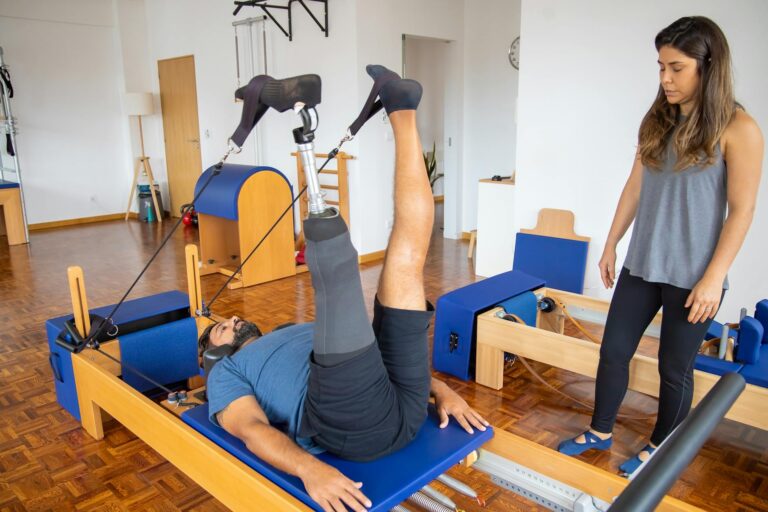
Core stability exercises represent six primary exercise categories—supine stabilization, prone engagement, quadruped positions, seated work, standing movements, and functional progressions—that clinical research has consistently shown can reduce back pain by 3.08 points on the Visual Analog Scale, compared to 1.71 points for standard physical therapy alone. For someone with chronic lower back pain, this might mean the difference between a 7/10 pain level dropping to 4/10 through targeted core work. These exercises work by strengthening the deep muscles that support your spine: the transverse abdominis, multifidus, diaphragm, pelvic floor muscles, quadratus lumborum, and erector spinae. This article covers what core stability exercises are, how to progress through them safely, the specific training parameters that produce results, and what the latest 2025 research reveals about their effectiveness.
Table of Contents
- What Makes Core Stability Exercises Different From General Abdominal Work?
- Supine and Prone Stabilization Exercises as the Foundation
- Quadruped Positions for Integrated Spinal Control
- Standing Core Exercises and Functional Integration
- Optimal Training Frequency and the Critical 8-12 Week Window
- Common Mistakes That Reduce Effectiveness
- Integrating Core Stability With Other Treatment Approaches
- Conclusion
What Makes Core Stability Exercises Different From General Abdominal Work?
Core stability exercises differ fundamentally from traditional crunches or sit-ups because they target deep stabilizing muscles rather than superficial abdominal muscles. A 2025 randomized controlled trial published in the European Journal of Applied Physiology found that core stability exercises produce significant improvements in chronic nonspecific low back pain when compared directly against intermittent lumbar traction. The key difference is that stability exercises teach your deep core muscles—especially the transverse abdominis and multifidus—to activate in patterns that protect your spine during daily movement, rather than just creating flexion strength. When these deep muscles engage properly, they create an internal supportive “corset” around your spine.
For someone with dementia-related mobility challenges, this becomes especially relevant because core instability often develops from reduced movement. A person who sits for extended periods loses the natural recruitment patterns of deep core muscles, making everyday transitions—standing up from a chair, walking, turning—increasingly difficult and painful. Even gentle, low-impact core stability work can restore these patterns without the jarring impact of traditional strengthening exercises. The clinical evidence supporting this approach is substantial: a 2025 meta-analysis including 23 clinical trials with 1,132 participants found that longer treatment durations of 8–12 weeks produced the strongest effects on pain reduction, suggesting this is not a quick fix but a gradual restoration of spinal support.

Supine and Prone Stabilization Exercises as the Foundation
Supine exercises (lying on your back) and prone exercises (lying face-down) form the foundational entry point for core stability training because gravity provides support while you learn to activate deep muscles without compensation. The dead bug exercise—lying on your back with arms and legs raised, then slowly extending opposite arm and leg while maintaining a neutral spine—is the quintessential supine exercise because it forces you to stabilize your spine while moving your limbs in opposite patterns. A variation used in clinical settings involves holding each extended position for 3-5 seconds, then returning, repeated for 10-15 repetitions per side.
Prone exercises like the plank teach endurance in the deep stabilizers, and research protocols typically progress from wall-supported planks (hands on an elevated surface) to standard floor planks, held for 20-60 seconds depending on ability. However, planks can create excessive spinal extension strain if performed with poor form—the common mistake is letting your hips sag, which hyperextends the lower back instead of engaging the deep core. For individuals with existing back pain, modified planks using forearm support and knee elevation often produce better outcomes with less pain than full-length planks. The 2025 systematic review comparing core stability training protocols found that 3-4 sessions per week, lasting 40–60 minutes total, produced consistent improvements over 6–8 weeks, though this timeframe varies by individual.
Quadruped Positions for Integrated Spinal Control
Quadruped exercises—performed on hands and knees—are clinically valuable because they force your spine to stabilize while you move individual limbs, simulating the coordinated control needed for walking and other functional movements. The bird dog exercise, where you extend one arm forward and the opposite leg backward while on hands and knees, engages not just the core but also tests balance and proprioception. This matters for dementia care because proprioceptive awareness—knowing where your body is in space—declines significantly in dementia, and quadruped exercises help maintain that integration between core strength and spatial awareness.
Another quadruped variation is the rocking exercise, where you shift your weight back toward your heels while maintaining a neutral spine, then rock forward—this teaches core engagement throughout a range of motion rather than at a single static point. Research-backed protocols typically include 3-4 repetitions of 8-12 movements per direction, performed 3-4 times weekly. The progression typically moves from static holds (holding a bird dog position for 5-10 seconds) to dynamic movement (extending and retracting the limb repeatedly) to cross-body movements where the exercise becomes more demanding. One limitation: if someone has knee pain or arthritis, quadruped exercises may require additional padding or modification to a standing variation.

Standing Core Exercises and Functional Integration
Standing exercises directly transfer core stability to the movements people actually perform—standing transfers, walking, reaching for objects. Standing marches, where you lift one knee slightly while maintaining upright posture without arching your back, seem simple but require sophisticated core engagement. More advanced standing exercises include standing on one leg while reaching across the body, or performing small squat movements while maintaining neutral spine alignment. These transitions from supine and quadruped to standing are critical because laboratory-demonstrated core strength doesn’t automatically translate to functional stability without this progression.
A 2025 systematic review from Frontiers in Physiology comparing Pilates training, core stability training, and core resistance training all showed effectiveness, but the research emphasizes that progression from isolated stabilization to functional standing work produces superior outcomes for quality of life and functional independence. For individuals in dementia care, standing core work often combines with balance training and gait work, making it particularly valuable. However, standing exercises require careful supervision if fall risk is elevated—they should be performed near a countertop or with manual assistance until confidence and stability improve. The research found that 3-4 sessions per week, 30–45 minutes per session of core resistance training, produced meaningful improvements in pain and function.
Optimal Training Frequency and the Critical 8-12 Week Window
The 2025 meta-analysis analyzing 23 clinical trials identified a crucial finding: longer treatment durations of 8–12 weeks consistently produced stronger pain reduction effects than shorter programs. This means someone beginning a core stability program should expect meaningful improvement around weeks 4-6, with continued gains through week 12. Many people expect immediate results and abandon the program too early; understanding this timeline helps maintain consistency. Most clinical protocols recommend 3-4 sessions per week for core stability training, though Pilates-based approaches often use 2-3 sessions per week at 50 minutes per session.
The challenge for sustained improvement is that research also shows pain reduction effects can diminish at 6 and 12 months if the exercises aren’t maintained as part of an ongoing routine. This means core stability isn’t something you “finish”—it’s a practice that requires ongoing maintenance once you achieve results. For individuals with dementia or cognitive decline, this creates a practical barrier: family caregivers or facility staff need to understand that these exercises are part of ongoing care, similar to taking medications, not a temporary rehabilitation phase. The mean pain reduction achieved through core stabilization exercises—3.08 points on the Visual Analog Scale—translates to approximately 30% pain reduction in people starting with moderate back pain.

Common Mistakes That Reduce Effectiveness
The most common error in core stability training is substituting movement for genuine stabilization—performing exercises quickly without maintaining a neutral spine position, which loads joints instead of activating muscles. A second frequent mistake is asymmetrical progression, where one side of the body advances faster than the other, creating new imbalances. This is particularly relevant in dementia care where someone might favor one side due to stroke history, arthritis, or habit. Correcting asymmetries often requires slightly more repetitions or longer holds on the weaker side.
Inadequate breathing represents another hidden pitfall; many people hold their breath during core exercises, which paradoxically reduces core activation and increases spinal pressure. Proper cuing involves breathing continuously throughout the movement, often exhaling during the exertion phase. This connects to the research identifying the diaphragm as one of the six key core muscle groups—it’s not just an abdominal wall issue but a fully integrated system including your breathing muscle. Supervision during initial exercise instruction, whether from a physical therapist or trained caregiver, dramatically improves long-term adherence and results because corrections early in the process prevent the development of compensatory patterns that become difficult to unlearn later.
Integrating Core Stability With Other Treatment Approaches
Core stability exercises rarely work in isolation; the 2025 research showing core stability training effectiveness compared it directly against intermittent lumbar traction, finding both produced improvements but core work demonstrated superior outcomes. This suggests core exercises can replace or enhance more passive treatments. In dementia care contexts, core work integrates with gait training, balance work, and functional mobility practice—strengthening your core while simultaneously improving walking patterns and transfer techniques creates more lasting functional gains than addressing any single component.
The research indicates Grade B Evidence (moderate-quality evidence) supports core stability exercises for chronic nonspecific low back pain, placing them firmly in the category of evidence-based treatment rather than experimental approaches. For individuals unable to tolerate other interventions, core stability training often becomes a primary strategy. The clinical protocols emphasize progression from isolated segmental stabilization (single-joint, localized movements) toward functional movement patterns that mirror real-world demands—this progression takes the full 8-12 weeks but creates sustainable improvement rather than temporary relief.
Conclusion
Six exercise categories—supine stabilization, prone engagement, quadruped positions, seated work, standing movements, and functional progressions—form the evidence-supported foundation for core stability training in back pain treatment. Research from 2025 confirms that consistent training over 8–12 weeks, performed 3-4 times per week, produces significant pain reduction and functional improvement by engaging the deep stabilizing muscles that support your spine. Understanding that these exercises require ongoing maintenance, avoiding common mistakes like breath-holding and poor form, and progressing systematically from foundational to functional movements creates the conditions for lasting results.
For individuals in dementia care or anyone managing chronic back pain, core stability work offers a manageable, evidence-based path toward reduced pain and improved daily functioning. The key is starting gradually, maintaining consistency over the critical 8-12 week window, and integrating this work with other mobility and balance training. Consulting with a physical therapist or trained healthcare provider for initial exercise instruction ensures proper form and appropriate progression, maximizing the likelihood of successful, sustained improvement.