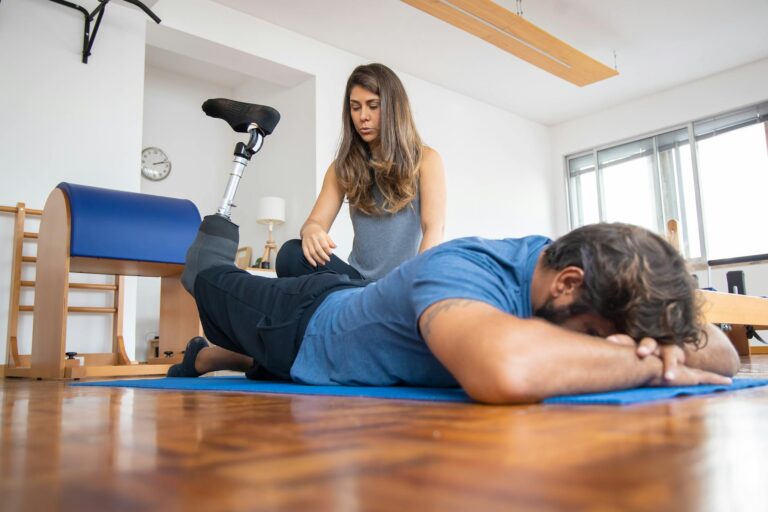
The six exercises most commonly recommended for core stabilization in back pain treatment are the plank, bird dog, side plank, bridge, beast crawl, and dead bug. These exercises work by strengthening the deep abdominal muscles, particularly the transversus abdominis and lumbar multifidi, which act as a muscular corset to stabilize the spine and reduce strain on the discs and ligaments. For example, someone experiencing chronic low back pain might begin with a simple dead bug exercise—lying on their back with arms extended toward the ceiling while alternating leg lifts—as a foundational way to engage these stabilizer muscles without placing excessive stress on the spine itself.
More than 50% of Americans experience chronic low back pain lasting longer than 12 weeks, making it one of the leading causes of disability worldwide. Research shows that a structured core stabilization program lasting just six weeks can outperform routine physical therapy exercises in reducing pain and improving function. This article explores each of the six core exercises, how they work, what research tells us about their effectiveness, and practical guidance for building a sustainable routine that can ease back pain and prevent future episodes.
Table of Contents
- What Are the Six Core Stabilization Exercises?
- The Science Behind Core Stabilization and Back Pain
- The Bird Dog and Side Plank—The Research Leaders
- Building Your Six-Week Core Stabilization Program
- Common Mistakes and How to Avoid Them
- When Back Pain Requires More Than Core Exercise
- Building a Sustainable Long-Term Practice
- Conclusion
What Are the Six Core Stabilization Exercises?
The six primary core stabilization exercises address different planes of movement and engage the stabilizer muscles from multiple angles. The dead bug involves lying on your back with your arms extended upward and legs bent at 90 degrees, then slowly lowering opposite arm and leg in a controlled, coordinated motion. The bird dog is performed on hands and knees, extending one arm and the opposite leg simultaneously while maintaining a neutral spine. The plank is a static hold where you support your body weight on your forearms and toes, keeping your back straight and core engaged.
The side plank involves supporting your body weight on one forearm and the side of one foot, creating lateral core engagement that’s impossible to achieve with traditional forward-facing exercises. The bridge is performed lying on your back with knees bent and feet on the floor, then lifting your hips toward the ceiling to engage the glutes and lower back stabilizers. The beast crawl is a dynamic exercise performed on hands and feet (in a tabletop position), moving forward and backward while maintaining a flat back and engaged core. Each exercise targets slightly different muscles and movement patterns, which is why using all six in a balanced program provides more comprehensive strengthening than relying on any single exercise. However, not every exercise is appropriate for everyone at every stage of recovery—a person with acute lower back pain may need to start with gentle dead bugs and bridges before progressing to more demanding exercises like beast crawls.

The Science Behind Core Stabilization and Back Pain
The core muscles don’t just move your body; they also stabilize your spine against the forces of daily activity. When these deep muscles weaken—whether from injury, inactivity, aging, or poor posture—the vertebrae and discs experience increased mechanical stress. Core stabilization exercises specifically target the transversus abdominis, lumbar multifidi, paraspinal muscles, and diaphragmatic and pelvic musculature, all of which work together to create a stable foundation for movement.
Research confirms that core stabilization exercise programs over six weeks are significantly more effective at reducing pain compared to routine physical therapy exercises of similar duration, and they also improve proprioception (body awareness), balance, muscle thickness, and reduce fear-related avoidance of movement. A 2025 meta-analysis published in Frontiers in Physiology found that core resistance training showed the largest and most stable effect on functional status improvement, surpassing both Pilates and standard core stability training. Importantly, all three approaches—Pilates, core stability training, and core resistance training—produced significant pain reductions, suggesting that consistency and proper progression matter more than which specific method you choose. The studies also identified that both shorter sessions (15-30 minutes) and longer sessions (60 minutes or more) produced meaningful improvements, though the sweet spot for most people appears to be regular, moderate-duration sessions rather than sporadic longer workouts.
The Bird Dog and Side Plank—The Research Leaders
Among the six core exercises, the bird dog has earned special attention from researchers because it produces the greatest increase in transversus abdominis muscle thickness and demonstrates the largest improvement in transversus abdominis function. This doesn’t mean it’s the “best” exercise—all six serve important roles—but it does mean that if your goal is specifically to maximize deep core activation, the bird dog deserves a prominent place in your routine. For someone returning from an acute back injury, starting with a slow, controlled bird dog (even without any additional weight) can be remarkably effective at reactivating the stabilizer muscles that may have gone quiet during the pain phase.
The side plank also generates significant transversus abdominis activation during core training and has the added benefit of engaging the quadratus lumborum and lateral core muscles that other exercises don’t address as thoroughly. A limitation of side planks is that they require more balance and coordination than exercises like bridges or dead bugs, so they may not be suitable early in recovery. However, if you’re building a comprehensive program, including both the bird dog and a well-executed side plank ensures you’re targeting the muscles that research shows are most important for stabilizing the spine and reducing pain.

Building Your Six-Week Core Stabilization Program
Starting a core stabilization program doesn’t require a gym, expensive equipment, or even much space. Week one might focus on learning proper form and technique using just your body weight, with sessions held three times per week for 20-30 minutes. Begin with the exercises you can perform pain-free—if that’s only dead bugs and bridges, that’s your starting point. Each session should feel like you’re building confidence and awareness rather than pushing yourself to exhaustion. A typical early-stage session might include five dead bugs, ten bridges, ten bird dogs (alternating sides), and one plank hold of 10-20 seconds, repeated for 2-3 rounds.
By week three or four, you can begin adding small progressions: holding planks a bit longer, adding small pulses to the bridge, or moving more deliberately through bird dog movements. The research showing that 15-30 minute sessions are effective means you don’t need to spend an hour at the gym to see results. However, consistency matters enormously—three sessions per week for six weeks will outperform sporadic intense sessions. The comparison is important here: one person doing dead bugs and bridges three times weekly for six weeks will typically see better pain reduction and functional improvement than someone doing an intensive 60-minute session once or twice. The body responds to regular, moderate stimulus rather than occasional heroic efforts.
Common Mistakes and How to Avoid Them
The most common mistake in core stabilization is allowing your lower back to sag during exercises, which shifts the work away from the deep core muscles and places stress on the vulnerable lower lumbar spine. In a plank, for instance, if your hips drop and your lower back arches, you’re not effectively engaging the transversus abdominis and may actually be reinforcing poor mechanics. A warning sign is if you feel your lower back working more than your core muscles feel “tight”—that’s typically a signal that your alignment needs adjustment. Using mirrors or video recording yourself during early sessions can help you catch these alignment issues before they become ingrained patterns.
Another common pitfall is progressing too quickly, especially when pain temporarily decreases. The exercises might feel easy after week two, but pushing into advanced variations like loaded bird dogs or single-leg planks before you’ve built a solid foundation often leads to setbacks and re-injury. A comparison might help: the person who progresses slowly but steadily for six weeks typically experiences better long-term pain relief than the person who attempts advanced exercises early and experiences a flare-up that disrupts their program. Additionally, holding your breath during core exercises is common but counterproductive—maintaining steady, rhythmic breathing ensures you’re not increasing intra-abdominal pressure excessively and allows proper diaphragmatic engagement.

When Back Pain Requires More Than Core Exercise
While core stabilization exercises are effective for many people with chronic non-specific low back pain, they are not a complete solution for everyone. Some people require additional interventions—physical therapy guidance on movement mechanics, manual therapy to address mobility restrictions, or in rare cases, advanced imaging and specialist consultation. Additionally, core stabilization exercises work best when paired with attention to overall movement patterns throughout the day.
Someone doing perfect bird dogs three times weekly but then sitting hunched at a desk for eight hours may see less improvement than someone who does slightly imperfect exercises but also maintains better posture during daily activities. The research supports core stabilization exercises with Grade B evidence, meaning they’re well-studied and effective, but Grade B also acknowledges that not every person responds equally and that individual factors matter. Age, prior injury history, overall fitness level, and even stress and sleep quality can influence how quickly someone experiences pain reduction. If you’re not seeing meaningful improvement within four to six weeks of consistent practice, consulting with a physical therapist can help identify whether you need form adjustments, different exercise variations, or additional treatment approaches.
Building a Sustainable Long-Term Practice
The real value of core stabilization isn’t completing a six-week program and then returning to old habits—it’s developing a sustainable practice that becomes part of your regular routine. Once you’ve completed the initial six weeks, many people find that maintaining the exercises two to three times weekly (rather than daily) is enough to sustain pain reduction and prevent recurrence. The exercises that take the longest to fatigue you become your most sustainable ones; if planks always exhaust you but bridges feel manageable, prioritize bridges and add variety through the other five exercises. Long-term sustainability also depends on finding enjoyment or satisfaction in the practice.
Some people respond well to the structure of a formal program or class setting. Others prefer quiet, consistent home routines. Some benefit from tracking progress—measuring plank duration improvements or noting pain level changes—while others just want to move through the exercises and move on with their day. The important insight from recent research is that consistency matters far more than perfection; a person doing a simple routine twice weekly for years will experience better long-term outcomes than someone doing an elaborate program intensely for six weeks and then stopping.
Conclusion
The six core stabilization exercises—plank, bird dog, side plank, bridge, beast crawl, and dead bug—offer an accessible, evidence-based approach to managing chronic back pain. These exercises target the deep stabilizer muscles that hold your spine secure, and research consistently shows that six weeks of regular practice can reduce pain, improve function, and prevent future episodes more effectively than general physical therapy exercises. The bird dog and side plank have earned particular attention for their effectiveness at activating the transversus abdominis, but all six exercises play complementary roles in building balanced core strength.
Starting a core stabilization program requires no special equipment and can be done in 20-30 minutes, three times per week. Focus on proper form, consistent progression, and maintaining these habits beyond the initial six weeks. If you’re experiencing back pain, particularly chronic pain lasting more than 12 weeks, discussing a core stabilization program with your healthcare provider or physical therapist can help you determine whether this approach is appropriate for your situation and whether you need additional interventions alongside these exercises.