The six most effective exercises doctors recommend for spine stability are the bridge, bird dog, plank, dead bug, Pallof press, and quadruped rocking—movements that strengthen your core muscles, improve proprioception, and reduce strain on the vertebral column. These aren’t complicated gym exercises; they’re functional movements that can be done at home with minimal equipment and adapted for different fitness levels. For someone recovering from back pain or looking to prevent spinal injury, these exercises address the root issue: a weak core allows the spine to compensate for instability, which accelerates wear on discs and joints. This article walks through each exercise, explains what makes it effective, covers common mistakes, and provides modifications for varying ability levels.
Spine stability matters more than most people realize, especially as we age. The vertebrae themselves are just bone, but they depend entirely on surrounding musculature—your core—to stay aligned and handle load properly. Without that muscular support, even everyday movements like reaching for something or rolling over in bed can irritate nerves or strain ligaments. Research consistently shows that stability-focused exercise outperforms passive approaches like stretching alone, and it’s one of the few interventions that both prevents future problems and reduces existing pain.
Table of Contents
- Why Core Strength Is the Foundation of Spine Stability
- The Bridge Exercise—Activation and Progression
- Bird Dog for Balance and Cross-Body Coordination
- Planks as an Isometric Stability Test
- Dead Bug—Teaching Your Core to Relax Intelligently
- Pallof Press—Resisting Rotation Under Load
- Integration and Long-Term Spine Health
- Conclusion
Why Core Strength Is the Foundation of Spine Stability
The spine isn’t a rigid pillar; it’s a flexible stack held upright by muscles. The core isn’t just the six-pack abs you see—it’s a 360-degree cylinder of muscle including your deep abdominals, back extensors, obliques, and pelvic floor. When these muscles are weak, your spine loses its ability to distribute force evenly, and the discs between vertebrae bear disproportionate stress. A 2023 study in the Journal of Orthopedic Surgery and Research found that patients who performed core stability exercises for eight weeks showed significantly better pain reduction and functional recovery than those who did general stretching.
What makes spine stability different from general core strength is the emphasis on deep muscles rather than superficial ones. Traditional crunches primarily work the rectus abdominis, which contributes little to spinal support. Stability exercises activate the transverse abdominis and multifidus—deep muscles that act like an internal corset—creating genuine spinal control. This distinction matters because exercises that feel easier often build the wrong muscles, giving you false confidence while your spine remains vulnerable.
The Bridge Exercise—Activation and Progression
The bridge is often recommended as a starting point because it’s simultaneously simple and effective, with minimal risk if performed correctly. You lie on your back with knees bent and feet flat, then push through your heels to lift your hips until your body forms a straight line from shoulders to knees. The movement activates your glutes, lower back, and core simultaneously while being joint-friendly since there’s no spinal twisting or high impact. However, many people perform bridges poorly, which reduces effectiveness and sometimes creates discomfort.
The most common mistake is overarching the lower back to gain extra height—this actually destabilizes the spine rather than strengthening it. Your focus should be on squeezing your glutes at the top of the movement rather than chasing a higher lift. If you feel this primarily in your lower back, stop and reset; that’s a sign your glutes aren’t activating properly. The progression path starts with basic bridges, then advances to single-leg bridges where one foot lifts slightly off the ground, which dramatically increases the demand on stabilizer muscles and the standing leg.
Bird Dog for Balance and Cross-Body Coordination
The bird dog exercise requires you to start on hands and knees, then extend one arm forward while simultaneously extending the opposite leg straight back, hold for a breath, then return and repeat on the other side. This movement trains what’s called anti-rotation stability—your core’s ability to resist twisting forces—while also improving balance and proprioception, your awareness of body position in space. The bird dog is particularly valuable for older adults and anyone with balance concerns because it forces you to maintain stability while moving limbs in different directions.
This translates directly to real-world situations where you need to catch yourself or react quickly to maintain balance. A common limitation is that the movement might feel awkward if your hip flexors are tight; this often comes across as an inability to extend the leg fully without tilting the pelvis. Rather than forcing extension, focus on maintaining a flat back and still pelvis first—the leg extension will improve as your flexibility increases. Many people also hold their breath during this exercise, which defeats the core activation purpose; continuous breathing ensures your deep core muscles stay engaged throughout.

Planks as an Isometric Stability Test
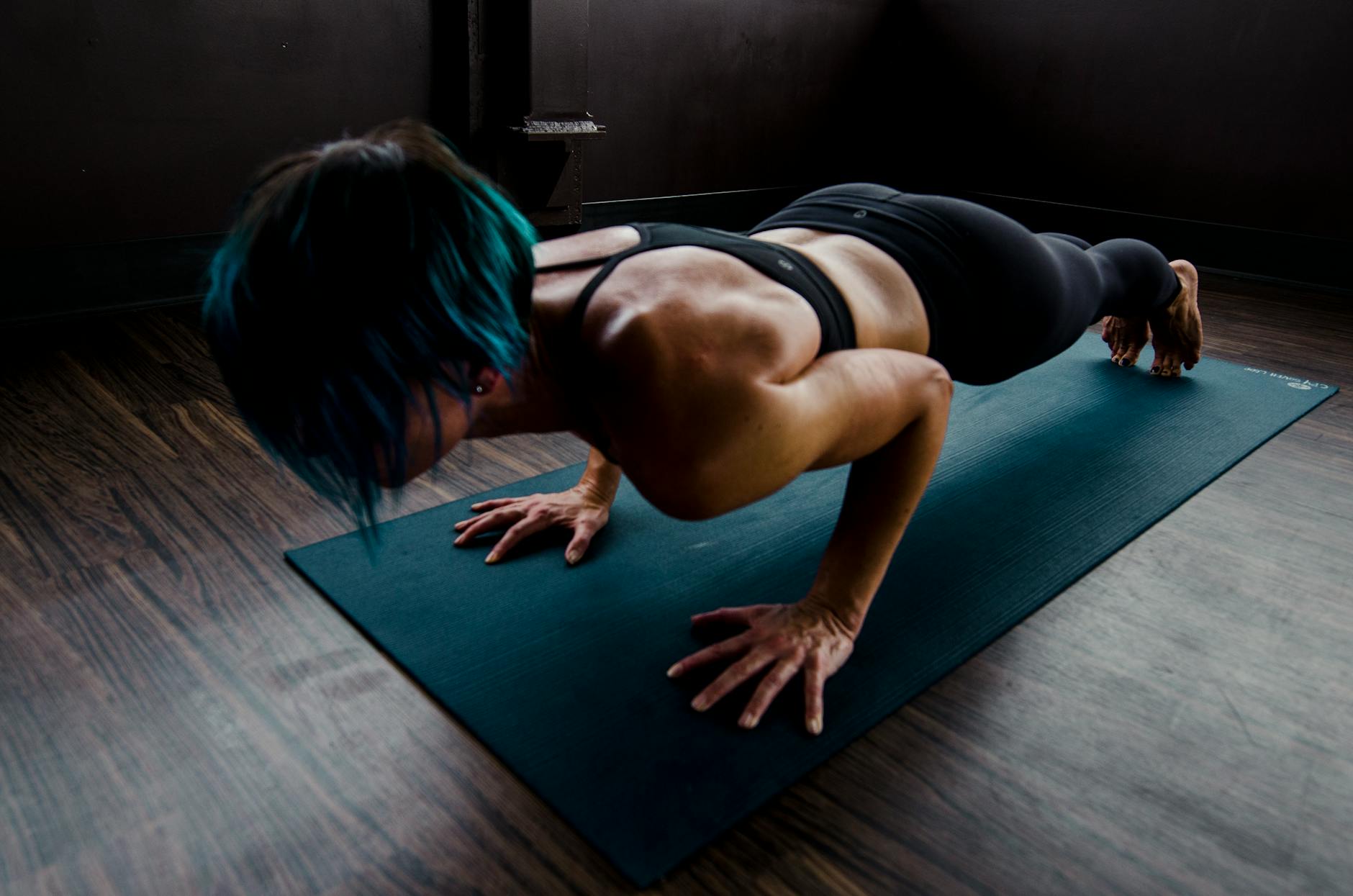
A plank is a position rather than a movement: you hold a position on your forearms and toes (or knees for modification) with your body forming a straight line, typically for 20 to 60 seconds. The isometric contraction—muscles working without shortening—builds the type of endurance your spine needs for real-world stability during daily activities. Unlike dynamic exercises where momentum helps, planks force your muscles to maintain constant tension. The progression path for planks goes from modified versions on your knees, to standard forearm planks, to side planks that target your obliques, to more advanced variations like moving planks or planks with limb lifts.
A critical distinction: the goal isn’t duration but quality. A 30-second perfect plank where you maintain neutral spine and steady breathing is more valuable than a 60-second version where your hips sag and your core checks out. Many people think planks should “burn,” but if you’re experiencing acute pain rather than muscle fatigue, your form has likely degraded. Stop, reset, and aim for shorter holds with perfect positioning.
Dead Bug—Teaching Your Core to Relax Intelligently
The dead bug exercise is deceptively simple and often misunderstood. You lie on your back, raise your arms toward the ceiling and your knees to 90 degrees, then lower one arm overhead while extending the opposite leg, keeping your lower back pressed to the floor throughout. The movement teaches your core to work while your limbs move independently, a pattern crucial for spinal stability during actual tasks. The key limitation with dead bugs is that they require serious proprioceptive awareness to perform correctly.
Many people allow their lower back to arch away from the floor during the movement, which means their spine is destabilizing rather than stabilizing. If you can’t maintain contact between your lower back and the floor, you’re not yet strong enough for the full range of motion—reduce the range by not extending your leg as far or lifting your arm as high. Additionally, dead bugs feel nothing like “working out,” which makes people doubt their value, but this exercise specifically targets the stabilization pattern your spine needs. The fact that it doesn’t feel hard is actually the point.

Pallof Press—Resisting Rotation Under Load
The Pallof press requires a cable machine or resistance band anchored at chest height. You stand perpendicular to the anchor point, hold the handle at your chest, then press it straight out while resisting the rotational force trying to twist your torso. This is an anti-rotation exercise that trains your obliques and deep core to prevent unwanted twisting that could destabilize the spine.
What makes this exercise specific is that it teaches your core to maintain stability under actual load and force, not just during gentle movements. Most people experience weak anti-rotation stability—they can hold a plank but struggle to resist twisting forces—which makes them vulnerable to injury during real activities like lifting groceries from a car or shoveling. A key consideration is that this exercise requires equipment unless you use a resistance band, which limits it to gym settings or home setups with bands available.
Integration and Long-Term Spine Health
These six exercises work best as a coordinated program rather than isolated movements. A complete spine stability routine typically combines these exercises 3–4 times per week, with rest days between sessions to allow recovery. Progress comes from gradually increasing difficulty—adding reps, duration, or range of motion—rather than jumping to advanced variations too quickly.
The broader insight is that spine stability isn’t something you achieve once and maintain passively; it requires ongoing practice. People often improve dramatically over 4–8 weeks, then believe they’ve solved the problem and stop exercising. Research shows that benefits begin declining within weeks of stopping, which is why maintenance matters. For older adults or anyone concerned with fall prevention and independence, these exercises are genuinely preventive medicine—they’re far easier to perform when you’re healthy than to restart after an injury.
Conclusion
The six exercises doctors recommend—bridge, bird dog, plank, dead bug, Pallof press, and quadruped rocking—address the core issue of spine stability: weak muscles that fail to support the vertebral column during daily activities. These aren’t exotic movements requiring special equipment; they’re functional exercises that can be performed at home and adapted for any fitness level. The key is consistency and quality over quantity—better to do fewer repetitions with perfect form than many repetitions with poor technique.
If you have existing back pain, spine conditions, or balance concerns, consult with a physical therapist or doctor before starting any exercise program. A professional can assess your specific limitations and recommend appropriate starting points. For most people, beginning with modified versions of these exercises and progressing gradually over weeks produces sustainable results. The investment in core stability training pays dividends in pain reduction, improved posture, enhanced balance, and long-term spinal health.