Doctors commonly recommend six specific exercises to improve lumbar stability: dead bugs, bird dogs, bridges, quadruped shoulder taps, pallof presses, and prone planks. These exercises work by strengthening the deep abdominal muscles, back stabilizers, and core foundation that protect your lower spine during daily movement.
For example, a 65-year-old who struggles with balance when reaching for items on shelves might find that just three weeks of consistent dead bug exercises noticeably improves their ability to bend and rotate safely without lower back strain. Beyond preventing injury, lumbar stability matters significantly for anyone managing cognitive changes or neurological conditions, as physical confidence and core strength directly support balance, gait stability, and the independence that keeps the brain engaged. This article covers each of the six recommended exercises in detail, explains the science behind why they work, addresses common mistakes, and outlines how to progress safely.
Table of Contents
- Why Core Strength Protects Your Spine and Independence
- Understanding How These Exercises Build Lasting Core Strength
- Dead Bug Exercise—The Foundation Movement
- Bird Dog and Bridge Variations for Progressive Strength
- Quadruped Shoulder Taps and Pallof Press for Rotation Control
- Prone Planks and Isometric Hold Variations
- Building a Sustainable Exercise Routine That Fits Daily Life
- Conclusion
Why Core Strength Protects Your Spine and Independence
The lumbar spine (lower back) doesn’t function as a single rigid structure—it relies on a network of muscles to remain stable and protected during every movement. When the deep core muscles weaken, the small bones and discs of the lumbar spine absorb more force than they should, leading to pain, stiffness, and increased injury risk. This is particularly critical for older adults and those experiencing cognitive changes, because balance problems often stem from weak core stability. A person with a strong core can catch themselves and adjust position without thinking; someone with weak lumbar stability may fall, lose confidence in movement, and become increasingly sedentary—a pattern that accelerates physical and cognitive decline.
The six exercises doctors recommend target the transverse abdominis (the deepest core muscle), the multifidus (small muscles along the spine), and the glute muscles that stabilize the pelvis—essentially creating a muscular corset that protects the spine while allowing natural movement. However, lumbar stability exercises only work if performed consistently and with proper form. Many people perform these movements incorrectly, either by moving too quickly or compensating with the wrong muscles, which means they build strength in the wrong places and don’t achieve the protective benefit. Additionally, if someone has existing severe lower back pain or spinal conditions like stenosis or herniated discs, they may need to start with gentler variations or get clearance from a physical therapist before attempting the full versions.
Understanding How These Exercises Build Lasting Core Strength
Lumbar stability exercises work differently than traditional crunches or sit-ups. Rather than moving the spine (which can stress it), these movements keep the spine neutral and rigid while your limbs move around it—this is called isometric core training. The nervous system learns to activate the stabilizer muscles automatically, so over time your body protects your lower back even during unexpected movements like stepping off a curb or reaching across your body. Research in physical therapy shows that people who complete 4-6 weeks of regular stability training report reduced pain, improved posture, and better balance. For people with dementia or cognitive decline, the repetitive nature of these exercises also provides beneficial movement rhythm and proprioceptive feedback—meaning your body develops a clearer sense of where it is in space, which is essential for safe navigation and fall prevention.
The progression happens gradually. In the first two weeks, you’re building the neural connection—your brain is learning to recruit these muscles on command. By weeks 3-4, you’ll notice the movements feel easier and you can hold positions longer. By week 6 and beyond, the strength becomes more automatic, and you can begin adding difficulty through variations. However, if you skip workouts for more than a few days, some of this adaptation resets, so consistency matters far more than intensity. Someone doing these exercises three times per week for three weeks will see more benefit than someone doing them intensely once and then stopping.
Dead Bug Exercise—The Foundation Movement
The dead bug is typically where physical therapists start because it teaches the core contraction pattern with the spine completely supported by the floor. You lie on your back with both knees bent at 90 degrees and both arms pointing straight up toward the ceiling. Slowly extend one leg straight out while simultaneously extending the opposite arm overhead, hovering both a few inches above the ground, then return to the starting position and repeat on the other side. The movement looks simple, but the goal is to keep your lower back completely flat against the floor throughout—this requires your deep core muscles to activate to prevent your lower back from arching.
A common mistake is moving too quickly or not paying attention to spinal position. If you rush through dead bugs, your lower back will arch upward, which defeats the purpose. The correct approach is to move slowly (taking 2-3 seconds per movement) and to mentally focus on pressing your lower back into the floor. Another limitation is that dead bugs don’t feel very challenging to most people, so some mistakenly believe they’re not working hard enough and skip to harder exercises too soon. In reality, dead bugs are highly effective for training the nervous system to activate core muscles with precision, and they’re appropriate for people of all fitness levels, including older adults and those recovering from injury.

Bird Dog and Bridge Variations for Progressive Strength
The bird dog exercise is similar to dead bugs but performed on all fours, which requires more core activation because your spine is no longer supported by the floor. You start in a quadruped position (hands and knees), then extend one leg straight back while simultaneously extending the opposite arm forward, creating a straight line from fingertips to heel. Hold for 2-3 seconds and return to the starting position. Bridges complement bird dogs by targeting the glute muscles and posterior chain—you lie on your back with knees bent and feet flat on the floor, then press through your heels to lift your hips upward until your body forms a straight line from knees to shoulders. Both exercises build strength through a different line of motion than dead bugs, so practicing all three creates comprehensive core stability.
For people beginning strength training or with limited mobility, bridges are often easier than bird dogs because your weight is supported by the floor. For more fit individuals, bird dogs provide a greater challenge and teach stability while balanced on only two limbs. The comparison here is important: if your goal is to improve balance and proprioception (which is critical for fall prevention), bird dogs are superior because they replicate the instability you encounter in daily life. However, if you’re recovering from an acute injury or have severe balance impairment, bridges are the safer starting point. A practical progression is to master 10-15 reps of bridges, then add bird dogs, and only after performing both comfortably should you move to more difficult variations like cross-body bird dogs or single-leg bridges.
Quadruped Shoulder Taps and Pallof Press for Rotation Control
Quadruped shoulder taps involve starting on all fours, then while keeping your core tight and hips level, reaching one hand across to tap the opposite shoulder, then returning that hand to the floor and repeating on the other side. This movement trains the core to resist rotation—meaning your abs contract to prevent your torso from twisting as your limb moves. Pallof presses involve using a resistance band anchored at chest height; you hold the band with both hands at your chest and press it away from your body, resisting the band’s pull to rotate you. Both exercises target a critical stability pattern because much of daily activity involves rotating safely without stressing the spine.
A warning: these rotation-resistance exercises should only be practiced after you’re comfortable with dead bugs, bridges, and bird dogs. Jumping to rotation work with a weak core can actually reinforce poor patterns where your spine twists instead of your core muscles resisting that twist. Additionally, if you have acute lower back pain or spinal conditions, rotation exercises may not be appropriate—stick with the simpler movements first. For someone without injury, quadruped shoulder taps can be started around week 2, and pallof presses around week 4, once the foundational muscles are stronger.

Prone Planks and Isometric Hold Variations
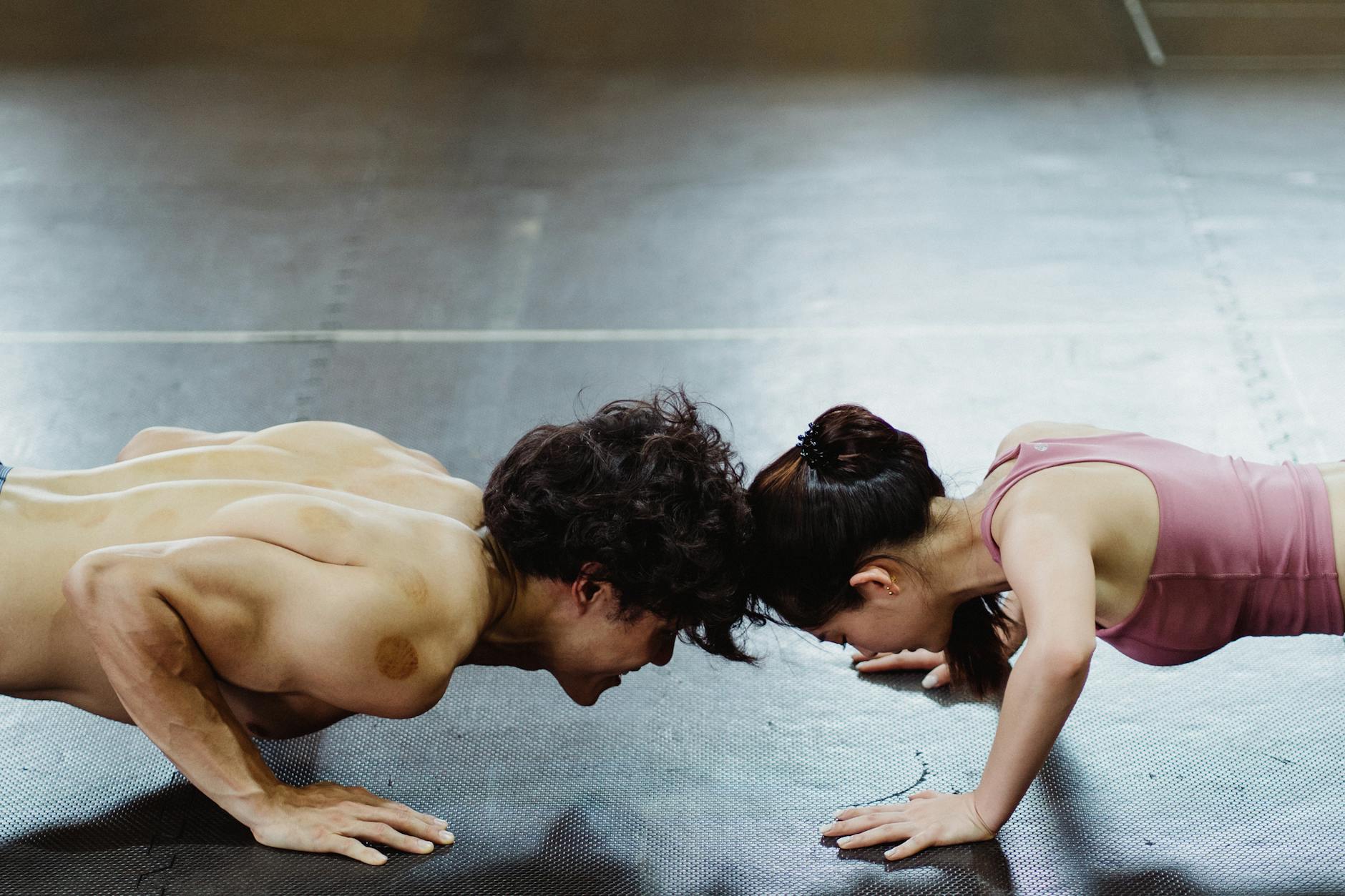
Prone planks—holding a push-up position with your weight on forearms and toes—train the anterior (front) core and demand sustained muscle activation. The key is maintaining a straight body line from head to heels without letting your hips sag or pike upward. Start with 20-30 second holds and build to 45-60 seconds as strength improves.
Planks are deceptively demanding because they’re isometric—your muscles contract without moving, which creates time under tension that builds deep stability. For many people, prone planks feel more “real” than dead bugs or bird dogs because they’re recognizably challenging, though this difficulty can also lead to poor form if people hold them too long before they’re ready. If traditional planks are too difficult, side planks (lying on one forearm and the outer edge of one foot) provide a more accessible starting point. For people with wrist pain or shoulder issues, planks on forearms are easier than plank variations that require hand support, and modified planks (on knees instead of toes) reduce difficulty while maintaining the core engagement pattern.
Building a Sustainable Exercise Routine That Fits Daily Life
The most effective lumbar stability routine isn’t the fanciest one—it’s the one you actually do consistently. A realistic schedule is 10-15 minutes, three times per week, performing 2-3 exercises per session. For example, Monday might be dead bugs and bridges, Wednesday might be bird dogs and quadruped taps, and Friday might be pallof presses and planks. This approach allows adequate recovery (muscles build during rest, not during exercise) and prevents boredom.
Over 6-8 weeks, you’ll develop strength and automatic stability patterns that improve posture, reduce pain, and enhance balance during daily activities—benefits that compound significantly over months and years. As your strength improves, you can progress by increasing hold times, adding more reps, using resistance bands, or trying single-leg variations. The goal isn’t to become a fitness enthusiast—it’s to build enough core stability that your spine is protected during life, whether you’re gardening, playing with grandchildren, or walking in the community. For someone managing cognitive changes or concerned about fall risk, these exercises are particularly valuable because strong core stability is foundational to safe, confident movement.
Conclusion
The six exercises doctors recommend for lumbar stability—dead bugs, bird dogs, bridges, quadruped shoulder taps, pallof presses, and prone planks—are evidence-based movements that target the deep muscles responsible for protecting your lower spine. Starting with simpler exercises like dead bugs and bridges, then progressing to more challenging variations, allows your nervous system to build stability gradually and sustainably.
Done consistently three times per week, these exercises require only 10-15 minutes and typically produce noticeable improvements in pain, balance, and confidence within 4-6 weeks. If you have existing back pain, spinal conditions, or haven’t exercised in a long time, consult with a physical therapist or doctor before starting any new routine. For most people, beginning with dead bugs and bridges and progressing over weeks is a safe, effective path to better core strength and the spinal protection that supports independence and quality of life for years to come.