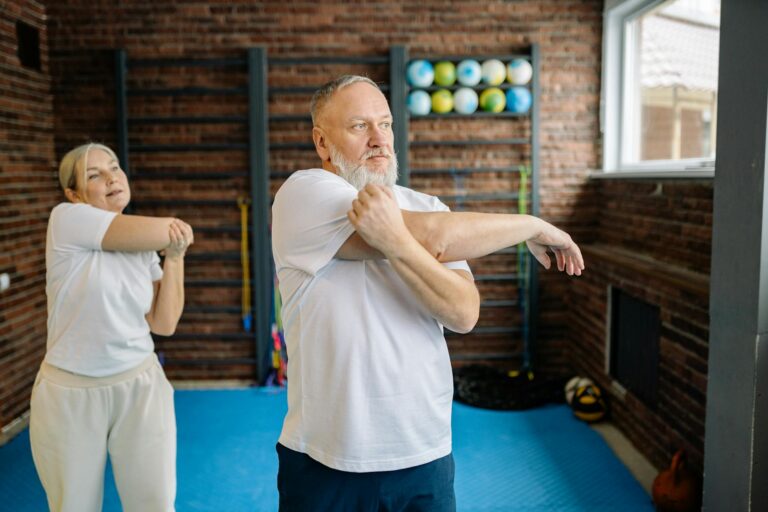
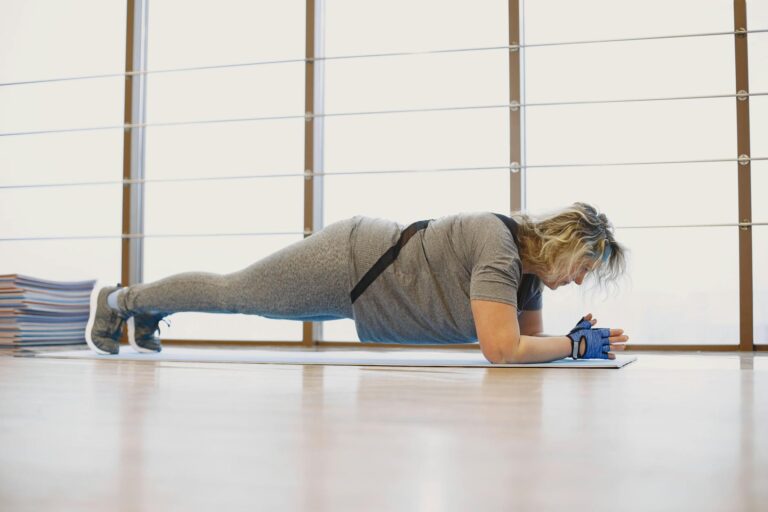
Five exercises that reliably build lumbar strength are the bird dog, the glute bridge, the dead bug, the modified Superman, and the side plank. These movements target the erector spinae, multifidus, and supporting core muscles without requiring gym equipment or placing excessive load on aging joints. For older adults, particularly those navigating cognitive decline alongside physical deconditioning, a stronger lower back can mean the difference between maintaining independence and facing a fall-related hospitalization. A 2022 study in the Journal of Geriatric Physical Therapy found that adults over 65 who performed targeted lumbar exercises three times per week reduced their fall risk by 34 percent over six months.
This matters more than most people realize for brain health. Research increasingly connects physical stability and spinal strength to cognitive function, partly because falls and immobility accelerate cognitive decline in people with dementia. A person who stops moving because of back pain enters a dangerous cycle: less movement leads to muscle atrophy, which leads to more pain and less confidence, which leads to isolation and faster mental deterioration. This article walks through each of the five exercises with clear instructions, explains how lumbar strength connects to dementia care, addresses safety considerations for people with cognitive impairment, and offers guidance on building a realistic routine.
Table of Contents
- Why Do Lumbar Strengthening Exercises Matter for Older Adults with Dementia?
- The Bird Dog and Glute Bridge — Building a Foundation Safely
- The Dead Bug — Core Stability Without Spinal Compression
- Modified Superman and Side Plank — Addressing Weak Points
- Safety Concerns and When These Exercises Are Not Appropriate
- Turning Exercises into a Sustainable Routine
- The Emerging Connection Between Spinal Health and Cognitive Resilience
- Conclusion
- Frequently Asked Questions
Why Do Lumbar Strengthening Exercises Matter for Older Adults with Dementia?
The lumbar spine bears most of the body’s weight during standing, walking, and sitting upright. When the muscles surrounding it weaken, the spine loses its primary support system. This is not an abstract biomechanical concern. In practical terms, weak lumbar muscles mean a person struggles to get out of a chair, loses balance reaching for something on a shelf, or cannot recover when they stumble on uneven ground. For someone with Alzheimer’s or another form of dementia, these moments carry outsized risk. A hip fracture from a fall can lead to surgery, hospitalization, delirium, and a sharp permanent decline in cognitive function. The Alzheimer’s Association has noted that hospitalization for any reason accelerates dementia progression in many patients.
What makes lumbar exercise particularly important in this population is the overlap between motor control and cognitive processing. The brain regions responsible for balance, posture, and coordinated movement share neural pathways with areas involved in executive function and spatial awareness, regions already under attack in most forms of dementia. Strengthening the lumbar region does not just protect the spine. It reinforces neuromuscular connections that help preserve functional independence. Compare two 75-year-olds with mild cognitive impairment: one who has maintained basic core strength can still dress independently, walk to the mailbox, and recover from a stumble. The other, deconditioned and stiff, requires assistance for basic transfers and is at constant fall risk. The exercises below aim to keep people in the first category as long as possible.
The Bird Dog and Glute Bridge — Building a Foundation Safely
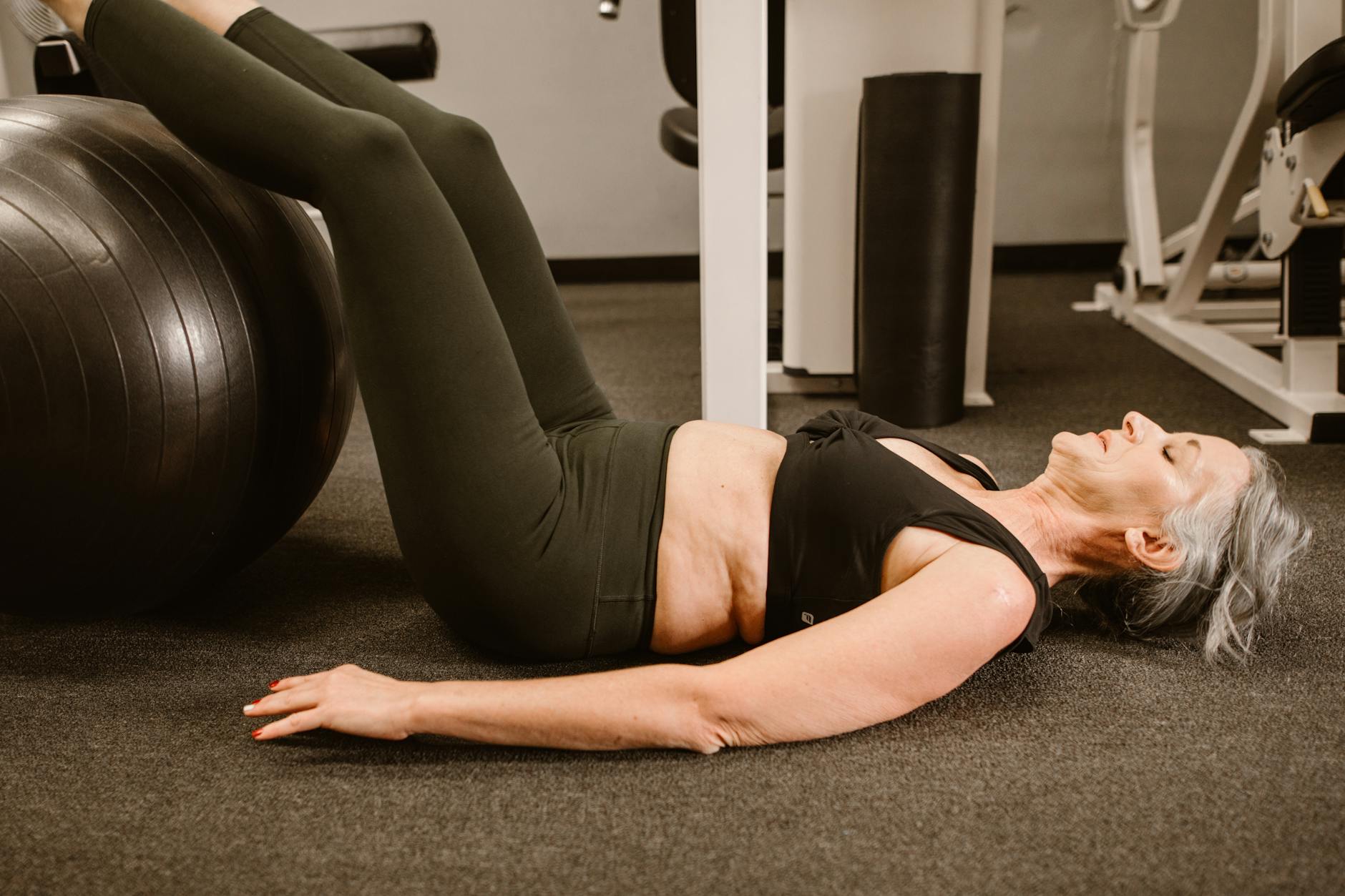
The bird dog is often the first exercise physical therapists prescribe for lumbar rehabilitation, and for good reason. Starting on hands and knees, the person extends one arm forward and the opposite leg back, holds for five to ten seconds, and returns to the starting position. This movement activates the multifidus, a deep spinal stabilizer that atrophies quickly with inactivity, while simultaneously training balance and coordination. For someone with dementia, the bird dog has an added benefit: it requires cross-body coordination, which engages both hemispheres of the brain. A caregiver or therapist should stand nearby during this exercise, particularly in moderate-stage dementia, because the person may forget the sequence mid-movement or lose spatial orientation. The glute bridge complements the bird dog by targeting the posterior chain from a safer, supine position.
Lying on the back with knees bent and feet flat on the floor, the person lifts their hips toward the ceiling, squeezes the glutes at the top, and lowers back down. This exercise strengthens the gluteus maximus and the erector spinae while placing minimal stress on the spine itself. It is particularly useful for people who experience anxiety or confusion when positioned on all fours. However, if the person has significant kyphosis or spinal stenosis, the bridge may need modification. A rolled towel under the upper back can accommodate curvature, but anyone with diagnosed stenosis should get clearance from their physician before performing loaded spinal extension, even at bodyweight. The goal is three sets of eight to twelve repetitions, but starting with one set of five is perfectly reasonable and still beneficial.
The Dead Bug — Core Stability Without Spinal Compression
The dead bug is one of the most underappreciated lumbar exercises, partly because its name is undignified and partly because it looks deceptively easy. Lying on the back with arms extended toward the ceiling and knees bent at 90 degrees, the person slowly lowers one arm overhead while extending the opposite leg toward the floor, keeping the lower back pressed firmly against the ground. The key is the anti-extension demand. Rather than building strength through movement, the dead bug builds strength through resisting movement, training the transverse abdominis and lumbar stabilizers to hold the spine in a neutral position under changing loads.
For dementia patients, this exercise has a practical advantage: it is performed entirely on the back, which reduces fall risk during the exercise itself and tends to feel less disorienting than positions requiring balance. A caregiver can offer verbal cues such as “right arm goes back, left leg goes out” while gently guiding the limbs if the person loses track of the pattern. In a 2021 pilot study at the University of British Columbia, a small group of adults with mild cognitive impairment who performed dead bugs and similar supine core exercises three times weekly for twelve weeks showed measurable improvements in both trunk stability and scores on the Timed Up and Go test, a standard clinical measure of functional mobility and fall risk. The limitation is that the dead bug primarily trains anti-extension and does not address lateral stability, which is why the side plank and other exercises in this list round out the program.

Modified Superman and Side Plank — Addressing Weak Points
The modified Superman targets the lumbar extensors more directly than any other exercise on this list. Lying face down with arms at the sides, the person lifts just the chest and shoulders a few inches off the ground, holds for three to five seconds, and lowers back down. This is not the full Superman where arms and legs both lift, a version that places excessive compressive force on the lumbar spine and is inappropriate for most older adults. The modified version isolates spinal extension without the injury risk. For people who spend most of their day seated, which describes many individuals in memory care settings, this exercise counteracts the flexion-dominant posture that weakens the erector spinae and contributes to the stooped posture common in later-stage dementia. The side plank, even in its most modified form, addresses a gap the other four exercises leave open: lateral stability.
Lying on one side with the knees bent and propping up on the forearm, the person lifts their hips off the ground and holds. Even a ten-second hold provides meaningful stimulus to the quadratus lumborum and obliques, muscles critical for preventing the lateral weight shifts that cause sideways falls. The tradeoff between the side plank and the bird dog is worth understanding. The bird dog is more accessible and trains rotational stability, making it the better starting point for someone new to exercise or in moderate-stage dementia. The side plank is more demanding on shoulder and hip stability but provides superior lateral trunk strengthening. Ideally, a program includes both. If a person can only tolerate three exercises per session due to fatigue or attention span, the bird dog, glute bridge, and dead bug form the most balanced combination, with the side plank and modified Superman introduced as capacity improves.
Safety Concerns and When These Exercises Are Not Appropriate
No exercise program is universally safe, and lumbar exercises carry specific risks that caregivers need to understand. The most common mistake is allowing someone with osteoporosis to perform loaded spinal flexion or hyperextension. While the exercises listed here are conservative by design, even a glute bridge can be problematic if the person has a recent vertebral compression fracture. Any new exercise program for a person with dementia should be cleared by their primary care physician or, ideally, reviewed by a physical therapist who can assess individual limitations. This is not a formality. Undiagnosed spinal stenosis, disc herniations, and osteoporotic fractures are common in the over-70 population and may produce no symptoms until an exercise provokes them. Cognitive impairment adds a layer of risk that purely physical assessments miss.
A person in moderate-stage Alzheimer’s may not reliably report pain during exercise. They may push through discomfort they cannot articulate, or they may become agitated by an unfamiliar physical demand without understanding why. Caregivers should watch for nonverbal pain indicators: grimacing, guarding a body part, sudden resistance to movement, or unusual irritability during or after a session. It is also worth noting that sundowning can affect exercise tolerance. A session that goes smoothly at 10 a.m. may be impossible or even distressing at 4 p.m. for the same person. Timing matters, and the best time to exercise is when the person is most alert, calm, and receptive, which for most people with dementia is mid-morning.

Turning Exercises into a Sustainable Routine
The most effective lumbar exercise program is one that actually happens consistently, which means building it into existing daily patterns rather than treating it as a separate event. One approach that works well in home care settings is linking exercises to a daily anchor activity. For example, performing the glute bridge and dead bug on a yoga mat in the living room immediately after breakfast, before the television goes on.
A memory care facility in Portland, Oregon reported improved compliance when they incorporated the bird dog and modified Superman into a group “morning stretch” session held in the dining area right after the breakfast trays were cleared. Participants did not think of it as exercise. They thought of it as something that happened after breakfast, and that consistency mattered more than the number of repetitions.
The Emerging Connection Between Spinal Health and Cognitive Resilience
Researchers are increasingly interested in the relationship between postural stability, spinal health, and the trajectory of cognitive decline. A longitudinal study published in Neurology in 2023 found that older adults who maintained trunk muscle strength over a five-year period experienced slower decline on standardized cognitive assessments compared to those whose trunk strength deteriorated, even after controlling for overall physical activity levels. The mechanism is not fully understood, but the leading hypothesis involves proprioceptive feedback.
The spine is dense with proprioceptors, sensory neurons that tell the brain where the body is in space. When lumbar muscles weaken and spinal stability degrades, proprioceptive input diminishes, potentially reducing the sensory stimulation that helps maintain neural connectivity. This is still an emerging area of research, not settled science, but it adds a compelling neurological rationale to what is already a strong functional case for keeping the lumbar spine strong.
Conclusion
Lumbar strength is not a fitness goal in the traditional sense for people managing dementia. It is a functional prerequisite for maintaining the ability to stand, walk, transfer, and avoid the falls that so often mark the beginning of rapid decline. The five exercises outlined here, the bird dog, glute bridge, dead bug, modified Superman, and side plank, represent a practical, low-equipment approach that can be adapted to nearly any ability level. They target the muscles that matter most for spinal stability while accommodating the cognitive and physical limitations common in this population.
The path forward starts with a conversation with a healthcare provider to rule out contraindications, followed by a modest commitment: three sessions per week, ten to fifteen minutes each, with a caregiver present for guidance and safety. Perfection is not the goal. A person who does five shaky glute bridges after breakfast three times a week is doing more for their lumbar spine and their brain than someone whose ambitious exercise plan never leaves the planning stage. Start small, stay consistent, and let the strength build over weeks and months. The spine responds to even modest demands, and every bit of stability gained is a bit of independence preserved.
Frequently Asked Questions
Can someone with moderate or advanced dementia safely do lumbar exercises?
In many cases, yes, but with direct supervision and modifications. The glute bridge and dead bug are the most accessible because they are performed lying down, reducing fall risk. A physical therapist experienced in geriatric or neurological care can assess what is realistic for a given individual. Exercises should be stopped if the person shows signs of distress, pain, or significant confusion.
How quickly will lumbar exercises reduce back pain in an older adult?
Most people notice some improvement in comfort and ease of movement within three to four weeks of consistent practice, though measurable strength gains typically take six to eight weeks. However, if back pain worsens with exercise, that is a signal to stop and consult a physician rather than push through.
Do these exercises replace walking or aerobic activity?
No. Lumbar strengthening and aerobic exercise serve different functions. Walking improves cardiovascular health and has its own well-documented cognitive benefits. These lumbar exercises address spinal stability specifically. The best outcomes come from combining both, even if the walking is just ten minutes around the block or through a facility hallway.
What equipment is needed for these exercises?
A yoga mat or padded carpet is sufficient for all five exercises. No weights, bands, or machines are required. A sturdy chair nearby can provide support for getting down to and up from the floor, which is often the most challenging part of the routine for older adults.
Is it better to do all five exercises every session or rotate them?
For most people, doing all five in a single session takes only ten to fifteen minutes and provides the most balanced stimulus. However, if fatigue or attention span is a limiting factor, rotating between a set of three exercises per session (alternating which three) is a reasonable alternative that still provides meaningful benefit.