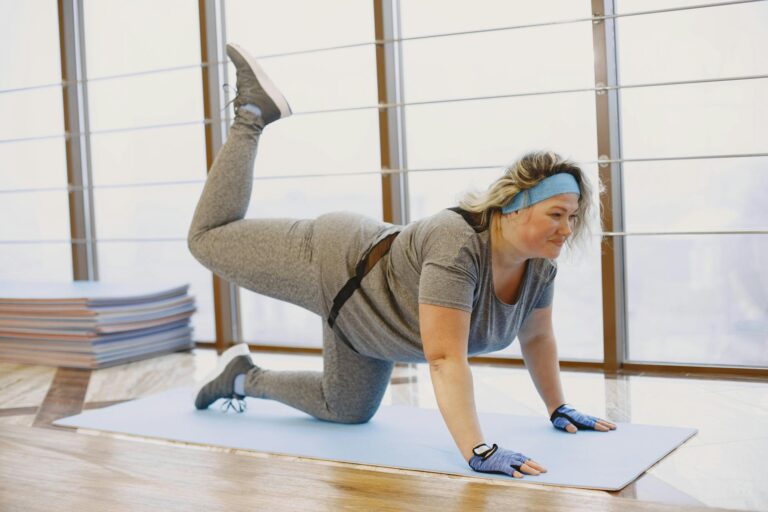
The five exercises doctors most frequently recommend for improving core stability are the dead bug, bird dog, modified plank, pelvic tilt, and bridge. These movements target the deep stabilizing muscles of the trunk, including the transversus abdominis, multifidus, and pelvic floor, without placing excessive strain on the spine. For older adults, particularly those managing cognitive decline or dementia, core stability is not just about posture or back pain. It directly affects balance, fall prevention, and the ability to perform everyday tasks like getting out of a chair or turning around in a hallway. A 2022 study published in the Journal of Aging and Physical Activity found that older adults who performed structured core exercises three times per week reduced their fall risk by nearly 30 percent over six months.
What makes these five exercises stand out is their adaptability. Each one can be performed lying down or on all fours, which reduces the fear of falling during the exercise itself, a real barrier for many older adults. They also require no equipment, making them accessible for home use or in care settings. This article walks through each exercise in detail, explains why doctors favor them over more aggressive alternatives like crunches or sit-ups, discusses how cognitive impairment affects the ability to follow exercise routines, and offers practical guidance for caregivers who may need to assist or supervise. Core stability work is one of the few interventions that addresses both physical decline and some of the secondary consequences of dementia, including the shuffling gait, reduced proprioception, and impaired motor planning that increase fall risk as the disease progresses.
Table of Contents
- Why Do Doctors Specifically Recommend These Five Core Exercises Over Others?
- How Core Stability Directly Affects Fall Prevention in Older Adults
- Breaking Down Each Exercise and Its Specific Benefits
- How to Adapt These Exercises for People With Cognitive Impairment
- When Core Exercises May Not Be Appropriate or Sufficient
- The Connection Between Core Stability and Cognitive Function
- Building a Sustainable Routine for Long-Term Benefit
- Conclusion
- Frequently Asked Questions
Why Do Doctors Specifically Recommend These Five Core Exercises Over Others?
The preference for dead bugs, bird dogs, planks, pelvic tilts, and bridges comes down to a simple clinical calculation: they strengthen the muscles that matter most while minimizing the risk of injury. Traditional abdominal exercises like sit-ups and crunches involve repeated spinal flexion, which can aggravate degenerative disc disease, a condition present in the majority of adults over 65. Dr. Stuart McGill, a spine biomechanics researcher whose work has shaped rehabilitation guidelines for decades, has long argued that the core should be trained for stability, not movement. These five exercises follow that principle. They challenge the trunk muscles to resist motion rather than produce it. There is also a cognitive dimension that matters for this population.
Each of these exercises involves a predictable, rhythmic pattern. The dead bug, for example, alternates extending opposite arms and legs while lying on the back. That cross-body coordination activates neural pathways that support motor planning, something that deteriorates in Alzheimer’s and other dementias. Compare this to a cable rotation or a kettlebell swing, both effective core exercises for younger populations but far too complex and equipment-dependent for most older adults in a care setting. One important distinction doctors draw is between core strength and core stability. A person can have strong abdominal muscles and still lack stability if the deep stabilizers, particularly the transversus abdominis and the multifidus along the spine, are not functioning well. The five recommended exercises specifically target these deeper muscles. Crunches, by contrast, primarily work the rectus abdominis, the “six-pack” muscle, which contributes relatively little to the stability needed for balance and functional movement.

How Core Stability Directly Affects Fall Prevention in Older Adults
Falls are the leading cause of injury-related death in adults over 65 and the single greatest source of traumatic brain injuries in that population. The connection to core stability is mechanical: when someone stumbles or shifts weight unexpectedly, it is the trunk muscles that fire first to keep the body upright. If those muscles are weak or slow to activate, the person goes down. Research from the University of Michigan’s Falls Prevention Clinic has demonstrated that reaction time in the core muscles is a stronger predictor of fall risk than leg strength alone. For people with dementia, the problem compounds. Cognitive impairment slows the brain’s ability to process spatial information and coordinate a corrective response. A person with moderate Alzheimer’s who trips on a rug may not only have weaker core muscles but also a delayed neurological signal telling those muscles to engage. This is why preventive strengthening matters so much.
A stronger baseline means the muscles need less neural input to do their job. However, if someone is already in the later stages of dementia and has significant mobility limitations, these exercises may need to be adapted substantially or replaced with assisted range-of-motion work. Pushing exercises that a person cannot understand or safely perform does more harm than good. The data on exercise and fall reduction is consistent but comes with a caveat. Most studies showing a 25 to 40 percent reduction in fall rates involved supervised programs with trained instructors. Home-based programs without supervision show smaller benefits, around 10 to 15 percent reduction. For caregivers, this means that simply handing someone a printout of exercises is unlikely to produce meaningful results. Active participation, cueing, and consistency matter.
Breaking Down Each Exercise and Its Specific Benefits
The dead bug is performed lying face-up with arms extended toward the ceiling and knees bent at 90 degrees. The person slowly lowers one arm overhead while extending the opposite leg, then returns to the starting position and switches sides. This exercise is particularly valuable because it trains the core to resist extension, the arching of the lower back, which is one of the most common compensation patterns in people with weak abdominals. A physical therapist at the Mayo Clinic geriatrics program described it as “the single best starting exercise for an older adult who has never done core work,” because the supine position eliminates balance concerns entirely. The bird dog is performed on hands and knees, extending one arm forward and the opposite leg back while keeping the hips level. It targets the multifidus and erector spinae along with the glutes, making it excellent for people with low back pain. The bridge, done lying face-up with knees bent and feet flat, involves lifting the hips toward the ceiling.
It primarily strengthens the glutes and posterior chain but also demands isometric engagement of the deep abdominals to keep the pelvis stable. For someone who has trouble getting onto all fours, the bridge is often the most accessible option. Pelvic tilts are subtle but important. Lying on the back with knees bent, the person gently flattens the lower back against the floor by engaging the lower abdominals. This exercise teaches body awareness and motor control in the lumbar spine, skills that translate directly into better posture during sitting and standing. The modified plank, performed on forearms and knees rather than toes, builds endurance in the entire anterior chain. Doctors typically recommend holding for 10 to 20 seconds initially rather than chasing long hold times, which can lead to breath-holding and blood pressure spikes in older adults.

How to Adapt These Exercises for People With Cognitive Impairment
The biggest practical challenge is not the physical difficulty of these exercises but the ability of the person to understand and remember the movement pattern. For someone with mild cognitive impairment, verbal cues and demonstrations are usually sufficient. A caregiver can say “push your back flat into the floor” for the pelvic tilt, and the person can follow along. For moderate dementia, hand-over-hand guidance becomes necessary. The caregiver physically guides the person’s limbs through the movement while providing simple, consistent verbal cues. Using the same words every session helps build procedural memory, which is often preserved longer than declarative memory in Alzheimer’s disease. There is a real tradeoff between exercise complexity and effectiveness.
The dead bug and bird dog are more effective core exercises than the pelvic tilt, but they require more cognitive engagement because of the contralateral coordination. For someone who becomes frustrated or confused by the dead bug, switching to pelvic tilts and bridges, which involve simpler single-plane movements, is a better choice. An exercise performed consistently at lower difficulty will always outperform a more effective exercise that the person resists or cannot complete. Occupational therapists often recommend starting with the two simplest exercises, the pelvic tilt and bridge, establishing them as a routine over two to three weeks, and then introducing the bird dog only if the person is tolerating the program well. The timing of exercise sessions also matters. Most dementia care specialists recommend scheduling physical activity during the person’s best time of day, often mid-morning, when alertness and cooperation tend to peak. Late afternoon sessions, when sundowning can increase agitation, are generally a poor choice regardless of the exercise selected.
When Core Exercises May Not Be Appropriate or Sufficient
Not every older adult is a candidate for active core training, and it is important to recognize the boundaries. Someone with severe osteoporosis may not tolerate the prone position required for bird dogs or planks without risking a vertebral compression fracture. People with significant kyphosis, the rounded upper back posture common in advanced age, may find lying flat painful or impossible. In these cases, seated core exercises or standing wall presses may be more appropriate, though they are generally less effective at engaging the deep stabilizers. There is also a common misconception that core exercises alone can solve balance problems. Core stability is one component of balance, but vestibular function, lower extremity strength, vision, proprioception, and medication side effects all play roles.
A person taking a sedating medication that causes dizziness will continue to fall regardless of how strong their core becomes. Doctors who recommend core exercises typically do so as part of a broader fall-prevention strategy that includes medication review, home safety modifications, vision correction, and lower body strengthening. If a care provider is only addressing one of these factors, they are unlikely to see meaningful improvement. A particular warning applies to unsupervised exercise in people with moderate to advanced dementia. Even familiar exercises can become dangerous if the person forgets they are on the floor and attempts to stand abruptly, or rolls off an exercise mat. Supervision should be hands-on, not simply being in the same room.

The Connection Between Core Stability and Cognitive Function
An emerging area of research explores whether physical exercise, including core-specific work, can slow cognitive decline. The evidence is cautiously encouraging. A 2023 meta-analysis in Neurology Reviews found that multicomponent exercise programs, those combining balance, strength, and aerobic elements, were associated with a modest slowing of cognitive decline in people with mild cognitive impairment. Core stability exercises fit naturally into the balance and strength components.
One study from the University of British Columbia tracked older adults performing a program that included planks and bird dogs three times weekly and found improvements not only in balance scores but also in executive function tests over 12 months. The mechanism likely involves increased blood flow to the brain during physical exertion and the neuroplasticity-promoting effects of brain-derived neurotrophic factor, or BDNF, which rises with exercise. Core exercises performed at moderate intensity, where the person is working but can still hold a conversation, appear sufficient to trigger these effects. This dual benefit, reducing fall risk while potentially supporting brain health, is part of why geriatricians increasingly view core stability training as a priority rather than an optional add-on.
Building a Sustainable Routine for Long-Term Benefit
The most effective exercise program is the one that actually gets done consistently. For caregivers managing a loved one’s dementia, adding a 10-minute core routine to an existing daily structure, such as after breakfast or before a favorite television program, increases adherence significantly compared to standalone exercise sessions. Research on habit formation in older adults suggests that anchoring a new behavior to an established routine reduces the cognitive load of remembering to do it, which benefits both the caregiver and the person with dementia.
Looking ahead, physical therapy and geriatric medicine are moving toward more personalized exercise prescriptions that account for cognitive status, not just physical capacity. Several academic medical centers are piloting programs that pair specific exercises with cognitive engagement, asking a person to count repetitions aloud or name objects while performing a bridge, turning a physical exercise into a dual-task training session. Early results suggest this approach may produce greater benefits for both balance and cognition than either intervention alone. For now, the straightforward advice remains: start simple, stay consistent, supervise closely, and treat core stability as a non-negotiable part of dementia care rather than an afterthought.
Conclusion
Core stability is foundational to maintaining independence, preventing falls, and supporting overall physical function in older adults, particularly those living with dementia. The five exercises most commonly recommended by doctors, the dead bug, bird dog, modified plank, pelvic tilt, and bridge, offer the best combination of effectiveness and safety. They target the deep stabilizing muscles without the spinal stress associated with traditional abdominal exercises, and they can be scaled to match a wide range of physical and cognitive abilities. The key is matching the exercise complexity to the individual’s current capacity and providing appropriate supervision.
For caregivers, the practical next step is straightforward: discuss these exercises with the person’s physician or a physical therapist to confirm they are appropriate, then begin with pelvic tilts and bridges performed three times per week for two to three weeks before adding more complex movements. Keep sessions short, around 10 minutes, and schedule them during the person’s most alert period of the day. Document what works and what causes frustration so you can adjust over time. Core stability training is not a cure for dementia or a guarantee against falls, but it is one of the most evidence-supported interventions available for reducing physical decline and preserving the ability to move safely through daily life.
Frequently Asked Questions
How often should an older adult with dementia do core exercises?
Most guidelines recommend three times per week with at least one rest day between sessions. Daily light exercises like pelvic tilts are generally safe, but more demanding movements like planks and bird dogs benefit from recovery time. Consistency over weeks and months matters far more than frequency within a single week.
Can someone with advanced dementia still benefit from core exercises?
It depends on the individual’s physical and cognitive status. In advanced dementia, active participation in exercises like the bird dog may not be possible. However, assisted movements, where a caregiver guides the person through gentle pelvic tilts or supported bridges, can still help maintain some muscle tone and joint mobility. The goals shift from building strength to preserving function and comfort.
Are these exercises safe for someone with osteoporosis?
Pelvic tilts and bridges are generally safe because they are performed in a supine position with minimal spinal loading. Bird dogs and planks require more caution, as the prone or quadruped position places some load on the spine. Anyone with diagnosed osteoporosis should have their exercise program reviewed by a physical therapist who can identify specific contraindications based on bone density and fracture history.
What if the person refuses to exercise or becomes agitated during sessions?
Never force exercise. Agitation during physical activity can be a sign that the person is in pain, confused by the instructions, or simply not in a cooperative state at that moment. Try again at a different time of day, simplify the exercise, or incorporate movement into an activity the person already enjoys, such as gentle stretching while listening to familiar music. Some occupational therapists use task-oriented approaches, like reaching for objects on a table, that engage core muscles without feeling like formal exercise.
Do these exercises replace the need for walking or aerobic activity?
No. Core exercises address stability and trunk strength but do not provide the cardiovascular benefits of walking, cycling, or other aerobic activities. The best outcomes in fall prevention research come from programs that combine core stability work with regular walking and lower body strengthening. Think of core exercises as one component of a complete physical activity plan, not a substitute for the whole thing.