Core strength sits at the center of this dementia and brain health question.
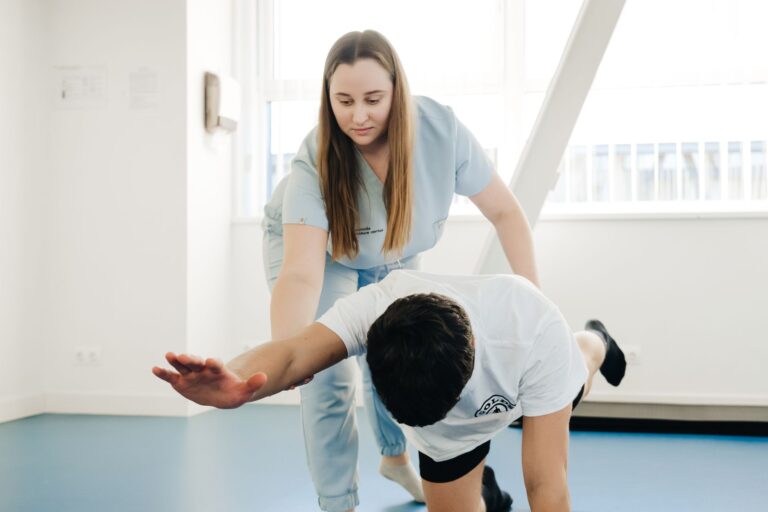
The five core exercises spine specialists most consistently recommend for reducing pressure on injured discs are the bird dog, the dead bug, the pelvic tilt, the glute bridge, and the cat-cow stretch. These movements share a common principle: they strengthen the muscles that act as a natural corset around the spine without forcing the kind of loaded flexion or compression that aggravates a herniated disc. A 2025 systematic review and meta-analysis published in *Frontiers in Medicine* confirmed that exercise therapy enhances core muscle strength, improves lumbar stability, relieves lower back and leg pain, and improves quality of life in patients with lumbar disc herniation. For someone dealing with a bulging or herniated disc — particularly at the L4/L5 or L5/S1 levels, where roughly 95% of lumbar herniations occur in adults aged 25 to 55 — these exercises represent a first-line, evidence-backed approach to recovery. Consider a 42-year-old office worker who herniates a disc lifting a suitcase.
The instinct is to rest, but Dr. Jonathan Oren, an orthopedic spine surgeon at Northwell Health, points out that prolonged rest actually worsens outcomes. Controlled movement is critical. The exercises outlined in this article are designed to be performed at low intensity, with slow and deliberate control, so that the muscles surrounding the spine gradually take over the job of stabilizing vertebral segments — a job the damaged disc can no longer do alone. This article breaks down each of the five exercises, explains how and why they work at the biomechanical level, offers practical guidance on building a routine, and flags the precautions that matter most. It also addresses the broader context of disc herniation recovery, including the encouraging research on natural disc resorption and the role of complementary approaches like yoga.
Table of Contents
- Why Do Spine Specialists Recommend Core Exercises to Reduce Pressure on Injured Discs?
- The Bird Dog and Dead Bug — Two Foundational Moves for Spinal Stability
- Pelvic Tilts and Glute Bridges — Building a Foundation From the Ground Up
- How to Build a Safe Weekly Routine Around These Five Exercises
- What to Avoid — Exercises and Habits That Worsen Disc Herniations
- The Role of Natural Disc Resorption and Why Movement Matters During Healing
- Long-Term Spine Health and the Cognitive Connection
- Conclusion
Why Do Spine Specialists Recommend Core Exercises to Reduce Pressure on Injured Discs?
Symptomatic herniated lumbar disc affects roughly 1 to 3% of the general population, with a point prevalence of about 5% in adults aged 30 and older. Peak incidence falls between ages 30 and 50, and men are affected at roughly twice the rate of women. The conventional thinking — that a herniated disc means surgery or months of immobility — does not hold up against the evidence. The core musculature, when properly engaged, reduces the mechanical load on spinal discs by stabilizing the lumbar segments and limiting excessive movement at the injury site. The Abdominal Drawing-in Maneuver combined with core stabilization exercises has been shown to reduce lumbar segmental translation, essentially keeping the vertebrae from shifting in ways that irritate the damaged disc. What makes core strengthening different from general fitness is specificity.
A spine specialist is not prescribing squats or deadlifts for someone with an acute herniation. The recommended exercises target the deep stabilizers — the transversus abdominis, the multifidus, the pelvic floor, and the diaphragm — rather than the superficial movers like the rectus abdominis. Compare a sit-up, which loads the spine in flexion and can push disc material further posteriorly, to a dead bug, which trains the same anterior core muscles while the spine stays neutral and unloaded. The difference is not subtle. For someone with a posterior disc herniation, which is the most common type, that distinction can mean the difference between relief and a flare-up. One important caveat: core strengthening is not a replacement for medical evaluation. If you have progressive neurological symptoms — numbness spreading down your leg, foot drop, or loss of bowel or bladder control — those are red flags that require immediate medical attention, not a home exercise program.

The Bird Dog and Dead Bug — Two Foundational Moves for Spinal Stability
The bird dog, popularized by Dr. Stuart McGill, a leading spine biomechanics researcher, is arguably the most widely prescribed core exercise in spine rehabilitation. You begin on all fours, then extend one arm forward and the opposite leg back while maintaining a completely neutral spine. The movement targets the lower back extensors and hip extensors while teaching the body to produce motion at the shoulders and hips without allowing the lumbar spine to shift, rotate, or sag. McGill includes it in his “Big 3” spine hygiene protocol because it trains exactly the kind of motor control that prevents re-injury. The key is not speed or range of motion — it is stillness in the trunk while the limbs move. The dead bug works a complementary pattern.
Lying face-up with arms extended toward the ceiling and knees bent at 90 degrees, you lower one arm overhead and the opposite leg toward the floor while pressing your lower back firmly into the ground. This posterior pelvic tilt position is the critical detail: it engages the deep lumbo-pelvic-hip stabilizers and activates the core without loading the spine. For people with herniated discs, the dead bug is often better tolerated than the bird dog in the early stages of recovery because the floor provides feedback — you can feel immediately if your back is arching, which would indicate a loss of core control. However, if you have significant pain with any degree of hip flexion — which can occur with certain disc herniations that irritate the femoral nerve — the dead bug’s starting position may be uncomfortable. In that case, a physical therapist may modify the exercise or delay its introduction. The bird dog, which places the hips in a neutral or slightly extended position, may be the better starting point. Neither exercise is universally appropriate on day one of every herniation, which is why an initial assessment matters.
Pelvic Tilts and Glute Bridges — Building a Foundation From the Ground Up
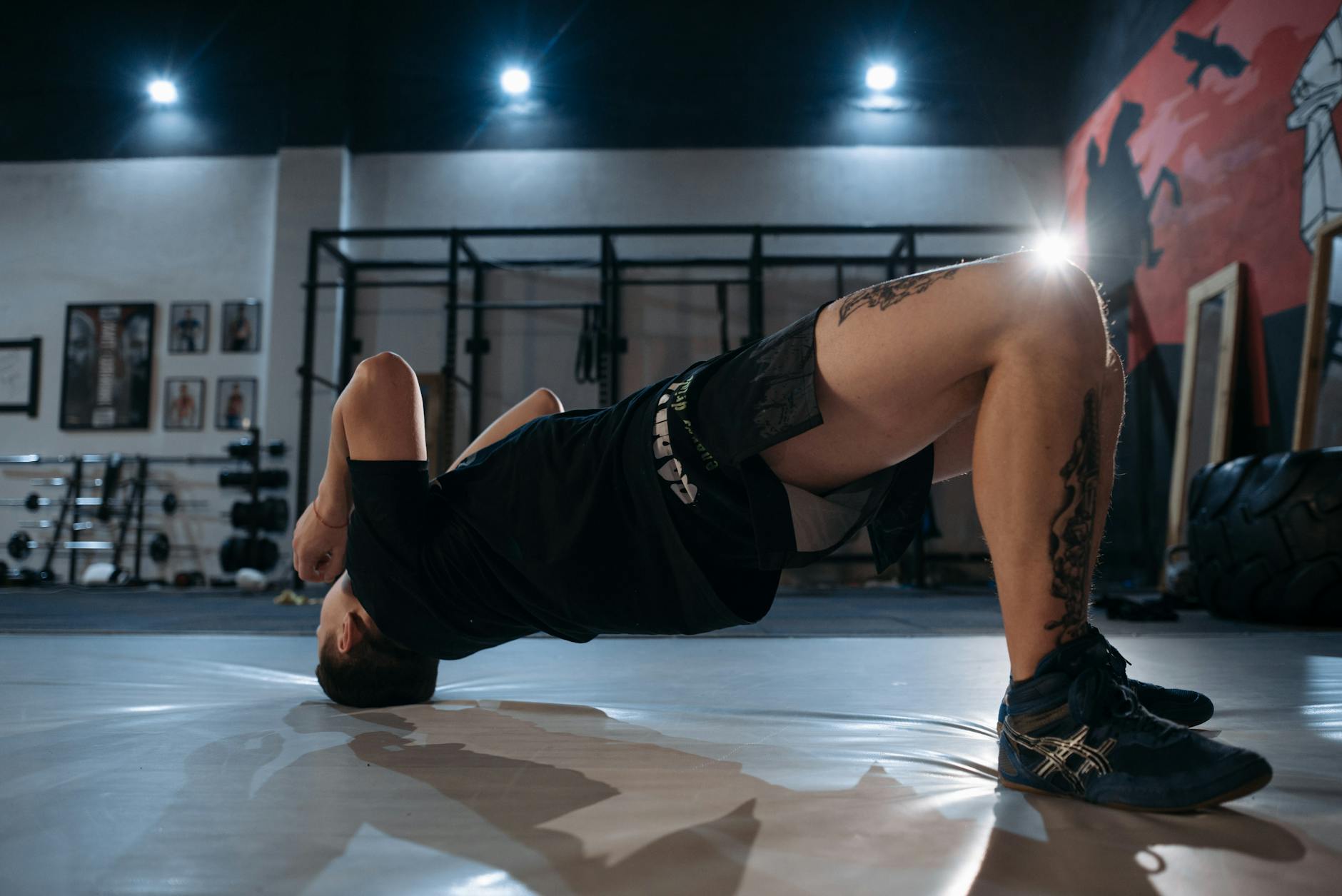
The pelvic tilt is considered a cornerstone exercise in physical therapy protocols and chronic pain management for good reason: it is nearly impossible to do wrong, and it teaches the fundamental skill that every other core exercise depends on. Lying on your back with knees bent, you gently contract your abdominal muscles to press your lower back flat against the floor, slightly tilting your pelvis upward. There is no movement of the legs, no lifting, no strain. What there is, for many people with disc injuries, is the first moment of relief they have felt in weeks — because the posterior tilt gently opens the spaces between the vertebrae and reduces posterior pressure on the disc. The glute bridge builds on the pelvic tilt by adding hip extension. From the same starting position, you press through your heels to lift your hips off the floor while maintaining that same pelvic tilt. This strengthens the gluteal muscles and hamstrings, which support the pelvis and lower back. Strong glutes take pressure off the lower back and improve spinal stability, reducing strain on herniated discs.
The glute bridge is part of what some practitioners call the “Big 3 B’s” — bridges, bird dogs, and bracing — for disc herniation recovery. A person who has been sedentary due to back pain often has significant gluteal weakness, and restoring that strength is one of the fastest ways to reduce the load the lumbar spine has to bear. A specific example: a 55-year-old woman with an L5/S1 herniation and chronic low back pain begins with pelvic tilts, three sets of ten, twice a day. After two weeks, she progresses to glute bridges. Within six weeks, her pain has decreased enough that she can walk for 30 minutes without stopping — something she had not done in months. This trajectory is common and well-documented, though individual results vary. The limitation to be aware of is that glute bridges performed with excessive lumbar extension — arching the back at the top rather than squeezing the glutes — can aggravate disc symptoms. The cue is to think about driving the hips up with the glutes, not about how high you can lift.
How to Build a Safe Weekly Routine Around These Five Exercises
A practical starting routine might look like this: pelvic tilts and dead bugs on day one, bird dogs and glute bridges on day two, and cat-cow stretches daily as a warm-up or cooldown. Begin with two sets of eight to ten repetitions per exercise, resting 30 to 60 seconds between sets. The cat-cow stretch — alternating between arching and rounding the back on all fours — promotes gentle, controlled spinal mobility and helps relieve stiffness without high-impact loading. It is not a strengthening exercise in the traditional sense, but it improves the segmental mobility that allows the other exercises to be performed correctly. The tradeoff in programming these exercises is between frequency and intensity. For someone in the acute phase of a disc herniation, daily low-intensity work — pelvic tilts and cat-cow only — may be all that is appropriate.
As symptoms improve, adding the bird dog, dead bug, and glute bridge on alternating days provides progressive overload without overwhelming the healing tissue. Contrast this with a general fitness approach, where training a muscle group hard twice a week and allowing recovery between sessions is standard. Disc rehabilitation favors higher frequency and lower intensity because the goal is motor control and endurance of the stabilizers, not hypertrophy. The deep core muscles are designed to work at low levels of activation for long periods — they are postural muscles, not power muscles. One comparison worth making: a physical therapy clinic will typically prescribe these exercises three to five times per week for six to twelve weeks. A home program without professional guidance tends to be less consistent and less progressive. If you have access to a physical therapist, even a few sessions to learn proper form and establish a progression plan can make the difference between a program that works and one that stalls.
What to Avoid — Exercises and Habits That Worsen Disc Herniations
The single most important warning for anyone with a herniated disc is to avoid spinal flexion-heavy exercises. Sit-ups, crunches, and toe touches all load the lumbar spine in flexion, and because discs typically protrude posteriorly, flexion increases posterior pressure and can worsen symptoms. This is not a theoretical concern — it is a well-established biomechanical reality. The same logic applies to exercises that combine flexion with rotation, such as Russian twists or bicycle crunches. These movements generate exactly the kind of shear force that a compromised disc cannot tolerate. Beyond specific exercises, high-impact activities and movements involving excessive bending or twisting should be avoided during the recovery period. Running, jumping, heavy lifting, and contact sports all impose compressive and shear loads on the spine that can aggravate a herniation.
The guidance from Northwell Health and other spine centers is consistent: opt for low-impact, slow, controlled movements. This does not mean you are limited to lying on the floor forever. Walking, swimming, and stationary cycling are generally well-tolerated and provide cardiovascular benefits that support overall recovery. A limitation worth acknowledging: the five exercises in this article are not sufficient for every presentation. A large extruded disc fragment causing significant leg weakness, for example, may require surgical intervention before rehabilitation exercises become the primary treatment. Similarly, someone with spinal stenosis in addition to a disc herniation may not tolerate the extension component of the cat-cow or the glute bridge. The exercises described here are broadly safe and broadly effective, but “broadly” is not “universally.” Professional assessment fills the gap.

The Role of Natural Disc Resorption and Why Movement Matters During Healing
One of the most encouraging findings in spine research is that natural resorption occurs in approximately 76.6% of herniated disc cases, with higher resorption rates observed in ruptured or extruded herniations compared to contained ones. This means the body often heals itself — the herniated disc material shrinks or is absorbed over time. The core strengthening exercises described in this article support that process by maintaining spinal stability and blood flow to the area while the body does its work. A person who stays active within appropriate limits during this resorption period tends to recover faster and with fewer residual symptoms than someone who remains immobile.
Complementary approaches can also play a role. Studies published in the *Journal of Orthopedic Rheumatology* have concluded that yoga can significantly reduce pain and disability in individuals with chronic low back pain, including those with herniated discs. Gentle yoga shares many principles with the exercises described here — controlled movement, neutral spine awareness, and emphasis on breathing. The cat-cow stretch, in fact, is borrowed directly from yoga. For someone who finds a five-exercise physical therapy routine monotonous, a gentle yoga class that avoids deep forward folds and heavy twisting can provide variety while respecting the same biomechanical principles.
Long-Term Spine Health and the Cognitive Connection
Chronic pain, including the kind caused by disc herniations, has well-documented effects on cognitive function, sleep quality, and mental health. For readers of a brain health and dementia care site, this connection is worth underscoring. Persistent pain is associated with reduced attention, impaired working memory, and increased risk of depression — all of which are independent risk factors for cognitive decline.
By addressing the physical source of pain through targeted core strengthening and gradual return to activity, you are not only protecting your spine but supporting your brain. Looking ahead, the trend in spine care is moving firmly away from surgical intervention as a first-line treatment and toward structured rehabilitation. The 2025 meta-analysis in *Frontiers in Medicine* represents the latest in a growing body of evidence that conservative, exercise-based treatment produces meaningful improvements in pain, function, and quality of life. For most people with herniated discs, a disciplined core strengthening program is not just an alternative to surgery — it is the preferred approach, with surgery reserved for the minority of cases that do not respond to conservative care or that present with serious neurological compromise.
Conclusion
The five exercises — bird dog, dead bug, pelvic tilt, glute bridge, and cat-cow stretch — are recommended so consistently by spine specialists because they work on the right muscles in the right way. They strengthen the deep stabilizers that act as a natural corset for the spine, they do so without imposing the flexion or compression that aggravates disc herniations, and they are accessible to people at virtually every fitness level. Combined with the body’s own capacity for disc resorption, which occurs in the majority of cases, a structured core program gives most people a realistic path to recovery without surgery.
The key is to start conservatively, progress gradually, and avoid the movements that biomechanics tells us are harmful — particularly loaded spinal flexion. If possible, work with a physical therapist to establish proper form and a progression timeline. And remember that staying active within appropriate limits is not just good for your back. It supports sleep, mood, and cognitive function — all of which matter for long-term brain health.
You Might Also Like
- 8 Exercises for Spine Strength
- 5 Physical Therapy Exercises Doctors Commonly Recommend for Stabilizing Herniated Discs Without Surgery
- 5 Physical Therapy Exercises Doctors Commonly Recommend for Stabilizing Herniated Discs Without Surgery
For more, see Alzheimer’s Association.