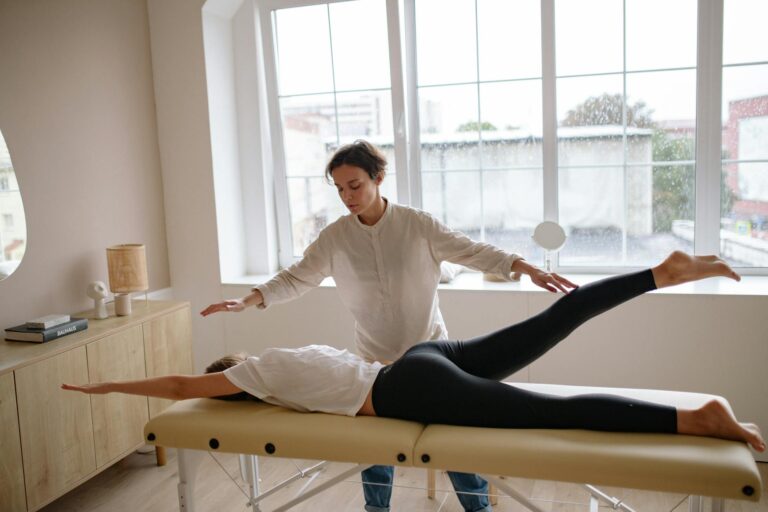
Pelvic misalignment is one of the most overlooked causes of chronic back pain, yet it’s remarkably common in modern life. The pelvis is the foundation of your spine—when it tilts, rotates, or shifts out of its neutral position, it forces the entire spinal column into compensation patterns that create sustained stress on discs, joints, and nerves. A person sitting in an office for eight hours daily with anterior pelvic tilt (where the pelvis tips forward) will gradually develop low back pain because this forward tilt exaggerates the curve of the lower spine, pressing vertebrae and discs into positions they weren’t designed to sustain. This article explores ten distinct causes of pelvic misalignment, from postural habits and muscle imbalances to structural conditions like scoliosis and sacroiliac joint injury, along with how each type drives pain and what makes each one clinically significant.
The connection between pelvic position and back pain isn’t theoretical—it’s rooted in biomechanics. When your pelvis shifts out of neutral, your lower back muscles, hip flexors, glutes, and core must work harder to stabilize your spine. Over weeks and months, this constant over-engagement leads to muscle fatigue, trigger points, and eventually chronic pain that can extend from the sacrum all the way up the lumbar spine. Understanding which type of misalignment is driving your pain is essential because each cause responds to different interventions.
Table of Contents
- What Are the Two Most Common Pelvic Tilts That Cause Back Pain?
- How Do Muscle Imbalances Create Pelvic Misalignment?
- What Role Does the Sacroiliac Joint Play in Pelvic Misalignment?
- How Does Scoliosis Create Pelvic Misalignment?
- What About Leg Length Differences and Asymmetrical Pelvis Structure?
- What Is Spinopelvic Malalignment and Why Does It Matter?
- How Do Daily Habits and Behavioral Patterns Drive Pelvic Misalignment?
- Conclusion
What Are the Two Most Common Pelvic Tilts That Cause Back Pain?
Anterior pelvic tilt and posterior pelvic tilt represent the two primary directional imbalances that trigger chronic back pain. Anterior pelvic tilt—where the front of your pelvis tilts downward and your tailbone tips upward—occurs most often in people who spend extended hours sitting. When you sit, your hip flexors shorten and your core muscles disengage, which naturally tips your pelvis forward. This forward tilt forces your lumbar spine into an exaggerated inward curve (excessive lordosis), placing unnatural compressive stress on your lower vertebrae and intervertebral discs. A software engineer who sits ten hours daily often develops anterior pelvic tilt within months, even with a good chair, simply because sitting mechanically encourages this position.
Posterior pelvic tilt—the opposite problem—results from prolonged standing with locked knees and uneven weight distribution, combined with disengaged abdominal muscles. When someone stands with locked knees (a common habit to “rest” while standing), the pelvis tips backward, flattening the natural curve of the lower back. This backward tilt strains the posterior disc structures and changes how loads distribute through the sacroiliac joint. Unlike anterior tilt, which feels like lower back tightness, posterior tilt often manifests as a dull ache deeper in the pelvis or radiating into the buttocks. The limitation here is that both tilts exist on a spectrum—many people have elements of both, depending on their activity context.

How Do Muscle Imbalances Create Pelvic Misalignment?
Muscle imbalances are among the most correctable causes of pelvic misalignment, yet they’re often missed in standard physical exams. When certain muscle groups become chronically tight while others grow weak and lax, the pelvis loses its equilibrium and tilts toward the tight muscles. For example, if your psoas (hip flexor) and erector spinae (lower back muscles) become overactive while your glutes and deep abdominal muscles weaken, your pelvis will tip forward, replicating anterior pelvic tilt. Conversely, if your hamstrings and rectus abdominis (the six-pack muscle) become dominant while your glutes and lower back muscles fatigue, your pelvis tips backward.
What makes muscle imbalances particularly insidious is that they’re self-perpetuating—a misaligned pelvis changes muscle activation patterns, which then worsens the misalignment. Someone with weak glutes will over-recruit their lower back muscles during movement, which tightens the back further, which weakens the glutes more. This cycle explains why simply stretching tight muscles isn’t always enough; you have to simultaneously strengthen the weak ones. However, if you’re dealing with acute inflammation or nerve irritation, aggressive strengthening can temporarily worsen pain, so progression must be gradual and symptom-monitored.
What Role Does the Sacroiliac Joint Play in Pelvic Misalignment?
The sacroiliac joint (SIJ) is where your sacrum (base of the spine) connects to your pelvis, and it’s a frequent culprit in both misalignment and chronic disability. The SIJ is unique because it’s highly mobile in some directions while being constrained by ligaments, which makes it vulnerable to both hypermobility (too much movement) and hypomobility (too little movement). When an SIJ is injured or dysfunctional—from a fall, a sudden twisting movement, or prolonged postural strain—it creates a cascade of compensation. The pelvis can become tilted or rotated on that side, and the entire kinetic chain from your hip to your ankle adjusts in response.
Research consistently shows that sacroiliac joint dysfunction is a significant cause of unilateral low back pain (pain on one side) and frequently contributes to substantial chronic disability that interferes with work and daily life. Someone with SIJ injury might experience sharp pain on one side of their lower back, or a clicking sensation when they move. A key distinction is that SIJ pain is often made worse by single-leg activities (like climbing stairs or walking uphill), whereas general lower back pain from anterior pelvic tilt is worse during prolonged static positions like sitting. This difference in aggravating factors helps clinicians and patients identify whether the SIJ is the primary problem.
How Does Scoliosis Create Pelvic Misalignment?
Scoliosis—a sideways curve of the spine—almost always produces pelvic obliquity, which is when one side of the pelvis sits higher than the other. Research examining patients with degenerative scoliosis found that 87% of them had significant pelvic obliquity, and in those with single-curve scoliosis (the most common type), 91% showed asymmetrical pelvic heights. This isn’t coincidental; the spine and pelvis work as an integrated system, and when the spine curves sideways, the pelvis rotates and tilts to accommodate that curve.
The practical consequence is that scoliosis-related pelvic misalignment creates uneven load distribution—one side of your lower back and pelvis bears more weight than the other. Over years, this asymmetrical loading leads to pain typically on the side bearing more load, disc degeneration, and arthritis. Someone with a right-sided thoracic scoliosis (curve in the upper-mid back) may develop a compensatory pelvic tilt that causes chronic left-sided lower back pain—a pattern that’s easy to miss if you’re only treating the local pain without addressing the scoliosis above. The limitation is that scoliosis-related pelvic misalignment often can’t be “corrected” through posture alone once the curvature is structural; management focuses on preventing progression and managing pain.
What About Leg Length Differences and Asymmetrical Pelvis Structure?
Lower limb length inequality—a difference in leg length—is a frequently overlooked cause of pelvic misalignment. Even a 5-10mm difference can tilt the pelvis slightly, which over time accumulates into chronic pain. Someone with a genuinely shorter leg will naturally hike one hip higher to level out their pelvis during standing and walking, creating asymmetrical muscle activation and eventual pain. Additionally, some people have structural pelvic asymmetries—differences in the shape or size of their pelvic bones themselves—that create misalignment independent of leg length.
These asymmetries can result from past trauma, pelvic injury, obstetric changes, or congenital structural variation. Pelvic asymmetry is strongly associated with chronic low back pain in biomechanical studies that assess posture systematically. The warning here is that true structural asymmetries often can’t be “fixed” through stretching or exercise alone; the body adapts and manages the asymmetry rather than eliminating it. Someone with a genuinely shorter leg might benefit from a heel lift in their shoe, which levels the pelvis and reduces the compensatory tilt. However, implementing a lift requires professional assessment—an apparent leg length difference might actually stem from muscle tightness or pelvic misalignment rather than actual bone length difference, and adding a lift could worsen pain in those cases.

What Is Spinopelvic Malalignment and Why Does It Matter?
Spinopelvic malalignment refers to a specific mismatch between two key measurements: your pelvic incidence (an anatomical angle of your pelvis) and your lumbar lordosis (the natural inward curve of your lower spine). Research shows that when this PI-LL mismatch exceeds 10 degrees, it’s associated with low back pain and shows a significant correlation with lumbar spine instability. This concept represents a higher-level biomechanical insight—it’s not just about tilting forward or backward, but about whether your spine’s curve actually matches what your pelvis’s geometry requires.
Someone with a naturally high pelvic incidence (a steep pelvis) may need more lumbar curve to maintain balanced alignment, and if they have a relatively flat lumbar spine instead, they’ll experience chronic stress and pain. Conversely, someone with a low pelvic incidence who develops an excessive lumbar curve (from anterior pelvic tilt, for instance) is also in a mismatched state. Understanding this measurement is valuable for understanding why some people seem prone to back pain despite “good posture”—their anatomy simply requires a different postural setup than the standard recommendations provide.
How Do Daily Habits and Behavioral Patterns Drive Pelvic Misalignment?
Beyond the larger structural causes, everyday postural habits and behavioral patterns are responsible for a substantial portion of preventable pelvic misalignment. Common culprits include consistently shifting weight onto one leg during standing (which tilts the pelvis laterally), habitually locking knees while standing (which encourages posterior pelvic tilt), and poor occupational postures in office workers (which promote anterior tilt). These habits seem minor individually, but they’re performed thousands of times over months and years, which is how they shape pelvic alignment.
Importantly, pelvic misalignment from postural habits is highly reversible—it responds well to awareness and corrective exercises—whereas structural causes (like scoliosis or genuine leg length difference) are more fixed. A data analyst who learns to shift weight evenly between both legs during standing, engages their core consciously, and performs glute strengthening exercises may reverse several degrees of pelvic tilt within weeks. The forward-looking insight is that increasingly sedentary work (remote work, gaming, longer sitting hours) is likely to increase the prevalence of anterior pelvic tilt-related back pain in younger populations if postural habits and movement breaks aren’t prioritized.
Conclusion
Pelvic misalignment causes chronic back pain through multiple pathways: directional tilts that alter spinal curves, muscle imbalances that destabilize the pelvis, sacroiliac joint dysfunction, structural conditions like scoliosis, asymmetries in leg length or pelvic anatomy, spinopelvic geometry mismatches, and cumulative postural habits. While some causes (like scoliosis or structural asymmetries) require management strategies that accept the baseline misalignment, many others—particularly muscle imbalances and postural habits—are highly responsive to targeted exercises, movement awareness, and ergonomic adjustments. The first step is identifying which type of misalignment you have, which typically requires assessment by a physical therapist or qualified clinician who can perform specific tests for pelvic tilt, SIJ function, and alignment measurements.
If you experience chronic lower back pain that doesn’t improve with standard stretching or over-the-counter treatments, a pelvic misalignment evaluation is worth pursuing. Treatment might involve glute strengthening, hip flexor stretching, core engagement training, postural retraining, or in some cases, structural interventions like a heel lift or SIJ bracing. The key is addressing the root cause of the misalignment rather than just treating the pain symptomatically—once you’ve corrected pelvic position and restored proper muscle balance, the pain typically resolves more completely and doesn’t recur as readily.