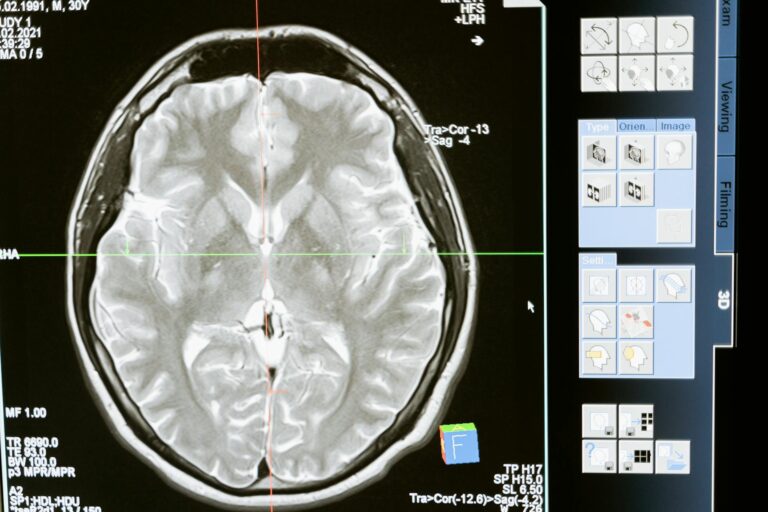
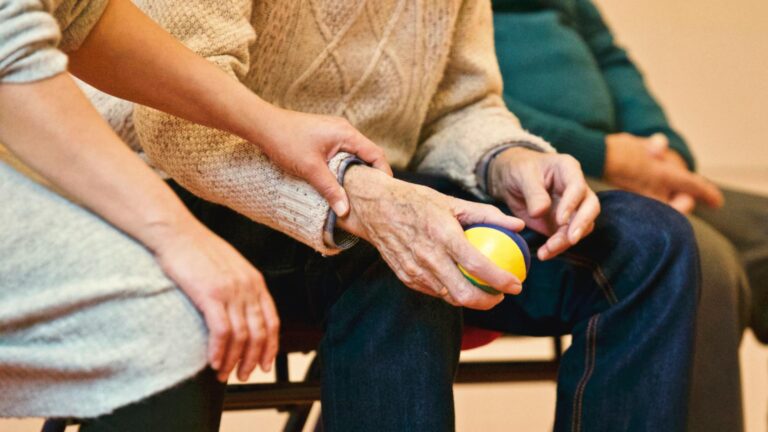
Parkinson’s patients sometimes feel *frozen* when trying to walk because their brain struggles to coordinate the automatic movements needed for walking. This phenomenon is called **Freezing of Gait (FOG)**, and it happens when the brain’s usual smooth control over walking breaks down, causing a sudden, temporary inability to move the feet forward despite the intention to walk.
Walking is normally an automatic process controlled by complex brain circuits that coordinate muscles and balance without much conscious effort. In Parkinson’s disease, these circuits are disrupted because of the loss of dopamine-producing cells in a part of the brain called the basal ganglia. Dopamine is essential for smooth, controlled movement. Without enough dopamine, the brain’s ability to initiate and maintain automatic movements like walking becomes impaired.
When a Parkinson’s patient tries to walk, especially in challenging situations—like turning, walking through narrow spaces, or starting to move after standing still—the brain’s communication between regions responsible for movement can fail briefly. This failure causes the legs to feel stuck or “frozen,” as if glued to the floor. It’s not that the muscles don’t want to move; rather, the brain cannot send the right signals to start or continue the walking motion.
Several factors contribute to this freezing:
– **Disrupted automatic movement control:** The brain’s automatic system for walking is impaired, so patients must consciously think about each step, which is difficult and inefficient.
– **Increased mental effort:** Because walking is no longer automatic, patients have to focus intensely on moving, which can be overwhelming, especially if attention is divided or anxiety is present.
– **Faulty brain communication:** The regions of the brain that coordinate movement, including the basal ganglia, supplementary motor area, and cortex, do not communicate properly, leading to brief breakdowns in movement initiation.
– **Environmental and psychological triggers:** Tight spaces, obstacles, stress, or anxiety can worsen freezing episodes by increasing the cognitive load or disrupting focus.
Freezing of gait tends to become more frequent and severe as Parkinson’s progresses or with long-term use of medications like levodopa. It is a major cause of falls and can significantly reduce independence and quality of life.
Researchers have studied the detailed movement patterns during freezing and found that patients show changes in stride length, walking speed, and timing of steps before freezing occurs. These subtle changes can sometimes be detected with wearable sensors, offering hope for early detection and intervention.
Managing freezing involves a combination of approaches:
– **Physical therapy:** Techniques like rhythmic auditory cues (e.g., walking to a beat), visual cues (lines on the floor), and focused attention strategies can help patients overcome freezing episodes.
– **Medication optimization:** Adjusting Parkinson’s medications can improve overall motor control, though freezing may not always respond well to drugs.
– **Neuromodulation therapies:** Experimental treatments like transcranial direct current stimulation (tDCS) targeting brain areas involved in movement control show promise in improving walking ability.
– **Psychological support:** Addressing anxiety and stress is important since these can worsen freezing.
In essence, freezing of gait in Parkinson’s is a complex problem arising from the brain’s impaired ability to automatically control walking, combined with increased mental effort and disrupted communication between key brain regions. It reflects the deep challenges Parkinson’s patients face in performing even simple, everyday movements.