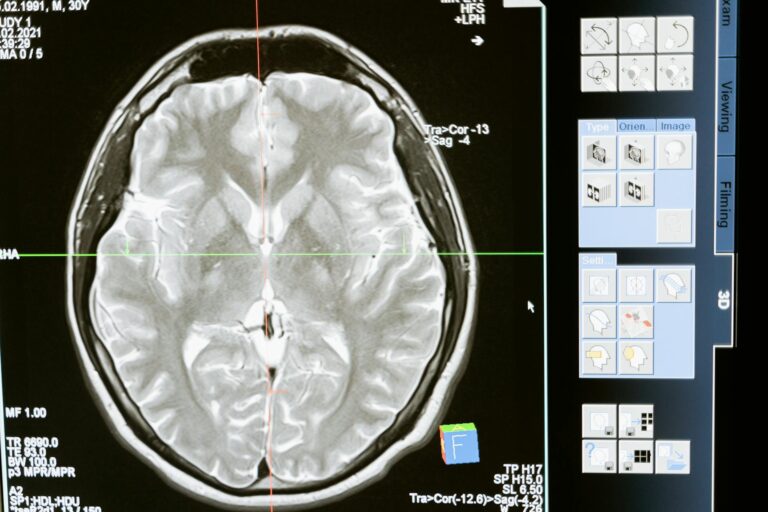
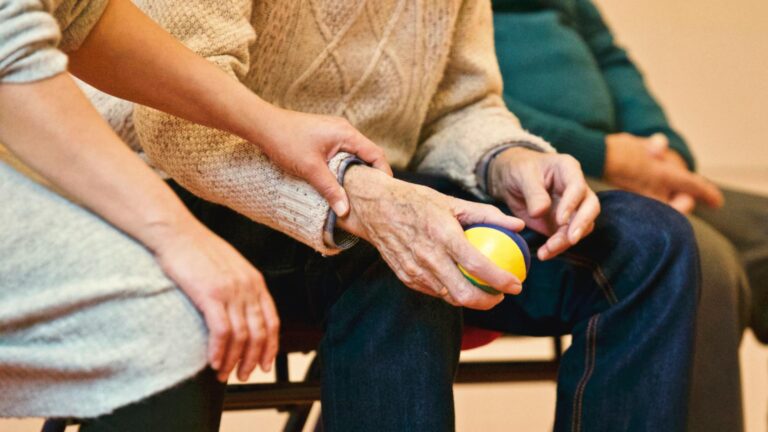
Parkinson’s disease often causes patients to lose balance in crowded places due to a combination of neurological, sensory, and environmental factors that interfere with their ability to maintain stability and coordinate movement. The core issue lies in how Parkinson’s affects the brain’s control over movement and balance, making it harder for patients to respond effectively to complex and dynamic surroundings like crowded areas.
Parkinson’s disease is a progressive neurological disorder characterized by the loss of dopamine-producing cells in the brain, particularly in a region called the substantia nigra. Dopamine is a critical neurotransmitter that helps regulate smooth, coordinated muscle movements and balance. When dopamine levels drop, patients experience symptoms such as tremors, muscle stiffness, slowness of movement, and postural instability. These symptoms directly impair their ability to maintain balance, especially in challenging environments[1][5].
In crowded places, the environment is unpredictable and constantly changing. There are many moving people, obstacles, and sensory distractions such as noise and visual clutter. For someone with Parkinson’s, this sensory overload can overwhelm the brain’s already compromised ability to process and integrate information from the eyes, inner ear (vestibular system), muscles, and joints—all of which are essential for balance. The brain must quickly interpret this sensory input to make rapid adjustments to posture and gait, but Parkinson’s disrupts this process[1][4].
One major factor is *postural instability*, a hallmark of Parkinson’s disease. This means patients have difficulty maintaining an upright posture and controlling their center of gravity. When standing or walking in a crowded place, small shifts in balance require quick reflexive responses to avoid falling. Parkinson’s patients often have delayed or reduced reflexes, making it harder to recover from a stumble or sudden push. This instability is worsened by muscle rigidity and bradykinesia (slowness of movement), which limit their ability to make the fast, precise movements needed to stay balanced[5].
Another challenge is *gait disturbances*. Parkinson’s patients often develop a shuffling walk with small steps and reduced arm swing. This altered gait pattern reduces their ability to navigate crowded spaces smoothly. They may also experience freezing of gait, where they suddenly feel as if their feet are glued to the floor, especially when faced with complex environments like narrow passages or groups of people. This freezing increases the risk of losing balance and falling[1][3].
Medications used to treat Parkinson’s can also contribute to balance problems in crowded places. While drugs like carbidopa/levodopa help improve motor symptoms, they sometimes cause side effects such as dizziness, low blood pressure, or unsteadiness, which can exacerbate balance difficulties. Additionally, medications for other conditions, such as blood pressure drugs, may further impair balance. The combination of medication side effects and the disease’s motor symptoms can make crowded environments particularly hazardous[3].
Cognitive factors play a role as well. Parkinson’s disease can affect attention, executive function, and the ability to multitask. Navigating a crowded place requires dividing attention between walking, avoiding obstacles, and processing social cues. When cognitive resources are limited, patients may become overwhelmed, leading to slower reactions and increased risk of imbalance or falls.
Sensory integration problems are also common. Parkinson’s patients may have impaired proprioception—the sense of body position and movement—which is crucial for balance. In a crowded setting, where visual and tactile cues are abundant but often conflicting, poor proprioception makes it harder to judge where their body is in space relative to others, increasing instability.
Physical deconditioning and muscle weakness, which often accompany Parkinson’s as the disease progresses, further reduce balance control. Weak muscles cannot provide the necessary support and adjustments to maintain stability, especially when sudden movements or shifts in the environment occur.
In summary, Parkinson’s patients lose balance in crowded places because their brains struggle to process and respond to complex sensory input due to dopamine loss, postural instability, gait abnormalities, medication sid